Where to Manufacture in Mexico: A Region-by-Region Guide for Product Sourcing
Where you manufacture in Mexico depends almost entirely on what you are making. Monterrey handles metal, appliances, and fabrication. Leon makes footwear and leather goods. Torreon is the denim belt. Tijuana runs medical devices and electronics. The Bajio is automotive. Picking a region before you match it to your product is the most common and most expensive mistake buyers make here.
New to sourcing from Mexico? Start with the complete Mexico sourcing guide, which covers suppliers, costs, tariffs, and how production actually works across the country.
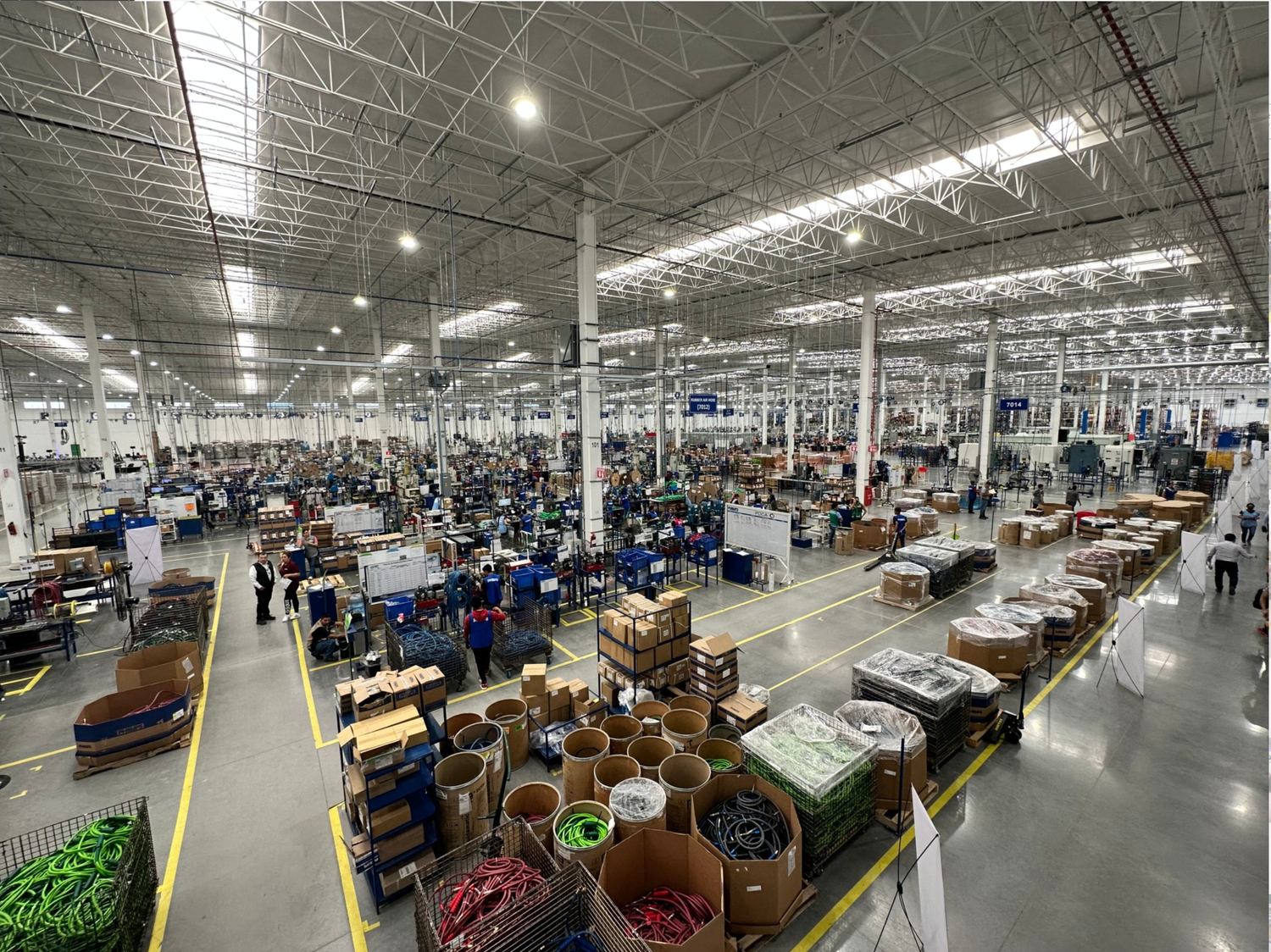
What Gets Made Where in Mexico
Mexico is not one manufacturing market. It is a set of regional clusters that specialized over decades, and the specialization is deep enough that a factory in the wrong region will either decline your project or quote it badly. A denim program belongs in Torreon. A stamped metal part belongs in Monterrey. Sending both to the same industrial park because it appeared first in a search is how buyers end up convinced that Mexico is expensive.
The right first question is not "where in Mexico," it is "which cluster makes my product." Work backwards from the product to the region, then evaluate individual factories inside that region.
| If you make this | Look here first | Why that region |
|---|---|---|
| Denim and jeans | Torreon (Coahuila) | The Laguna denim belt, mills and laundries in one place |
| Footwear, leather goods, belts | Leon (Guanajuato) | Mexico's leather and shoe capital, deep tannery base |
| Apparel and knitwear | Puebla, Yucatan, Mexico City | Long-established garment and textile workforce |
| Metal, stamping, machining, fabrication | Monterrey (Nuevo Leon) | Steel, foundries, and a dense machine-shop base |
| Appliances and white goods | Monterrey, Ciudad Juarez, Reynosa | Established appliance assembly and supplier networks |
| Furniture and casegoods | Monterrey, Jalisco | Wood, metal, and upholstery capability plus fabrication |
| Electronics, PCBs, cable assemblies | Guadalajara (Jalisco), Tijuana | Mexico's electronics cluster and contract assemblers |
| Medical devices | Tijuana, Ciudad Juarez | Decades of cleanroom infrastructure and trained operators |
| Food, beverage, and packaging | Jalisco, Nuevo Leon, Estado de Mexico | Agricultural supply plus processing and packaging lines |
| Automotive parts | The Bajio, Saltillo, Sonora | The OEM corridor and its Tier 1 and Tier 2 suppliers |
| Aerospace and precision parts | Queretaro, Baja California | Certified aerospace cluster with the required approvals |
| Plastic injection molding | Queretaro, Monterrey, Tijuana | Tooling and molding capacity serving several industries |
Regions overlap. This shows where the deepest supplier base sits, not the only place a product can be made.
The 10 Main Manufacturing Regions in Mexico
These are ordered by how often they matter to a consumer-products buyer, not ranked best to worst. A ranking would be meaningless: Tijuana beats Monterrey for a medical device and loses to it for a steel bracket. Read the specialization, not the position.
1. Nuevo Leon and Monterrey: Metal, Appliances, Furniture, and Fabrication
Monterrey is Mexico's industrial capital and the most versatile region in the country for anyone making a physical product that is not a car. Steel production, foundries, machining, metal fabrication, appliances, glass, cement, and furniture all cluster here, supported by a large base of small and mid-sized workshops that will take prototype and short-run work the big plants will not touch. That combination, heavy industry plus a working machine-shop layer underneath it, is rare in Mexico and is the main reason Monterrey suits buyers who are still developing a product.
It is also roughly two hours from the Laredo border crossing, which makes it one of the fastest regions in the country for truck freight into the United States.
"Most guides to manufacturing in Mexico are written for a company that wants to build its own plant. Almost nobody Cosmo Sourcing talks to wants that. They want to hire a factory that already exists, and that is a completely different map."
Jim Kennemer, Founder of Cosmo Sourcing2. Jalisco and Guadalajara: Electronics, Food and Beverage, Consumer Goods
Guadalajara is often called Mexico's Silicon Valley, and the label is earned. Global electronics manufacturing services companies including Flex and Jabil operate here alongside hundreds of smaller local firms producing printed circuit boards, cable assemblies, and enclosures. For a buyer, the practical value is that the supporting supply chain exists: connectors, housings, and assembly labor are all local, so you are not importing every component into a region that has never built your kind of product.
Jalisco also has a strong food, beverage, and agro-industrial base, which makes it a sensible first look for packaged food, beverages, and the packaging that goes with them.
3. Guanajuato and Leon: Footwear, Leather Goods, and Automotive
Leon is the center of Mexico's footwear and leather industry, with tanneries, component makers, and shoe factories concentrated in and around the city. If you are sourcing shoes, boots, belts, bags, or any leather good, this is the first place to look and there is no close second in Mexico.
The wider state, including Silao, Irapuato, Celaya, and Salamanca, is simultaneously one of the country's automotive centers, so Guanajuato runs two unrelated industrial economies side by side.
4. Coahuila: Denim in Torreon, Automotive in Saltillo
The Laguna region around Torreon and Gomez Palacio is Mexico's denim center, with spinning, weaving, cutting, sewing, and laundry capacity concentrated in one place. Denim is laundry-intensive, and having the wash houses next to the sewing floors is a genuine production advantage rather than a marketing line. If you are developing a jeans program for the North American market, start here and read the guide to denim manufacturers in Mexico before you brief anyone.
Saltillo, at the other end of the state, is a major automotive assembly and parts hub tied into the Monterrey corridor.
5. Baja California and Tijuana: Medical Devices, Electronics, Consumer Products
Tijuana sits directly against the San Diego border and has built one of the largest medical device manufacturing clusters in the Americas, with cleanroom infrastructure and operators trained on regulated production. It is also a long-established base for consumer electronics and white goods.
The border position is the point. For products where you need to visit the factory often, or where speed to the US West Coast matters more than the last few percent of unit cost, Baja California is hard to beat: a buyer can fly into San Diego and be on a factory floor the same morning.
6. Chihuahua and Ciudad Juarez: High-Volume Assembly, Electronics, Appliances
Ciudad Juarez is one of the highest-output manufacturing cities on the border, with an enormous assembly workforce built up over decades of maquiladora production. Electronics, wire harnesses, appliances, and medical devices dominate. This is a volume region: the infrastructure is built for large, repeatable programs, and it is generally the wrong fit for a first production run of a few hundred units.
7. Queretaro: Aerospace, Precision Manufacturing, and Plastics
Queretaro hosts Mexico's leading aerospace cluster, with a large concentration of certified aerospace suppliers and the quality systems that certification requires. For non-aerospace buyers, the useful consequence is a regional engineering and precision-machining culture that also serves plastics, tooling, and technical components. If your product needs tight tolerances and documented process control, Queretaro is a strong candidate.
8. Puebla and Tlaxcala: Textiles, Apparel, and Automotive
Puebla is one of Mexico's oldest textile regions and still holds real garment and fabric capacity, which makes it a first look for apparel alongside Yucatan. It is also a major automotive center anchored by long-established vehicle assembly. Its position beside Mexico City gives access to the country's largest domestic consumer market, which matters if you plan to sell inside Mexico as well as export.
For a wider view of the country's garment capability, see the guide to clothing manufacturers in Mexico.
9. Tamaulipas: Reynosa and Matamoros for Electronics and Appliances
Reynosa and Matamoros are long-running border manufacturing cities focused on electronics, electrical components, appliances, and auto parts. They offer the same border logistics advantage as Juarez and Tijuana and are worth quoting against both when your product fits the profile and you want a third comparison point.
10. Yucatan and Merida: Apparel and Light Manufacturing
Yucatan is the newest region on this list and the one most often overlooked. It has an established apparel and light manufacturing base, lower labor costs than the border, and notably low workforce turnover, which matters more than most buyers expect because turnover is a quality problem before it is a cost problem. The trade-off is distance: freight to the US border is long, so Yucatan tends to suit ocean-freight programs and buyers whose margins reward labor savings over transit speed.
Border or Interior: How Location Changes Your Cost and Lead Time
After product fit, this is the real decision. Border cities give you speed and easy factory visits. Interior regions give you lower labor cost and, often, a deeper specialized supply chain. Neither is correct in the abstract.
| Border (Tijuana, Juarez, Reynosa, Monterrey) | Interior (Bajio, Jalisco, Puebla, Yucatan) | |
|---|---|---|
| Truck transit to the US | Hours to a day | One to several days |
| Fully burdened labor cost | Higher | Meaningfully lower |
| Factory visits | Easy, often a same-day trip | Requires a domestic flight |
| Labor competition | Intense, higher turnover | Generally lower turnover |
| Best for | Fast replenishment, frequent oversight, heavy or urgent freight | Labor-intensive products, specialized clusters, cost-driven programs |
How to Choose the Right Manufacturing Region in Mexico
Match the Cluster, Then Shortlist the Factories
Use the product table above to pick one or two regions, then quote three to five factories inside them. Quoting one factory in five different regions produces five numbers you cannot compare, because you are measuring regional supply chains against each other rather than measuring factories.
Check Whether the Region Makes Your Inputs, Not Just Your Product
A sewing factory in a region with no fabric mills is importing fabric before it starts, and that cost and lead time land on you. The clusters above exist because the inputs are local. This is the single most common reason a quote comes back higher than expected.
Weigh Labor Cost Against Freight Honestly
Labor is the variable that moves most between Mexican regions, and it moves in the opposite direction from freight speed. Work out what your product actually consumes: labor-heavy goods reward the interior, freight-heavy or fast-replenishment goods reward the border.
Understand Whether You Need a Maquiladora Arrangement
If you are hiring an existing contract manufacturer to build your product, the factory already holds whatever permits it needs and this is not your problem. It becomes your problem only if you are importing components into Mexico for processing, which is what the IMMEX and maquiladora programs exist to handle. Know which situation you are in before a shelter operator sells you a solution to a problem you do not have.
Visit, or Have Someone Visit
Mexico's advantage over Asia for a US buyer is that oversight is genuinely practical: same time zone, short flight, no visa for most business travel. That advantage is worth nothing if nobody actually goes. Cosmo Sourcing has had a team in Nuevo Leon since 2023 for exactly this reason. For the wider case, see what nearshoring means and which brands already manufacture in Mexico.
What USMCA Changes About Where You Manufacture
The reason to manufacture in Mexico rather than nearshore somewhere else is trade access, and that access is conditional. Goods do not enter the United States duty-free because they were assembled in Mexico. They qualify because they meet the rules of origin for their specific product category, which usually turn on where the inputs came from and how much transformation happened in North America.
Region does not determine origin. Sourcing does. A factory in Monterrey building from imported Asian components may not qualify, while a factory in Yucatan using regional inputs does. Ask any factory you shortlist where its raw materials originate, and confirm it can produce the documentation, before you assume a duty-free landed cost. The details are in the guide to USMCA rules of origin.
Frequently Asked Questions
What is the best place to manufacture in Mexico?
There is no single best place, because Mexico's regions are specialized. Monterrey is the most versatile for general manufacturing and fabrication, Leon for footwear and leather, Torreon for denim, Tijuana for medical devices and electronics, Guadalajara for electronics and food, and the Bajio for automotive. Match the region to your product first, then compare factories inside it.
Which Mexican city is best for manufacturing?
Monterrey is the most common answer for buyers making physical consumer or industrial goods, because it combines heavy industry with a deep base of smaller workshops and sits about two hours from the Texas border. Tijuana is the strongest choice when frequent factory visits or speed to the US West Coast matter most.
Is it cheaper to manufacture on the border or in the interior of Mexico?
Interior regions are generally cheaper on labor, with industry estimates putting fully burdened operator costs in Bajio locations roughly 15 to 25 percent below comparable border cities. Border cities are cheaper on freight and far easier to visit. Which one wins depends on how labor-intensive your product is and how often you need to replenish.
Where is clothing manufactured in Mexico?
Apparel production concentrates in Puebla and Tlaxcala, the Mexico City area, and Yucatan, with denim specifically centered on Torreon and the Laguna region. Yucatan has grown as an apparel base because labor costs are lower and workforce turnover is low, though freight to the US border is longer.
Do I need to set up a maquiladora to manufacture in Mexico?
Not if you are hiring an existing contract manufacturer to produce your product. The factory holds its own permits. IMMEX and maquiladora arrangements matter when you are importing components into Mexico for processing or operating your own facility, which is a different business model from buying finished goods from a Mexican factory.
How far are Mexico’s manufacturing regions from the US border?
It varies enormously. Tijuana, Ciudad Juarez, Reynosa, and Matamoros sit directly on the border. Monterrey is roughly two hours from Laredo. Bajio cities are one to two days by truck. Yucatan is the furthest and generally suits ocean freight rather than trucking.
Finding the Right Mexican Factory with Cosmo Sourcing
Cosmo Sourcing is a sourcing company, not a factory and not a middleman. Unlike commission-based sourcing agents who take a percentage of your order value, Cosmo Sourcing charges a fixed fee, passes on original factory quotes with no markup, and hands over the factory's full contact details so you own the relationship from day one.
A sourcing package typically returns 2 to 6 vetted quotes on your product within 4 to 6 weeks, with direct introductions and a sourcing report. Unlike operations that vet factories by video call from another country, Cosmo Sourcing has had a team on the ground in Nuevo Leon since 2023. Matching your product to the right region is the first thing Cosmo Sourcing works out, because a quote from the wrong cluster is not a real quote.
If you know what you want to make but not where in Mexico to make it, email info@cosmosourcing.com, send your brief through the contact page, or read more about working with a Mexico sourcing company.