15 Top Clothing Manufacturers in Mexico: A Sourcing Guide
Mexico is one of the strongest nearshore options for clothing manufacturing, especially for brands selling into North America. USMCA-compliant apparel can ship duty-free to the US, lead times are measured in days rather than weeks, and many factories accept lower minimums than their Asian counterparts.
Below is a list of 15 well-known clothing manufacturers in Mexico, followed by a breakdown of the types of apparel the country produces best, the key production hubs, and how to find and evaluate the right factory for your product. Several of these manufacturers have been verified through US customs import records, which gives a clearer picture of who is actually shipping product versus who just has a nice website.
One important note before the list: the manufacturers below are among the most visible and active exporters in Mexico's garment industry. They are not necessarily the best fit for every product or order size. In my experience, many of the factories that end up being the right match for a specific project are smaller operations that do not show up in English-language searches. The list is a starting point, not a directory.
Updated Febrary 26, 2026
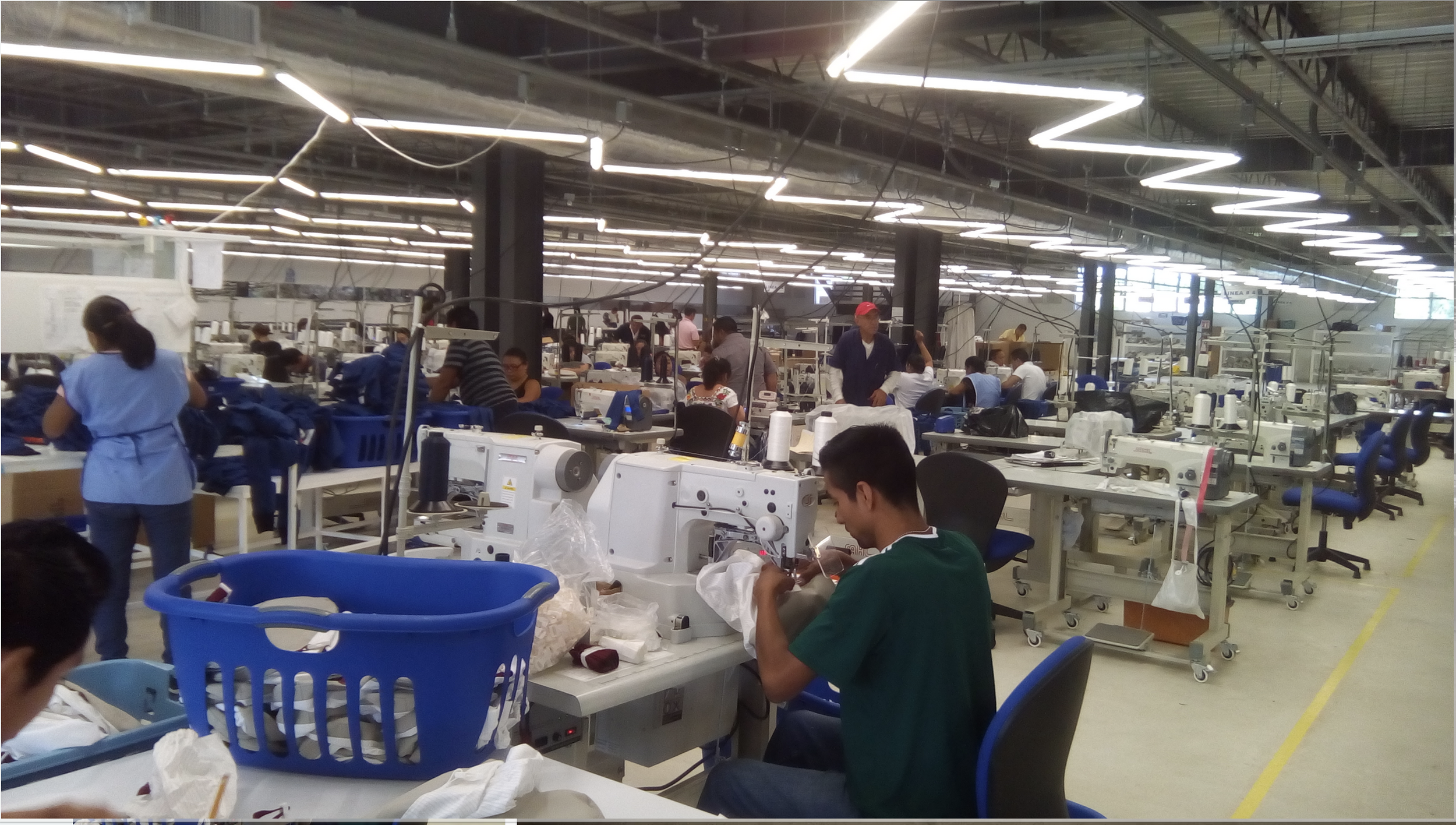
Touring a Clothing Factory in the Yucatan, from a Cosmo Sourcing client visit
Top Clothing Manufacturers in Mexico
Grupo Denim
Location: Gomez Palacio, Durango (La Laguna region) Specialization: Denim jeans and workwear
Grupo Denim is one of the largest denim-focused manufacturers in Mexico, with roots going back to the 1960s. The company is still family-owned after four generations and offers both CMT (cut, make, trim) and full-package services. Their Mexico facility produces around 500,000 units per month, with 3,500 sewing machines, an in-house laundry, embroidery capability, and a recycling plant. They have historically served major US brands, including Lee, Wrangler, and Vans.
I have sourced denim from the La Laguna region, and the vertical integration you find at operations like Grupo Denim is a genuine advantage. When the mill, laundry, and sewing are all in the same cluster, you get tighter quality control and faster sample turnarounds than coordinating across multiple suppliers in different countries.
Vertical Knits
Location: Baca, Yucatan (with additional facilities in Tizimin, Peto, and Espita) Specialization: Knit apparel, T-shirts, activewear
Vertical Knits produces over 25 million units annually and exports to more than 21 countries. Their client list includes Nike, Converse, VF Corporation, Tommy Hilfiger, Lacoste, and Fanatics. They also produce T-shirts for Patagonia, which named them a "Green manufacturer" for their sustainability practices, including solar energy use and water conservation. With over 3,500 employees across multiple facilities in the Yucatan, they are one of Mexico's largest knit apparel producers.
Kaltex Apparel
Location: Multiple facilities across Mexico (part of Grupo Kaltex) Specialization: Denim, casual pants, woven apparel
Kaltex Apparel is part of Grupo Kaltex, a 100% Mexican textile company that controls the full production chain from fiber and yarn production through to finished garments and logistics. They operate three sewing facilities with over 2,000 machines and can produce more than 160,000 units per week, with the capacity to double that when needed. Their vertically integrated model is one of the most comprehensive in Mexico.
Grupo Siete Leguas
Location: Multiple locations across Mexico, with additional operations in Nicaragua, Brazil, and Argentina. Specialization: Denim, jeans, and casual apparel
Founded over 65 years ago, Grupo Siete Leguas is one of the largest apparel manufacturers in Mexico. The company employs roughly 13,500 workers across its operations and distributes products to over 40 countries. They are primarily known for denim and jeans production and have built a significant international footprint.
Zentrix
Location: Atizapan de Zaragoza, Estado de Mexico Specialization: Full-package apparel manufacturing
Zentrix offers complete package solutions from design through logistics, with a focus on quality and competitive pricing. They have built a reputation around socially and environmentally responsible manufacturing, which is increasingly important for brands that need to demonstrate supply chain sustainability to their own customers. Their Estado de Mexico location gives them access to a large labor pool and proximity to Mexico City's infrastructure.
Maya Mode
Location: Mexico Specialization: Sustainable apparel manufacturing
Maya Mode has been building a reputation around sustainable clothing production since 2015. They focus on eco-friendly materials and processes, which makes them worth considering for brands that need to meet sustainability commitments or certifications. The sustainable manufacturing space in Mexico remains relatively small compared to conventional production, so factories like Maya Mode, which have genuine sustainability credentials, tend to stand out.
Ideas Josbris
Location: Mexico Specialization: Woven men's shirts
Ideas Josbris has been producing finished garments since 1971, primarily woven men's shirts in both long and short-sleeve styles. Their production capacity is around 50,000 units per month with a 45-day lead time (depending on fabric availability) and a 1,000-piece MOQ. They use a vertically integrated full-package process from design through cutting and manufacturing.
CS Tech Contract Manufacturing
Location: Facilities in Mexico, with presence in the US and Canada. Specialization: Contract manufacturing, technical apparel, custom design
CS Tech focuses on collaborative product development with a prototyping process that lets clients refine designs before full production. They handle cross-border logistics across North America and emphasize IP protection, which is worth noting for brands concerned about design confidentiality. They are a solid option for brands that need a manufacturing partner involved in the development process, not just production.
AML Textil
Location: Tlaxcala, Mexico Specialization: Jackets, sweatshirts, recycled fiber products
Founded in 2016, AML Textil is a newer manufacturer producing outerwear and casual apparel from recycled fibers. They also produce non-apparel items, such as blankets. Tlaxcala has a long textile manufacturing history, and AML Textil represents the newer wave of Mexican manufacturers building around sustainability.
Campeche Sportswear
Location: Campeche, Campeche Specialization: Cut-and-sew shirts and sportswear Verified shipment volume: ~1,120 shipments via Progreso port
Campeche Sportswear is one of Mexico's higher-volume apparel exporters, based on customs data, with shipments consistently flowing through Progreso to the US. They employ between 200 and 500 workers and focus on cut-and-sew shirt production. Their location in Campeche places them in the Yucatan Peninsula's growing apparel manufacturing cluster.
Monty Industries
Location: Motul (Muxupip), Yucatan Specialization: Women's outerwear and casualwear Verified shipment volume: ~640 shipments via Progreso port
Monty Industries is part of the Monty Group, originally founded in Hong Kong in 1946 and expanded to Mexico after NAFTA. They employ approximately 1,800 workers in Yucatan and produce seasonal clothing collections with designs updated three times per year. Panjiva records show over 130 US customers, including L.L. Bean. Their MOQ starts at around 1,000 units with production timelines of 120+ days, so they are better suited for brands with established order volumes rather than small test runs.
Delta Campeche
Location: Campeche, Specialization: General apparel manufacturing,g Verified shipment volume: ~719 shipments via Progreso port
Delta Campeche is another high-volume exporter operating out of the Yucatan Peninsula. Their customs records show consistent shipment activity to US ports, placing them among the more active garment exporters in the region. Like several other Yucatan-based manufacturers, they benefit from the Progreso port infrastructure for ocean freight to the US Gulf Coast.
Alsico Promex
Location: Valladolid, Yucatan Specialization: Technical workwear and industrial uniforms Verified shipment volume: ~244 shipments via Progreso port
Alsico Promex is the Mexican manufacturing arm of Alsico, a Belgian workwear company. Their Valladolid facility produces high-tech uniforms for the automotive, petroleum, electrical, and hospitality sectors. The plant has a capacity of roughly 90,000 garments per month and employs over 400 workers. They have supplied protective clothing for sectors requiring strict compliance standards, including healthcare and industrial safety. If you are sourcing technical workwear or flame-resistant uniforms, this is one of the more specialized operations in Mexico.
Operadora Ganso Azul
Location: Yucatan Specialization: Textile and apparel manufacturing Verified shipment volume: ~262 combined shipments via Progreso port
Operadora Ganso Azul is a Yucatan-based manufacturer with consistent export activity to the US market. Their customs records show shipments of clothing and textile products through Progreso. They are part of the Yucatan Peninsula's concentration of apparel manufacturers that has grown significantly over the past decade, driven by USMCA advantages and competitive labor costs in the region.
QST Industrias de México
Location: Veracruz region Specialization: Apparel and garment accessories Verified shipment volume: ~42 combined shipments via Veracruz port
QST Industrias operates in the Veracruz region, which differentiates it from the Yucatan-heavy cluster that dominates Mexico's apparel export landscape. Their product descriptions in customs data include clothing and garment components. The Veracruz port gives them a different logistics profile than Yucatan-based manufacturers, which may be relevant depending on your US distribution points.
What Types of Clothing Are Manufactured in Mexico?
Mexico's apparel industry covers a wide range, but certain categories stand out.
Denim and Jeans
Mexico is a global denim powerhouse. The Bajio region (particularly Guanajuato), Durango, and Coahuila have deep expertise in everything from raw denim production to complex washes, distressing, and specialty finishes. Factories in these regions often offer vertically integrated operations covering spinning, dyeing, weaving, cutting, and sewing under one roof. For a deep dive, see our guide on finding denim manufacturers in Mexico.
Workwear and Uniforms
Industrial coveralls, flame-resistant clothing, high-visibility gear, corporate uniforms, medical scrubs, and hospitality attire represent a major segment of the manufacturing industry. Companies like Cintas, Dickies (VF Corporation), and Aramark all source uniforms from Mexico. I have helped clients source workwear and uniforms from Mexican factories, and the combination of durable fabrics, reliable production timelines, and proximity for quick reorders makes this one of the categories where Mexico competes on total value, not just price. See our dedicated guide on sourcing uniforms from Mexico.
Casual and Everyday Wear
T-shirts, polo shirts, blouses, casual pants, joggers, shorts, and sundresses are produced at scale across multiple regions. Mexico's cut-and-sew capabilities for basic and mid-range casualwear are well established, with many factories serving both domestic and export markets.
Athletic and Activewear
Performance fabrics, leggings, sports bras, team jerseys, and swimwear are a growing segment. Monterrey and parts of Jalisco have developed strong capabilities for technical athletic apparel, including moisture-wicking fabrics and sublimation printing.
Leather Goods and Apparel
Leon, Guanajuato, is Mexico's leather capital. Leather jackets, belts, handbags, wallets, and footwear are produced there with strong traditions of craftsmanship. This category serves both mass-market and premium buyers.
Key Clothing Production Hubs in Mexico
Understanding which region specializes in what saves time when narrowing down factory options.
La Laguna Región (Torreón, Gómez Palacio, Durango)
One of Mexico's most concentrated denim and casualwear production zones. Home to major vertically integrated factories with decades of experience serving US brands. If you are sourcing denim or jeans, start here.
Puebla and Tlaxcala
Rich textile manufacturing history blends modern production with artisanal traditions. Strong in casualwear, traditional garments, and cut-and-sew operations.
Guadalajara (Jalisco)
Known for higher-end fashion manufacturing, swimwear, and a growing activewear segment. Also home to Intermoda, Mexico's largest fashion trade event.
Monterrey (Nuevo León)
Focuses on athletic wear, industrial clothing, and performance fabrics. Advanced manufacturing technology and strong infrastructure make it well-suited for technical apparel.
Leon (Guanajuato)
Mexico's leather goods capital. If your brand includes leather jackets, accessories, belts, or footwear, this is the region to explore.
Yucatan
Home to large-scale knit apparel producers like Vertical Knits. Strong in basics, T-shirts, and embroidered apparel.
Mexico City and Estado de Mexico
Diverse production capabilities across multiple categories. Good for small-batch production, prototyping, and limited-edition runs.
How to Find the Right Clothing Manufacturer in Mexico
Finding the right factory in Mexico requires a different approach than sourcing in China, where platforms like Alibaba dominate. Many of Mexico's best manufacturers are not listed on international B2B platforms.
Work with a Sourcing Company
A sourcing partner with on-the-ground presence in Mexico can significantly reduce the time and risk involved in finding, vetting, and managing factory relationships. At Cosmo Sourcing, we help brands connect with vetted Mexican manufacturers, handling everything from factory identification and sample development to production management and quality control. Our flat-rate pricing means no hidden markups on factory quotes, and you receive the factory's full contact details and direct introductions.
I have found that the greatest value a sourcing partner adds in Mexico lies in navigating the relationship side of things. The best factories are often not the ones with the slickest websites. They are the ones with deep production experience, strong quality systems, and a willingness to work through the details. Those relationships take time to build, and having someone local who knows the landscape saves months of trial and error.
Use Mexico-Specific Directories and Platforms
Standard platforms like Alibaba are not the strongest resource for Mexican manufacturers. Better options include MexBest, SIEM (Mexico's official government business directory), CANAIVE (National Chamber of the Apparel Industry), CANACINTRA, and Kompass. We compiled a detailed list in our guide to sourcing platforms for Mexico.
Attend Trade Shows
Intermoda (held twice annually in Guadalajara) is Mexico's largest fashion trade event and an excellent way to meet manufacturers face-to-face. Exintex focuses on textiles and raw materials. These events give you direct access to suppliers you will not find online.
Visit Factories
This matters more in Mexico than in many other sourcing destinations. Mexican business culture values in-person relationships, and a factory visit lets you assess capabilities, quality control processes, and working conditions firsthand. In my experience, the factories that are most responsive via email tend to be the ones that already work heavily with export clients. For the rest, a visit or at minimum a phone call is what gets things moving. Phone calls and face-to-face meetings consistently move things forward faster than email alone in Mexico.
What to Evaluate Before Placing an Order
Trade Agreement Compliance
If you are importing into the US, confirm that the factory can produce garments meeting USMCA rules of origin (such as the yarn-forward rule for textiles). USMCA-compliant apparel can enter the US duty-free, while non-compliant goods face a 25% tariff. Tariff rates vary by importing country and change frequently, so always verify the latest rates for your specific market before finalizing cost calculations. For a broader look at how tariffs affect sourcing decisions across the region, see our Latin America product sourcing guide.
Product Category Experience
A factory that excels at denim may not be the right fit for performance activewear. I always ask for samples from recent production runs in the specific product category, not just their best showroom pieces.
Minimum Order Quantities
Many Mexican factories offer lower MOQs than Asian manufacturers, sometimes as low as 250 to 500 units per design and color. This is a real advantage for startups, small brands, or limited-edition collections. But it varies widely by factory, so ask early.
Lead Times and Capacity
Mexico's proximity means shorter transit times, but production timelines still depend on factory capacity and material availability. I have seen clients assume "nearshore" means "instant," which leads to frustration. Get clear timelines upfront and build in a buffer, especially if the factory is sourcing fabrics from Asia.
Material Sourcing and Vertical Integration
Some Mexican factories source raw materials locally (particularly cotton, denim, and leather), while others import fabrics from Asia or the US. Vertically integrated operations that control the process from yarn to finished garment tend to offer better quality control and faster turnarounds. Ask specifically where materials come from, as this also affects compliance with trade agreements.
Communication and Cultural Fit
Shared time zones with North America are a real advantage, but some factories are more export-oriented than others. Language capabilities, email responsiveness, and willingness to engage with international buyers vary. Mexican business culture generally favors phone calls and in-person meetings over email, so be prepared to adapt your communication style. I have worked with factories that barely respond to email but are incredibly responsive on WhatsApp or by phone.
Quality Certifications and Labor Standards
Ask about compliance with international standards, sustainability practices, and labor certifications. Mexico's apparel sector has been moving toward greater transparency, but vetting is still essential.
Why Mexico for Clothing Manufacturing?
Mexico is not the cheapest place to make clothes. Countries like Bangladesh, Vietnam, and Cambodia typically offer lower per-unit labor costs. But Mexico's value proposition is built on a different set of strengths.
Proximity to the US and Canada means lead times measured in days, which is transformative for brands that need to respond quickly to trends or replenish fast-selling SKUs. Trade agreements like USMCA can provide preferential or duty-free access for qualifying goods. Shared time zones eliminate the overnight email lag that complicates production management in Asia. Lower MOQs allow smaller test runs without committing to thousands of units. And Mexico's denim, leather, and workwear capabilities are genuinely world-class, backed by decades of experience supplying major North American brands.
The trade-off is that Mexico's apparel manufacturing ecosystem is not as broad or as deeply scaled as China's or Vietnam's across all product categories. For highly labor-intensive items at massive volumes, Southeast Asia may still be more competitive. The strongest approach for many brands is a dual-sourcing strategy: Mexico for speed-sensitive, trade-agreement-qualifying products, and Asia for high-volume, cost-driven items.
For a side-by-side comparison, see our Mexico vs. Vietnam sourcing guide, and for a broader look at manufacturing in Mexico beyond apparel, see our complete Mexico product sourcing guide.
Source Clothing from Mexico with Cosmo Sourcing
Finding the right clothing manufacturer in Mexico does not have to mean cold emailing factories from a list. Whether you are launching a new apparel line, diversifying away from China, or seeking faster replenishment for existing products, we can help you find the right factory and manage the process.
Cosmo Sourcing connects brands with vetted manufacturers across Mexico, Vietnam, and Southeast Asia. We provide original factory quotes with transparent flat-rate pricing (no commissions or markups), direct factory introductions with full contact details, and hands-on support from sourcing through production. Most projects involve 2 to 6 factory quotes, so you can compare options and make an informed decision.
Get started: cosmosourcing.com/contact-us
Email: info@cosmosourcing.com