Thailand Jewelry Manufacturers Guide: What Gets Made There and Who Makes It
Thailand manufactures the full jewelry spectrum, from cheap plated costume pieces to high-end gold and diamond work, often in factories within the same province. Bangkok is a global center for colored stone cutting and sterling silver production. Minimum orders commonly start at 100 to 300 pieces per design, lower than China for silver and fashion jewelry.
Looking at Thailand as an alternative to Chinese production? Start with the China plus one sourcing guide, which covers how buyers actually move or split production across Southeast Asia.
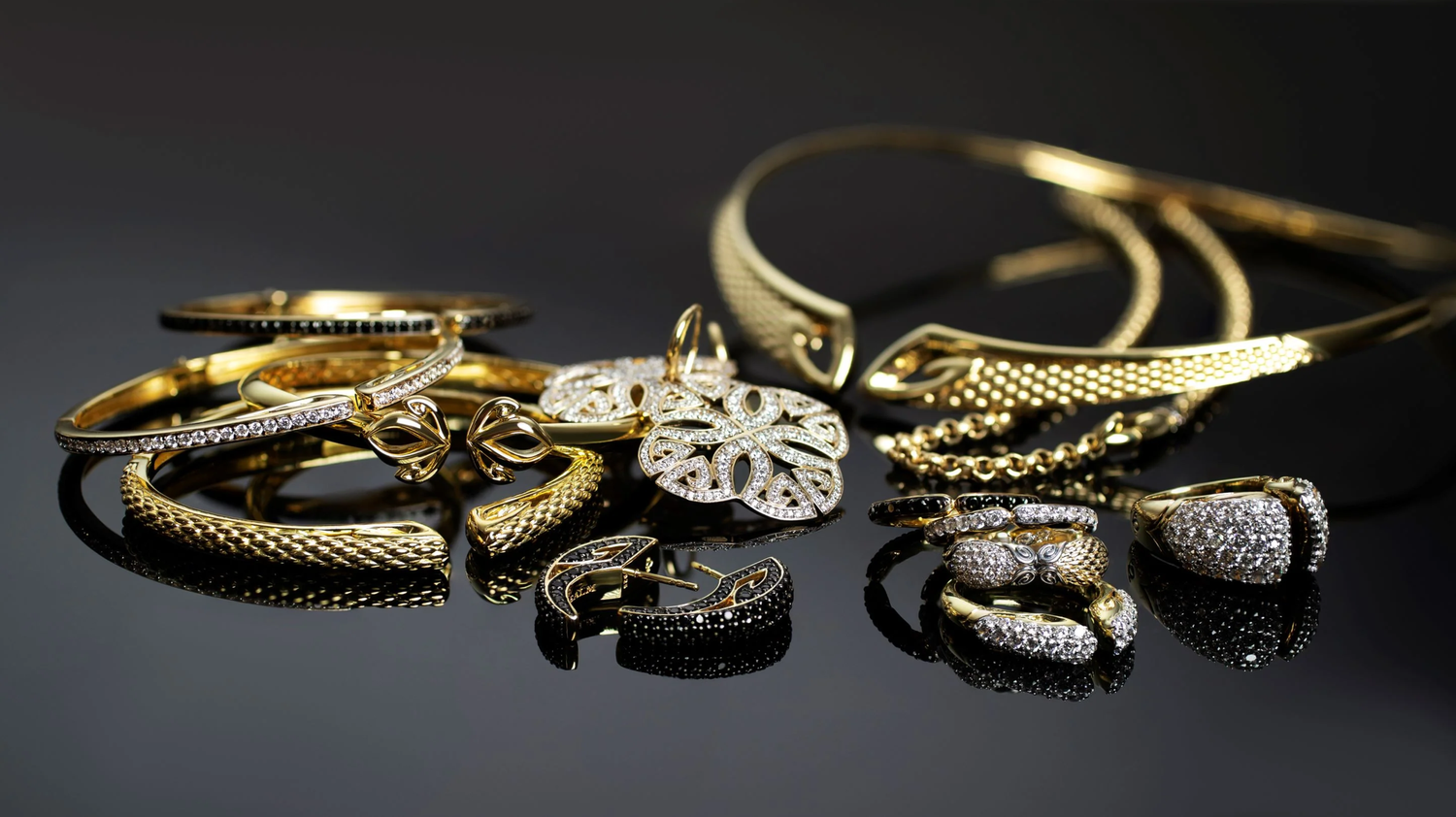
What Jewelry Thailand Actually Makes
Thailand is usually described as a silver country, which undersells it badly. The useful way to think about the industry is by material, because that is how factories specialize and how you should build a shortlist.
The right first question is not "can Thailand make this," it is "which tier of factory makes this." A high-volume costume producer asked to quote a diamond-set piece will either decline or quote badly, and a fine jewelry house asked for ten thousand plated brass earrings will do the same.
| If you are making this | Material and tier | What to know before you brief it |
|---|---|---|
| Everyday silver jewelry | 925 sterling, mid-volume | Thailand's deepest capability. Most export volume by piece count sits here |
| Gold look at a silver price | Gold vermeil over sterling | Thick gold over silver, not brass. Wears far better than gold plated base metal |
| Fine jewelry | 14K or 18K gold, fine tier | State your karat first. Thai domestic gold is traditionally 96.5 percent |
| Costume and fashion pieces | Brass with gold, rhodium or silver plating | Widest quality spread. Plating thickness is where cost gets cut |
| Stone-set pieces | Sapphire, ruby, semi-precious, CZ, lab-grown | Stones are sourced, graded and set locally rather than imported finished |
| Body jewelry and piercings | 316L stainless, titanium | A real Thai niche. Several factories ship it to the US in volume |
| Children's jewelry | Silver and plated base metal | Established export category. Lead and cadmium limits apply in the US |
| Steel jewelry at volume | Stainless steel | Produced in Thailand, but China holds the deeper base. Not the obvious first stop |
Tiers overlap. This shows where the deepest capability sits, not the only place a product can be made.
Silver, Gold, and Stones: Where Thai Factories Are Strongest
Sterling Silver Jewelry
This is the deepest capability in the country. Sterling is 92.5 percent silver with the balance usually copper, which is where the 925 hallmark comes from. Thai factories produce cast silver, stamped lightweight pieces, chain, and stone-set silver at a level of hand finishing that is difficult to match at comparable order sizes. Most of the country's export volume by piece count sits here.
Gold and Gold Vermeil
Export production for Western markets is typically 14K or 18K. Gold vermeil, which is thick gold plating over sterling silver rather than over brass, is widely produced and is the usual answer for brands that want a gold look at a silver price. It also wears considerably better than gold plated base metal, which matters more than the cost difference once returns start coming back.
Gemstones, Cubic Zirconia, and Lab-Grown Stones
Bangkok's cutting trade means colored stones are sourced, graded, and set locally rather than arriving as finished imported components. Sapphires and rubies are the historic strength, alongside a wide range of semi-precious material. Cubic zirconia is produced at scale, and one manufacturer below began as a CZ lapidary before moving into finished jewelry. Lab-grown stones are now normal in the trade.
Thai Jewelry Techniques Worth Knowing by Name
Thailand carries specialisms that do not exist in most sourcing countries, and knowing the terms changes the conversation you can have with a factory. Lost wax casting dominates cast production, and several Thai houses have run it for four decades or more. Marcasite-set silver is a long-standing specialty with dedicated factories behind it. Nielloware, known locally as kruang tom, inlays a black metal alloy into engraved silver or gold and is established enough to have its own national trade association. Hill tribe silver from the north is hand-worked above sterling purity, softer and unsuitable for some settings but distinctive in a way machine production cannot copy.
Top Thailand Jewelry Manufacturers
These are among the most established and most visible jewelry manufacturers in Thailand. This is not a comprehensive directory and it is not a ranking. Cosmo Sourcing assembled it by cross-checking United States customs export records against company registration details, certifications, and stated capabilities, then discarding the freight forwarders and trading companies that dominate a raw customs pull.
Capacity and headcount figures are as stated by the companies themselves. None are Cosmo Sourcing clients, and inclusion is not an endorsement of fit for your product or your volumes. The customs component reflects one window of United States ocean freight, so it excludes the European, Gulf, and Japanese trade entirely.
"Thailand is one of the few places where cheap costume jewelry and high-end gold and diamond work come out of factories in the same province. That range is the opportunity and the trap. A factory that is excellent at one end is usually the wrong choice at the other, so the question is never whether Thailand can make your product. It is which tier of factory you are actually talking to."
Jim Kennemer, Founder of Cosmo Sourcing1. Pranda Group
Founded in 1973 as Pranda Design and manufacturing since 1984, Pranda has been listed on the Stock Exchange of Thailand since 1990 and is the country's largest fine jewelry manufacturing group. Certified to ISO 9001 and ISO 14001 and a member of the Responsible Jewellery Council, with a stated group capacity of around four million pieces a year across plants in Thailand, Indonesia, and Vietnam. The realistic caveat for most readers is scale: a group this size is generally the wrong first call for a launch-volume order.
2. Choon Jewelry
The business began in 1984 as a cubic zirconia lapidary and was established as a jewelry manufacturer in 1993 by Chairat Noppasanti. In-house casting, polishing, gem setting, and plating, with a stated capacity above 30,000 pieces per month. Works in gold and silver with semi-precious stones and cubic zirconia, exports entirely to the United States, EU, Japan, and Australia, and states that OEM and small orders are available, which makes it more accessible than its size suggests.
3. E.L.F. Co. Ltd (ELF925)
One of the higher-volume sterling silver operations in the country, and one of the few names in this list that also appears directly in United States customs records as a shipper of sterling silver and children's jewelry rather than through a freight forwarder. A member of the Thai Gem and Jewellers Association and the Thai Niello and Silver Ware Association, running lost wax casting and stamping with in-house XRF material testing and AQL-based sampling. Also produces 316L stainless steel and body jewelry. Oriented to wholesale and private label, so it suits catalog-plus-customization buyers better than highly bespoke fine jewelry.
4. Loytee
Works in 925 sterling silver, gold, and gold vermeil, with brass as well. The SMETA certification matters if you sell into retailers that require a social compliance audit. Builds from hand-carved molds through lost wax casting, and positions itself around small-batch custom work for sustainability-focused brands in North America and Europe rather than mass production. Expect a higher unit cost and a stronger fit for a considered collection than for a volume program.
5. Primarose Co., Ltd
Works in 925 sterling silver and brass, with gold, rhodium, and silver plating options. OEM and private label, with in-house design, mold making, casting, stamping, and polishing, and gold plating subcontracted. States compliance with EU REACH and relevant United States safety standards. Explicitly works with startups and first-collection brands as well as established buyers, which is unusual enough among factories this size to be worth noting.
6. Hong Factory
Manufacturing in Bangkok's Bang Rak district since 1971 and one of the oldest jewelry factories in the country. Its defining specialty is marcasite-set silver, where it is among Thailand's largest producers, alongside sterling silver with cubic zirconia and plain silver, finished in rhodium plating or oxidised. Around 500 staff, a catalogue running to several thousand designs, and OEM and ODM work under NDA for clients in more than 60 countries. Notably accessible for a factory of its age: made-to-order work runs at five pieces per design against a minimum order value rather than a minimum piece count.
7. SMV Thailand
Produces costume and fashion jewelry for jewelry and fashion brands. Handles both small batches and larger runs, offers 3D printed prototyping, and provides finishing including e-coating and nano-plating, which is directly relevant if plating durability is a known weak point in your category.
Which of These Work with a Small Business?
More than you would expect. Choon states that OEM and small orders are available despite its size, Primarose explicitly takes first-collection brands, Hong Factory runs made-to-order at five pieces per design, and Loytee is built around small-batch custom work. Scale alone does not tell you whether a factory will take your order, so ask rather than assuming.
How Thai Jewelry Pricing Actually Works
Jewelry does not quote like other products, and this is where buyers with experience in apparel or hardgoods get caught out.
Your Quote Is Three Numbers, Not One
A jewelry quote is built from metal weight priced at or near market spot, a labor charge per piece (often called a making charge), and the cost of any stones. Because precious metal spot prices move daily, a quote for a silver or gold piece is typically valid only for a short window. When a factory re-quotes two weeks later at a different number, that is usually the metal market moving, not a supplier acting in bad faith.
Ask for the quote broken into those three components before comparing suppliers. Two quotes that look identical can carry very different making charges once the metal is stripped out, and only the making charge is negotiable.
Weight Is the Lever, Not Labor
The most useful question a first-time jewelry buyer can ask is not what a piece costs but what it weighs. Weight drives the metal component, which usually drives most of the cost on a precious metal piece, and half a gram off a shank can move landed cost more than a hard negotiation on labor ever will. Send your target price with your product specification sheet and ask the factory what it would change to hit it. Confirm the unit as well as the karat, because Thai factories may quote gold by the baht, a local weight unit of roughly 15.2 grams, and domestic-standard gold is stamped 965 for 96.5 percent.
Minimums Are Per Design, Not Per Order
A 300-piece minimum usually means 300 of each design, so a ten-SKU launch is a 3,000-piece commitment. Some factories will blend minimums across designs that share a mold or a casting tree, which is worth asking directly. Watch for the other kind of minimum too: some Thai factories set a minimum order value rather than a piece count, which can mean as few as five pieces per design provided the total order clears a threshold. That suits a buyer testing several designs far better than a flat per-design minimum, so ask which model applies before assuming you are priced out. Factories will also want your estimated annual usage before agreeing to cut molds, because mold and master model costs are only justified by repeat volume.
What Customs Records Show About Thai Jewelry Exporters
Cosmo Sourcing pulled United States customs records for Thai shipments to test the marketing against real export activity. Two findings change how you read any Thai supplier list, including the one above.
The first is that the highest-volume apparent jewelry exporter in the data is a freight forwarder, not a manufacturer, with the producer named only inside the cargo description. Shipper of record is not manufacturer. Any list built by sorting customs data by volume without reading the cargo lines comes out mostly forwarders, which is one reason competing Thai supplier lists so often name companies that do not manufacture anything.
The second is that the ocean freight record skews heavily toward costume, children's, and sterling silver jewelry, almost all of it leaving through Laem Chabang for Long Beach, Los Angeles, and Newark. Swarovski's Thai manufacturing arm shows up clearly in that data, a useful reminder that global brands manufacture here even though they are not realistic suppliers for an independent label. Fine gold and gemstone pieces move by air in small high-value consignments and barely register in container data.
How to Vet a Thai Jewelry Factory
Generic supplier vetting applies here as everywhere. These are the checks specific to jewelry, and they are the ones that decide whether your returns rate is one percent or fifteen.
Casting Quality and Porosity
Porosity is the defining defect of cast jewelry: microscopic voids left as metal cools, surfacing as pits after polishing or opening up later under wear. Ask how the factory controls it and inspect a cast sample under magnification. Porosity at a shank or solder joint is structural, not cosmetic.
Plating Thickness
Plating is the most common quality failure in this category and the hardest to catch on receipt. Rhodium over silver resists tarnish and gold over brass carries the whole look of a costume piece, but performance depends entirely on the thickness actually applied, so a piece that looks right on arrival can fail within months on a customer's wrist. Specify thickness in microns rather than accepting "heavy gold plating," and ask how the factory verifies it.
Stone Setting Security
Stone loss is the most common warranty claim in jewelry. Check prong thickness and whether stones sit level and flush, and ask whether setting is done by hand or machine and what the factory's own pull-test standard is. On pave and micro-pave work, ask to see a production piece rather than a showpiece sample, because the gap between the two is widest exactly here.
Findings: Clasps, Ear Posts, and Jump Rings
Clasps, ear posts, jump rings, and hinges fail before the body of a piece does. Confirm what the findings are made of, since a sterling silver pendant on a plated base metal chain is a common surprise, and check that ear posts match the metal you are selling.
Metal Purity and Hallmarking
Ask what assay method the factory uses, whether XRF testing is done in-house or sent out, and whether pieces are hallmarked. If your market requires specific marking, say so before sampling rather than after production. A certificate of conformance is reasonable to request with the shipping documents.
Restricted Substances by Market
Jewelry carries market-specific requirements that vary considerably, and the United States is more complicated than most buyers assume. There is no mandatory federal standard for jewelry as such. What binds children's jewelry is the CPSIA limit on total lead in children's products, together with a Children's Product Certificate based on testing at a CPSC-accepted laboratory. Cadmium, nickel release, and the mechanical requirements sit in ASTM F2923, a voluntary consensus standard the CPSC recognises as industry best practice and which major retailers and marketplaces require in practice, with several states legislating their own cadmium limits on top. Adult jewelry has its own consensus standard in ASTM F2999. The European Union separately restricts nickel release in items intended for prolonged skin contact. Identify your destination market's requirements before sampling and confirm the factory has produced to that standard before, rather than assuming a general compliance claim transfers.
The Jewelry Sampling Path: CAD to Cast Sample
Jewelry sampling runs from CAD to a resin or wax print, then a master model, then a mold, then a cast sample. Each stage can drift from your intent and each correction costs a cycle, so budget for more than one round. Agree in writing who owns the CAD files and the molds before work starts, because that single clause determines whether you can move production later. Published production times give you a rough anchor: one long-established Bangkok manufacturer quotes roughly 30 to 45 days for made-to-order production, and that is before sampling. Treat it as a floor for a straightforward piece rather than a promise, and add your sampling rounds on top. The general rules for ordering product samples apply, with the caveat that jewelry adds model and mold stages most products do not have.
Where to Find Thai Jewelry Manufacturers
The Bangkok Gems and Jewelry Fair is the industry's primary trade event and the most efficient way to see many manufacturers quickly. Arrive with a spec sheet, target volumes, and named booths rather than walking the aisles hoping to be impressed.
ThaiTrade.com is the official B2B marketplace run by Thailand's Department of International Trade Promotion, which makes it a steadier starting point than open marketplaces. The Gem and Jewelry Institute of Thailand supports the sector with certification and trade promotion, and is a useful reference when testing a supplier's claims. For the wider platform landscape, the guide to Thai sourcing platforms and directories covers where Thai suppliers actually list.
Thailand also sits alongside ceramics, rubber, and processed foods among the products made in Thailand worth a closer look.
Thailand vs China vs Vietnam for Jewelry Manufacturing
| Thailand | China | Vietnam | |
|---|---|---|---|
| Core strength | Sterling silver, colored stone setting, hand finishing | Volume production, costume jewelry, stainless steel, components | Limited jewelry base relative to apparel and furniture |
| Typical minimum order | Commonly 100 to 300 pieces per design on silver and fashion | Generally higher at comparable quality tiers | Varies widely, few specialist factories |
| Stone access | Bangkok cutting trade, sourced and set locally | Sourced, often imported for setting | Largely imported |
| Traditional techniques | Lost wax, marcasite, nielloware, hill tribe silver | Broad but less category-specific heritage | Not a jewelry specialism |
| Best fit for | Silver and gold vermeil lines, stone-set pieces, mid-volume launches | High-volume costume programs, steel | Buyers already running Vietnam programs adding a small line |
Vietnam deserves a caveat. Cosmo Sourcing's team has been on the ground in Binh Duong province since 2014 and sourcing from Vietnam is the company's deepest capability, but jewelry is not one of Vietnam's strong sectors. Moving a jewelry program there purely for diversification trades a strong supply base for a weak one. Thailand is the better answer for this category.
Common Questions About Sourcing Jewelry from Thailand
Is jewelry from Thailand cheaper than from China?
Not at high volume. Thailand competes on skilled labor per piece, stone setting, and lower minimums, not on the lowest achievable unit cost. For a costume program in the tens of thousands of units, China will usually be cheaper. For a mid-volume silver or stone-set line, Thailand is frequently the better total-cost answer.
What karat gold do Thai factories work in?
Export production for Western markets is typically 14K or 18K, while Thai domestic gold is traditionally 96.5 percent. State your karat explicitly at first contact so quotes come back against the right standard.
Can Thai factories produce my own designs?
Yes. Most established manufacturers work from client CAD files or will produce CAD from sketches and reference images. Agree ownership of the CAD files and molds in writing before work starts, because that clause determines whether you can move production later.
Do Thai factories work with lab-grown stones?
Many do, and lab-grown material is now a normal part of the trade. What matters is disclosure. Confirm in writing what is natural, what is treated, and what is lab-grown, and make sure it matches what you tell your own customers.
Sourcing Jewelry from Thailand with Cosmo Sourcing
Cosmo Sourcing is a sourcing company, not a jewelry manufacturer and not a sourcing agent, so there is no factory of its own to steer you toward. Thai jewelry sourcing runs through the company's Southeast Asia coverage from its regional base in Vietnam, where the team has operated since 2014.
Unlike commission-based sourcing agents who take a percentage of order value, Cosmo Sourcing charges a fixed fee, with no commissions and no markups on your quotes. A typical engagement delivers original quotes from two to six vetted factories, full contact details, and direct introductions, so the relationship belongs to you. Since 2012 the company has sourced more than 10,000 products for thousands of clients.
If you know what you want to make but not which tier of Thai factory should make it, email info@cosmosourcing.com or send your brief through the contact page.