
Working With a Sourcing Company: The Complete Guide
Working with a sourcing company means handing the factory search, vetting, negotiation, sampling, and introductions to a team on the ground in the manufacturing country, usually for a fixed project fee, over a typical engagement of four to six weeks.
On the ground in Vietnam since 2014, Mexico since 2023, and China since 2012. Thousands of clients, 10,000+ products sourced. Fixed fee, no commissions, no markups on factory quotes.
Most buyers do not need everything a sourcing company offers, and the honest ones will tell you so. What follows is the whole engagement from the buyer's side: what the work actually includes, how the fee models differ and which ones quietly work against you, what happens week by week, how factories get vetted, and how to choose a partner you will not regret.
We are Cosmo Sourcing. We have done this work since 2012, and we have been called in often enough after it went wrong somewhere else to know exactly where buyers get burned. Read this in order if you are new to sourcing, or jump to the section you need.
What's on this page
- Do You Actually Need a Sourcing Company?
- What a Sourcing Company Actually Does
- Sourcing Company, Agent, or Trading Company?
- Sourcing It Yourself vs Hiring Help
- How Pricing Works: The Four Fee Models
- The Engagement, Step by Step
- How Factories Get Vetted
- How to Choose a Sourcing Company
- What Happens After Introductions
- Where the Work Happens: Country Coverage
- Frequently Asked Questions
- Next Steps
Do You Actually Need a Sourcing Company?
Before the full guide, an honest fit check. We turn away projects that fail it, which will save you time reading.
You probably need a sourcing company if
- Your product is custom or semi-custom, not an off-the-shelf listing.
- You need factory-direct quotes rather than platform listings.
- You are comparing countries: Vietnam, Mexico, China, or elsewhere.
- You want the factory verified before you pay anyone.
- One bad factory decision would cost more than professional help.
- You need the full chain handled: search, vetting, negotiation, samples, introductions.
You may not need one yet if
- You are placing a very small, off-the-shelf order or testing at a very low MOQ.
- You do not yet have a spec, sample, drawing, or clear requirements. Finish product development first.
- You are looking for branded, counterfeit, factory-reject, or otherwise unauthorized goods. We do not source them, and neither should anyone you trust.
- Your budget cannot support proper sourcing: samples, inspections, and vetting are part of the real cost.
Not sure your order size, MOQ, or category is a fit?
Talk to us before you pay anyone to source it. We will tell you honestly whether you need a sourcing company at all.
What a Sourcing Company Actually Does
A sourcing company finds, vets, and negotiates with factories on your behalf, then hands you the relationship. The value is not access to a secret list of factories. It is the filtering, the verification, and the local negotiation that you cannot do well from another continent. Stripped to its frame, the job is four things:
- Find the right supplier pool for your product.
- Remove the bad-fit factories before they cost you time.
- Negotiate from local market knowledge, in the local language.
- Hand over a verified, usable factory relationship.
The core services
In practice, these sourcing services mean mapping your category against real trade records and databases (ours holds 14,000+ vetted Vietnamese factories, alongside our networks in Mexico and China), then negotiating in the local language and coordinating samples before any introduction is made. Exactly what lands in your hands at the end is itemized in the deliverables table further down; how we package the work is on our product sourcing service page. If you are completely new to this world, our product sourcing guide for online sellers is the gentler starting point.
What a sourcing company does not do
A sourcing company is not a freight forwarder: it does not move containers, though a good one coordinates closely with the forwarder you choose. It is not a customs broker, a factory, or a trading company holding inventory. It also does not replace product development. If you do not yet have dimensions, materials, tolerances, packaging requirements, target quantities, and certification needs on paper, the search becomes guesswork, and the quotes that come back are guesses politely formatted. Finish the spec first; the engagement section below shows what a factory-ready one contains. Shipping responsibilities get divided by the trade terms in your quote, which is worth understanding early; our guide to Incoterms like FOB and EXW covers what each term makes you responsible for.
Who hires one
E-commerce and marketplace sellers are moving past their first supplier. Retailers and wholesalers are adding product lines. Established brands are diversifying production out of a single country. Companies that already manufacture and want a second source, a price benchmark, or a component supplier. Our clients ship to North America, Europe, the UK, Australia, and beyond; the common thread is not geography; it is that the cost of a bad factory decision has become larger than the cost of professional help.
Sourcing Company, Sourcing Agent, or Trading Company?
A sourcing company is a staffed firm paid a service fee. A sourcing agent is usually an individual who is paid a commission on the value of your order. A trading company resells factory goods to you at a markup. The terms are used interchangeably; the models are different, and that difference shows up in whose interests are served when your money is on the table.
How each model earns money
A sourcing company charges a service fee, fixed or project-based, and has no stake in the factory invoice. A sourcing agent is usually an individual working on commission, typically 3 to 10 percent of order value, which ties their income directly to how much you spend. We have repeatedly seen quote benchmarks where the advertised commission was not the whole cost: the factory quote itself arrived above the factory's direct price, because margin had been built in upstream. A trading company buys from the factory and resells to you at a markup, and you often never learn which factory made your product. We break the agent model down fully in our guide to what a sourcing agent does, and the reseller model in our explainer on trading companies versus wholesalers and manufacturers.
Which model fits your situation
For custom manufacturing, ongoing production, multiple SKUs, or meaningful money at risk, a staffed company survives the things an individual cannot: vacations, disputes, a contact who goes quiet for three weeks mid-production. The table maps the rest:
| Model | Who it is | How they usually charge | Where the model breaks | Best for |
|---|---|---|---|---|
| Sourcing company | A staffed firm with teams in the sourcing country | Fixed or project fee, independent of order value | Overkill for a tiny, off-the-shelf, one-off buy | Custom products, ongoing production, and larger order values |
| Sourcing agent | An individual or a very small operation | Commission, typically 3 to 10% of order value | Incentive rises with your spend; single point of failure | Small one-off orders, simple products |
| Trading company | A reseller with its own factory relationships | Markup hidden inside the product price | No factory transparency, limited customization | Fast, small, off-the-shelf purchases |
| Doing it yourself | You, a platform account, and email | Your time | Vetting from a distance, scams, sample roulette | Experienced buyers with simple specs and time |
Sourcing It Yourself vs Hiring Help
When doing it yourself works
Platforms like Alibaba are genuinely usable when the product is standard, minimums are low, and you can afford a bad first order as tuition. If that is your route, learn to read the platform honestly before you wire anything: start with our straight answer on whether Alibaba is legit, and treat every listing as a claim to verify rather than a fact. Check minimum order quantities early too: a listed price only exists at its MOQ, and the real minimum is often negotiable in ways the listing does not show.
When a sourcing company pays for itself
If the fit check at the top of this page put you in the probably-need-one column, the remaining question is economics, and negotiation alone often covers the fee: factories quote differently to a local team that knows the market price than to an overseas email address, and knowing where the room is takes floor time, not templates. Our supplier negotiation guide shows the levers, but the leverage itself comes from being there.
The hidden costs of going alone
The visible cost of DIY is your time. The invisible ones hurt more: deposits lost to middlemen posing as factories, samples that never match production, and a landed cost that erases the unit-price win once freight, duties, and rework are counted. We keep a running list of the most common Alibaba scams because the same five keep appearing, and our landed cost calculation guide is the arithmetic to run before you commit to any quote, from anyone, including us.
Where different situations usually land:
| Situation | Usual best path |
|---|---|
| Small, off-the-shelf order | DIY or a platform order is often enough |
| Custom product with real order volume | A sourcing company usually pays for itself |
| Existing supplier, uncertain trust | Supplier verification or a factory audit before the next deposit |
| Continuous, multi-product production | A dedicated sourcing office (a retainer team in-country) |
| No clear spec yet | Finish product development first, then source |
How Pricing Works: The Four Fee Models
Sourcing companies charge in one of four ways: a fixed project fee, a commission of 3 to 10 percent of order value, a markup hidden inside the factory quote, or hourly and retainer billing. How sourcing services get priced matters more than the number itself, because the model decides whose side your partner is on.
Fixed fee
One quoted amount for a defined scope, unchanged whether your order is small or large. The incentive is clean: the partner earns the same either way, so the advice skews honest, including the advice to order less or walk away. This is the model we use at Cosmo: a fixed fee, no commissions, and no markups on factory quotes, with the factory's original pricing shown to you as-is. Our product sourcing page explains what each package includes.
Commission
A percentage of order value, usually 3 to 10 percent. It looks cheap on a small first order. The conflict is structural: the more you spend, the more they earn, which is exactly backward from what you want in a negotiator.
Markup and hidden margins
No visible fee at all, which should be the tell. The margin is hidden in the factory quote, common among trading companies and agents who advertise as free. If a partner will not show you the factory's name and original quote, assume a margin is in there.
Hourly and retainer
Hourly billing suits bounded post-sourcing tasks: sample follow-ups, a negotiation round, an extra inspection. Monthly retainers suit continuous production across multiple products, where the team effectively becomes your in-country buying office. More on that arrangement in the section on what happens after introductions.
The cheapest model at the start is often not the cheapest once the order value grows. Here is the same engagement under each model (illustrative industry figures, not quotes):
| Fee model | Order value $40,000 | Order value $200,000 | Order value $600,000 |
|---|---|---|---|
| 5% commission | $2,000 | $10,000 | $30,000 |
| 10% built-in markup | $4,000 | $20,000 | $60,000 |
| Fixed fee | One fixed amount | Unchanged | Unchanged |
For the full arithmetic across all four models, including the questions that expose a hidden margin, see our guide to what a sourcing company costs.
Want factory-direct quotes?
Original factory quotes, no commissions, and no markups.
Start a sourcing project and we'll come back with vetted factories, the factory's original pricing, and direct introductions. See the fixed fee model from the inside.
The Engagement, Step by Step
A typical sourcing project runs four to six weeks from brief to factory introductions: search and shortlist in weeks one and two, vetting, quotes, and samples in weeks two to four, introductions by week six. Here is what happens at each stage, based on the projects we run most often.
Scope agreed, specification finalized. You provide the spec sheet, quantities, and targets.
Weeks 1 to 2. Landscape mapped, mismatches removed. You review the shortlist.
Weeks 2 to 4. Factories verified, prices negotiated, samples ordered.
Weeks 4 to 6. Sourcing report, verified quotes, direct introductions. You choose your factory.
Before you start: the brief and the spec sheet
The quality of your quotes is decided before the search begins. A one-line product description gets you guesses; a real specification sheet gets you comparable, honest quotes. Dimensions, materials, tolerances, packaging, target quantities, required certifications. Our guide to writing a product specification sheet walks through exactly what factories need to see, and it is the single highest-leverage hour you will spend on the whole project.
Weeks 1 to 2: search and shortlist
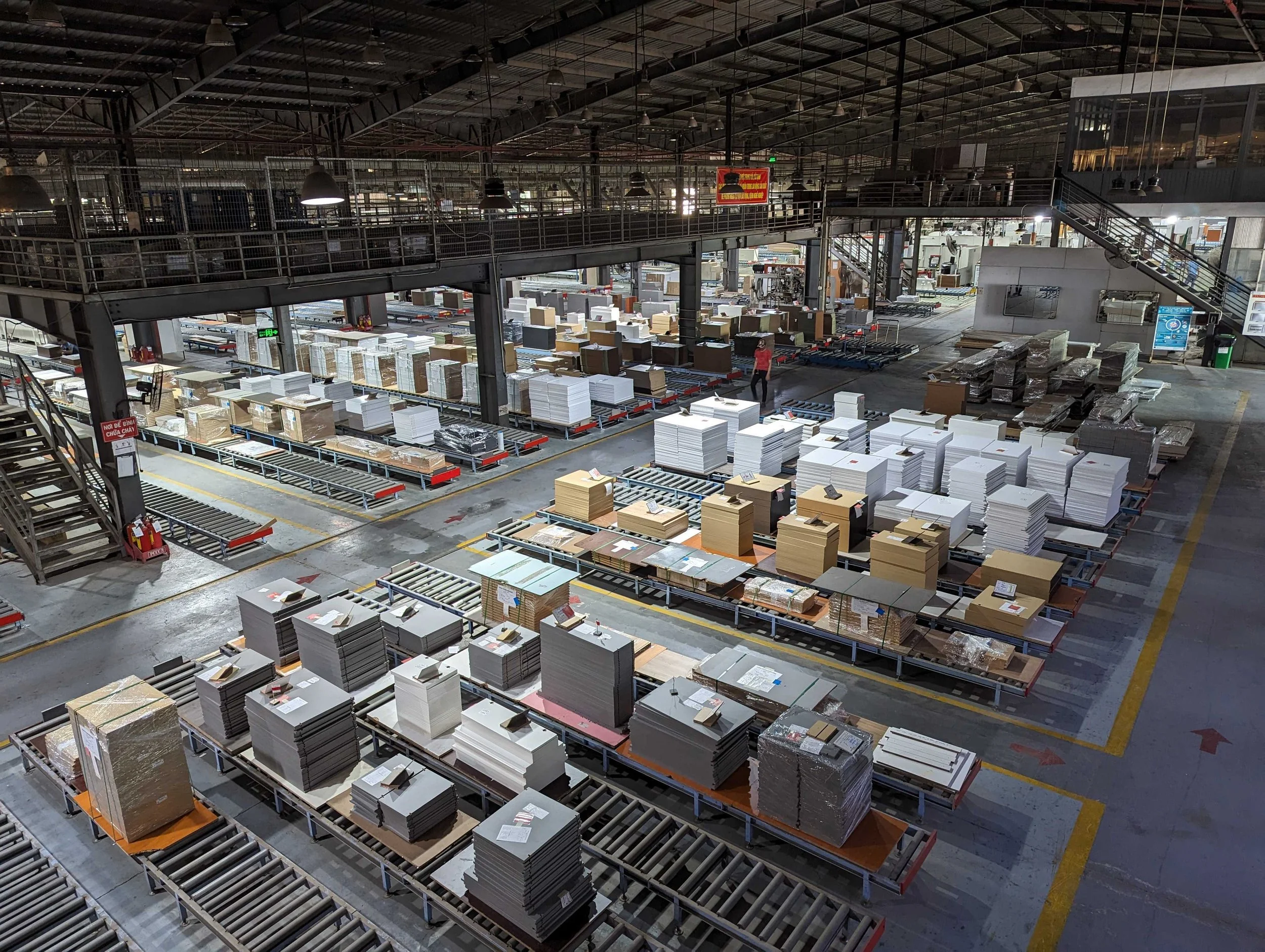
The team maps the supplier landscape for your category, screens candidates against the database, exports records, and removes obvious mismatches: incorrect capacity, no relevant export history, missing licenses, or a product line that only appears adjacent. You see a shortlist with reasoning, not a phonebook. The screen is where the database earns its keep: export records show who actually ships your product category, not who advertises it.
Weeks 2 to 4: vetting, quotes, and samples
Shortlisted factories get verified (the next section covers how), prices get negotiated in the local language, and samples get ordered where the product justifies it. Expect real trade-off conversations here: price against minimum order quantity against lead time. This is also where a good partner tells you things you did not ask to hear, like a cheaper quote hiding a subcontractor.
A golf equipment brand arrived with a finished spec sheet and no factory. The sourcing work was filtering out bad-fit suppliers, then walking the client through the real trade-offs between MOQ, unit price, tooling cost, and sample development, so the first production decision was made with open eyes.
Weeks 4 to 6: introductions and handoff
This is the handoff, and it is worth being precise about what it contains:
| Deliverable | What it is |
|---|---|
| Verified factory quotes | Two to six per project, depending on how many suitable factories actually exist for your product |
| Original factory pricing | The factory's own numbers, with no markup added between them and you |
| Sourcing report | Factory details, photos, licenses, capacity notes, and the reasoning behind each recommendation |
| Direct introductions | Factory names and contact people, handed to you outright |
| Optional next-stage support | Samples, negotiation rounds, production monitoring, quality control, inspections, freight coordination |
We do not promise a quote count before reviewing a project. The number of qualified factories depends on product complexity, MOQ, certifications, and actual capacity. A serious search and a transparent process can be promised; a number cannot.
Three timing notes from experience
Delays rarely come from the search itself: they come from unclear specs, sample revisions, slow buyer feedback, or products that need technical clarification before factories can quote accurately. Highly customized products stretch the sample stage, sometimes by weeks per iteration. And plan around factory holidays: Tet closes most of Vietnam for weeks around late January or February, Chinese New Year and Golden Week do the same in China, and December slows Mexico. A project briefed in the wrong week can lose a month before it starts.
How Factories Get Vetted
What a real vetting process covers
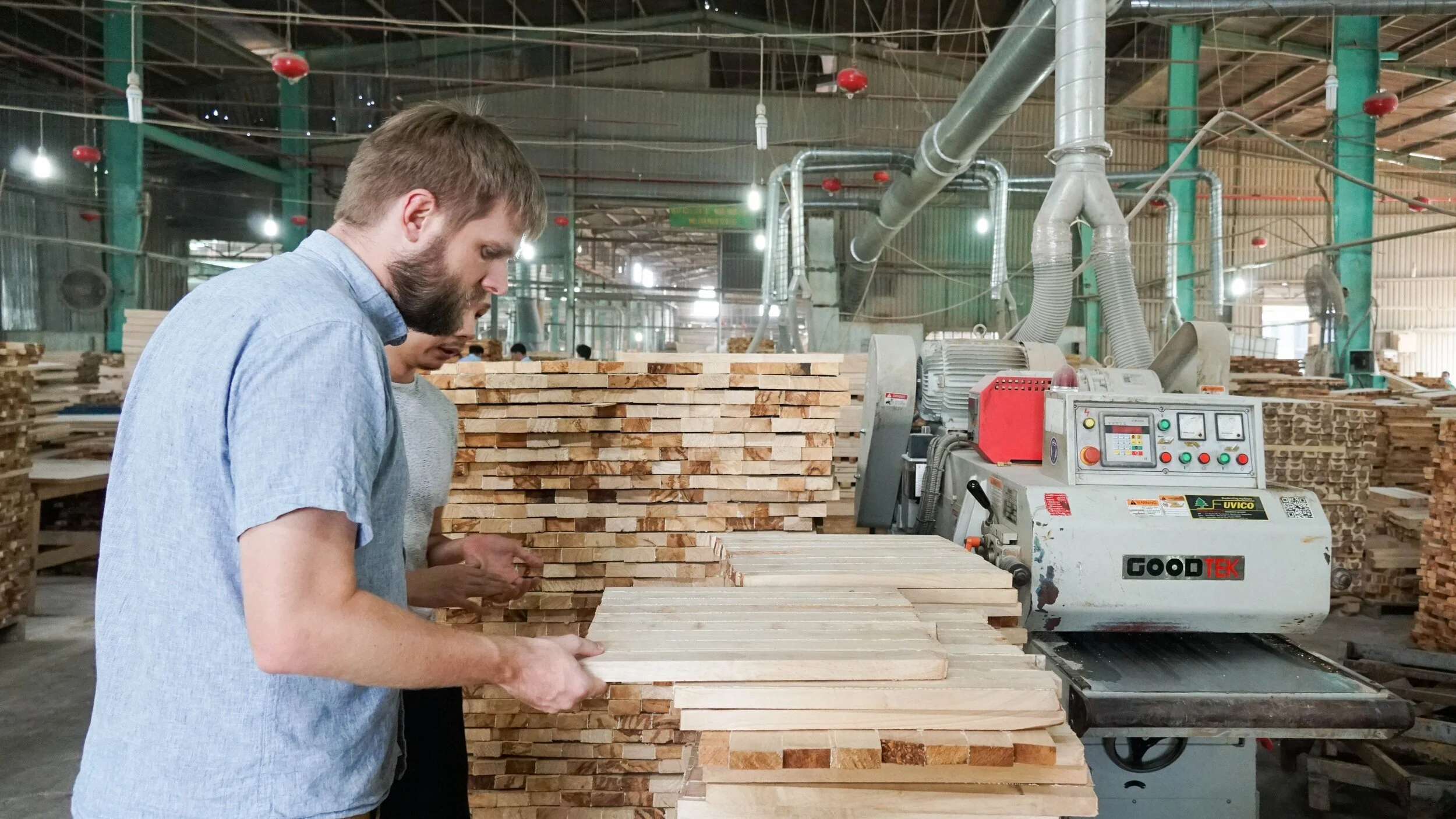
The floor is where claims fall apart, so real vetting is a walkthrough plus paperwork, not a phone call. It should confirm:
- Business license and registration
- Export history to your destination market
- Product-category fit: they make your product, not a cousin of it
- Equipment and process capability, counted on the floor
- Capacity against your actual order volume
- Certifications, including expiration dates
- Factory ownership versus quiet subcontracting
- Working conditions and compliance risk
- Sample consistency with production capability
- Similar products already made for export markets
Three of those items fail most often on our visits: the certifications (expired), the ownership (production quietly subcontracted to a workshop next door), and the capacity (numbers the machine count on the floor cannot support). Our Vietnam factory audit and quality control guide covers the inspection side in depth.
An automotive components client needed a Vietnam alternative to an existing China supply chain. Price comparison came last: the screen ran on export history, equipment fit, tolerance capability, and realistic lead times first, because a cheap quote from a factory that cannot hold your tolerances is not really a quote.
Vetting versus verified supplier badges
Platform badges confirm a paid subscription and some submitted paperwork. They do not confirm that the factory has made your product type, has capacity this quarter, or owns the machines in the photos. What Alibaba's verified supplier badges actually prove is worth five minutes before you rely on one. A badge is a starting point for your own checks, not a substitute for them.
Already found a supplier?
We can verify the licenses, the capacity, and the floor itself before you send a deposit. Supplier verification is one of the cheapest forms of insurance in sourcing.
How to Choose a Sourcing Company
Choose five things: a team physically present in the sourcing country, a fee model you can see through, full factory disclosure, real experience in your category, and references you can actually check.
The evaluation criteria that matter
Taking the five in turn. Presence: ask where the team physically sits and whether you can visit. Fee model: you should be able to reconstruct exactly what you will pay before signing. Transparency: factory names, direct contacts, and original quotes, in writing. Category experience: ask what they have sourced that resembles your product. References: documented projects you can check; our client case studies show the level of detail you should expect anyone to provide. One more filter that sounds soft but isn't: responsiveness during the sales process. A partner who takes four days to answer a pre-sale email will not get faster once your deposit clears.
Red flags to walk away from
- They will not name the factory, or quotes arrive with no factory breakdown.
- The service is free. The fee is in the price; you just cannot see it.
- No physical presence in the sourcing country, only a website and a WhatsApp number.
- Deposits are requested to personal accounts rather than a company account.
- One person with no backup. Ask what happens if your contact is unreachable for three weeks during production, then watch the answer.
- They guarantee a fixed number of qualified quotes before ever reviewing your product. A serious search and a transparent process can be promised; a quote count cannot, because it depends on the actual factory landscape.
If a partner will not put the factory's name and original quote in writing, the fee is hidden in the price. Everything else on this list is a variation of that one question: can you see what the factory actually charges?
Questions to ask before you sign
- Where does your team physically work, and can I visit the office?
- How do you charge, and will I see the factory's original quote?
- How many vetted factories will I receive, and will I get their direct contacts?
- Who owns the supplier relationship after handoff?
- What happens if the samples fail?
- Can you support production monitoring, quality control, and shipping after the introductions?
Put those six on any shortlist, then compare the answers with how we run projects.
What Happens After Introductions
You own the factory relationship
The handoff is the point of the whole engagement. You get names, contacts, and original pricing; you place orders directly; nobody sits between you and your factory collecting a toll. If a partner keeps itself in the middle indefinitely, you hired a trading company with extra steps. The sourcing project should end with you less dependent on the sourcing company, not more dependent on it. For the practical side of running suppliers directly, see how to manage overseas suppliers without opening your own office.
A North American cabinetry company had been buying through an importer and wanted the factory itself. The work was not just finding a Vietnamese cabinet maker: it was confirming capacity, putting original factory quotes next to the landed numbers they already knew, and setting up a direct relationship that the client now controls.
Ongoing support through production and shipping
Cosmo can step back entirely after handoff, or stay involved through the next-stage support listed in the deliverables table above. Either way, expect the factory to talk in manufacturing shorthand once production starts; what ODM and OEM actually mean clears up the two terms that confuse buyers most. Shipping and risk transfer follow the trade terms you agreed to in the quote, so lock those before production, not after. Budget a pre-shipment inspection into every first order as a rule, not an option; against the cost of receiving a container of seconds, it is the cheapest line item on the project.
When ongoing sourcing support makes sense
Once production is continuous across multiple products and suppliers, project-by-project help no longer fits. That is when a dedicated sourcing office earns its keep: a retainer team in-country running the whole cycle as your standing operation. Here is what a buying office is in product sourcing and how our Dedicated Sourcing Office service runs it.
Where the Work Happens: Country Coverage
A sourcing company is only as good as its ground game. Ours looks like this, and the honest version of any country pitch includes what that country is not good at.
Vietnam
Our primary base since 2014, with the team in Binh Duong province in the greater Ho Chi Minh City area and a database of 14,000+ vetted Vietnamese factories. Vietnam is the strongest all-around China alternative today: furniture, apparel, footwear, bags, packaging, and home goods, with a fast-growing electronics base and wide access to free trade agreements.
The honest limits: the deepest electronics component supply chains still sit in China, and the best factories book out well ahead of Tet, so timing matters. Start with our Vietnam sourcing guide, or the Vietnam sourcing company page if you are ready to run a project.
Mexico
Our Nuevo Leon team has operated since 2023. For buyers selling into North America, Mexico's case is transit time and trade terms: days instead of weeks on the water, and USMCA preferences for qualifying goods.
Buyers elsewhere weigh it differently, which is the honest answer; nearshoring is a map question, not a universal one. Our Mexico sourcing guide covers what Mexico makes well, and what nearshoring is, and when it wins.
China
China is where we started in 2012. For electronics, components, tooling depth, and sheer supplier density, China remains hard to beat. Most of our clients now run it as one leg of a multi-country strategy rather than the whole plan.
Our China plus one hub covers the diversification play, the China sourcing guide covers sourcing there today, and how Vietnam, China, and Mexico compare weighs the three. One caveat everywhere: tariff exposure differs by country and product and changes quickly, so check the latest rates before you commit.
Frequently Asked Questions
Click any question to expand the answer.
How much does a sourcing company cost?
It depends on the model. Commission agents typically charge 3 to 10 percent of the order value. Trading companies build a markup into the product price. Hourly support is billed by time. Fixed-fee companies, including Cosmo, quote one amount per project regardless of order size; contact us for pricing. The fee model section above shows how the same engagement prices out under each model.
What are sourcing services?
Sourcing services cover the work of finding and securing a manufacturer: supplier identification, factory vetting, price negotiation, sample coordination, and direct introductions. Many providers extend them through production with quality control, inspections, and shipping coordination. The fee model (fixed fee, commission, markup, or hourly) usually determines which of these services are actually in scope, so confirm the list in writing.
How long does it take to source a product?
Search for introductions typically runs four to six weeks. Sample iterations, tooling, and factory holidays (Tet in Vietnam, Chinese New Year, the December slowdown in Mexico) extend it, and the first production run adds its own lead time on top. Rush timelines exist, but they trade away vetting depth, so use them knowingly.
Is a sourcing company worth it for small orders?
Sometimes it is not, honestly. If the product is off the shelf and the order is tiny, a platform order or an individual agent may be the right call. A useful test: multiply your order value by a 5 percent commission and compare it with the fixed fee quotes you collect. Below a certain order size, the agent wins on price; above it, the fixed fee does, before you even count the transparency difference.
What is the difference between a sourcing company and a freight forwarder?
A sourcing company finds and vets the factory and negotiates the deal. A freight forwarder moves the finished goods. They meet at the trade terms in your quote, which decides exactly where one's responsibility ends and the other's begins.
Can a sourcing company vet a supplier I already found?
Yes. Verifying an existing supplier (licenses, capacity, a floor visit, a price benchmark against the market) is a common smaller engagement, and it is often the cheapest insurance available before a deposit leaves your account. The vetting checklist above is exactly what we run.
Do I have to visit the factory myself?
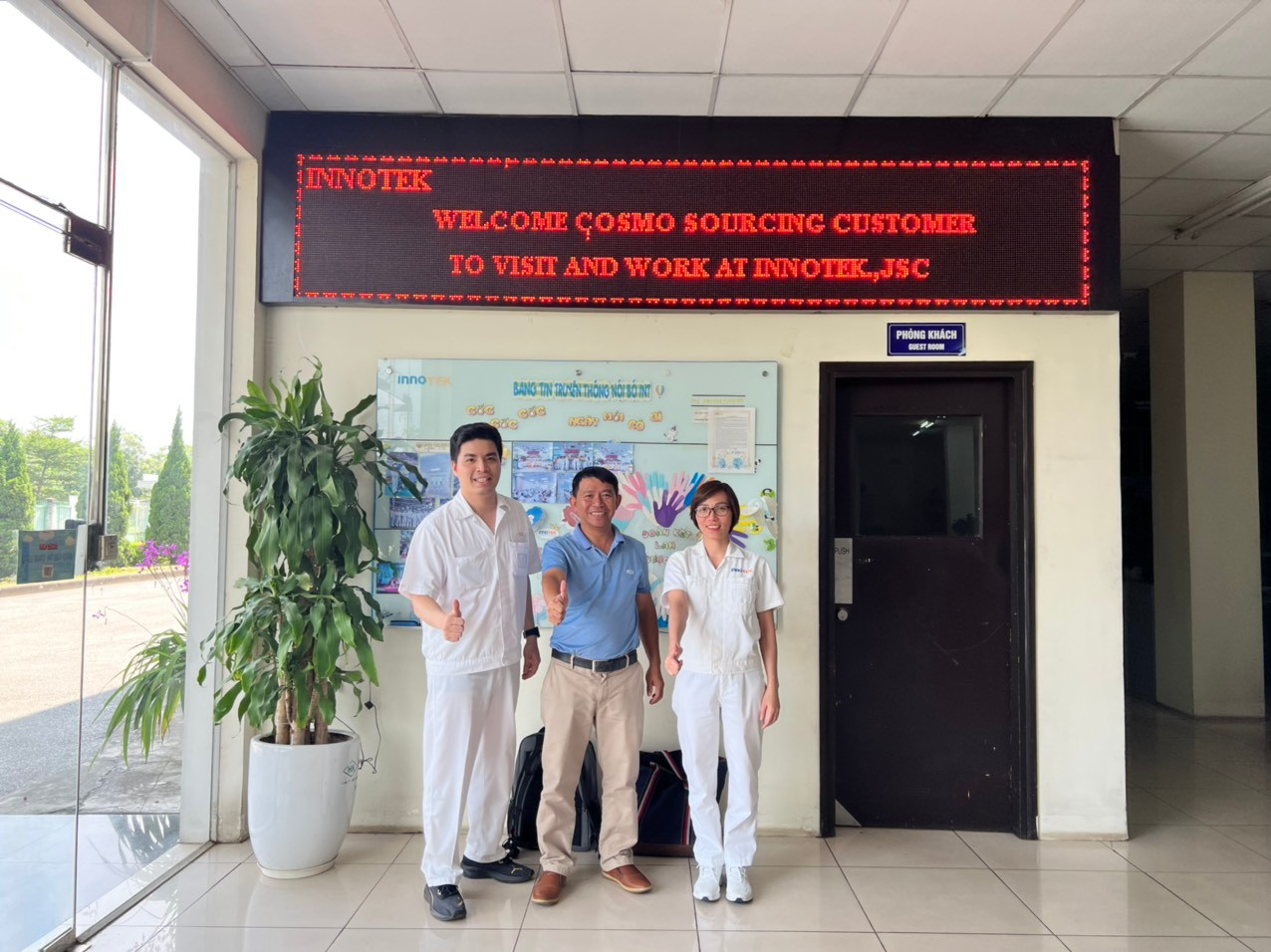
No. Having a team on the ground so you do not have to be is most of the point. That said, visiting is genuinely valuable when the relationship will be long, and it changes how a factory treats you. We run guided factory visits in Vietnam with a bilingual associate, an itinerary, and pre-qualified factories.
What is a dedicated sourcing office?
A retainer arrangement where an in-country team acts as your standing buying office: supplier sourcing and vetting, sample coordination, production monitoring, quality control, and shipping across your whole product range. It makes sense once production is continuous rather than project-based.
Next Steps
If you are weighing a sourcing project, start here.
Ready to work with a sourcing company that's on your side?
We are a sourcing company, not an agent: a fixed fee, no commissions, no markups on factory quotes, and you own the factory relationship from day one. Our teams work on the ground in Vietnam (since 2014), Mexico (since 2023), and China (since 2012), with more than 10,000 products sourced for thousands of clients.
Our work has been covered by the Wall Street Journal, Reuters, the LA Times, and the Chicago Tribune. See everything we offer, or tell us what you need and we will tell you honestly whether you need us, and what we would do if we were you.
Or email us directly at info@cosmosourcing.com
Your product, target countries, quantities, and where you're feeling stuck.
A shortlist of verified factories, original quotes, samples coordinated, introductions made. Fixed fee.
Full factory contact details handed over. You own the relationship from sample through reorder.