Top Brands Made in Mexico: 50+ Companies That Manufacture in Mexico
Mexico is one of the largest manufacturing economies in the world, and the list of companies that produce there reads like a Fortune 500 directory. From General Motors and BMW to Medtronic and Levi's, some of the biggest names in automotive, aerospace, electronics, medical devices, apparel, and consumer goods run production lines across the country.
We operate a sourcing office in Nuevo Leon, Mexico, and work with manufacturers across the country's major industrial corridors. I have visited several factories in Mexico and seen them producing for major global brands, many of them known for extremely high quality standards. Out of respect for the confidentiality of those factories and the brands they serve, I cannot share their names. But the takeaway is simple: the manufacturing capabilities in Mexico are world-class, and the same factories that produce for household names also take on OEM and private-label orders for smaller buyers.
This post covers which major brands are manufactured in Mexico, organized by industry, and explains what that means for buyers looking to source their own products.
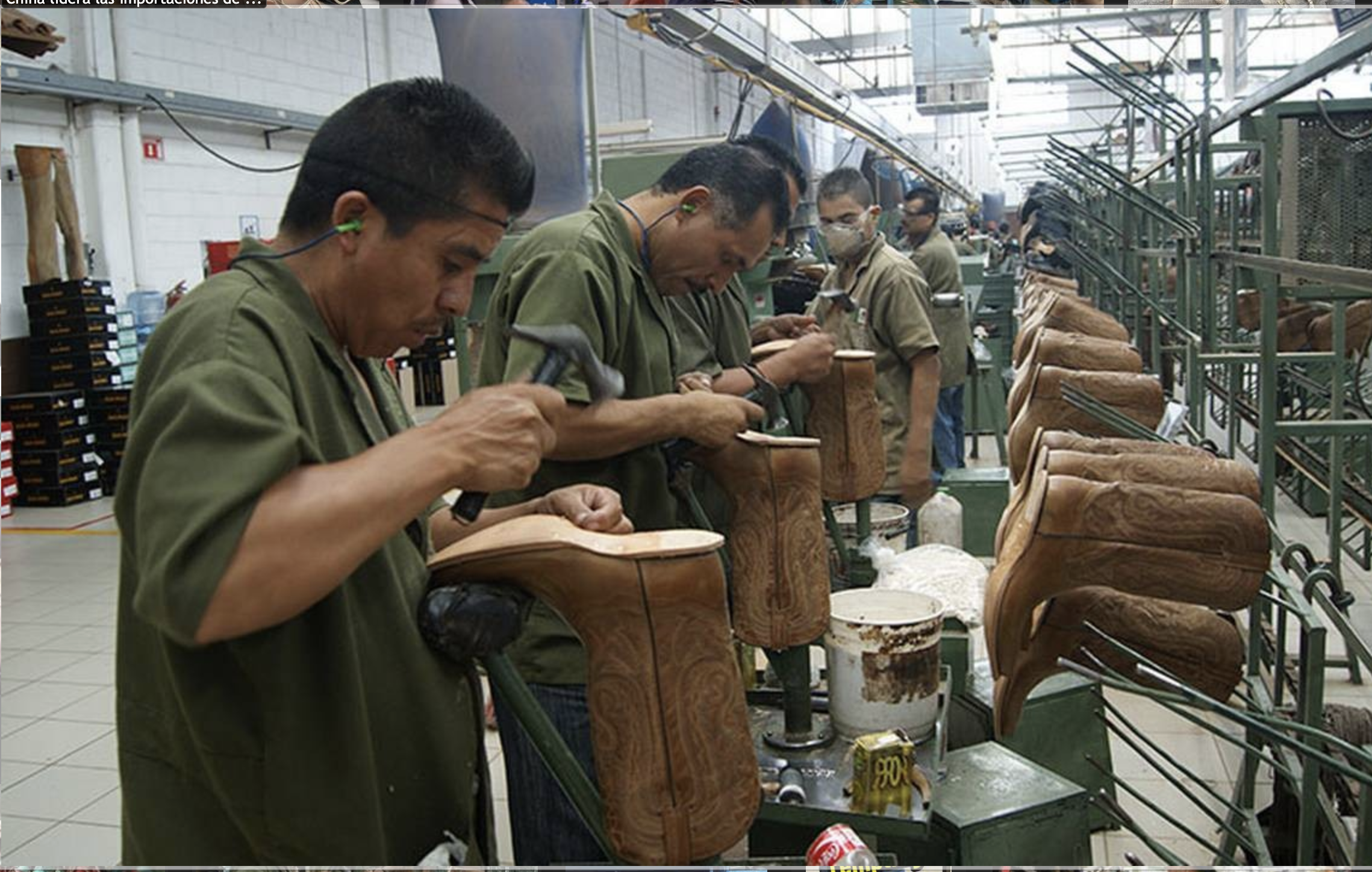
Automotive
Mexico is the seventh-largest vehicle producer in the world and the fourth-largest producer of auto parts, generating over $94 billion in annual auto parts revenue. Nearly every major global automaker operates assembly plants or parts manufacturing facilities in the country.
General Motors
GM runs plants in Silao, Ramos Arizpe, San Luis Potosí, and Mexico State. Operations cover full vehicle assembly, engine manufacturing, and transmission production. GM has been manufacturing in Mexico for decades, and its Silao complex is one of the largest vehicle assembly operations in Latin America.
Ford
Ford's Hermosillo plant in Sonora has been producing vehicles for over 30 years. The company also operates facilities in Chihuahua (for engine manufacturing) and in Mexico State. Ford has announced plans to expand electric vehicle production capacity at its Mexican facilities.
Volkswagen and Audi
Puebla hosts one of VW's largest global manufacturing campuses. The state's automotive industry accounts for over 40% of its GDP and employs more than 65,000 workers. Audi also operates in Puebla, producing the Q5 SUV for global export from its San Jose Chiapa plant.
BMW
BMW Group operates an assembly plant in San Luis Potosí, producing the 3 Series sedan for both the Mexican domestic market and global export. The facility opened in 2019 and represents a significant investment in Mexico's premium vehicle segment.
Toyota
Toyota maintains manufacturing operations in Baja California (Tijuana) and Guanajuato, producing pickup trucks and compact vehicles. The Guanajuato plant primarily produces the Tacoma for the North American market.
Nissan
Nissan has one of the longest manufacturing histories in Mexico, with facilities in Aguascalientes and Morelos. The Aguascalientes complex is one of the country's most important assembly operations, and the state is the third-largest vehicle exporter in Mexico.
Stellantis (Chrysler, Jeep, Ram, Fiat)
Stellantis operates in multiple Mexican states, including Mexico State and Coahuila. The company produces vehicles under the Ram, Jeep, and Fiat brands, with announced investments in electric vehicle production at its Mexican facilities.
Kia and Hyundai
Kia operates a manufacturing plant in Nuevo Leon (Pesqueria), producing compact vehicles for the North American market. Hyundai has also expanded its presence in the country.
Honda and Mazda
Honda manufactures in Guanajuato (Celaya), while Mazda operates a plant in Salamanca, Guanajuato. Both facilities primarily serve the North American and Latin American markets.
What this means for buyers: Mexico's automotive supply chain includes hundreds of Tier 1, 2, and 3 suppliers that serve these OEMs. Many of these suppliers also accept custom manufacturing orders for non-automotive products, particularly in metal fabrication, plastics, rubber components, and electronics assembly. A large portion of this production takes place in maquiladora zones, which offer specific tax and import advantages for manufacturers. If you need precision machining, injection molding, or wiring harnesses, the same supplier base is accessible for OEM/ODM sourcing.
Electronics
Mexico's electronics manufacturing sector is concentrated in Baja California, Nuevo Leon, Jalisco, and Tamaulipas. Over 200 electronics companies operate in the country, and electronics are among Mexico's fastest-growing manufacturing exports.
Samsung
Samsung operates a major manufacturing facility in Monterrey, Nuevo Leon, producing electronic components and consumer electronics. The Monterrey facility is a key node in Samsung's global supply chain.
LG Electronics
LG has expanded manufacturing operations in Monterrey, contributing to the city's reputation as an electronics hub. LG produces home appliances and electronic components at its Mexican facilities.
Foxconn
Foxconn (the primary contract manufacturer for Apple and many other tech brands) operates facilities in Mexico, producing electronic components and assemblies. Foxconn's presence means Apple components are partially manufactured in Mexico, though final iPhone assembly happens elsewhere.
Whirlpool
Whirlpool maintains manufacturing operations in Mexico for home appliances, including refrigerators and washing machines. Their Mexican operations serve both the domestic market and the North American export.
Flex (Flextronics)
Flex operates substantial manufacturing facilities in Tijuana, producing electronic components and devices across automotive, consumer electronics, and industrial sectors. Tijuana's proximity to California makes it an ideal location for quick-turnaround electronics production.
What this means for buyers: Electronics contract manufacturers (EMS providers) in Mexico handle everything from PCB assembly to full product box builds. If your product involves electronic components, Mexico's EMS ecosystem supports low- to mid-volume production runs with faster delivery to North America than Asian alternatives. Jalisco, often called Mexico's Silicon Valley, is the hub for higher-tech electronics work.
Aerospace
Mexico's aerospace industry has grown rapidly, now valued at over $8 billion and projected to continue expanding at a strong pace. The country hosts approximately 300 aerospace companies across several specialized clusters.
Bombardier
Bombardier operates manufacturing facilities in Querétaro, which has become Mexico's aerospace epicenter. The company produces aircraft components, including fuselage sections, electrical harnesses, and structural parts. Querétaro hosts more than 80 aerospace companies.
Safran
Safran Aircraft Engines operates in Querétaro, including a LEAP engine final-assembly line that opened in late 2024. Safran's presence anchors Queretaro's position as Mexico's leading aerospace cluster for engine and propulsion manufacturing.
Honeywell
Honeywell manufactures aerospace systems, automation technology, and critical components across several facilities in Mexico. Their operations span multiple states and represent a long-standing commitment to Mexican manufacturing.
GE Aviation
GE Aviation has manufacturing and engineering operations in Mexico, producing engine components and avionics systems. Mexico's aerospace workforce, now exceeding 60,000 direct employees, supports GE's precision manufacturing requirements.
What this means for buyers: Aerospace manufacturing requires extremely tight tolerances and rigorous quality certifications (AS9100, FAA compliance). The same precision machining and composite material capabilities that serve Bombardier and Safran are available for non-aerospace applications. If your product requires CNC machining, precision sheet metal, or composite materials, Mexico's aerospace corridor suppliers may be worth evaluating.
Medical Devices
Mexico is the seventh-largest medical device exporter globally and the largest in Latin America, generating over $13 billion in annual exports. Tijuana and the broader Baja California region host the largest concentration of medical device manufacturing employees in North America.
Medtronic
Medtronic has manufactured in Tijuana for more than 20 years, operating multiple facilities that employ over 5,500 workers. Production includes coronary and vascular devices, and the Tijuana operation is one of Medtronic's most significant global manufacturing sites.
Becton Dickinson (BD)
BD operates twelve manufacturing plants in Mexico, making it one of the most deeply committed medical device manufacturers in the country. BD recently invested $80 million in a third plant in Ciudad Juárez, with operations expected to begin in 2026.
Johnson and Johnson
J&J manufactures medical devices in Mexico alongside its broader healthcare product lines. The company's Mexican operations cover device manufacturing, assembly, and quality testing.
Stryker
Stryker, a Fortune 500 medical technology company, operates multiple facilities in Tijuana, leveraging the cross-border advantages of manufacturing close to the US market.
Abbott Laboratories
Abbott opened a $200 million electrophysiology manufacturing plant in Queretaro in early 2026, focused on specialized technologies for the diagnosis and treatment of cardiac rhythm disorders. This investment signals continued expansion of high-value medical device production in Mexico.
Other Notable Manufacturers
Boston Scientific, Cardinal Health, Siemens Healthineers, GE Healthcare, Philips Healthcare, 3M, and Intuitive Surgical all maintain manufacturing or assembly operations in Mexico. The medical device cluster in Baja California alone includes over 800 companies.
What this means for buyers: Medical device manufacturing requires cleanroom facilities, FDA compliance, and ISO 13485 certification. These capabilities extend to non-medical products that need similar precision: optical components, sensitive electronics, laboratory equipment, and consumer health products. If your product requires certified cleanroom assembly or stringent quality management systems, Mexico's medical device corridor has the infrastructure to support them.
Apparel and Footwear
Mexico's textile and garment sector supports over 1.2 million jobs and exports roughly $7.3 billion annually, with over 90% shipped to the United States. The country's strength lies in denim, workwear, and athletic wear, as well as USMCA-compliant production that ships duty-free to the US and Canada.
Levi's
Levi's uses Mexican contract manufacturers for production that serves the North American market. Mexico's role in Levi's supply chain is primarily for fast replenishment: shorter lead times than Asian production, ideal for quickly restocking core styles. Suppliers like Siete Leguas in the Bajio region have long-standing relationships with Levi's.
Wrangler (Kontoor Brands)
Wrangler produces the bulk of its jeans in Mexico, more than any other country. Manufacturers like Global Denim in Puebla have produced for Wrangler for over 25 years. Kontoor Brands (Wrangler's parent company) maintains a formal Mexican subsidiary, Manufacturera Lee de Mexico.
VF Corporation (Dickies, The North Face, Timberland)
VF Corporation sources from Mexican manufacturers for several of its brands. Dickies workwear production in Mexico is well established, leveraging the country's strength in durable, performance-oriented garments.
Patagonia and Nike
Both brands work with Mexican contract manufacturers, primarily for products serving the North American market, where speed to shelf matters. Patagonia has partnered with facilities along the US-Mexico border for quick-turn production.
For a deeper look at Mexico's garment manufacturing capabilities and how to find the right factory, see our guide to clothing manufacturers in Mexico. If denim is your focus, our Mexico denim sourcing guide covers the Bajio region's vertically integrated denim corridor in detail.
What this means for buyers: The factories that produce for Levi's, Wrangler, and Patagonia also take private-label orders. Mexican garment manufacturers are strongest in denim, workwear, uniforms, activewear, and cut-and-sew basics. USMCA-compliant production means 0% duty for qualifying garments entering the US or Canada, compared to tariffs that can exceed 25% on apparel from non-USMCA countries. MOQs are often lower than in Asia, sometimes starting at 500 pieces per style.
Food and Beverage
Mexico is a global food manufacturing powerhouse, home to some of the world's largest food companies and serving as a production base for multinational brands.
Grupo Bimbo
Grupo Bimbo is the world's largest baking company, headquartered in Mexico City. The company operates dozens of plants across Mexico and owns brands including Bimbo, Marinela, Barcel, and (globally) Thomas', Sara Lee, and Entenmann's. Grupo Bimbo exports to over 30 countries.
Nestle Mexico
Nestle operates multiple manufacturing plants across Mexico, producing everything from coffee and dairy products to confectionery and pet food. Mexico is one of Nestle's largest markets in Latin America.
AB InBev (Corona, Modelo)
Corona and Modelo are brewed in Mexico by Grupo Modelo, now owned by AB InBev. The Zacatecas and Mexico City breweries are among the largest in Latin America. Corona is the most exported Mexican beer globally.
Jose Cuervo
Jose Cuervo, the world's largest tequila producer, has been manufacturing in Jalisco since 1758. Tequila production is geographically restricted to Mexico by denomination-of-origin rules, similar to Champagne in France.
What this means for buyers: Food and beverage is less directly relevant for product sourcing buyers, but Mexico's packaging, bottling, labeling, and food processing equipment supply chains are extensive. If you source packaging materials, food-grade plastics, or glass containers, the suppliers serving Grupo Bimbo and Nestle are part of the same ecosystem.
Consumer Goods and Packaging
Mexico's consumer goods manufacturing sector is anchored by multinational companies that have operated in the country for decades.
Procter and Gamble
P&G has manufactured in Mexico since 1948, currently operating nine plants and a distribution center. Products span home care, personal care, hygiene, and healthcare categories.
Kimberly-Clark de México
Kimberly-Clark de México is one of the country's most established consumer goods manufacturers, producing tissue, personal care, and hygiene products. The company is publicly traded on the Mexican stock exchange and operates as a semi-independent entity focused on the Latin American market.
Henkel
Henkel manufactures adhesives, beauty care, and laundry products in Mexico, serving both the domestic market and export channels across Latin America.
What this means for buyers: Consumer goods manufacturing in Mexico includes plastics, packaging, household products, and personal care products. If your product falls into any of these categories, Mexico's manufacturing base includes everything from injection molding and blow molding to flexible packaging and corrugate production. The same supplier base that packages P&G's products can handle private-label packaging runs.
Furniture and Home Goods
Mexico's furniture manufacturing sector is growing, concentrated in Jalisco, Nuevo Leon, Chihuahua, and the State of Mexico. The country produces solid wood, upholstered, metal-frame, and outdoor furniture for both domestic consumption and export.
While the brand presence is less concentrated than in automotive or electronics (furniture is more fragmented, with hundreds of mid-size manufacturers rather than a handful of global names), Mexico's furniture sector is a strong nearshoring option for buyers currently sourcing from Asia. Production capabilities range from mass-market case goods to custom artisanal pieces.
What This Means for Sourcing Buyers
This list is not just trivia. The presence of brands like GM, Medtronic, Samsung, and Levi's tells you three important things about Mexico as a sourcing destination:
The infrastructure is proven. Factories that meet the quality standards of Fortune 500 companies have been audited, certified, and stress-tested. The same industrial parks, logistics networks, and quality management systems serve smaller OEM/ODM orders.
The supply chain runs deep. Each major brand is supported by hundreds of Tier 2 and Tier 3 suppliers. These suppliers often have excess capacity and are open to taking on new clients, especially for orders that complement their existing production lines.
The workforce is skilled. Mexico graduates over 140,000 engineering students per year. The labor force that assembles aerospace components, medical devices, and automotive systems brings precision and process discipline to any product category.
The practical takeaway: if your product involves metalwork, plastics, electronics assembly, textiles, packaging, or precision components, there is almost certainly an established supplier base in Mexico that already serves the brands above and can handle your production.
For a comparison of Mexico vs. Vietnam as sourcing destinations, see our Mexico vs. Vietnam sourcing guide. For a similar breakdown of brand manufacturing in Vietnam, see our Top Brands Made in Vietnam post.
Source Your Products from Mexico with Cosmo Sourcing
Cosmo Sourcing operates a sourcing office in Nuevo Leon, Mexico, with a team that vets factories, manages quality control, and handles logistics across the country's major manufacturing corridors. We work on a flat-fee model with no commissions or markups on your product costs, so the factory price is your price.
For most products, we provide original quotes from two to six factories and make direct introductions where relevant. We have sourced thousands of products for clients across more than 50 countries, and Mexico is one of our fastest-growing sourcing destinations.
If you are considering manufacturing in Mexico and want help finding the right factory, reach out at info@cosmosourcing.com or visit cosmosourcing.com/contact-us to get started.