
Vietnam Sourcing: The Complete Guide (2026)
Thinking about moving production to Vietnam? Here’s what the country makes best, how to vet a factory, and what your order will really cost, from a team that has been on the ground since 2014.
Whether you’re sourcing from Vietnam for the first time, moving production out of China, or trying to figure out if Vietnam is the right fit for your product, this guide covers the full process: what Vietnam manufactures well, how to find and vet factories, what quality control looks like on the ground, and how to get your goods through customs and onto a ship. Along the way, we’ll cover what makes Vietnam different from China as a sourcing destination, how to spot trading companies posing as factories, and the mistakes that cost first-time Vietnam buyers thousands of dollars in bad shipments.
We’re Cosmo Sourcing, a Vietnam sourcing company based in Ho Chi Minh City. We’ve been on the ground here since 2014, helping thousands of clients source more than 10,000 products, and our team has visited thousands of factories across the country. Everything in this guide comes from that experience.
The short version: Vietnam is excellent for clothing, furniture, footwear, bags, and packaging, but it’s not a drop-in replacement for China in every category. Vet your factory properly, get a physical sample before committing to production, check quality at multiple points during production (not just at the end), and figure out your tariff rates and compliance requirements before you place an order.
If you’re weighing multiple countries and not just Vietnam, our low-cost country sourcing guide covers the broader landscape.

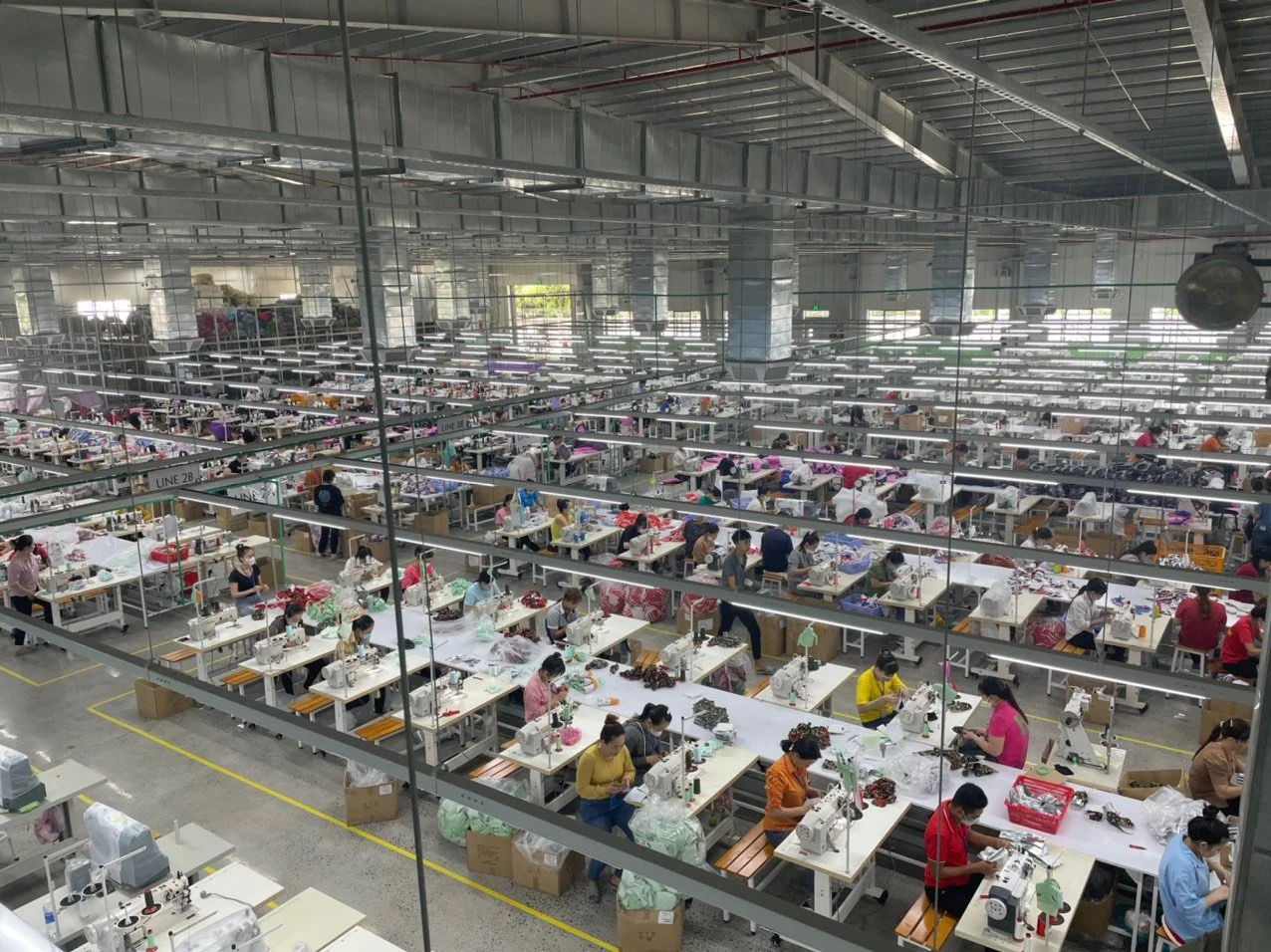
Why Source from Vietnam
Vietnam has earned its place among the world’s top manufacturing destinations. The question that matters is not whether Vietnam is good; it is whether Vietnam’s specific advantages apply to your product. Here is what actually drives the shift.
Trade Agreements and Tariff Position
Vietnam has signed free trade agreements with dozens of countries. The two most impactful for importers are the EVFTA (EU-Vietnam Free Trade Agreement), which gives EU buyers reduced or zero duties on qualifying goods, and the CPTPP, which benefits buyers in Canada, Australia, Japan, and other member countries. US importers have no bilateral FTA with Vietnam, but Vietnamese goods still face lower cumulative tariff rates than Chinese goods in most categories.
Important: US tariff rates on Vietnamese goods have shifted four times in 16 months (EO 14257 in April 2025 at 46%, EO 14326 in July 2025 at 20%, the Section 122 surcharge at 10% from February 24 to July 24, 2026, and a Section 301 forced-labor action that took effect July 24, 2026, placing Vietnamese goods in the 12.5% tier). Unlike its predecessors, the Section 301 duty has no built-in expiration date and no statutory rate cap, and a separate Section 301 overcapacity investigation covering Vietnam is still pending. Verify the current rate with a customs broker before committing to a purchase order. Do not rely on rates you find in blog posts (including this one).
Last verified: August 1, 2026
Lower Labor Costs and a Maturing Factory Base
Vietnam’s biggest cost advantage shows up in products that require a lot of manual labor: sewing, hand finishing, assembly, and woodworking. We’ve seen this play out most clearly with clothing, where a garment that costs $4.50 to make in coastal China might come in at $3.20 to $3.80 in Vietnam, depending on complexity and fabric. Ten years ago, Vietnam’s manufacturing was mostly garments and footwear; today, the factory base also covers furniture, packaging, building materials, and electronics assembly. Not every category is equally developed, which is why most buyers come to Vietnam as part of a China+1 strategy rather than a full China replacement. The next section walks through where Vietnam is strong and where to be careful.
Vietnam Sourcing vs China: How to Decide
This is one of the questions we get asked most. The honest answer is: it depends on your product. Here is a practical comparison based on what we see across thousands of projects.
| Factor | Vietnam | China |
|---|---|---|
| Labor cost | Lower, especially for sewing, assembly, and hand-finishing | Higher in coastal hubs, but competitive in inland provinces |
| Raw materials | Strong for textiles, wood, and rubber. Limited to electronics parts | Deep supply chains for almost everything |
| Minimum orders | Moderate. Often, 300 to 2,000 units, depending on the product | Wide range. Some factories go lower at scale |
| Production speed | Moderate. Expect 30 to 60 days for most products | Often faster, especially for repeat orders |
| English at the factory | Getting better, but still inconsistent | More trading companies that speak fluent English |
| Product range | Strong in textiles, furniture, footwear, bags, and packaging | The broadest product range in the world |
| Quality | Good to excellent in established categories. Variable in newer ones | All over the map. Depends entirely on the factory |
| US tariffs | Lower cumulative rates than China in most categories (check the latest rates with a broker) | Higher cumulative tariffs from stacked Section 301 actions; significantly more expensive for most products |
| EU tariffs | EVFTA gives preferential rates on qualifying goods | Standard rates apply |
| IP protection | Improving, but enforcement is still patchy | Better legal tools, but enforcement is also inconsistent |
We’ve moved well over 100 products from China to Vietnam for clients across dozens of categories. Two recent examples: We moved production of orthotic shoes for a client who’d been manufacturing in China for years. The combination of rising Chinese labor costs and Section 301 tariffs made the landed cost unsustainable, and Vietnam’s footwear expertise made the transition smooth. We ran a similar move for an athleisure brand, shifting their full line from Guangdong to factories outside Ho Chi Minh City. In both cases, unit costs dropped and quality held up after one round of sample revisions. Not every product story ends that way, but for sewn goods and footwear, Vietnam frequently wins on total cost.
For a three-country comparison including Mexico, see our Vietnam vs China vs Mexico sourcing guide. For the head-to-head Vietnam vs China, our Vietnam vs China manufacturing comparison goes deeper.
What Products Vietnam Makes Well (and Where to Be Careful)
Vietnam’s factory base is strongest in textiles, footwear, furniture, bags, and packaging. Moderate in electronics assembly, plastics, and building materials. Thinner in precision machining and specialty chemicals. Our full post on what products are made in Vietnam covers the landscape. Below are the categories where we have visited factories and managed production ourselves.
Vietnam Clothing Sourcing
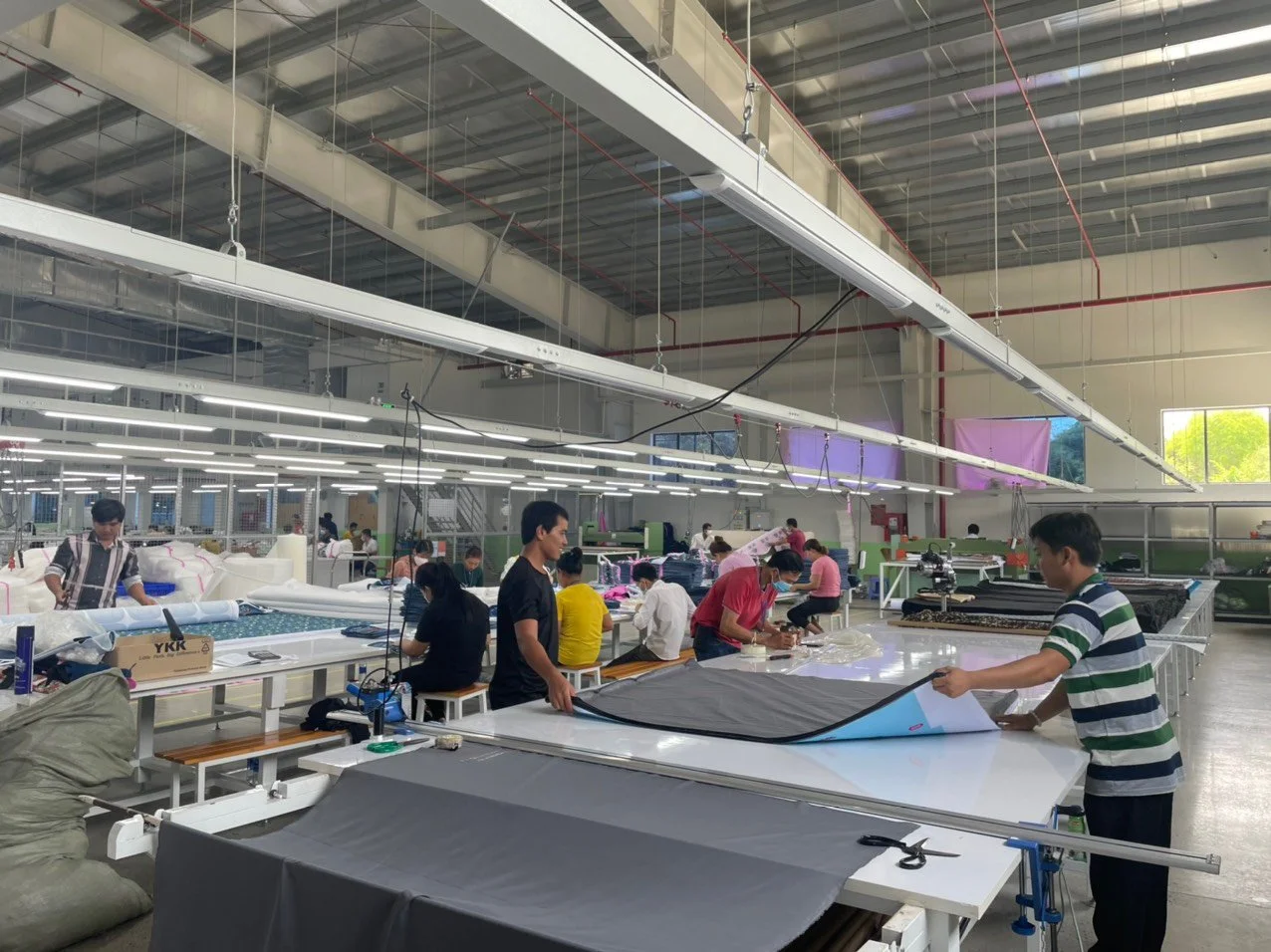
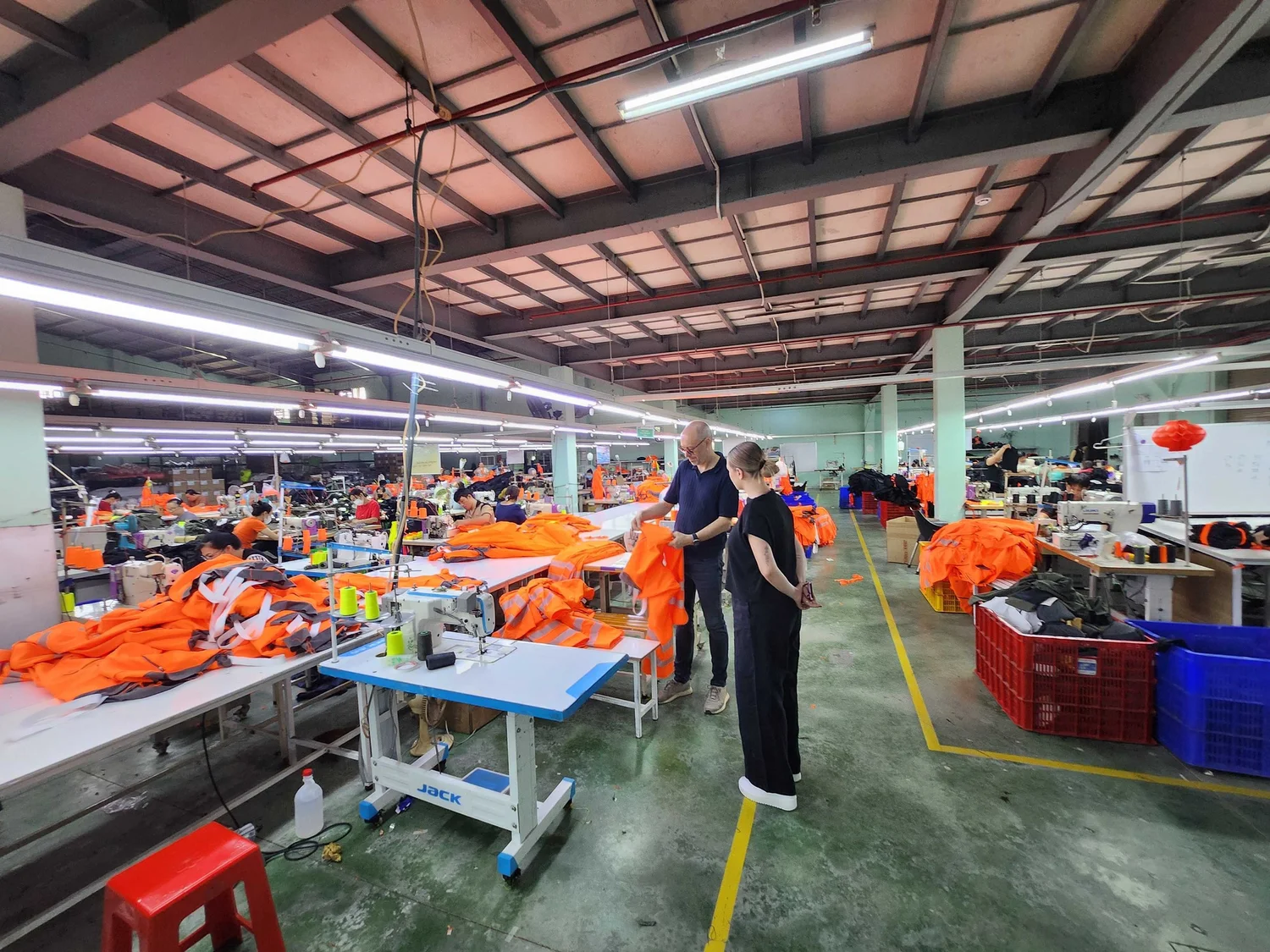
This is Vietnam’s strongest category by far. The country is one of the world’s largest garment exporters, and the workforce has decades of experience producing for brands like Nike, Uniqlo, Patagonia, and H&M. Whether you need basic t-shirts or technical performance wear, Vietnam can handle it. We’ve sourced everything from athleisure lines to workwear uniforms here and consistently find that Vietnamese garment factories deliver high quality at competitive prices, especially for items with complex stitching or multi-panel construction.
See our guides to clothing manufacturers, top brands made in Vietnam, and uniform manufacturers, and swimwear manufacturers.
Explore clothing sourcingVietnam Footwear Sourcing
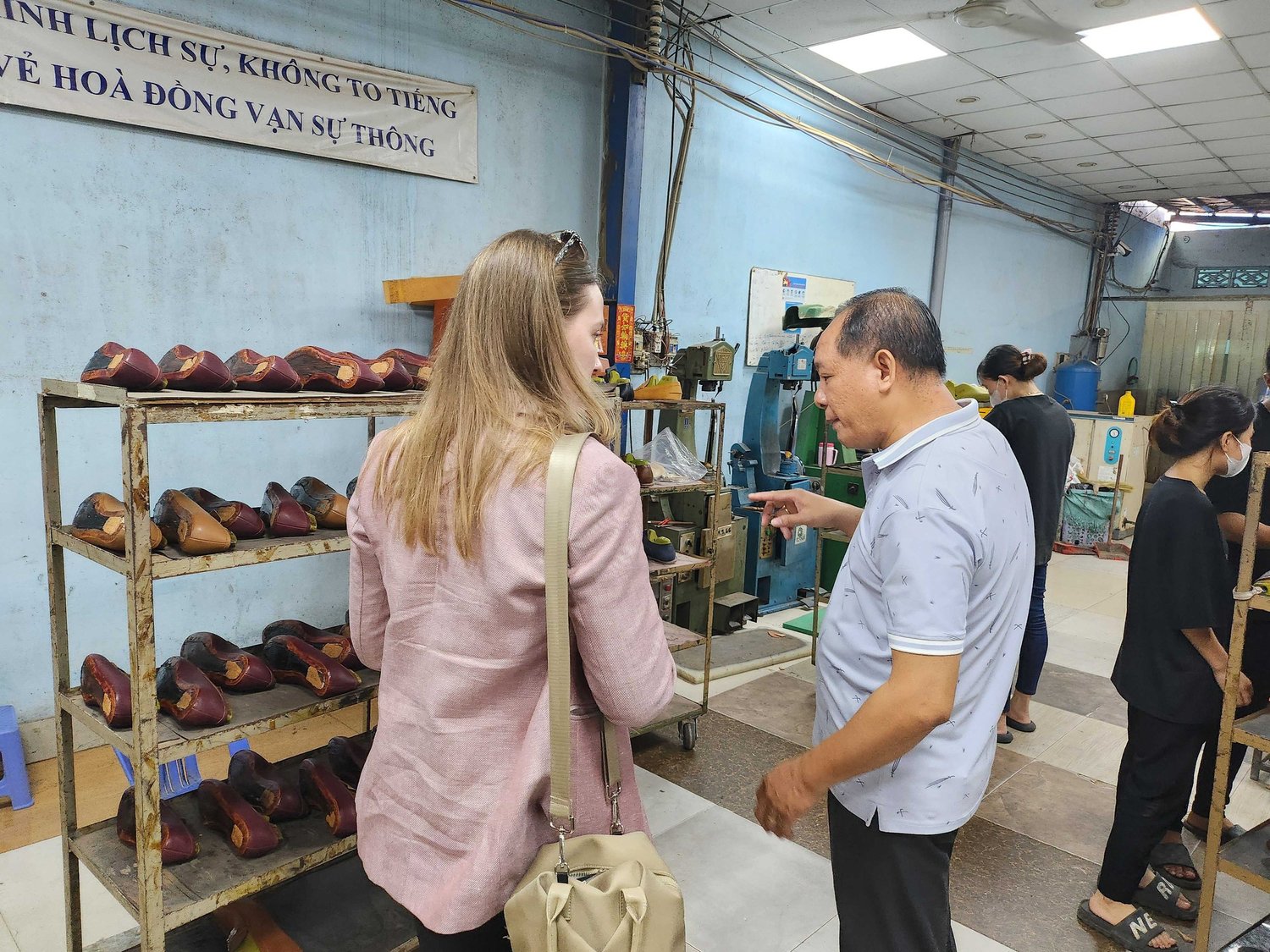
Vietnam is the world’s second-largest footwear exporter, producing shoes for Nike, Adidas, Puma, and Skechers. Athletic, casual, and formal styles are all well-established here. We recently moved production of orthotic shoes from China to Vietnam for a client, and the transition was seamless because the factory workforce already had deep experience with technical footwear construction. If your product involves lasting, cementing, or injection molding, Vietnam has the skills.
See our shoe manufacturers guide and dress shoes list.
Explore footwear sourcingVietnam Furniture and Home Goods Sourcing
Vietnam is the world’s second-largest furniture exporter after China. Solid wood, engineered wood, rattan, and wicker are all strong. We’ve sourced tables, shelving, outdoor furniture, and home decor items extensively here. Vietnamese furniture factories are often very good at working with alternative wood species that give you the look and durability you need at a better price than the species you originally specified. Always verify substitutions with a physical sample.
See our furniture manufacturers guide, cabinet sourcing, home decor, and wood species.
Explore furniture sourcingVietnam Bags, Backpacks, and Luggage Sourcing
The same skilled sewing workforce that powers the garment industry also produces excellent bags and backpacks in canvas, nylon, polyester, and leather. We’ve sourced everything from tactical-style gear bags to fashion handbags, and the sewing quality is consistently strong. Vietnam is a top-tier destination for any soft-sided or hybrid carry product.
See also our Vietnam luggage manufacturers guide.
Explore bag sourcingVietnam Packaging Sourcing
Paper, corrugated, and flexible packaging manufacturing has grown fast, both for domestic consumption and export. Custom retail packaging, shipping boxes, and food-safe packaging are all widely available. Print and finishing quality have improved significantly in the past few years, and MOQs are more accessible than in China for most packaging categories.
Explore packaging sourcingVietnam Rubber and Plastic Products Sourcing
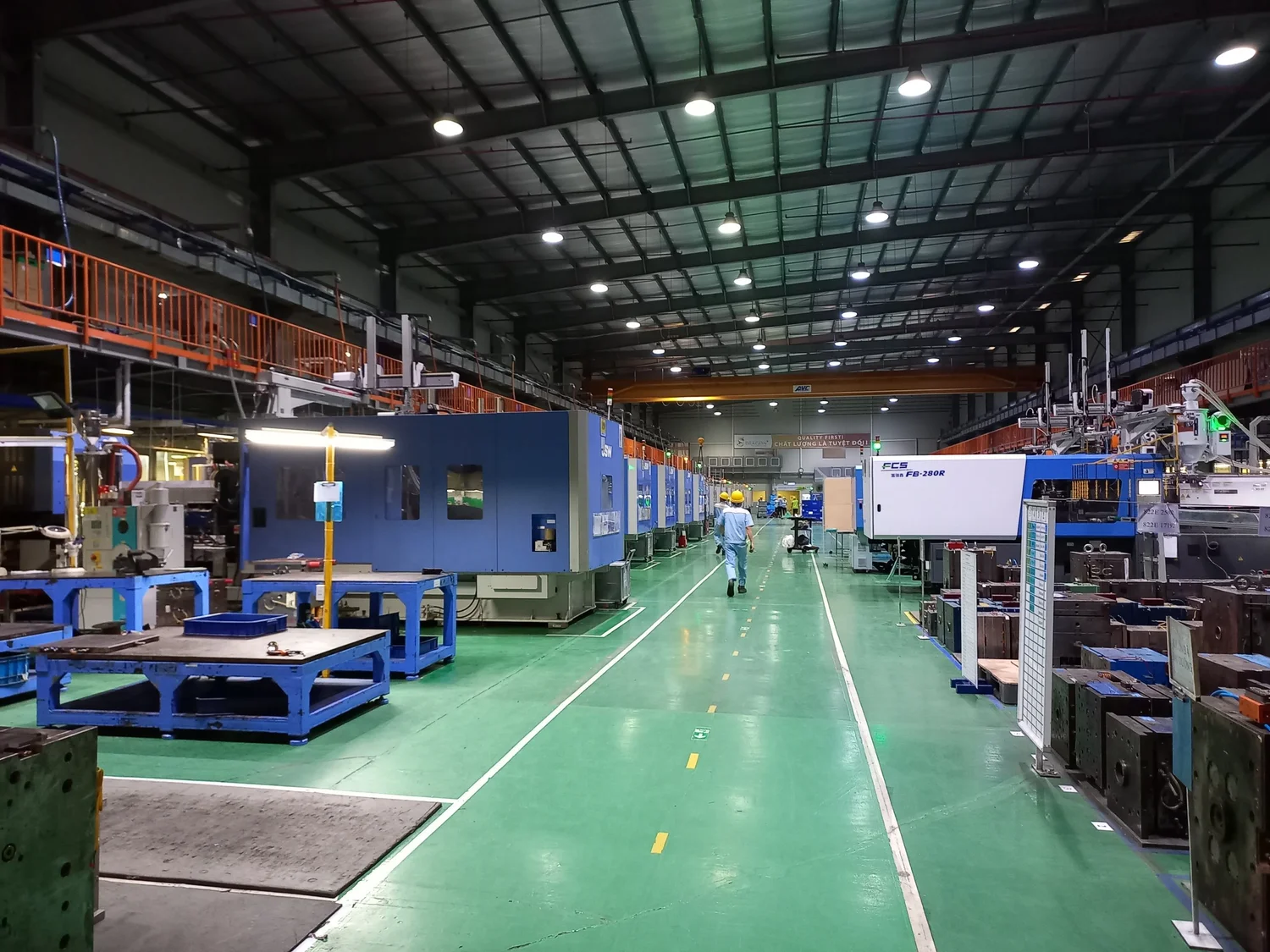
Vietnam has a growing plastics and rubber sector: silicone kitchenware, rubber mats, plastic housewares, and injection-molded components. Vietnam is also one of the world’s largest producers of natural rubber, giving local manufacturers a raw-material advantage in rubber-based products, which keeps pricing competitive against China on most SKUs.
See guides to rubber manufacturers and plastic manufacturers.
Explore rubber & plasticVietnam Building Materials Sourcing
Vietnam’s building materials sector has expanded fast, particularly in ceramic tiles, natural stone, sanitary ware, and engineered wood flooring. Quality varies more by factory than across the category, so vetting is especially important here. For construction projects with tight tolerance requirements, specify ASTM or EN compliance up front and always sample before production.
See our guide to home building materials made in Vietnam.
Explore building materialsVietnam Sporting Goods and Outdoor Gear Sourcing
Vietnam’s strengths in textiles, rubber, and injection molding translate directly into sporting goods: yoga mats, resistance bands, sports bags, protective gear, and outdoor accessories. The same factory base that produces performance apparel and rubber matting handles most categories in this space. For anything sewn, molded, or assembled from multiple components, there is almost certainly a Vietnamese factory that can produce it.
Explore sporting goodsOther Vietnam Product Categories
Beyond the major categories, Vietnam has growing factory bases in health and beauty items (cosmetics packaging, skincare tools, bamboo and wooden accessories), small kitchenware, and pet accessories. Ownership and management structures in these newer categories vary widely, so expect to vet more carefully than in the established sectors above. If your category is not listed here, ask us directly.
Ask about your categoryWhere to Be Careful
Electronics. Vietnam assembles electronics at scale (Samsung has huge operations here), but the landscape for small and medium-sized buyers is more nuanced than in Shenzhen. Custom electronics with deep component supply chains are still easier to source in China. That said, Vietnam can absolutely handle products that combine simple electronics with other manufacturing strengths. We sourced a waterproof Bluetooth-controlled propeller attachment for stand-up paddleboards here, a product that combined electronics assembly, injection-molded plastic housings, and waterproofing. The factory handled the full assembly because the electronics were relatively straightforward, and the rest of the product played to Vietnam’s strengths. The rule of thumb: if your product needs a custom PCB design and a complex component ecosystem, start in Shenzhen. If it involves assembling imported electronic components into a product that’s primarily mechanical, molded, or sewn, Vietnam can be a good fit.
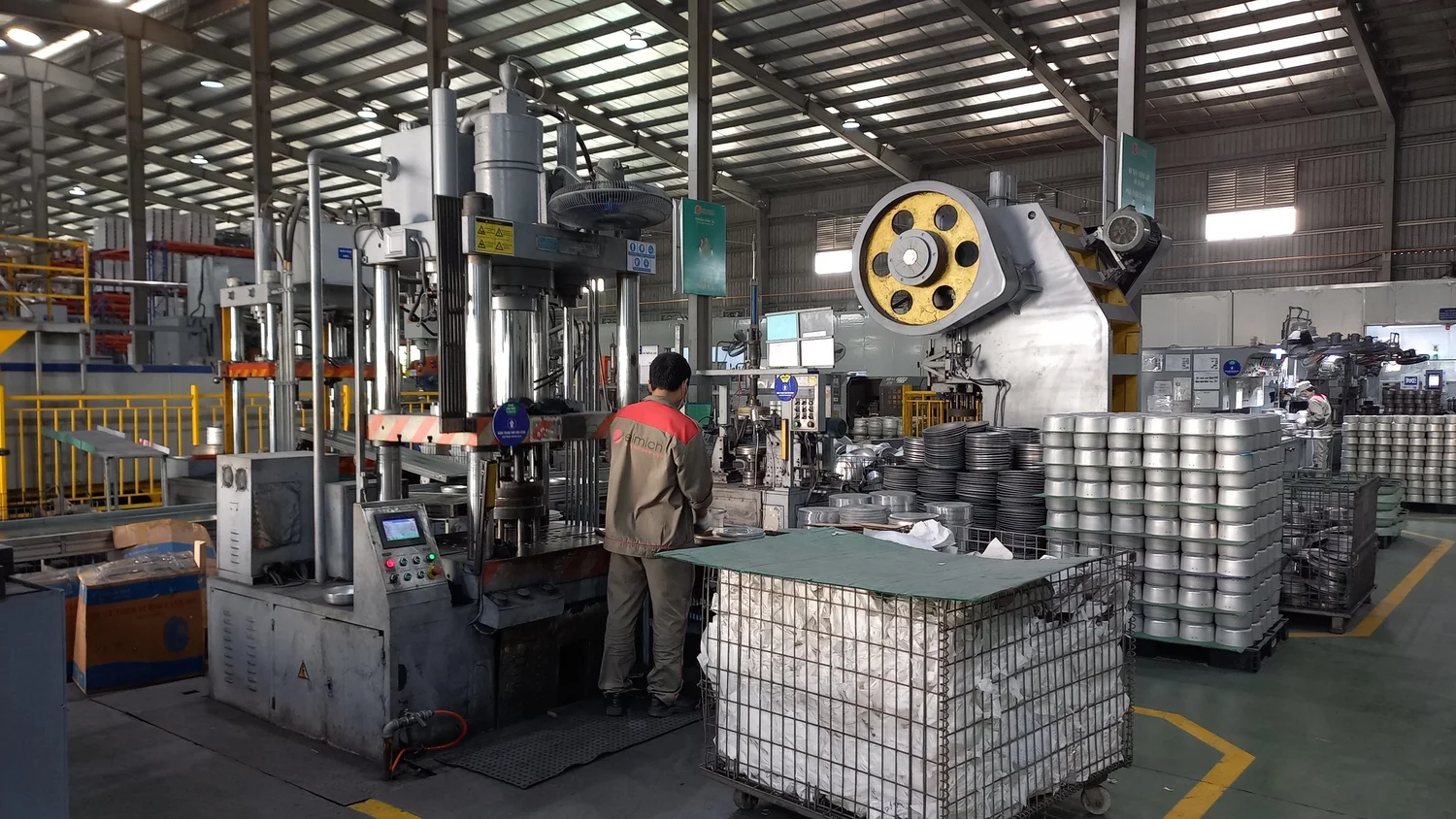
Precision machining and specialty chemicals. The supply base is thinner for these. You’ll find fewer options, and vetting takes longer.
The bottom line: Don’t pick a country first and then try to make your product fit. Pick the country that has a mature factory base for your specific product. If you’re weighing your options across multiple countries, our Vietnam vs China vs Mexico comparison is a good starting point.
Where Factories Are Located
Vietnam’s manufacturing is concentrated in regional clusters. Most sourcing for small- and mid-sized importers takes place in the south, within a few hours of Ho Chi Minh City. Northern Vietnam has a heavier concentration of electronics and some textiles. Our guide to Vietnam’s top manufacturing cities maps these clusters in detail.
| Product Category | Main Regions | Nearest Major Port |
|---|---|---|
| Clothing and textiles | Ho Chi Minh City, Binh Duong, Dong Nai, Long An (south); Hanoi, Hai Duong, Nam Dinh (north) | Cat Lai / Cai Mep (south); Haiphong (north) |
| Footwear | Binh Duong, Dong Nai, Ho Chi Minh City (south); Thanh Hoa, Hai Duong (north) | Cat Lai / Cai Mep (south); Haiphong (north) |
| Wood furniture | Binh Duong, Dong Nai, Binh Dinh (south/central); Quang Nam for craft furniture | Cat Lai / Cai Mep (south); Quy Nhon (central) |
| Bags and luggage | Ho Chi Minh City, Binh Duong, Long An | Cat Lai / Cai Mep |
| Packaging | Ho Chi Minh City, Binh Duong, Dong Nai, Hanoi | Cat Lai / Cai Mep (south); Haiphong (north) |
| Rubber and plastics | Binh Duong, Dong Nai, Long An, Ho Chi Minh City | Cat Lai / Cai Mep |
| Electronics assembly | Bac Ninh, Thai Nguyen, Vinh Phuc (north, driven by Samsung and Foxconn) | Haiphong |
Sourcing from Vietnam: A Step-by-Step Process
Sourcing from Vietnam is not complicated, but it punishes skipped steps. If you are sourcing here for the first time, the process breaks into seven steps:
- Write a detailed product specification sheet covering materials, dimensions, tolerances, packaging, and compliance requirements.
- Confirm Vietnam has a mature factory base for your specific product category.
- Build a shortlist of 5 to 10 factories using Import Yeti, trade shows, industry associations, or a sourcing company.
- Send a quote request (RFQ) to every factory and compare responses on price, MOQ, lead time, and communication quality.
- Pay for physical samples from your top two or three candidates and evaluate them against your spec.
- Negotiate terms, issue a purchase order, and pay a deposit (typically 30 percent).
- Inspect the production run at multiple checkpoints before releasing the final payment and shipping.
The rest of this guide walks through each step in depth. Below is the realistic timeline for a first Vietnam order, followed by detailed sections on finding factories, vetting them, negotiating, and managing quality.
The Sourcing Timeline: What to Expect
First-time importers almost always underestimate how long the process takes. Here is a realistic timeline based on what we see across most product types.
| Stage | Weeks | What Happens |
|---|---|---|
| 1. Specs and Factory Search | 1 to 2 | Write your product spec (materials, dimensions, tolerances, packaging, compliance, target price), then start reaching out to factories. |
| 2. Quotes | 2 to 3 | Send your spec to 5 to 10 factories. Compare pricing, MOQs, lead times, and communication quality. Narrow it down to 2 to 3 candidates. |
| 3. Samples | 3 to 5 | Sample costs vary by product. Vietnamese factories typically take two to four weeks per round, and most projects need at least one revision. Always approve a physical sample in your hands, never photos. |
| 4. Production | 5 to 8 | Finalize pricing, issue a purchase order, and inspect quality at least twice during the run. First production runs usually sit at the longer end of this range. |
| 5. Shipping | 3 to 5 | Ocean transit runs 14 to 35 days, depending on destination, plus 5 to 14 days for customs and last-mile delivery. |
| Realistic range | 12 to 20 | Most first-time Vietnam orders land at 16 to 20 weeks. Stages often run simultaneously and rarely all hit their high estimate at once, which is why the realistic total sits below the column sum. |
Total: 12 to 20 weeks from first factory contact to goods on the water. First orders run longer. One critical note: Tet (Vietnamese Lunar New Year, which falls between late January and mid-February, depending on the year) shuts down most factories for two to three weeks, with reduced capacity one to two additional weeks on either side. Tet 2027 falls on February 6; Tet 2028 falls on January 26. Plan around it.
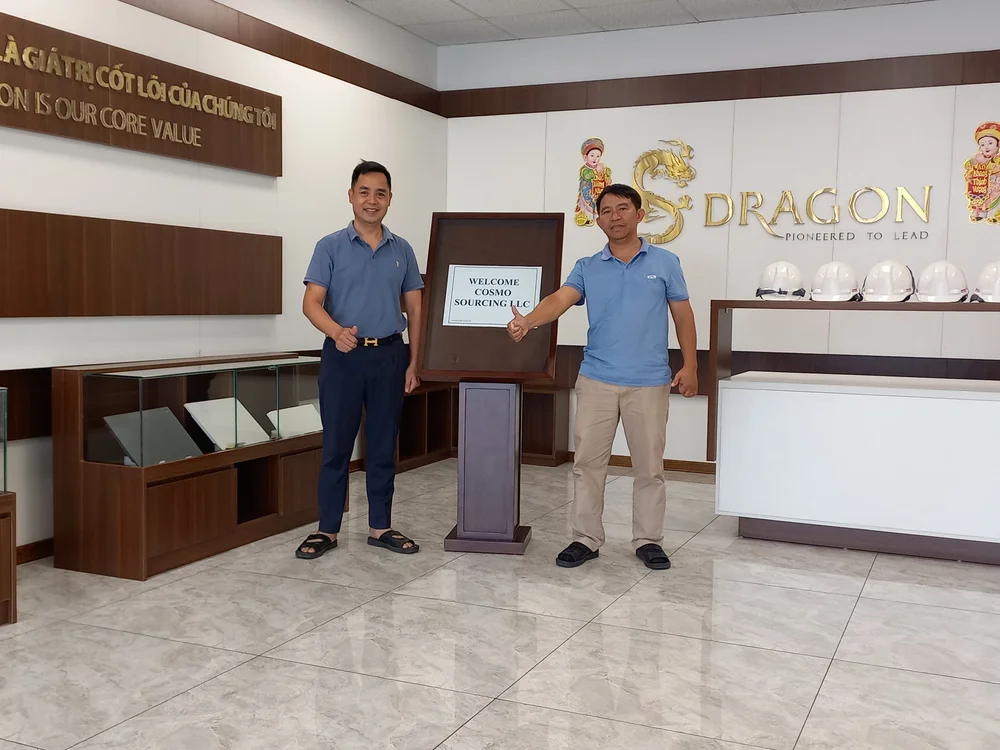
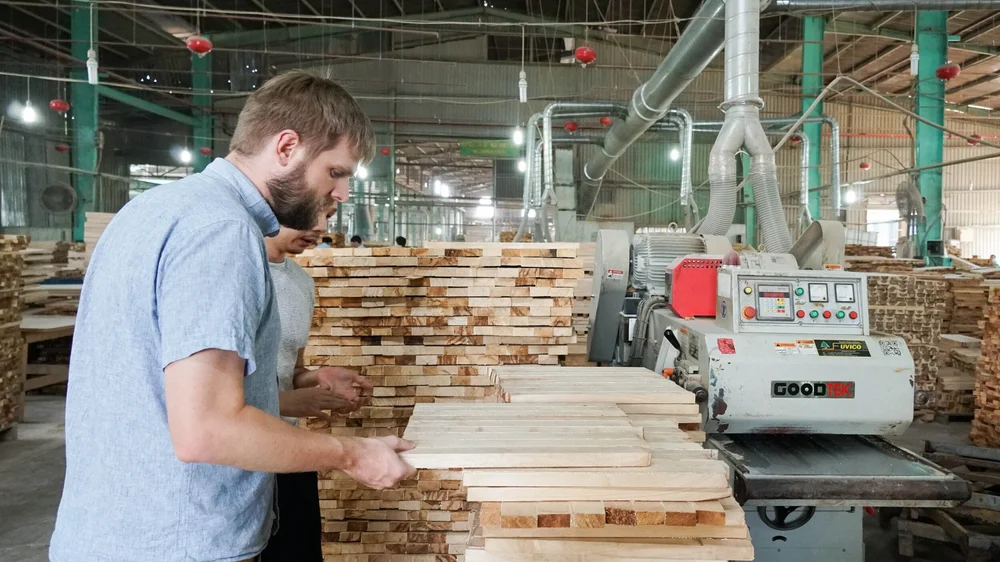
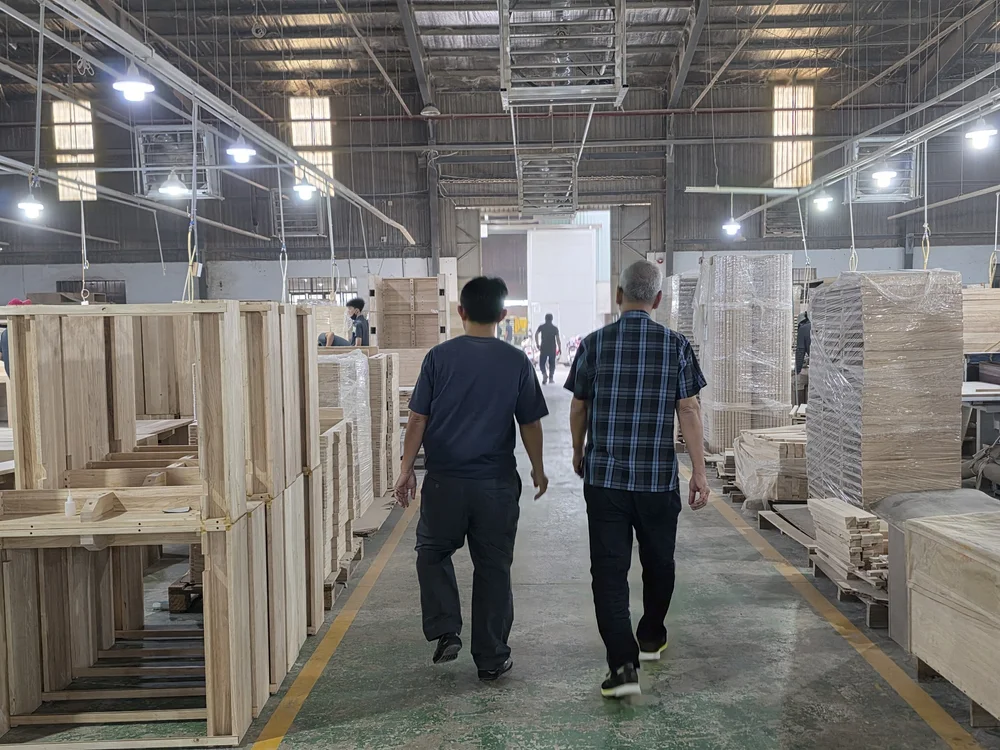
How to Find and Vet Factories in Vietnam
Finding factories is the easy part. Vetting them is where the real work happens, and where most problems are prevented.
Vietnam B2B Platforms and Supplier Directories
Alibaba (filtered to Vietnam) is the most well-known starting point, but it’s not the best for Vietnam specifically. Alibaba’s Vietnam listings are thinner and less reliable than its China listings because fewer Vietnamese factories invest in maintaining their storefronts on Alibaba. Many of the “Vietnam” listings on Alibaba are actually Chinese trading companies sourcing from Vietnam on your behalf, which adds a middleman you don’t need.
Import Yeti is more useful for finding real Vietnamese manufacturers. It pulls from US customs shipping records, so you can see which factories are actually exporting to the US, how often they ship, and who their buyers are. Global Sources tends to list more verified factories than Alibaba and has a stronger presence among mid-sized Vietnamese manufacturers.
Beyond the big B2B platforms, several Vietnam-specific directories are worth checking:
- Made-in-Vietnam.com and Vietnam Supplier, local directories that list factories selling directly.
- The Vietnamese government’s export databases, which publish lists of registered exporters by category.
- US customs records via Import Yeti, Panjiva, and ImportGenius, which list every Vietnamese factory that has shipped to the US, along with volume and buyer data.
Our guide to sourcing websites and Alibaba alternatives covers all of these platforms in detail.
Vietnam Trade Shows for Finding Factories
Trade shows are among the best ways to find Vietnamese factories, yet they are underused by foreign buyers. Two days on a show floor gives you more factory contacts than weeks of online searching, plus product samples and face time with ownership. The main shows by category:
- VIFA Expo (HCMC). Vietnam’s largest furniture show; best for wood, home, and outdoor furniture.
- SaigonTex (HCMC). Main textiles and garment show: fabrics, trims, and finished garment factories.
- ProPak Vietnam (HCMC). Packaging machinery and packaging manufacturers.
- Vietnam Expo (Hanoi and HCMC). Broader general trade show covering multiple industries.
- VietnamWood (HCMC). Wood processing, machinery, and wood product manufacturers.
Our 2026 Vietnam trade show calendar lists dates, locations, and which shows are worth attending by category.
Industry Associations
Vietnam’s industry associations maintain factory directories and make introductions, particularly useful in categories with thin online platform coverage: VITAS (textiles and apparel), HAWA (furniture, HCMC Handicraft and Wood Industry Association), VPA (plastics, rubber, packaging), and LEFASO (footwear, leather, handbags).
Our guide to finding Vietnam manufacturing companies covers how to use these associations effectively.
A Sourcing Company
A Vietnam sourcing company shortlists vetted factories based on your product and volume, handles the RFQ process, delivers 2 to 6 quotes with full factory background, and gives you direct access to every supplier. The value is the vetting. Our team has visited thousands of factories from Binh Duong to Thanh Hoa to Hai Phong and knows which ones actually produce what they claim, which are trading companies, and which have the capacity and quality systems for export orders. That on-ground knowledge takes years to build.
If you want to visit factories yourself, our Vietnam sourcing trips guide covers what to bring and what red flags to watch for, and we run guided factory tours for buyers who want to see their shortlist before committing.
Should I Use a Vietnam Sourcing Agent?
Most buyers sourcing from Vietnam don’t actually need a traditional sourcing agent. A traditional agent works on commission, adding 5 to 15 percent to the factory’s invoice as their margin; you often never see the true factory quote, and don’t own the supplier relationship. A sourcing company like Cosmo charges a fixed fee per project, takes no commission, and hands you direct contact details for every supplier. The factory quote you see is the factory quote you get.
For small, simple, one-off orders you will never reorder, a low-overhead agent might be fine. For anything you plan to buy more than once, anything with technical specifications, or any buyer who wants to know their true landed cost, a sourcing company is a better model. Red flags on any agent: refusing to name the factory, pressuring you to pay them rather than the factory, or quoting without a price breakdown.
Vietnam Contract Manufacturing: OEM, ODM, and Manufacturing Partners
If you are searching for Vietnam contract manufacturing or a manufacturing partner in Vietnam, you are describing the same relationships covered throughout this guide, just in different industry language. Most Vietnamese export factories operate as contract manufacturers: you supply the design and specifications, and the factory produces to order. In sourcing terminology, that arrangement is OEM (original equipment manufacturing). Many factories also offer ODM (original design manufacturing), where you take a product the factory already makes and customize the branding, packaging, or minor details. ODM is the faster, cheaper route when you are validating a product; OEM is what you need once your own design is the differentiator. Our guide to ODM, OEM, and contract manufacturing breaks down the differences and who owns the intellectual property under each model.
The practical pattern we see in Vietnam: garment, footwear, and bag factories are overwhelmingly OEM operations built to produce against your tech pack, while furniture, housewares, and packaging factories often run deep ODM catalogs you can customize. When we scope a client project, one of the first questions we ask is whether an existing factory design gets you 90 percent of the way there, because that answer changes the MOQ, the sampling timeline, and the tooling cost. If what you actually need is a long-term manufacturing partner rather than a one-off production run, say so in your first factory conversation. Vietnamese factories prioritize buyers who signal repeat volume, and that framing alone often improves the pricing and terms you are offered.
What Is Different About Vetting Factories in Vietnam
Factory vetting basics are universal: verify the business license, get a sample, check references, visit, or audit. The Vietnam-specific wrinkles are where buyers get caught off guard.
Trading Companies Posing as Factories
More common in Vietnam than most buyers expect. A company presents itself as a manufacturer but is actually a middleman subcontracting to a workshop you never see. Always ask to visit the production floor; if they dodge or push to meet at an office, that is a red flag. Import Yeti’s shipping records can verify whether the company actually exports directly.
Export License Verification
Not every Vietnamese factory has a direct export license. Some smaller operations use a third party for export paperwork, which adds a layer of complexity and cost. Ask whether they export directly or through an intermediary.
English Communication Gaps
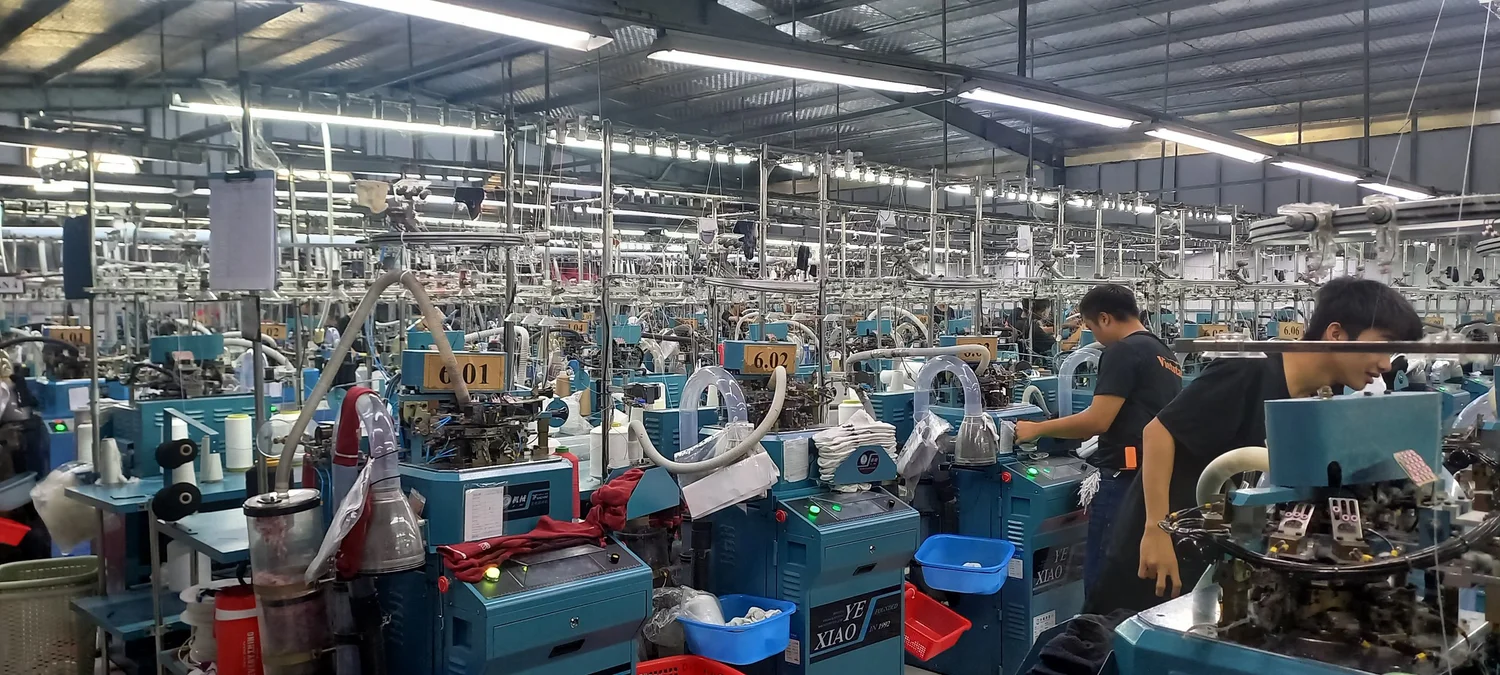
Many Vietnamese factories, especially smaller family-run ones, don’t have dedicated English-speaking sales staff. Communication may be routed through a translator or a junior staffer with limited English. Be more explicit with your specs than you would in China: visual references, annotated drawings, and written specs confirmed at each step.
MOQs, Negotiations, and Payments in Vietnam
Minimum Order Quantities
MOQ (minimum order quantity) is the smallest order a factory will accept, and it is the number that decides whether a factory will even quote you. In Vietnam, typical ranges look like this:
- Clothing: 300 to 1,000 pieces per style and color
- Furniture: 50 to 200 pieces per design
- Bags: 200 to 500 pieces per style
- Packaging: 5,000 to 20,000 units
- General consumer goods: 500 to 2,000 units
These are starting points, not hard rules. If you are below a factory’s MOQ but can show repeat orders, many factories will work with you; others will accept a smaller order at a higher unit price. Our MOQ guide explains why factories set minimums and how to negotiate them down. If your volumes sit below standard garment minimums, our guide to low MOQ clothing manufacturers in Vietnam covers the workshop tier that takes smaller runs.
How to Negotiate with Vietnamese Factories
Negotiating with Vietnamese factories works best as a conversation, not an arm-wrestling match. Share your expected volumes over the next 6 to 12 months, request a price breakdown for materials, labor, and overhead, and remember that price is only one variable (MOQ, lead time, payment terms, and packaging are all negotiable). Do not push so low that the factory has to cut corners, because that is how quality problems start. Our guide to negotiating with Vietnamese suppliers covers specific tactics.
How to Pay Vietnamese Suppliers
The standard payment structure for a first order is 30/70: 30 percent deposit before production, 70 percent after production and inspection, before shipment. T/T (bank wire) is the most common payment method; larger orders sometimes use a Letter of Credit. Two non-negotiable rules: never pay 100 percent upfront, and never release the final balance before a third-party inspection has physically confirmed the goods. Our guide to paying Vietnamese suppliers covers methods, transfer fees, currency conversion, and how to spot payment scams.
Vietnamese Business Culture: What to Know
If you’ve sourced from China, expect a different dynamic in Vietnam. Vietnamese business culture is more relationship-driven. Factories want to know who they’re working with before committing to their best work for you. Expect small talk before getting down to business, and don’t rush straight to pricing on a first call. Hierarchy matters: when meeting a factory team, address the most senior person first and direct important decisions to them. Direct confrontation or aggressive negotiation tactics can backfire. Vietnamese suppliers may say “yes” to avoid conflict even when they mean “we’ll try,” so pay attention to hesitation and ask follow-up questions to confirm understanding.
English proficiency at the factory level varies widely. Some owners speak fluent English, others rely entirely on Google Translate. Confirm early that your factory contact can discuss technical details in English, not just exchange pleasantries. If they can’t, a sourcing company or bilingual intermediary isn’t optional; it’s necessary.
Buyers who build genuine relationships with their factories, visit when they can, give positive feedback when things go well, and handle problems privately rather than publicly, consistently get better pricing, faster turnarounds, and priority treatment during peak season. This is not just a nice-to-have; it’s a competitive advantage.
How Pace and Communication Differ from China
Having worked with Vietnamese factories for over a decade, we find that the biggest adjustment for buyers coming from China is the pace. In China, you can often get a quote straight away on a first call. In Vietnam, the factory wants to understand your business first: what you’re making, who it’s for, and whether this is a one-time order or a long-term relationship. That might feel like wasted time, but it’s not. The factories that take the time to understand your product up front tend to deliver better results during production.
We’ve also found that when things go wrong (and they eventually do), the factories we have strong relationships with are far more willing to fix the problem at their own expense than those we’ve only dealt with transactionally.
Foreign-Owned Factories Change the Dynamic
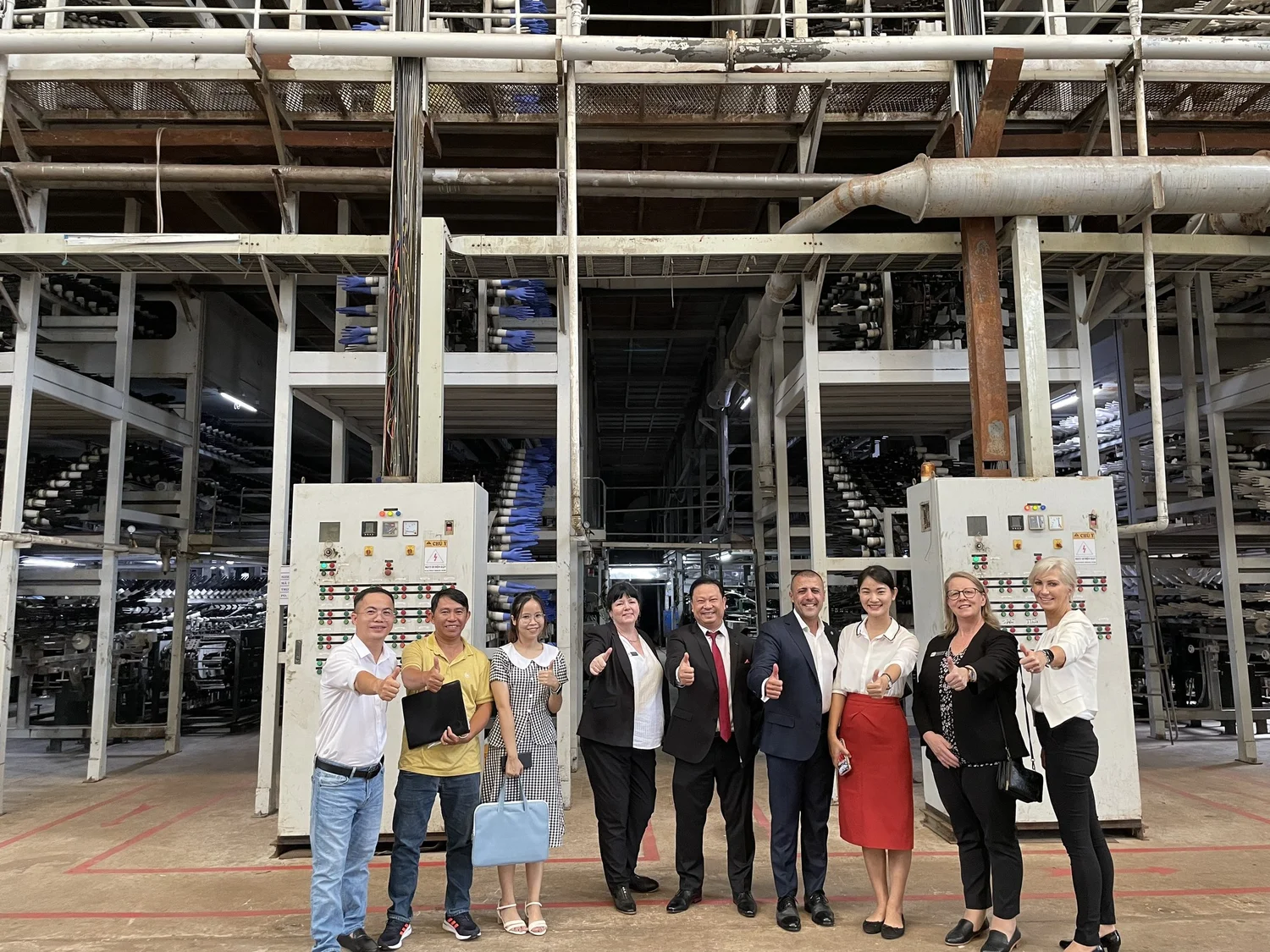
A significant number of factories in Vietnam are foreign-owned or foreign-managed. We regularly work with Japanese, Korean, Danish, French, Thai, and Chinese-owned factories operating in Vietnam. This means the business culture at the factory level can vary significantly depending on who owns and manages the operation. A Japanese-owned garment factory in Binh Duong operates very differently from a Vietnamese family-run furniture workshop in Dong Nai. The management style, communication expectations, quality standards, and even payment terms can vary depending on ownership. It’s worth asking about ownership and management structure early in the vetting process so you know what to expect.
Plan Around Tet or Miss Your Deadline
One timing issue every buyer needs to plan around: Tet (Lunar New Year) shuts the country down for one to three weeks, usually between late January and mid-February. Production slows for two to three weeks on either side as workers travel home, and some don’t return to the same factory. If you have a Q1 deadline, plan around Tet, or you will miss it. We start flagging Tet timelines with clients in October because by December, it’s usually too late to adjust production schedules. This isn’t just a Vietnam issue (China’s Spring Festival causes the same disruption), but first-time Vietnam buyers are often caught off guard because they don’t realize the shutdown is just as long and just as disruptive. Tet 2027 falls on February 6; Tet 2028 falls on January 26.
For the full treatment, see our dedicated guide to working with Vietnamese suppliers: business culture, communication, and Tet planning.
What Does a Vietnam Order Actually Cost? A Landed Cost Breakdown
Factory price isn’t your real cost. Here’s a side-by-side comparison from a dual-sourcing project we ran in late 2025, where a client asked us to quote the same custom sportswear top from factories in both China and Vietnam for a 1,000-unit order shipping to the US.
Vietnam landed at $9.18 per unit on this project; China landed at $9.81. The per-unit difference was small ($0.63) but on a 1,000-unit order that is $630, and the client planned to reorder quarterly, so the real savings compounded across the year. Notice what the chart actually shows: Vietnam’s FOB factory price was higher ($6.00 vs $5.50 in China). Vietnam only wins once the tariff differential is included. That’s the whole point of the exercise. Always compare landed cost, not factory price, when evaluating suppliers or countries. Your exact numbers will vary based on HS code, shipping volume, and current tariff rates on the day your container clears.
| Cost Component | Approximate Range |
|---|---|
| Unit price (FOB) | $5.50 to $7.00 per unit |
| Samples (2 rounds) | $150 to $300 total |
| Ocean freight (LCL, shared container) | $0.30 to $0.80 per unit |
| US customs duties | HTS base rate plus any Section 301 duty in force; total varies by HS code (check latest rates with a customs broker) |
| Customs broker fee | $150 to $300 per shipment |
| Pre-shipment inspection | $250 to $400 (one day) |
| Inland delivery to the warehouse | $200 to $500, depending on distance from port |

Vietnam Sourcing for Amazon FBA Sellers
Vietnam is a major sourcing hub for Amazon FBA sellers of apparel, home goods, kitchenware, small furniture, pet accessories, and outdoor gear. Unit economics usually beat China once tariffs are factored in, and sewn and molded quality is consistently strong. The main tradeoffs are higher factory MOQs (typically 300 to 1,000 units for apparel, 50 to 200 for furniture) and the need to specify FBA prep requirements up front.
The key FBA-specific things to nail: request a mock carton before production to verify FNSKU labels, polybag thickness, and Amazon-compliant carton dimensions; list every required certification (CPSIA, FDA, Prop 65) at the spec stage, not the PO stage; and decide between direct-to-FBA shipping or routing through a US prep center. For first orders with a new Vietnamese factory, a prep center is usually worth the extra cost. Our full guide to sourcing FBA products from Vietnam covers prep, packaging, direct-to-FBA vs prep center, and compliance in detail.
Quality Control in Vietnam
Quality control in Vietnam requires more hands-on oversight than in China. The inspection infrastructure is thinner (most QC firms are concentrated in Ho Chi Minh City and Hanoi), and factories in smaller provinces require longer scheduling lead times. The good news: Vietnamese factories are generally more receptive to in-process inspections than many Chinese factories we have worked with.
Plan for three inspection checkpoints, not just one. Check 1 (before production starts): Confirm that the raw materials match your approved sample, as material substitution is more common in Vietnam than buyers expect. Check 2 (at 20 to 30 percent production complete): catch spec misunderstandings before they propagate through the full run, and compare against your approved physical sample, not just the spec sheet. Check 3 (pre-shipment): verify quantities, quality, packaging, and labeling before releasing your final payment. Expect to pay $250 to $400 per inspection day.
At Cosmo Sourcing, we coordinate third-party inspections on our clients’ behalf as an additional service. Our complete Vietnam factory audit and QC guide covers the full inspection process, and our list of the top 13 inspection companies in Vietnam covers which QC firms to use for each product category and region.
Vietnam Origin Compliance and Anti-Transshipment Rules
Last verified: August 1, 2026. The legal authority for US import surcharges has shifted from IEEPA (struck down February 20, 2026) to Section 122 (expired July 24, 2026) to a Section 301 forced-labor action now in force, with a separate Section 301 overcapacity investigation still open. Confirm current rates and enforcement authority with a US customs attorney before placing any order.
This is the part of Vietnam sourcing that changes most often, and the part that costs US importers the most when they skim it. The US transshipment enforcement framework shifted significantly in February 2026. On February 20, 2026, the Supreme Court ruled in Learning Resources, Inc. v. Trump (6-3) that IEEPA does not authorize the President to impose tariffs. This invalidated Executive Order 14326 and the 40 percent transshipment penalty that had been collected under HTS 9903.02.01. CBP halted collection on February 24, 2026 and replaced the IEEPA framework with a flat 10 percent Section 122 surcharge (HTS 9903.03.01). That surcharge hit its 150-day statutory limit and expired on July 24, 2026. A Section 301 forced-labor action took effect the same day, placing Vietnamese goods in the 12.5 percent tier across a list of roughly 60 economies. Unlike Section 122, Section 301 duties carry no expiration date and no rate cap, and a separate Section 301 overcapacity investigation covering Vietnam and 15 other economies remains open. Neither action created a standalone transshipment penalty, but CBP continues to pursue transshipment aggressively under existing customs fraud authority (19 U.S.C. § 1592). Vietnam’s domestic origin-enforcement posture also tightened: the Ministry of Industry and Trade took over certificate of origin issuance from VCCI on May 5, 2025 under Decision No. 1103/QĐ-BCT, centralizing issuance at the source.
The short version for any US importer sourcing from Vietnam: your product qualifies as Made in Vietnam only if it underwent substantial transformation there (new name, character, or use under 19 C.F.R. § 134.1(b)), not just final assembly or relabeling. The defensible documentation package is a bill of materials by country, a manufacturing process narrative, a government-issued MoIT certificate of origin, and for gray-area assembly operations, a CBP Binding Ruling under 19 C.F.R. Part 177. Rates and legal authorities have shifted repeatedly through 2025 and 2026 and could shift again as the remaining Section 301 investigations conclude; verify current rates and penalty authority with a customs broker or trade attorney before placing an order. Our dedicated guide to Vietnam origin compliance and anti-transshipment rules covers the substantial transformation test, documentation specifics, and how we vet Vietnamese factories for origin compliance on client projects.
Importing from Vietnam: Paperwork and Compliance by Destination
Compliance is your responsibility as the importer of record, even if you work with a sourcing agent. The requirements differ by destination and product category. Still, a few pieces apply to every Vietnam shipment: country-of-origin labeling (“Made in Vietnam” on every product), a correct Harmonized System (HS) code classification (which determines your duty rate), and any category-specific safety documentation required in your market.
Importing from Vietnam to the US
Vietnamese goods entering the US are subject to standard HTS duty rates plus any additional trade-action duties in force at the time of entry (currently a Section 301 duty). These rates have shifted multiple times since early 2025; verify the current rate with a customs broker before you commit to a purchase order. Beyond duties, product-specific agencies (CPSC for consumer products, FDA for food-contact items and cosmetics, FCC for electronics) set their own testing and certification requirements, with extra CPSIA rules for children’s products. Ocean shipments also require an Importer Security Filing (ISF) at least 24 hours before the goods are loaded onto the ship. Our complete guide to importing from Vietnam to the US covers tariffs, HS codes, ISF, and product-specific requirements in detail.
Importing from Vietnam to the EU, UK, Canada, or Australia
EU buyers benefit from the EVFTA, which gives reduced or zero duties on qualifying goods with proper rules-of-origin documentation (an EUR.1 certificate or exporter origin declaration). Many product categories require CE marking, and all products must comply with REACH chemical regulations. The UK, Canada, and Australia each have their own rules. Our country-specific import guides cover the details: Vietnam to the EU, Vietnam to the UK, Vietnam to Canada, and Vietnam to Australia.
Documents You Need to Import from Vietnam
Your factory or freight forwarder should provide these for a standard shipment (exact requirements depend on your product and destination):
- Commercial invoice and packing list
- Bill of lading (ocean freight) or airway bill (air freight)
- Certificate of origin
- Test reports or compliance certificates for your destination market
- For wood products entering the US: fumigation certificates and Lacey Act documentation

Shipping from Vietnam
Incoterms and Port Selection
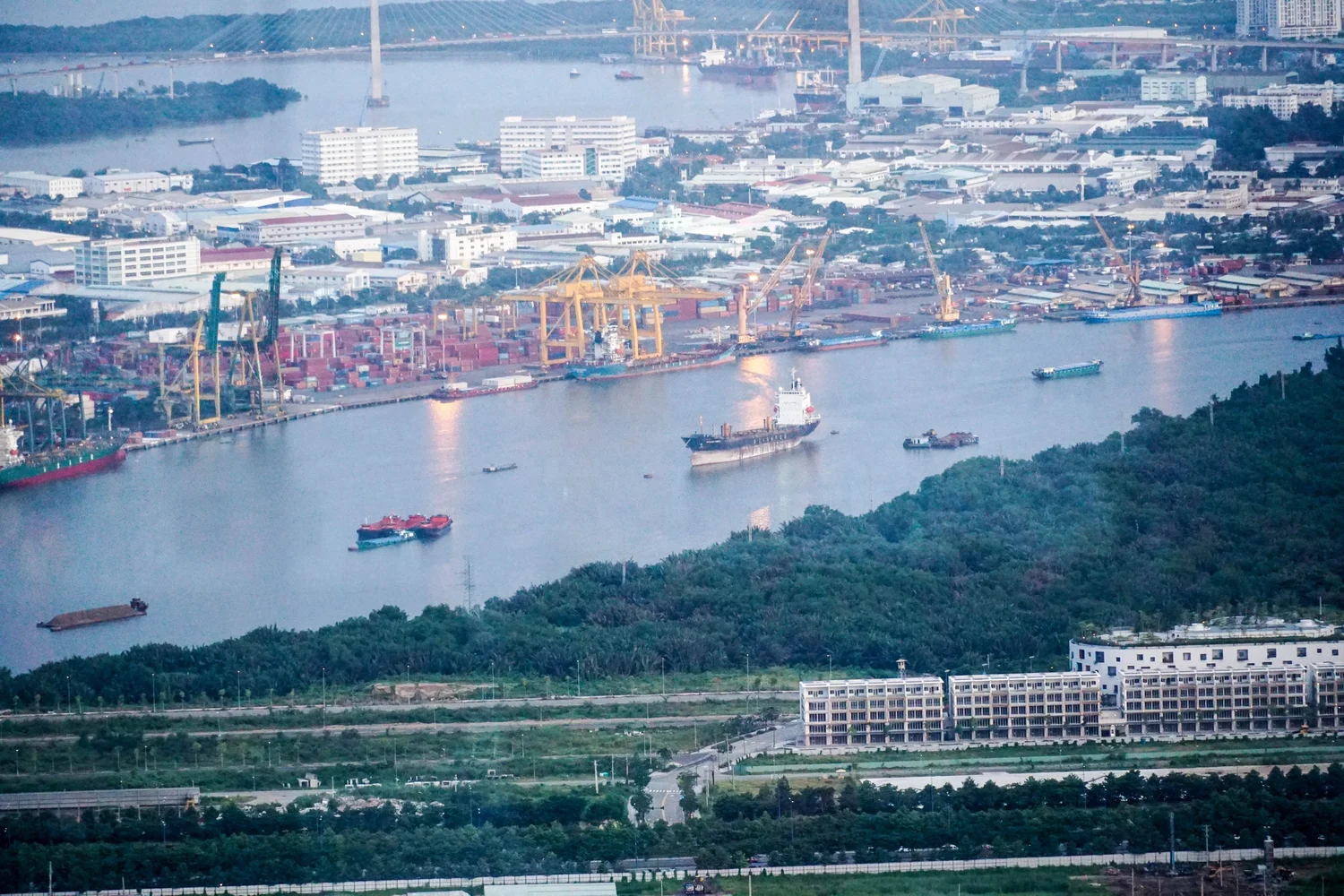
Use FOB for most Vietnam orders (FOB Ho Chi Minh City for southern factories, FOB Haiphong for northern ones). The factory handles everything up to loading the goods onto the ship; you take over with your own freight forwarder. We don’t recommend EXW because navigating Vietnamese export customs is more difficult than in China. DDP sounds convenient, but it means you lose visibility into shipping costs and duties. Our Incoterms guide explains the full set of options, and our guide to Vietnam’s manufacturing cities maps factory clusters to port access.
Ocean Freight, Air Freight, and Freight Forwarders
Ocean freight is standard for most orders: full container (FCL) for large shipments, shared container (LCL) for smaller ones. Air freight is 5 to 10 times more expensive but delivers in days rather than weeks, so we use it for urgent shipments, samples, and high-value, low-weight products. Approximate ocean transit times: 14 to 21 days to the US West Coast, 25 to 35 days to the US East Coast or Northern Europe, 10 to 18 days to Australia. Add 5 to 14 days on top for customs clearance and warehouse delivery. You will need a freight forwarder to handle booking, documentation, customs brokerage, and delivery coordination. Our full Vietnam shipping guide and list of Vietnamese freight forwarders cover forwarder selection and route-specific pricing in detail.
Common Vietnam Sourcing Mistakes (and How to Avoid Them)
The generic sourcing mistakes (vague specs, skipping samples, paying too much upfront) apply to any country. These four are the ones we see trip up Vietnam-specific projects most often.
| Mistake | What Goes Wrong | The Fix |
|---|---|---|
| Assuming Vietnam replaces China for everything | The buyer moves production to Vietnam without verifying whether a supply chain exists for their product. Works for sewn goods, furniture, and packaging. Falls apart for complex electronics, precision machining, or specialty raw materials. | Check whether Vietnam has a mature factory base for your specific product before you commit. |
| Discovering tariff or compliance issues after ordering | Container arrives at port. Customs flags wrong HS code, missing certification, incorrect labeling, or a higher tariff rate than budgeted. The tariff landscape has shifted multiple times since 2025. | Work with a customs broker at the quoting stage. Know your HS code, duty rate, and whether any Section 301 or other trade-action duties apply before you commit to a factory. |
| Treating the factory like a transaction, not a relationship | Buyer applies the China playbook: jump straight to pricing, negotiate aggressively, send short transactional emails. In Vietnam, the factory goes quiet and deprioritizes your orders. Vietnamese business culture is relationship-driven. | Slow down on the first interaction. Ask about capabilities, share context about your product. Visit when you can. Give positive feedback when things go well. |
| Skipping QC on smaller or first orders | The buyer decides a $250 to $400 inspection is not worth it for a small first order. Goods arrive with wrong measurements, mismatched colors, or damaged packaging. Fixing the order costs far more than the inspection would have. | Inspect every first order from a new factory, regardless of size. When a factory knows you are inspecting, they pay more attention. |
Every one of these is preventable with the right process. If you are sourcing from Vietnam for the first time, the factory vetting process outlined earlier in this guide covers the due diligence steps that help prevent most of these problems. If you are moving production from China, our guide to manufacturing relocation from China to Vietnam walks you through the full transition.
Vietnam Sourcing FAQ
Is Vietnam actually cheaper than China for sourcing?
For labor-intensive products like clothing, bags, and hand-finished goods, Vietnam is often cheaper per unit. For complex supply chains or heavily automated products, China still wins on total cost. Compare landed cost, not just factory price. Our Vietnam vs China manufacturing guide breaks this down.
Do I need a Vietnam sourcing company?
Not always, but a sourcing company can save time and reduce risk when you’re new to Vietnam, lack people on the ground, or need to vet multiple factories quickly. Cosmo Sourcing delivers 2 to 6 vetted quotes within 4 to 6 weeks, with full supplier contact details.
What are the current tariff rates from Vietnam to the US?
Rates depend on HS code and have shifted multiple times since 2025. The 10 percent Section 122 surcharge expired on July 24, 2026, and a Section 301 forced-labor action took effect the same day, placing Vietnamese goods in the 12.5 percent tier on top of standard MFN duty. Unlike earlier measures, this duty has no built-in expiration date, and a separate Section 301 overcapacity investigation is still pending. Verify current rates with a customs broker before ordering.
How do I find a manufacturer in Vietnam?
Four routes: B2B platforms like Alibaba Vietnam and Global Sources for a shortlist; Import Yeti to find factories that actually export; Vietnam trade shows like VIFA Expo and SaigonTex to meet factories in person; or a sourcing company that handles vetting. Most first-time DIY buyers switch to a partner by order two or three.
What is the minimum order quantity for sourcing in Vietnam?
MOQ varies by category. Clothing starts at 300 to 1,000 pieces per style. Furniture starts at 50 to 200 pieces per design. Bags run 200 to 500. Packaging runs 5,000 to 20,000. General consumer goods run from 500 to 2,000. MOQs are negotiable with repeat-order volume or a higher unit price.
How do I pay a Vietnamese supplier safely?
Standard terms are a 30 percent deposit before production, with 70 percent due after inspection but before shipment, paid by T/T (bank wire). Never pay 100 percent upfront. Never release the balance before a third-party inspection. Refuse requests to pay a personal account rather than the registered business account.
Is Vietnam a good sourcing country for Amazon FBA sellers?
Yes for apparel, home goods, kitchenware, small furniture, pet accessories, and outdoor gear. Vietnamese factories handle FNSKU labeling and Amazon-compliant packaging if you specify it. MOQs run 300 to 1,000 units (higher than Alibaba-style), but unit economics and quality are usually better for any SKU past validation.
How do I protect my designs when sourcing from Vietnam?
Register trademarks in Vietnam, use NDAs adapted to Vietnamese law, and limit who sees your full design. For sensitive IP, split component production across factories. Enforcement is inconsistent, so practical safeguards matter more than documents alone. Our guide to IP protection in Vietnam covers copyright, patents, and trademark registration.
How long does it take to get production started with a Vietnamese factory?
Plan 12 to 20 weeks from first factory contact to goods on the water. The sequence is roughly 1 to 2 weeks for spec and factory search, 2 to 3 weeks for quoting, 3 to 5 weeks for sampling (often with one revision round), 5 to 8 weeks for production, and 3 to 5 weeks for shipping and customs. First orders run longer. Tet shuts factories for two to three weeks between late January and mid-February, so plan around it. Tet 2027 is February 6; Tet 2028 is January 26.
What is the difference between a Vietnam sourcing agent and a Vietnam sourcing company?
A sourcing agent works on commission, typically 5 to 15 percent of the factory invoice, and often does not disclose the true factory quote or the factory’s name. A sourcing company like Cosmo charges a fixed fee per project, takes no commission, and hands you direct contact details for every supplier we recommend. The factory quote you see is the factory quote you get.
Can I source samples from Vietnamese factories before placing a full order?
Yes, and you should. Paying for physical samples from your top two or three candidates is a required step before committing to a production order. Vietnamese factories typically take two to four weeks to produce a sample, slightly slower than in China. Always approve a physical sample in your hands, never photos.
Do Vietnamese factories work with small businesses and startups?
Yes, though many small businesses hit factory MOQs before product-market fit is proven. Clothing factories start at 300 to 1,000 pieces per style; furniture at 50 to 200 pieces; general consumer goods at 500 to 2,000 units. Factories will often run a smaller first order at a higher unit price, or work below MOQ when you can show expected repeat volume. For apparel specifically, our guide to low MOQ clothing manufacturers in Vietnam covers the workshop tier built for small batches. A sourcing company can help match your size to factories that are a realistic fit.

Continue Reading
If this guide was useful, here are the three pillar reads we recommend next.
Nearshoring alternative with USMCA duty-free access. How Mexico compares to Vietnam for US buyers who need faster lead times or avoid transshipment exposure entirely.
Read the guide →Head-to-head comparison across cost, quality, lead time, MOQ, and tariff exposure, with our recommended country by product category.
Read the comparison →How to add a second country to your supply chain without disrupting your existing China production. Framework, timeline, and common mistakes.
Read the guide →About the Author

Work with Cosmo Sourcing
Cosmo Sourcing has been helping clients source from Vietnam since our team moved on the ground in 2014, but we’re not a Vietnam-only sourcing company. Since 2012, we’ve helped thousands of clients source more than 10,000 products across Vietnam, China, Mexico, and our broader country network. Whatever your product needs, we’ll help you find the right country and the right factory.
Send your specs
Share your product, quantities, and target deadline.
We vet factories
Our team qualifies suppliers on the ground.
You get quotes
2 to 6 vetted factories in 4 to 6 weeks.
You own the relationship
Direct factory contacts, handed over to you.
Ready to get started? Tell us what you’re looking to source, your estimated quantities, and the deadline. We’ll come back with an honest assessment of whether Vietnam is the right fit and a clear outline of next steps.
See how our process works See our sourcing packages Email info@cosmosourcing.com
Social Compliance and Factory Audits in Vietnam
If you are selling into mid-market or enterprise retail (Walmart, Target, Costco, REI, major EU or UK chains) or into regulated categories like children’s products or electronics, your factory will need current social compliance documentation before your buyer will issue a purchase order. Our approach to every Vietnam project is to pre-qualify on existing audit status rather than take an uncertified factory through SMETA, BSCI, WRAP, or SA8000 from scratch. For children’s products, we source from factories that already carry CPSIA and ASTM records; for electronics, from factories with current UL listings and FCC or CE testing.
Certifying a previously uncertified factory is long and expensive. We only take that path when the factory is an exceptional commercial fit on every other dimension, and the buyer has the runway. Our guide to Vietnam factory audits and social compliance (SMETA, BSCI, WRAP, SA8000) covers the major frameworks, which buyers require, which audits they require, who pays, and how we verify that a factory’s claimed certification is current and covers the production site that will actually run your order.