
China Plus One Sourcing Strategy: A Practical Guide to Diversifying Beyond China
Keep your existing China production, add a second manufacturing country, and stop carrying single-country risk on the products that drive your business. Vietnam, Mexico, and Southeast Asia from a sourcing company with offices in all three.
On the ground in Vietnam since 2014, China since 2012, and Mexico since 2023. Thousands of clients, 10,000+ products sourced. Fixed fee, no commissions, no markups on factory quotes.
Most buyers we talk to are not trying to leave China. Their supply chain still works. But a customer, a tariff change, or a board question has put a new question in front of them: where else can this be made?
That question is China Plus One. The short answer: keep your existing China production, add a second manufacturing country alongside it, and stop carrying single-country risk on the products that drive your business. You do not leave China. You reduce your dependence on it.
For most buyers in 2026, the second country is Vietnam. For buyers selling close to home in North America, it is often Mexico. Thailand, Indonesia, Malaysia, and the Philippines fill in for specific categories. Which one fits depends on your product, your customers, and where your supply chain is most exposed.
At Cosmo Sourcing, we help buyers evaluate and execute China Plus One transitions across Vietnam, Mexico, China, and Southeast Asia. We have been active in China since 2012, on the ground in Vietnam since 2014, and operating in Mexico since 2023. We tell clients honestly when the case for moving is real, when China still makes more sense, and when the best answer is a phased transition. This guide explains how China Plus One works in practice, which countries fit which products, how to plan the transition, what costs and timelines to expect, and which mistakes to avoid.
What's on this page
- What China Plus One Sourcing Actually Means
- Why China Plus One Matters in 2026
- Is China Plus One Right for Your Business?
- How Cosmo Sourcing Helps With China Plus One Sourcing
- Which Countries Qualify as China Plus One Destinations
- The China Plus One Transition Process: Step by Step
- How China Plus One Costs Actually Compare Across Countries
- China Plus One Manufacturing by Industry
- Common China Plus One Mistakes (and How to Avoid Them)
- China Plus One Sourcing FAQ
- Next Steps for Your China Plus One Transition
- Work with Cosmo Sourcing on Your China Plus One Transition
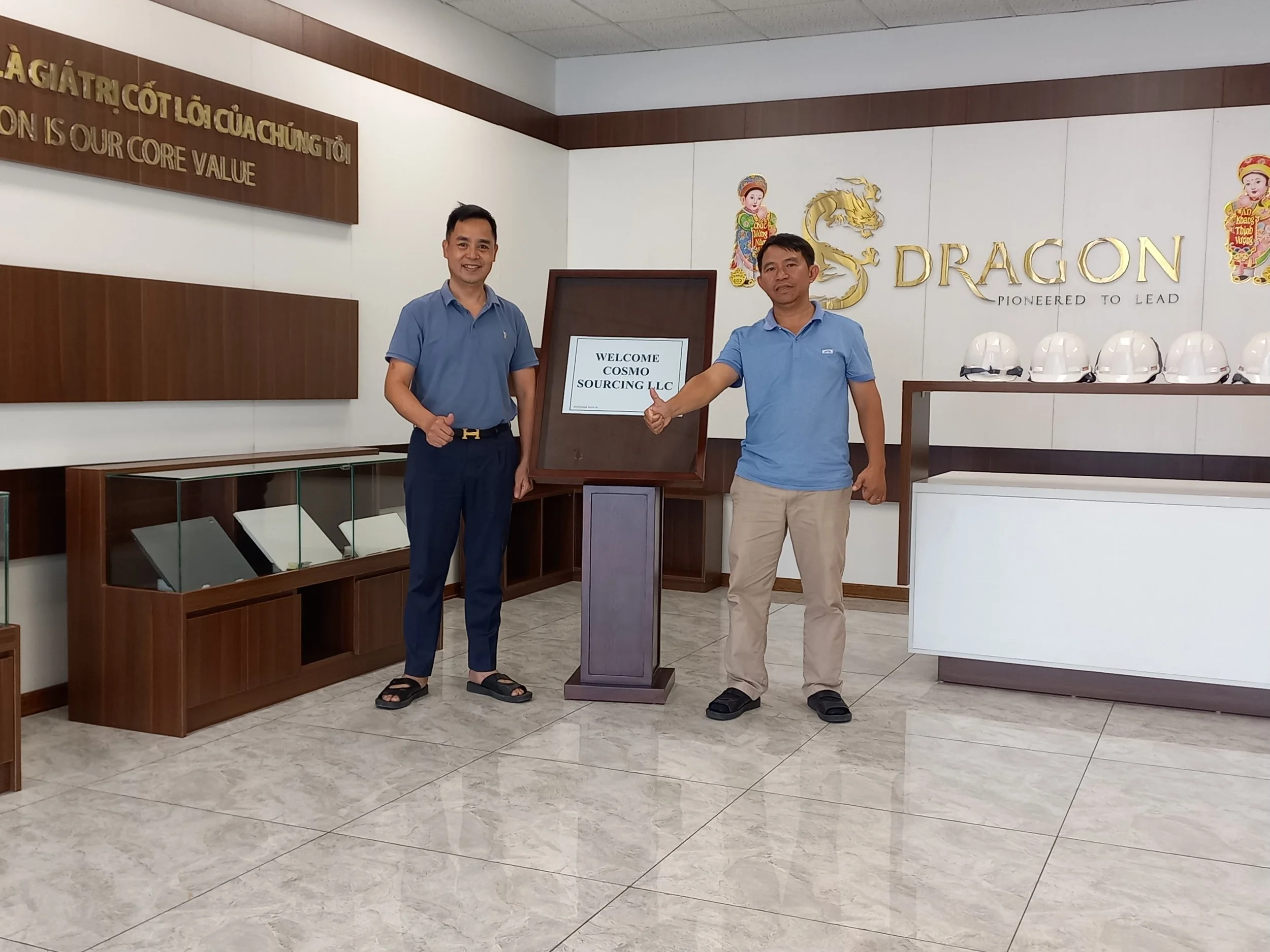
What China Plus One Sourcing Actually Means
China Plus One is a supply chain strategy: keep production in China, add a second manufacturing country, run them side by side. The "plus one" can be one country or several. The configuration often evolves as more product lines or volume migrate out of China. Some practitioners call this Plus N or China + N, where N is whatever number of alternative countries you end up running. Some of our most established clients are now on China-plus-Vietnam-plus-Mexico setups, where the original "plus one" became the foundation for further diversification. What stays constant is that China remains in the mix while a second base of operations is built next to it.
The original definition
The term emerged in the mid-2000s as companies began recognizing the risk of concentrating too much production in China. The recommendation was simple: keep the China factory where it still worked, but add a second manufacturing base as backup capacity and a hedge against political, cost, currency, and supply chain risk. Vietnam became one of the earliest and most common destinations.
What "China Plus One Strategy" means in practice today
In 2026, the term has expanded. For most of the buyers we work with, China Plus One looks like one of three patterns:
- Mirrored production. The same product is made in both China and the second country. China handles legacy volume. The second country handles new orders, customer-specified non-China production, or tariff-sensitive markets.
- Split production. Some product lines stay in China (typically the ones where China still wins on cost or capability). Other product lines move entirely to the second country.
- Stepping-stone production. The second country starts small. Over twelve to thirty-six months, more volume migrates out of China as the second-country supplier matures.
China Plus One vs. nearshoring vs. Anywhere But China
These three phrases get used interchangeably and they are not the same thing.
- China Plus One keeps China in the supply chain and adds at least one more country.
- Nearshoring moves production geographically closer to the end market. For US and Canadian buyers that usually means Mexico. For European buyers that often means North Africa or Eastern Europe. Read our guide to nearshoring for the full breakdown.
- Anywhere But China excludes China entirely. It is a different decision with different consequences. We cover it in detail on our dedicated Anywhere But China sourcing guide.
China Plus One is the most common starting point because it is the lowest-risk version. You do not abandon a working supply chain. You add a second option. For the broader category of moving production out of China entirely, see our low-cost country sourcing guide and the pros and cons of top China manufacturing alternatives.
Why China Plus One Matters in 2026
China Plus One has been on the strategy menu for two decades. It became urgent in the last five years because four forces converged at once. We see each of them in the pattern of inbound inquiries that hit our office every week.
Tariff exposure and trade policy volatility
The single most common reason buyers contact us is that a tariff change has broken their landed-cost math. Section 301 in the United States, anti-dumping duties in the EU, and broader trade friction have made China-origin costs less predictable. Rates move. Categories get added. A second-country supplier with valid origin documentation can change the economics of an order. Vietnam in particular benefits from a wide network of free trade agreements that lower duties into multiple markets, including the EU under the EVFTA (see our overview of Vietnam's free trade agreements). We do not publish current tariff figures here because they change too often. Always confirm current rates with a customs broker.
Supply chain concentration risk
Many buyers who came to us in 2022 and 2023 had not lost sales to tariffs. They lost sales because a single supplier or single country could not ship. COVID shutdowns, port congestion, and chokepoints like the Suez Canal made concentration risk a board-level issue, not just an operations concern. Buyers who lived through 2022 do not want to live through it again with the same single-country exposure.
Procurement and customer-driven pressure
Procurement teams at large brands and retailers increasingly require non-China options as a condition of supplier qualification. We get inbound regularly from suppliers who have been told by a downstream retailer that the next contract renewal requires a non-China origin certificate on at least part of the volume. The reasons vary: government procurement rules, investor pressure, end-customer surveys. The practical effect is the same. When your customer's procurement team asks where the product is made and the only answer is China, you have a commercial problem regardless of whether the product is good.
Cost convergence
China is no longer the lowest-cost option for every category. Two years ago we routinely told clients that Vietnam ran five to ten percent higher than China at unit cost, and the case for moving was risk and tariffs, not the factory invoice. That conversation looks different in 2026. Average manufacturing wages in coastal China have risen substantially since 2010. Vietnam, Indonesia, and the Philippines now beat China on labor cost in several categories. Mexico has caught up on certain products once freight and tariff differences are included. The old assumption that China is always cheaper no longer holds across the board. Read our Vietnam vs. China manufacturing comparison for category-level detail.
Who is already doing this
Large companies have already executed versions of this strategy. Apple has shifted meaningful iPhone assembly to India while keeping much of its component ecosystem tied to China. Samsung consolidated major mobile phone production in Vietnam. Nike and Adidas now make more than half of their global footwear in Vietnam, with China still part of the mix. Smaller and mid-sized importers are now applying the same logic at their own scale: keep China where it still works, and build second-country capacity where risk, tariffs, or customer requirements justify the move.
China Plus One used to be a sourcing-team call. For most importers above a certain scale, it is now a board-level conversation. The buyers who treat it as procurement-only usually miss the bigger picture: what their customers will require, what tariff exposure they actually carry, and what doing nothing costs them.
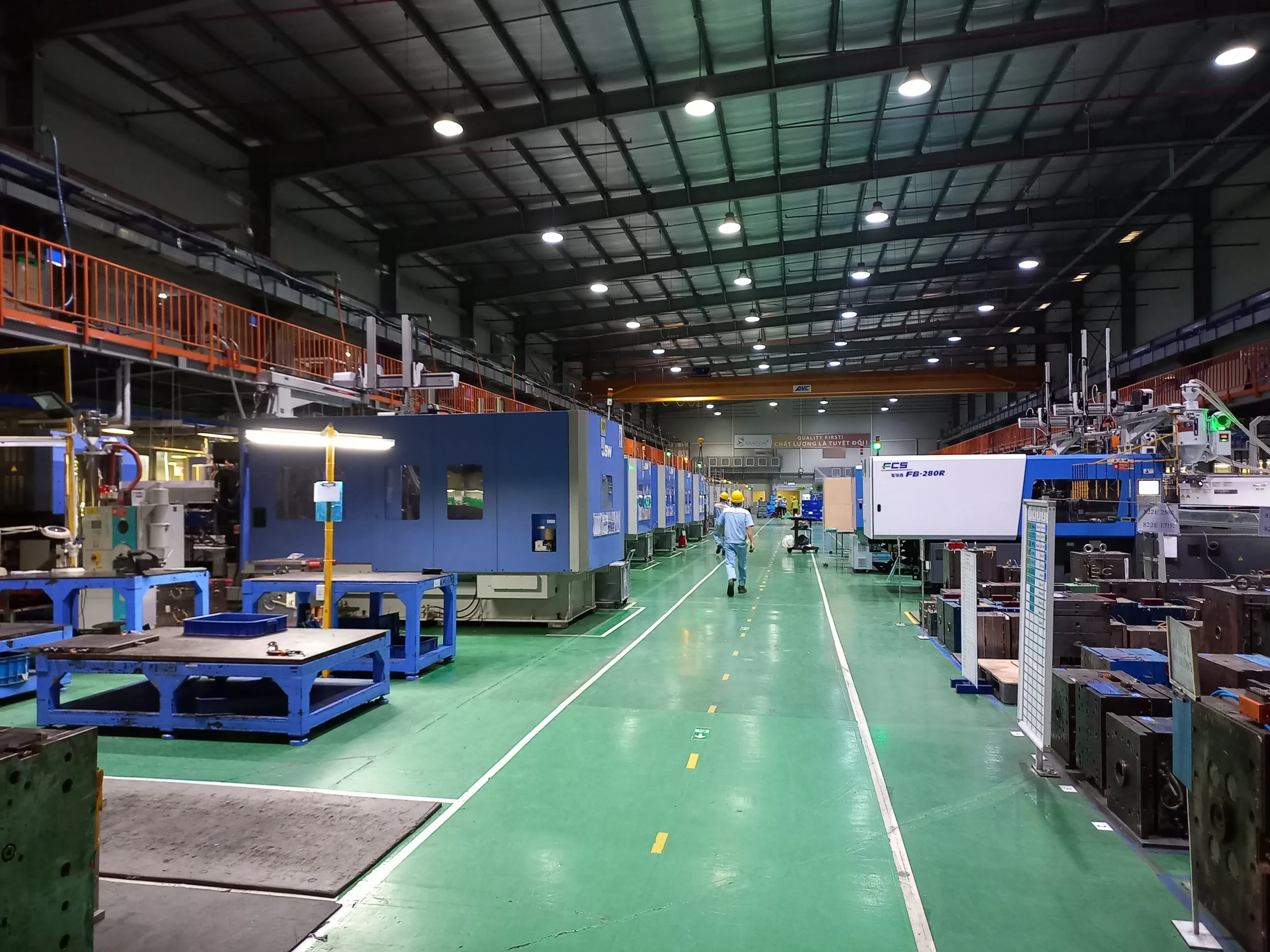
Is China Plus One Right for Your Business?
Not every importer should pursue China Plus One right now. The strategy has setup costs, learning curves, and short-term capacity risk. The honest answer: it is right for most importers above a certain volume threshold, and it is unnecessary for many small ones. Here is how to think about whether your business is in the first group or the second.
China Plus One makes sense when
- Your China purchasing volume is large enough that tariffs or delays materially affect the business.
- Customers, retailers, or government contracts are asking for non-China production.
- Your product category has tariff or anti-dumping exposure.
- You have experienced delays, shutdowns, or supplier issues in the last two years.
- You are launching new SKUs and want to avoid adding more China dependency.
China Plus One may not make sense yet when
- Your order volume is too small to justify a second supplier.
- Your product-market fit is still unproven.
- China still has a decisive capability or scale advantage for your category.
- Tooling costs are too high to justify relocation.
- You do not have working capital for sampling and parallel production.
Friction points worth planning for
Three operational realities surprise buyers in their first transition. Plan for them up front.
MOQs often go up, not down. A long-term China supplier may accept smaller lots because the setup is already amortized. A new Vietnamese or Mexican factory usually needs higher minimums to justify a new program. In Vietnam, we often see MOQs 20% to 100% higher than an established China supplier, depending on the category. See our guide to MOQ in manufacturing for the underlying mechanics.
Payment terms tighten. A trusted China supplier may have given you 30/70 terms after years of relationship, or net-thirty in some cases. A new factory typically wants fifty percent upfront and the balance before shipment until they have several clean orders behind them. That hits cash flow during the transition on top of parallel-production duplication.
Language, peak seasons, Tet. Vietnam has real operating friction: uneven English proficiency between sales and production teams, seasonal capacity crunches, and the Tet shutdown each January or February. Plan around these early. Read our guide to working with Vietnamese suppliers before you commit.
The questions to answer before you start
- Which products generate the most revenue or carry the most customer risk?
- Which products are most exposed to tariffs, anti-dumping duties, or origin requirements?
- What are your current China lead times, MOQs, and payment terms?
- Who owns your tooling, molds, and production files?
- How much working capital can you support during sampling and parallel production?
The buyers who succeed answer these before they start sourcing. The ones who struggle treat the transition as a procurement exercise instead of a supply chain redesign.
When Anywhere But China is the better answer
Some buyers are not doing China Plus One. They are doing Anywhere But China: removing China entirely. Choose that route when a customer or contract requires no China content, when the China supplier relationship is no longer recoverable, or when regulatory or sanctions exposure makes China a liability. Choose China Plus One when your goal is diversification, your China supplier is still performing, and you want optionality rather than a clean break. The default for most buyers is China Plus One because it is the lower-risk version. For the full treatment of the harder path, see our Anywhere But China sourcing guide.
How Cosmo Sourcing Helps With China Plus One Sourcing
Cosmo Sourcing helps buyers evaluate and execute China Plus One transitions across Vietnam, Mexico, China, and Southeast Asia. We identify which products to move first, compare country options, qualify manufacturers, collect original factory quotes, coordinate samples, and arrange factory visits. Our fixed-fee model means no factory commissions, no markups on supplier quotes, and no hidden contacts. Clients receive original quotes, full supplier details, and direct introductions, so they can build long-term relationships with the manufacturers themselves.

Not sure which product to move first or which country makes the most sense?
Cosmo Sourcing can review your current China supply chain and help identify the best China Plus One opportunities in Vietnam, Mexico, and Southeast Asia.
Which Countries Qualify as China Plus One Destinations
Five practical destinations for most importers, plus a handful of secondary options for specific categories. Each has a different strength profile. China remains the incumbent inside most China Plus One setups; for its role in the mix and our service breakdown, see the China sourcing pillar guide. For a head-to-head on the three most common second countries, see our Vietnam vs. China vs. Mexico comparison.
Vietnam
The most common second country, and where most of our client work happens. Vietnam shares a land border with China and has built its factory base largely on Chinese manufacturing techniques and, in many cases, Chinese ownership of capital and equipment. That continuity matters: a Vietnamese factory often runs the same machinery and the same production methods as its Chinese counterpart, with lower labor cost and a different country of origin on the export documents.
Vietnam is strong in apparel, footwear, furniture, bags and accessories, consumer electronics assembly, packaging, ceramics, and a growing list of industrial categories. See our full Vietnam sourcing guide and the top 10 Vietnam manufacturing cities.
Mexico
The second-most common destination, especially for buyers selling into the United States, Canada, and Mexico itself. Truck freight from Mexico to most US states is days, not weeks. USMCA tariff treatment for qualifying products (see our USMCA rules of origin guide). A workforce experienced in automotive, medical devices, electronics assembly, and apparel.
We have operated in Nuevo Leon since 2023. Strongest fit where speed-to-market and tariff advantage matter more than absolute lowest unit cost. See our Mexico sourcing guide, our maquiladora structure guide, and our list of top brands made in Mexico.
Thailand, Indonesia, Malaysia, Philippines
Each has specific category strengths. Thailand for automotive parts and rubber. Indonesia for textiles and footwear at high volume. Malaysia for electronics and semiconductors. The Philippines for assembly with an English-language workforce.
We do not maintain offices in these four countries and source across the region from our Vietnam hub. For most buyers, these are a third or fourth option after Vietnam and Mexico, not the primary "plus one." Read our Southeast Asia sourcing guide for the regional view.
India, Pakistan, Bangladesh
These appear on many China Plus One shortlists, especially when buyers compare labor costs on paper. India has textile, leather, pharmaceutical, and engineering clusters; Pakistan has cotton textiles, leather goods, and sporting goods; Bangladesh is a major global apparel producer.
Based on our direct sourcing experience, we do not recommend these countries for most buyers looking for a practical China Plus One alternative. The issue is not whether products can be made there. It is whether the sourcing process is predictable enough, documentation reliable enough, quality systems consistent enough, and follow-through strong enough for the Western buyers we typically serve. Cosmo Sourcing does not currently source from India, Pakistan, or Bangladesh.
Country comparison at a glance (8 countries, click to expand)
| Country | Best product categories | Main advantage | Main watchout | Best buyer fit |
|---|---|---|---|---|
| China | Electronics, consumer goods at scale, complex assemblies, deep component supply chain. | Mature factory base, deepest component supplier network, well-understood logistics. | Tariff exposure into Western markets, single-country concentration risk, rising coastal labor costs. | Buyers keeping China as the incumbent inside a China Plus One mix. |
| Vietnam | Apparel, footwear, furniture, bags, lighting, outdoor gear, packaging, growing electronics assembly. | Strong export manufacturing base, close cultural and supply chain links to China, broad free trade agreement coverage. | Tet shutdown each January and February, peak-season capacity tightness, MOQs above small-batch China options. | Most consumer goods buyers moving primary volume out of China. |
| Mexico | Automotive, medical devices, electronics assembly, industrial goods, apparel for North American markets. | Short freight times to the US and Canada, USMCA tariff treatment for qualifying products. | Higher unit cost than most of Asia, complex USMCA rules of origin that must be designed in. | US and Canadian buyers prioritizing speed-to-market and regional supply resilience. |
| Thailand | Automotive parts, processed food, rubber products, selected electronics. | Strong industrial and automotive parts base, well-developed component supply chains. | Labor costs above Vietnam but below coastal China, English fluency uneven outside Bangkok. | Specialized industrial, rubber-related, and automotive products. |
| Indonesia | Apparel, footwear, rubber, palm and natural materials, growing footwear sector. | Large labor force and competitive costs, deep textile base. | Infrastructure and logistics thin outside Java, higher import-export friction than Vietnam. | High-volume, labor-intensive products. |
| Malaysia | Electronics, semiconductors, rubber gloves, technical components, integration work. | Advanced electronics and technical manufacturing, English-language business environment. | Narrower category fit and labor cost comparable to coastal China. | Technical and regulated products where category depth matters more than labor cost. |
| Philippines | Electronics assembly, niche apparel, business process work, light manufacturing. | English-language proficiency, growing assembly base. | Smaller factory base, typhoon-season shipment risk in some months. | Selected electronics and light manufacturing categories. |
| India, Pakistan, Bangladesh | Apparel basics (especially Bangladesh), cotton textiles, leather goods, generic pharmaceuticals. | Low labor cost on paper, specific category clusters with global scale. | Higher friction on lead times, communication, compliance, quality consistency, and factory verification. | Generally not recommended for most China Plus One projects. Category-specific, very large buyers with on-the-ground teams only. Not a Cosmo sourcing market. |
Vietnam: the primary China Plus One country
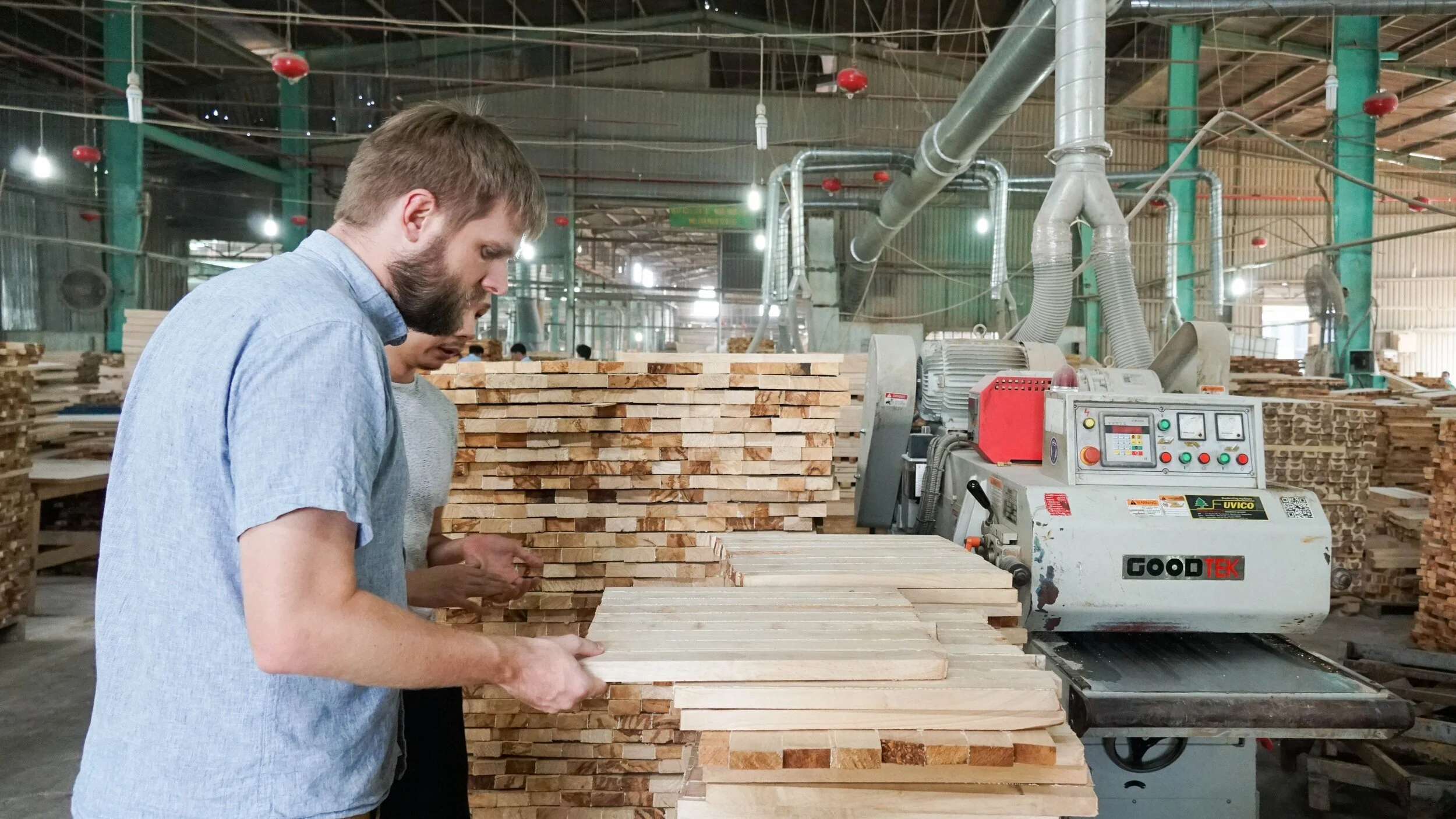
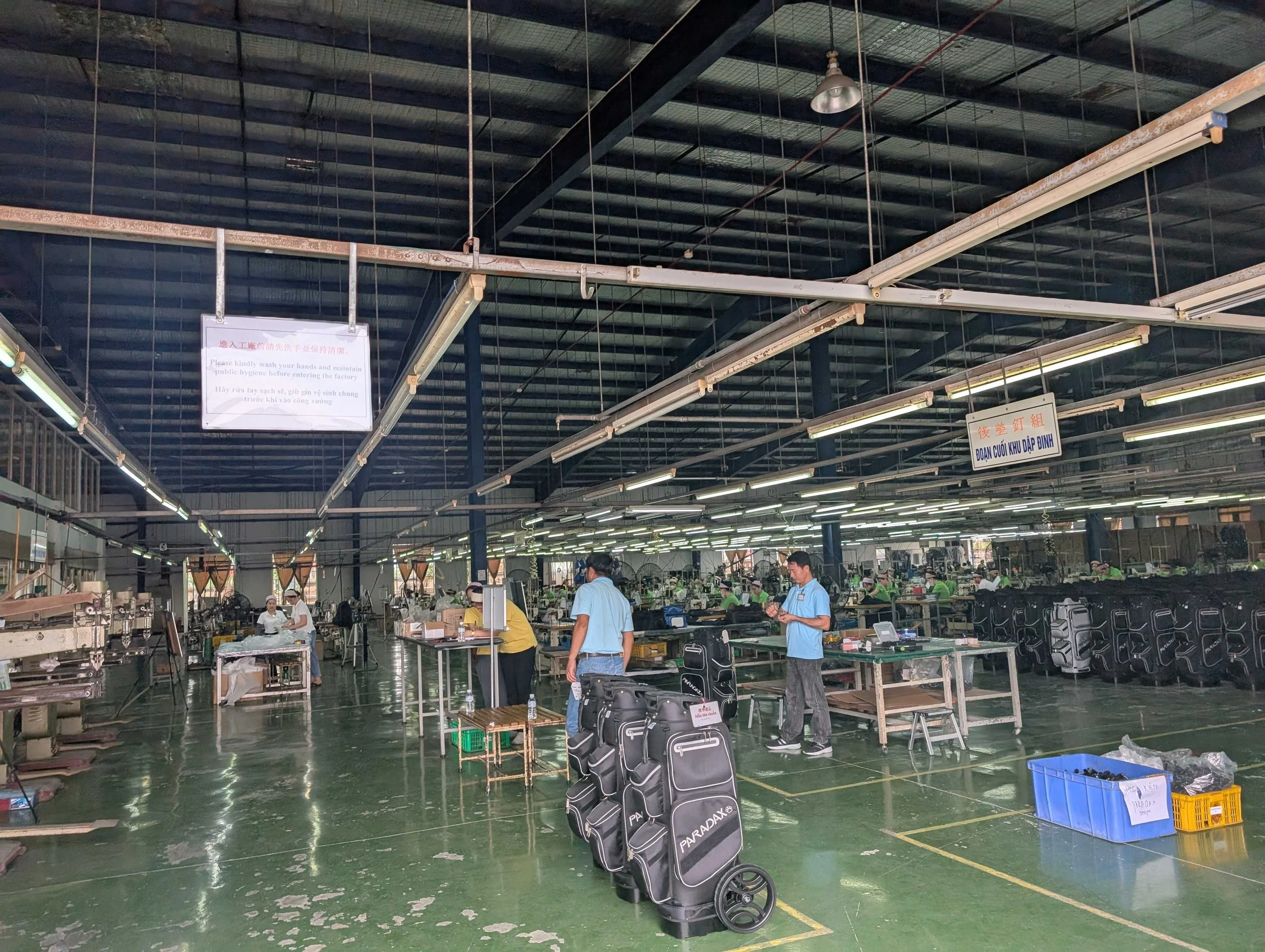
On a recent factory tour for a US lighting brand, one of our leading candidates ran twelve assembly lines in Vietnam connected to a research and design showroom in Foshan, China that held more than five hundred product models. Chinese design. Components drawn into Vietnam. Final assembly under Vietnamese certificate of origin for export. That is a literal China Plus One manufacturing structure, built into a single factory.
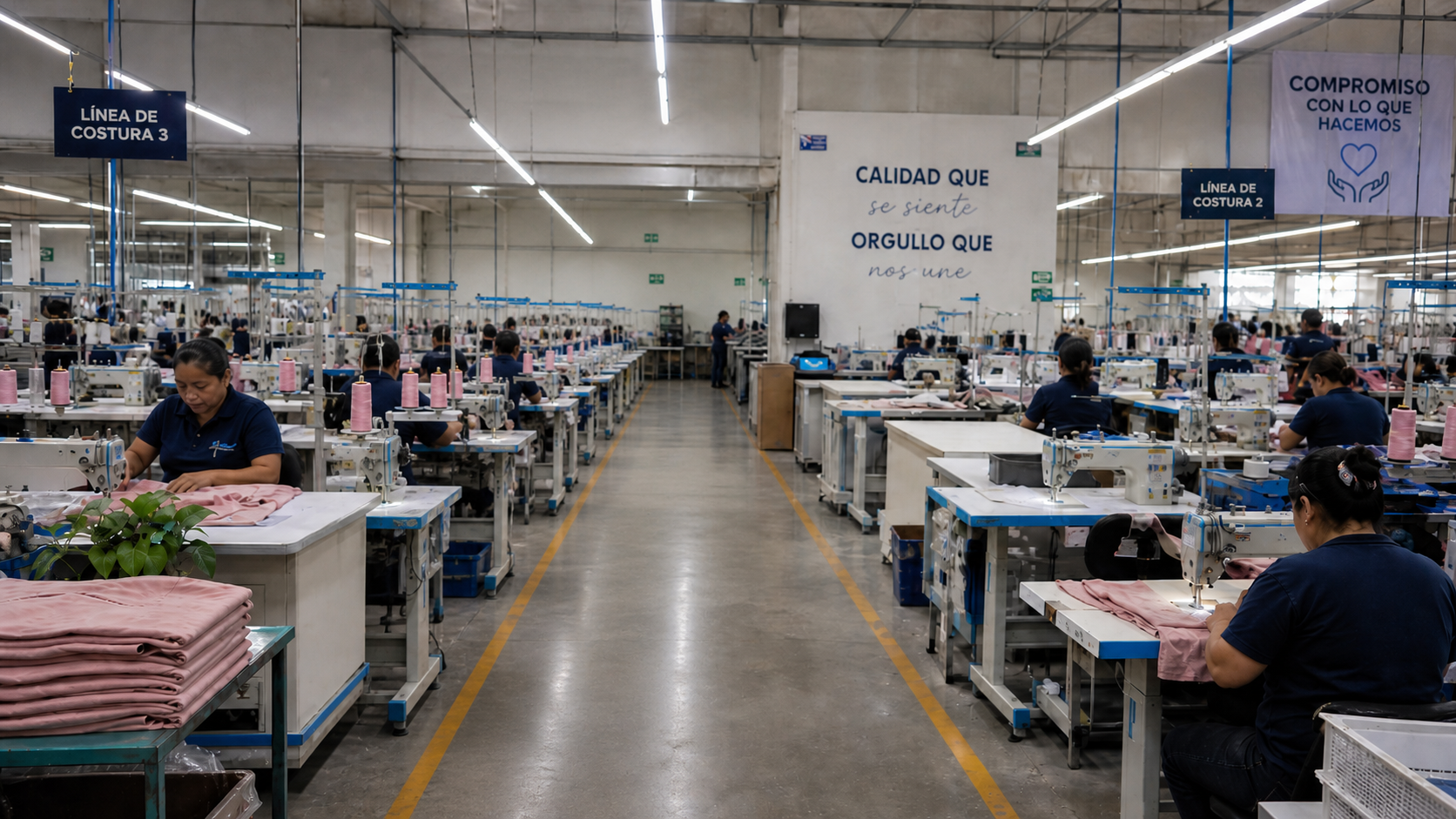
How to choose your Plus One country
The right country usually comes down to ten criteria. Most buyers should start with product category, component supply chain, and tariff treatment. If the answer is not obvious after those three, the remaining criteria usually decide it.
See all 10 criteria for choosing your Plus One country
- Product category and manufacturing capability: which countries have the factory base for what you make.
- Existing component supply chain: where your inputs come from, and how that affects country of origin treatment.
- Target market and tariff treatment: what the destination market charges on goods from each candidate country today.
- Freight time and shipping method: ocean, truck, or air, and what your customer needs.
- MOQ and factory capacity: whether the country's factories will accept your order size at sustainable terms.
- Required certifications: UL, ETL, CE, REACH, RoHS, FDA, CPSIA, OEKO-TEX, BSCI, SMETA, WRAP. Whichever apply.
- Tooling and setup costs: capital cost of a transition, including tooling recreation if the China factory owns the original.
- Labor versus material content: labor-heavy products favor lower-cost countries; material-heavy products favor countries near the input supply chain.
- Customer or retailer country-of-origin requirements: what your downstream buyer or contract specifies.
- Total landed cost: the only number that matters once the other nine are weighted.
Need help choosing the country?
Send us your current China supply base and we'll model the Plus One options for your top SKUs.
Our team will compare Vietnam, Mexico, and Southeast Asia options against your product mix, target market, tariff exposure, and order volume. Fixed fee, no commissions, direct factory contact.
The China Plus One Transition Process: Step by Step
Most successful transitions follow the same five-step process. The timing varies by product complexity and order volume. The sequence rarely does. The realistic timeline range is covered at the end of this section. Trying to compress it usually produces the mistakes we cover later. For a Vietnam-specific deep dive on the transition itself, see our guide to moving manufacturing from China to Vietnam.
List every product, volume, factory, FOB, lead time, and tooling owner.
Tariff exposure, concentration risk, simplicity, tooling cost. One to three first wave.
Paper review, sampling, NNN, in-person visit. Two to three sample rounds.
One to three months. China holds reduced volume while new country ramps up.
25%, 50%, 75% increments to the new factory. Manage the China relationship deliberately.
Step 1: Audit your current China supplier base
Before you source a single new factory, list every product you currently produce in China. For each one, capture annual volume, current factory, current FOB cost, lead time, recent quality issues, and any contractual obligations. The audit becomes the foundation of every decision that follows.
Tooling deserves its own column. For each product, note who owns it, where it is located, what its replacement cost would be, and what the lead time is to remake it elsewhere. If the China factory owns the tooling, you have three options when you transition: negotiate a release (sometimes for a fee, sometimes hostile), recreate the tooling at the new factory (usually faster, with a capital cost), or run two sets in parallel during the transition (most expensive, lowest risk). The right choice is product-specific. We have seen clients walk away from transitions over tooling cost alone. Know what you own before you decide what to move.
Step 2: Identify which products to move first
Not everything moves at once. The products that should move first are the ones with the highest tariff exposure, the highest concentration risk (a single Chinese factory making a high-revenue item), the simplest manufacturing process, and the lowest tooling cost to recreate elsewhere. We start most clients with one to three products in the first wave. Sometimes a single product line.
The first product to move is not always the biggest one. Pick a product where tariff exposure is high, manufacturing is simple, tooling cost is manageable, and supplier availability is good in the second country. A clean first transition gives you the operational base for the harder products later.
COR Surf: moving surf and travel gear from China to Vietnam
COR Surf came to us in 2022 with one China-made product: bamboo surf and skateboard racks. The goal was to move production to Vietnam without losing quality. After that first transition proved out, we helped source additional categories in Vietnam, including microfiber changing ponchos, backpacks, toiletry bags, and roof rack pads.
Step 3: Source and qualify factories in the new country
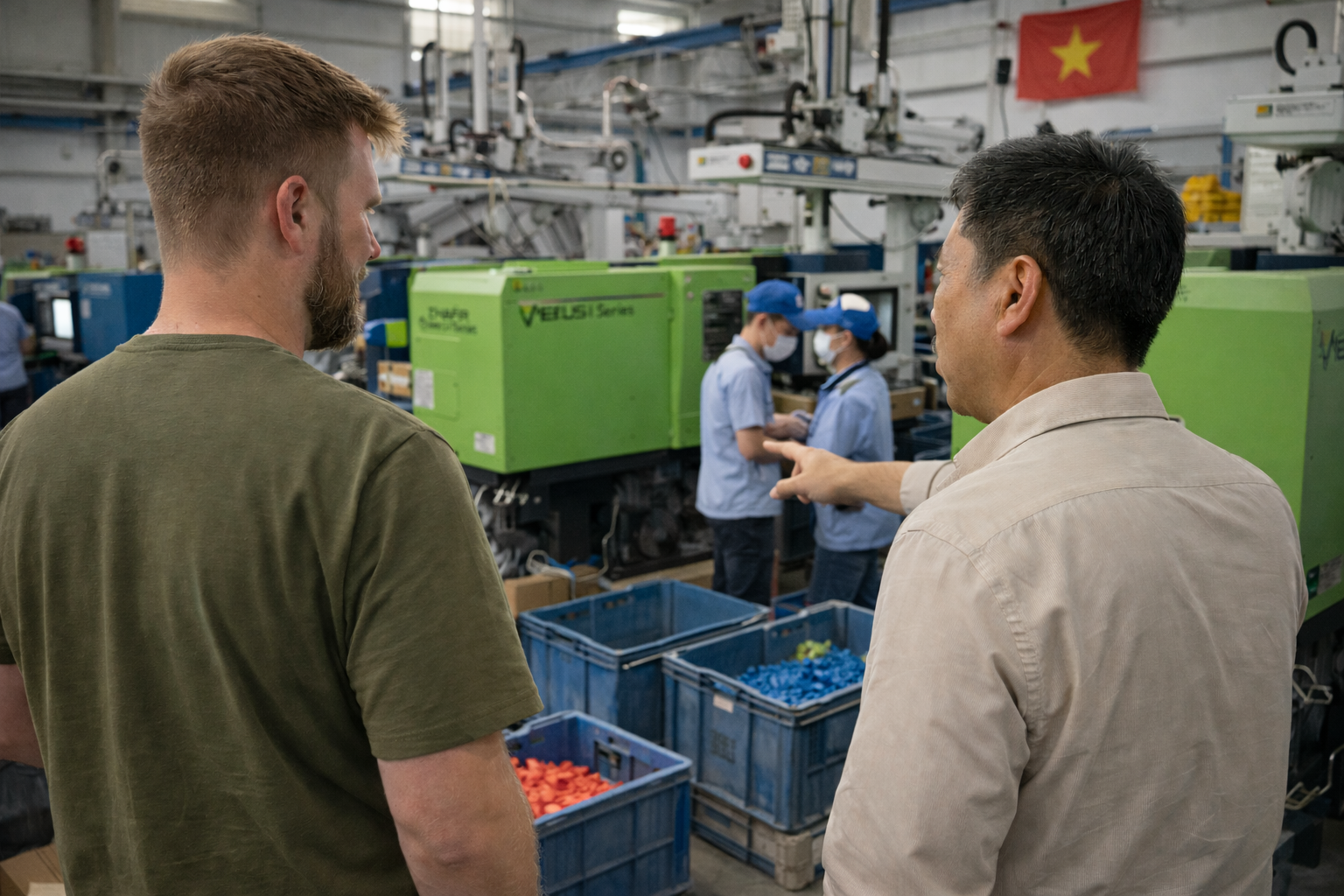
This is the step that takes the most time and where most do-it-yourself transitions stall. Sourcing alone is not the bottleneck. Anyone can pull a list off Alibaba or a trade-show directory. The bottleneck is qualification. A factory that passes a paper review fails on a floor walk often enough that we treat in-person factory visits as non-negotiable for any production order above modest volume.
Hunting and Fishing New Zealand: qualifying Vietnamese factories in person
Grant Sheridan, CEO of Hunting and Fishing New Zealand, flew to Vietnam to qualify factories before committing. Over three days, he visited seven factories across Ho Chi Minh City and Hanoi, with our team handling logistics, translation, and technical evaluation. He left with four credible candidates and is now placing a first production order of approximately 15,000 pieces.
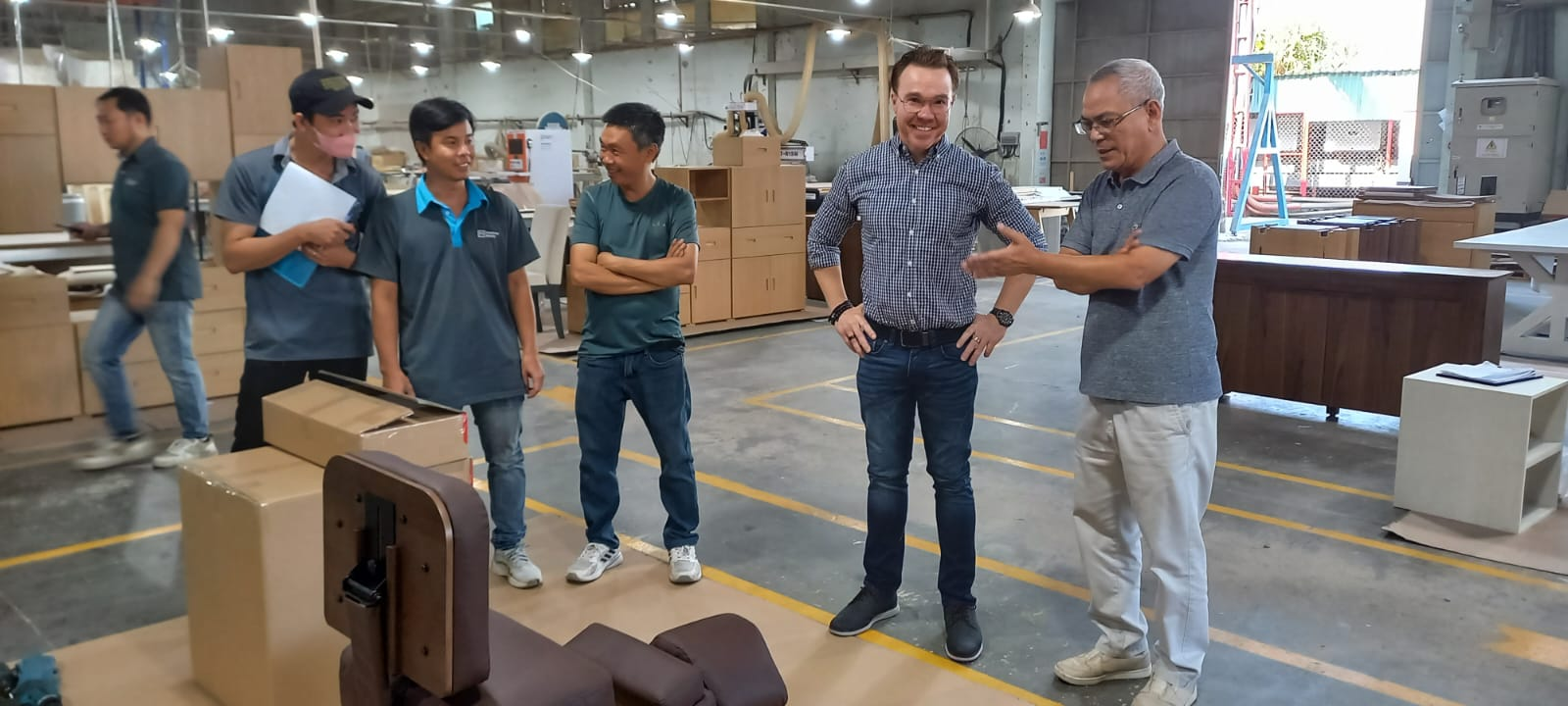
What in-person qualification catches that paper review does not:
- Whether the factory you visited actually does the production, or whether it subcontracts to a smaller shop
- Whether claimed certifications match observed practice on the floor
- Whether quality control stations are staffed or for show
- Worker conditions and turnover signals (always relevant for compliance and stability)
- Whether sample rooms reflect production reality or were built to impress buyers
Sampling and IP protection
Once you have a shortlist of qualified factories, sampling begins. Typical run for consumer goods is four to eight weeks with two to three rounds before you sign off on production. The sample brief should specify materials, tolerances, finishes, packaging, and any regulatory marks (UL, CE, FCC, ETL) the production unit will carry. Benchmark new-country samples against the existing China-made reference unit, not against a render or written spec. That apples-to-apples comparison catches drift early.
Before you send full specs, CAD files, or samples to a new factory, get an NNN agreement (non-disclosure, non-use, non-circumvention) signed. Our guide to NNN agreements covers the specific provisions to insist on. For Vietnam-specific IP filings, see our intellectual property in Vietnam guide. Register important design patents and marks in the manufacturing country before production begins.
Step 4: Run parallel production (the dual-track period)
The biggest risk in a transition is shutting down China production before the new country is ready to absorb full volume. We typically recommend a parallel production period of one to three months for most categories, longer for regulated or precision goods. During this time, the China factory runs at reduced volume while the new factory ramps up. Costs are higher. That is the price of doing the transition without a stockout.
Use the parallel period to run multiple production cycles in the new country, validate quality against China-made benchmarks (third-party inspection helps here; our Vietnam factory inspections and quality control guide walks through the options), test logistics and lead times, train your team on the new country's payment terms and shipping documents, and confirm unit economics work at production scale, not just at sample stage.
Freight and logistics deserve attention during the parallel period. Vietnam ships out of Cat Lai (Ho Chi Minh City) and Hai Phong. Mexico moves overland to most US destinations. China's Shenzhen, Ningbo, and Shanghai have the deepest forwarder networks. Transit times vary by route:
| Route | Typical transit time |
|---|---|
| Vietnam to US West Coast | 14 to 21 days |
| Vietnam to Northern Europe | 28 to 35 days |
| Mexico to US by truck | 3 to 7 days |
| China to US West Coast | 16 to 22 days |
| China to Northern Europe | 30 to 35 days |
These shipping windows are separate from total order-to-arrival lead time, which also includes production and inspection. The forwarder you use in China may not have the right Vietnam presence, so budget time to vet capabilities. Our guide to choosing a freight forwarder covers what to evaluate.
Tariff rates can move during a transition. Build a quarterly tariff review into the parallel period to confirm the math still works.
Step 5: Scale up and shift volume
Once the new factory has delivered two or three clean production runs and the parallel data shows the unit economics work, shift volume systematically. Most clients move in increments: 25% to the new factory, then 50%, then 75%, with China holding the balance. Some keep China at 25% indefinitely as a hedge. Others go to 100% in the new country once confidence is high.
The China relationship needs deliberate management, not benign neglect. Telling the China factory their volume is dropping (and why) early is usually better than letting them discover it through declining purchase orders. Some will respond with price concessions or service improvements. Others will quietly deprioritize you. Either response is information. The wrong move is to leave the question unanswered and let it answer itself.
Realistic timelines at a glance
-
1
Month 1Audit and shortlist
China audit, product priority, country selection, factory shortlist.
-
2
Month 2 to 3Sourcing and qualification
RFQ, NNN, factory visits, paper review.
-
3
Month 3 to 4Sampling and approval
Two to three sample rounds, golden sample sign-off.
-
4
Month 4 to 6First production and parallel
First production run, inspection, start of parallel production.
-
5
Month 6 to 7+Scale up
Multi-run validation, volume shift, end-state mix decision.
Five to seven months from decision to full second-country production is the realistic range for most consumer goods. That includes sourcing and qualification, sampling, the first production run, and the start of parallel production. Apparel, basic bags, and similar high-volume categories often land at the shorter end. Furniture, footwear, and lighting tend to sit in the middle. Electronics, medical, food-contact, and other regulated categories typically extend beyond seven months because certification and validation work cannot be compressed.
How China Plus One Costs Actually Compare Across Countries
The right question is not whether Vietnam FOB is cheaper than China FOB. The right question is total landed cost: what it costs to get the product from the factory floor to your warehouse after tariffs, duties, freight, insurance, inspections, and inventory timing are included. Buyers comparing FOB quotes side by side often see Vietnam two to ten percent higher and walk away. They miss that China unit cost may carry tariffs the Vietnam-made product avoids, that the Vietnam quote may include a feature or certification the China factory left out, or that the Vietnam transit window is shorter. None of that shows up in a side-by-side FOB number.
Landed cost is the right metric
The right comparison is not China FOB versus Vietnam FOB. It is total landed cost: factory price, ocean or air freight, insurance, tariffs and anti-dumping duties, customs brokerage, domestic transport, and pre-shipment inspection. A Vietnam quote that looks slightly higher at the factory often comes in lower at the warehouse once tariffs and freight are included.
Landed cost includes:
- Factory FOB price (unit cost from the factory at port)
- Ocean or air freight
- Insurance
- Tariffs and anti-dumping duties on arrival
- Customs brokerage and clearance fees
- Domestic transport from port to warehouse
- Any pre-shipment inspection or third-party QC costs
Automotive precision components: 30% landed cost advantage in Vietnam
We worked with a global automotive components manufacturer producing precision parts for German luxury and performance vehicles. Vietnam-sourced suppliers came in roughly 30% below the client's existing domestic production at the unit-cost level while meeting required automotive-grade standards. The savings were only achievable after vetting for cleanliness certifications, surface treatment specs, and material traceability.

For pricing models and a deeper breakdown of how sourcing companies charge (fixed fee, commission, hourly, markup), see our guide to sourcing company costs.
The certificate of origin question
Almost every China Plus One conversation eventually comes back to certificate of origin. A product made in Vietnam with valid Vietnamese origin documentation enters most markets under Vietnam's tariff schedule, not China's. But the certificate only works if the product meets the destination country's origin rules.
The rules are technical and they have tightened in both directions in recent years. The US has introduced significant penalty tariffs on shipments determined to be improperly transshipped through Vietnam, with limited room for mitigation. The EU has comparable origin and anti-dumping rules with documentation requirements that need to be planned for before shipment, not after.
Documentation that supports your origin claim should include:
- Bills of materials
- Production records
- Supplier declarations
- Process records
- Commercial invoices
- Factory records supporting substantial transformation
Our guide to Vietnam origin compliance and CBP transshipment rules covers the substantial transformation standard. We screen for certificate of origin capability on every factory we qualify in a transition.
Always confirm current treatment with a licensed customs broker before pricing a transition.
Compliance regimes beyond country of origin
Certificate of origin is the most visible compliance question in a transition. It is not the only one. Most product certifications are factory-and-product-specific, so moving country usually means re-running the testing. Plan for it in the timeline and budget.
The regimes that most often apply in client work: CPSIA for US children's products, FDA for US food contact and medical devices, REACH and RoHS for EU chemical compliance, UL/ETL/CE for safety, and OEKO-TEX/GOTS/SMETA/BSCI/WRAP for textiles and social compliance (the last set takes six to eighteen months to obtain). Our Vietnam factory audit guide covers the social compliance frameworks and our certificate of conformance guide covers the documentation side.
Payment terms and currency exposure
A transition usually tightens payment terms in the short term. A trusted China supplier may offer 30/70 or even net terms, while a new Vietnamese or Mexican factory often wants 50% upfront and the balance before shipment. Build that into working capital planning. Currency exposure is usually modest, but it matters if margins are tight or the transition stretches across multiple quarters.
China Plus One Manufacturing by Industry
Not all categories move the same way. Some are nearly frictionless in Vietnam. Some require Mexico for the nearshoring math to work. Some are still better served by China. Here is the category-level view from our project work.
Apparel and textiles
- Best C+1 country: Vietnam.
- Secondary: Mexico for North American buyers needing fast turnaround on smaller runs; Indonesia and Bangladesh for high-volume basics.
- Moves well: Technical outdoor wear, basics, uniforms, cut-and-sew, bags and accessories.
- Watchouts: Fabric sourcing (much of it still flows from China), MOQs on a new program, social compliance audit requirements.
Furniture and home goods
- Best C+1 country: Vietnam.
- Secondary: Mexico for upholstered and metal furniture serving North America.
- Moves well: Wooden furniture (Vietnam is a global leader for the US market), home decor, ceramics, kitchenware.
- Watchouts: Container loading efficiency for bulky goods, FSC and chain-of-custody certifications, Tet shutdown disruption.
Footwear
- Best C+1 country: Vietnam.
- Secondary: Indonesia for sport and casual at high volume.
- Moves well: Athletic, casual, and increasingly technical footwear. Major brand production lines are already in place.
- Watchouts: Specialized footwear components still flow from China; capacity at established factories is often locked up by major brands.
Bags, backpacks, and accessories
- Best C+1 country: Vietnam.
- Secondary: Indonesia and India for specific leather and bag subcategories.
- Moves well: Soft goods, technical bags, backpacks, microfiber accessories, board racks, and outdoor carry products.
- Watchouts: Different bag constructions require different factory types; one supplier rarely covers a full range.
Lighting and home decor
- Best C+1 country: Vietnam.
- Secondary: China remains the deepest base for novelty and high-mix lighting where the design library and component supply chain still favor it.
- Moves well: Chandeliers, pendants, lamps, vanity lights, wall sconces, outdoor lighting.
- Watchouts: UL, ETL, and CE certification on the new production line is non-negotiable for Western retail.
Electronics
- Best C+1 country: Vietnam for assembly and consumer electronics; Malaysia for semiconductor and technical electronics; Philippines for English-language assembly operations.
- Secondary: China remains the deepest base for components, particularly high-density PCB assembly and specialty parts.
- Moves well: Final assembly, case work, sub-assemblies, consumer electronics.
- Watchouts: Component depth is still in China; in electronics, China Plus One often means keeping components in China and moving final assembly elsewhere.
Industrial components and automotive
- Best C+1 country: Mexico for North American buyers (USMCA plus established supplier ecosystems); Vietnam for buyers who can absorb longer freight times.
- Secondary: Thailand for automotive parts and rubber-related components.
- Moves well: Precision components, stamping and casting, sub-assemblies, rubber and plastic parts.
- Watchouts: Automotive-grade quality systems (IATF 16949) take time to qualify. Material traceability and surface treatment specs require deep vetting.
Lighting deserves a note: the Foshan-Vietnam factory referenced earlier is typical of the category. Chinese design and component depth paired with Vietnam-based final assembly and Vietnamese origin documentation. The category is viable, but UL, ETL, CE, and customer-specific compliance files eliminate many inexperienced factories.
Mexico's automotive ecosystem is strongest in the Northeast and Bajio, including Monterrey, Saltillo, Ramos Arizpe, Guanajuato, Queretaro, Aguascalientes, and San Luis Potosi. Vietnam can also work for precision components when buyers can absorb longer freight times.
Common China Plus One Mistakes (and How to Avoid Them)
Most failed transitions fail for the same reasons. Here are the ones we see repeatedly, drawn from projects we have either run or had to clean up after.
Show all 9 common mistakes and how to avoid them (click to expand)
| Mistake | Why it happens | Why it causes problems | How to avoid it |
|---|---|---|---|
| Moving everything at once | Buyer treats China Plus One as a one-shot relocation rather than a sequenced transition. | Stockouts, missed deadlines, emergency air freight, and operational overload across multiple product lines at the same time. | Move one to three products in the first wave. Sequence the rest as each one proves out. |
| Comparing only FOB price | Buyers benchmark factory quotes side by side without modeling tariffs, freight, duties, or lead time. | The "more expensive" country often wins on landed cost once tariffs and freight are included. Buyers walk away from real savings. | Build a full landed-cost model before you decide. Sometimes the case for moving is risk, not unit cost. |
| Skipping factory visits | Buyer relies on Alibaba listings, sample-room photos, or remote video calls. | The "factory" turns out to be a broker, subcontractor, or smaller operation than represented. We have walked into "factories" that turned out to be trading offices with three desks. | Visit before you commit. If you cannot travel, hire someone on the ground who can visit on your behalf. |
| Ignoring tooling ownership | Buyer never confirms who owns the molds, dies, or fixtures until the transition is already underway. | Existing China factory refuses to release tooling, or demands a release fee that breaks the transition economics. Recreation cost was never budgeted. | Confirm tooling ownership in Step 1 of the audit. Plan recreation cost and timeline upfront. |
| Assuming certifications transfer | Buyer assumes UL, CE, FDA, CPSIA, REACH, or social audit certifications follow the brand, not the factory. | Most product certifications are factory-and-product-specific. Moving country means re-running the testing. Compliance gap delays the first shipment. | Plan to re-test in the new country. Budget six to eighteen months for slower-moving certifications like SMETA, BSCI, or WRAP. |
| Shutting down China production too early | Buyer cuts China before the new country has delivered multiple clean production runs. | Stockout, missed customer commitments, emergency air freight that erases projected savings. We watched a client try to flip 100% to Vietnam in 90 days and run out of inventory before the second Vietnam run completed. | Run parallel production for one to three months, longer for regulated goods. The duplication cost is the price of not breaking your supply chain. |
| Underestimating MOQs in the new country | Buyer assumes the new factory will accept the same lot sizes as their long-running China supplier. | New factories quote higher MOQs to make a new program worth their setup time. Working capital and inventory plans break under the higher commitment. | Pre-negotiate MOQs at the sampling stage. Build twenty to one hundred percent higher minimums into working capital planning. |
| Underestimating certificate of origin complexity | Buyer assumes Vietnamese final assembly automatically yields a Vietnamese certificate of origin. | Substantial transformation rules not met. Customs flags shipments. Tariff savings disappear. | Screen for certificate of origin capability on every shortlisted factory. Verify the supply chain inputs, not just the final assembly location. |
| Treating it as procurement, not supply chain redesign | Buyer assigns the project to a junior buyer, gets quotes, never builds the operational plan. | Transition stalls at the sampling phase. The original China supplier reabsorbs the volume by default. | Assign senior ownership. China Plus One is a multi-year strategic move, not a quarterly purchasing exercise. |
Most failed transitions do not fail because Vietnam or Mexico is the wrong country. They fail because the buyer treats the move as a supplier search instead of a supply chain redesign.
China Plus One Sourcing FAQ
Click any question to expand the answer.
How long does a China Plus One transition take?
Five to seven months for most consumer goods, including the initial sourcing and qualification phase. Apparel and similar high-volume categories often land at the shorter end. Furniture, footwear, and lighting sit in the middle. Regulated categories (electronics, medical, automotive, food contact) typically extend beyond seven months because certification and validation work cannot be compressed.
Is sourcing from Vietnam or Mexico cheaper than China?
Sometimes, not always at the unit cost level. The bigger savings usually come from tariff treatment, not factory price. The right comparison is total landed cost, not factory FOB. Many categories now sit at near-parity with China at unit cost, with the tariff differential providing the savings.
Is Vietnam the best China Plus One country?
For most consumer goods, often yes. Vietnam has the broadest factory base, strong China supply chain links, and favorable export infrastructure. For automotive, medical devices, or North American speed-to-market, Mexico may be stronger. For electronics or specialty categories, Malaysia, Thailand, or the Philippines may be relevant.
Is Mexico better than Vietnam for China Plus One?
For North American buyers who need short freight times, USMCA treatment, or closer supplier collaboration, Mexico may be better. For most consumer goods and global export programs, Vietnam is often the stronger first option.
Do I have to leave China entirely?
No. That is the difference between China Plus One and Anywhere But China. Most successful transitions keep some China production indefinitely. The strategic choice is the end-state mix, not whether China stays at all.
What if my Chinese supplier owns my tooling or molds?
You have three options: negotiate a release (sometimes free, sometimes hostile, sometimes for a fee), recreate the tooling at the new factory, or run two sets in parallel. The right choice is product-specific. Confirm tooling ownership during the Step 1 audit and budget the recreation cost and timeline upfront.
How do certificates of origin work?
A certificate of origin establishes where a product was made for tariff purposes. To qualify under a second country's certificate, the product must meet that country's substantial transformation rules, supported by bills of materials, production records, and supplier declarations. Confirm current rules with a licensed customs broker for your destination market.
What is transshipment risk?
The risk that customs authorities determine your product was routed through Vietnam (or another second country) without enough substantial transformation to qualify for that country's origin treatment. If flagged, goods get reclassified under the original country of origin and penalty tariffs can apply. The defense is documentation built into the supply chain design, not bolted on at the end.
What is the biggest mistake companies make during a China Plus One transition?
Treating it like a simple supplier search instead of a supply chain redesign. The buyers who succeed assign senior ownership, build a real operational plan, and accept that the first few months will cost more than running a single country. The ones who struggle hand the project to a junior buyer and expect quotes to solve the problem.
How do I run parallel production without doubling my costs?
You cannot eliminate the extra cost entirely. Parallel production is the insurance premium for avoiding disruption. Manage it by gradually reducing China volume as the second-country supplier proves itself.
Are tariffs lower in Vietnam and Mexico than in China?
Generally yes for most categories, especially for US-bound goods. Specific rates change frequently and vary by product. Always confirm current treatment with a licensed customs broker before pricing a transition.
Does Cosmo Sourcing work with India, Pakistan, or Bangladesh?
No. Cosmo Sourcing does not currently source from those countries and generally recommends Vietnam, Mexico, or selected Southeast Asian markets for most China Plus One projects.
Do I need a sourcing company to run a China Plus One transition?
Not strictly. Some buyers manage China Plus One internally. A sourcing company is most useful when you lack in-country presence, need factory qualification, or are comparing multiple countries. Multi-country capability matters because the right answer may be Vietnam for one product and Mexico for another. Read our guide to China sourcing agents and how we work.
Next Steps for Your China Plus One Transition
If you are evaluating a transition, start here.
Ready to start your China Plus One transition?
If your team does not have in-country sourcing capacity, factory-vetting experience, or the bandwidth to manage a multi-country transition, Cosmo Sourcing can help you evaluate the right products, qualify suppliers, and build a practical China Plus One plan. Clients receive the factory's direct contact details and the original factory quote. No markup. No hidden commission. No blocked supplier relationship.
We have been active in China since 2012, on the ground in Vietnam since 2014 (Binh Duong, just outside Ho Chi Minh City), and operating in Mexico since 2023 (Nuevo Leon). We have served thousands of clients, sourced more than 10,000 products, and been featured in the Wall Street Journal, Reuters, the LA Times, the Chicago Tribune, Global Sources, and other industry publications. For package options and pricing, see our China Plus One sourcing company services page and our services and packages.
Or email us directly at info@cosmosourcing.com
Current China supply base, product priorities, target country, and where you're feeling exposed.
Vietnam, Mexico, or Southeast Asia. Vetted factory shortlist, sample timelines, and fixed-fee scope.
Full factory contact details handed over. You own the relationship from sample through reorder.