What Does Minimum Order Quantity (MOQ) Mean in Manufacturing?
Minimum Order Quantity (MOQ) is the smallest number of units a factory will produce in a single order. If you are sourcing a product for the first time, MOQ is one of the first constraints you will hit, and understanding how it works will save you time, money, and frustration when talking to manufacturers.
MOQ (Minimum Order Quantity) is the minimum number of units a manufacturer will accept for one production run. MOQs exist because factories need each order to cover their setup costs, raw material purchases, and production line time. Typical MOQs range from 100 to 10,000+ units, depending on the product type, manufacturing process, and country of production.
Updated Feb 24, 2026
Why Factories Set MOQs
MOQs are not arbitrary numbers designed to shut out small buyers. They reflect real production economics that I have seen firsthand across hundreds of factory visits in Vietnam, China, and the rest of Southeast Asia.
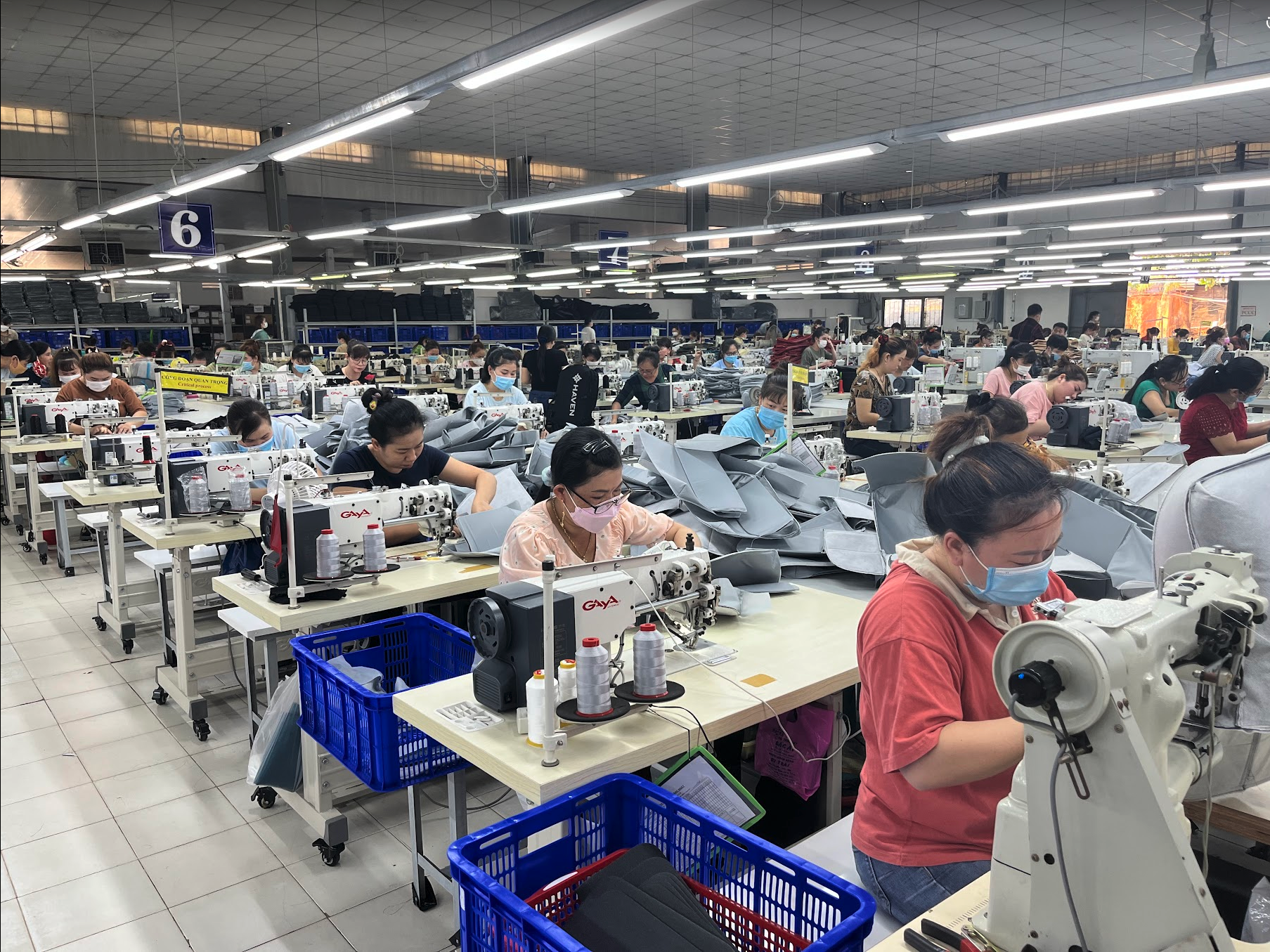
Every production run starts with setup: machines need to be configured, molds or cutting dies need to be loaded, raw materials need to be ordered from the factory's own suppliers (who also have minimums), and quality control baselines need to be established. That upfront investment is roughly the same whether the factory produces 200 units or 20,000. A low-volume order that does not cover those fixed costs means the factory loses money on the job, so they set a floor.
Raw material sourcing is another factor most buyers underestimate. Fabric mills, resin suppliers, and component vendors all have their own minimums. If a garment factory needs a specific fabric for your order, they may need to purchase 500 meters to get the mill to run it. That minimum from their supplier sets the floor for your MOQ. This is why highly customized products (unique colors, special materials, proprietary components) tend to carry higher MOQs than products that use standard, off-the-shelf components.
Production line scheduling also plays a role. Factories plan their capacity weeks or months. Accepting a very small order means pulling a production line off a larger, more profitable job. Some factories will still take smaller orders, but they will charge a higher unit price to offset the cost.
The key takeaway: MOQs reflect the actual cost of making your product, not a negotiating tactic. Understanding that changes how you approach the conversation with a factory.
| Product Type | Vietnam MOQ | China MOQ |
|---|---|---|
| Garments & Textiles | 300–3,000 pcs | 500–5,000 pcs |
| Plastics & Injection Molding | 1,000–5,000 units | 500–3,000 units |
| Furniture & Wood Products | 50–400 pcs | 200–500 pcs |
| Electronics & Assemblies | 500–5,000 units | 100–5,000 units |
| Consumer & Hard Goods | 500–3,000 units | 500–3,000 units |
Ranges reflect typical MOQs per style/SKU. Actual MOQs vary by factory, material, and customization level.
MOQ Ranges by Country and Product Type
MOQ expectations vary significantly depending on where you source and what you are making. After more than a decade of sourcing in Asia, here are the ranges I see most often across our projects at Cosmo Sourcing.
Vietnam
Vietnam's manufacturing base is dominated by small to mid-sized factories, many of which are more flexible on MOQs than their Chinese counterparts. That flexibility is one of the reasons Vietnam has become the go-to alternative to China for buyers who are not placing massive orders.
Garments and Textiles
MOQs for apparel in Vietnam typically range from 300 to 3,000 pieces per style and color. Smaller, specialized factories (the kind that don't show up in Google searches) can sometimes produce as few as 200 to 500 units for simpler products like t-shirts or tote bags. Large clothing manufacturers in Vietnam that supply global brands usually start with 3,000 to 10,000 pieces. The MOQ depends heavily on the fabric: if you need custom-dyed or custom-printed fabric, the fabric mill's minimum will raise your garment's MOQ.
Plastics and Injection Molding
MOQs for injection-molded products in Vietnam generally range from 1,000 to 5,000 units, depending on mold complexity and part size. Simple products using existing molds can go lower. If you need a new custom mold, the factory will often set a higher MOQ on the first order to recoup its tooling investment.
Furniture and Wood Products
Vietnam is the world's second-largest furniture exporter, and MOQs for furniture range widely. Container-load orders (roughly 200 to 400 pieces depending on the product) are standard for export. Some factories will accept mixed-container orders with as few as 50 pieces per SKU, which is useful for buyers testing multiple designs.
Electronics and Assemblies
For PCB assembly, electronic components, or consumer electronics, expect MOQs of 500 to 5,000 units. Vietnam's electronics sector is still more focused on large-scale contract manufacturing (Samsung, Intel) than on small-batch custom work, so finding flexible partners for lower volumes takes more effort. For a broader look at what can be produced here, see our guide on products made in Vietnam.
China
China's manufacturing ecosystem is enormous and mature, which means you can find nearly any MOQ level if you know where to look. However, the general trend over the past decade has been upward. As labor costs have risen and factories have consolidated, many Chinese manufacturers have shifted toward higher-volume orders and are less willing to take on small jobs.
Garments and Textiles
Large Chinese garment factories typically set MOQs of 500 to 5,000 pieces per style and color, comparable to those of Vietnam's larger operations. The difference is that China's sheer number of factories means you can find small workshops willing to do 100 to 300 pieces, particularly in Guangzhou's garment district. Quality and reliability at that tier vary widely.
Plastics and Injection Molding
China's injection molding MOQs usually start at 500 to 3,000 units and can go much higher for commoditized products. China's tooling costs are often lower than Vietnam's, and its turnaround time is faster, so the barrier to entry for custom molds is somewhat lower.
Electronics
China remains the global leader in electronics sourcing. MOQs for PCBAs and consumer electronics range from 100 to 5,000+ units, with Shenzhen's ecosystem offering the most flexibility for small batches and prototyping. If your product is electronics-heavy, China remains hard to beat on MOQ flexibility for that category.
Consumer Goods and Hard Goods
For products like kitchenware, pet products, sporting goods, and similar hard goods, expect MOQs of 500 to 3,000 units from Chinese factories. Trading companies on platforms like Alibaba may offer lower MOQs, but they act as middlemen, and the per-unit cost will be higher.
Other Sourcing Destinations
India, Mexico, Thailand, and Indonesia each have their own MOQ dynamics. Indian textile manufacturers often match or undercut China and Vietnam on MOQs for certain product categories, particularly cotton garments and home textiles. Mexican factories tend to have higher MOQs for mass production, but offer advantages in speed to market for North American buyers. Thai manufacturers are competitive in food and beverage products, rubber goods, and automotive components, with MOQs that are broadly similar to those in Vietnam.
The country you source from should be determined by what you are making, not just the MOQ, but the MOQ landscape in each country should factor into your planning.
How to Negotiate Lower MOQs
You can negotiate MOQs, but it helps to understand what the factory can and cannot bend on. Here are the approaches I have seen work consistently across thousands of sourcing projects.
Pay a Higher Unit Price
This is the simplest and most commonly accepted approach. If the factory's MOQ is 1,000 units and you want 500, ask what the price per unit would be at 500. Most factories will quote it. The price will be higher because they are spreading setup costs over fewer units, but you avoid committing to inventory you are not ready for.
Start with a Trial Order
Framing your first order as a "trial" or "test" order signals to the factory that you are evaluating them for larger future business. Many factories, particularly in Vietnam, will accept a smaller initial order if they believe you will come back with volume. Be honest about your projections. Factories can tell the difference between a buyer testing the market before scaling and one who will never order more than 300 units.
Use Standard Materials
If you are flexible on colors or materials, ask the factory what they have in stock. A garment factory sitting on 2,000 meters of a particular fabric can produce a much smaller run from that stock than from a fabric they need to order from a mill. The same applies to plastics (standard resin colors), packaging (stock box sizes), and other inputs.
Combine SKUs to Hit the Overall Minimum
Some factories set their MOQ per production run, not per individual SKU. If you have multiple products or multiple colorways, you may be able to combine them into a single order that meets the factory's overall minimum. Ask about this directly. It is one of the most effective tactics for product-line businesses.
Work with a Sourcing Company
A sourcing company with established factory relationships can often negotiate MOQ flexibility that a first-time buyer cannot. Factories are more willing to accommodate lower quantities when the order comes through a partner they know and trust. At Cosmo Sourcing, we regularly help clients navigate MOQ conversations because we know which factories are flexible and which are not. We can position a client's first order in a way that gets the factory's attention.
When Higher MOQs Are Worth It
Not every buyer should be trying to minimize their order quantity. In many cases, committing to a higher MOQ is the smarter business decision.
Larger orders drive lower unit costs. This is straightforward manufacturing economics, and the price difference can be substantial. Going from 500 to 2,000 units might reduce your unit price by 15-25%, improving your margins and competitive pricing.
Higher-volume buyers also get priority treatment from factories. When production lines are full (and they often are in peak seasons), the factory will prioritize the client ordering 5,000 units over the one ordering 300. That priority translates into shorter lead times, greater attention from QC teams, and greater flexibility when changes arise during production.
If you have validated your product and have reasonable confidence in demand, ordering at or above the factory's standard MOQ is almost always a better deal than negotiating it down. The negotiation effort should focus on getting the right price at the right quantity, not on pushing the quantity as low as possible.
How a Sourcing Company Helps with MOQs
One of the most common challenges we see at Cosmo Sourcing is buyers who have found a factory they like but cannot meet the MOQ. This is especially common among first-time importers and smaller brands launching a new product.
A sourcing company helps in several practical ways. First, we know the landscape. After sourcing thousands of products across Vietnam and other markets since 2012, we know which factories are genuinely flexible on minimums and which are not, before you spend weeks going back and forth. We also know when a factory's stated MOQ is their actual floor rather than a starting position.
Second, factories trust established relationships. When we introduce a client, the factory knows Cosmo Sourcing, knows we bring serious buyers, and is more likely to accommodate a lower first order because they see the potential for ongoing business through our pipeline.
Third, we help buyers avoid the common mistake of choosing a factory solely because it offered the lowest MOQ. A factory willing to take a 100-unit order might be a great fit, or it might be a trading company marking up someone else's production, or a factory desperate for orders because its quality has driven away larger clients. We help clients evaluate the full picture, not just the number on the quote.
If you are navigating MOQs for the first time or have been quoted minimums that do not fit your current stage, reach out to our team. We can help you find the right factory at the right quantity for where your business is right now, and help you scale from there.