Low-Cost Country Sourcing: Guide to Finding the Right Manufacturing Destination
Low-cost country sourcing (LCCS) is a procurement strategy where businesses source products, materials, or components from countries with lower labor and production costs, such as Vietnam, Mexico, Indonesia, and Bangladesh. Done well, it cuts manufacturing costs significantly. Done poorly, it trades unit-price savings for quality problems, long lead times, and tariff exposure.
Weighing a move away from China-only production? The China plus one sourcing guide covers how buyers actually split or shift production across these countries.
What Is Low-Cost Country Sourcing?
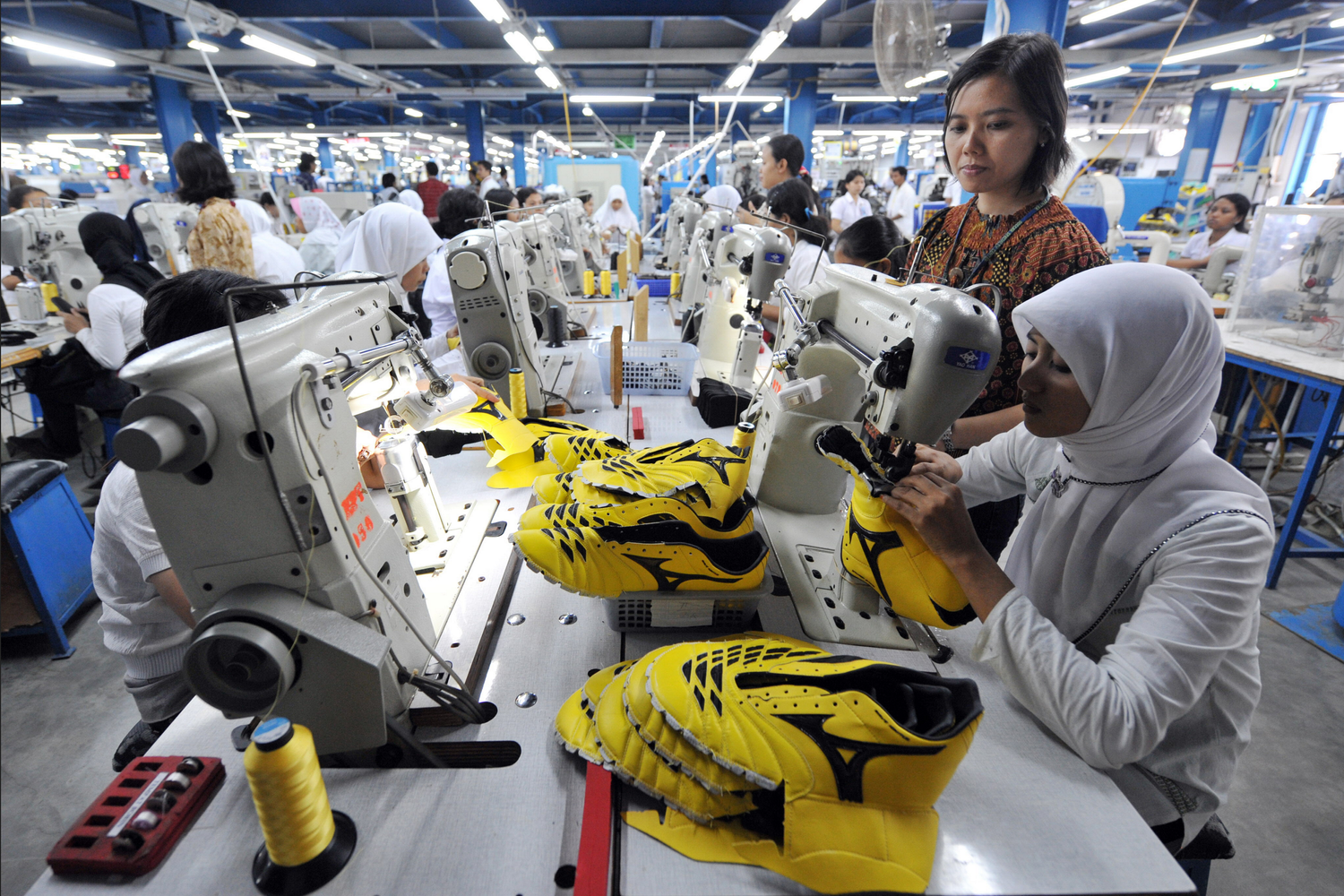
LCCS is the practice of purchasing goods from countries where labor, raw materials, and overhead are significantly cheaper than in developed markets. A U.S. company buying cotton t-shirts from Vietnam instead of manufacturing them domestically, or a European brand sourcing electronics assembly from Thailand, are both practicing LCCS.
The concept is simple. The execution is not.
The most popular LCCS destinations include Vietnam, China, Bangladesh, Indonesia, Thailand, Mexico, and parts of Eastern Europe. Each has different strengths, challenges, and cost structures. Choosing the right one depends on your product, target market, volume, and tolerance for complexity.
The key distinction most people miss is between unit price and total landed cost. A factory in Bangladesh might quote you 30% less than one in Mexico, but once you factor in ocean freight (30 to 45 days versus 3 to 5 days by truck), inventory carrying costs, quality inspection expenses, and tariff exposure, the math can look very different.
"Low cost is only part of the equation. The country you choose, the relationships you build, and the total cost picture, not just the unit price, determine whether LCCS actually works for your business."
Jim Kennemer, Founder of Cosmo SourcingBenefits and Advantages of Low-Cost Country Sourcing
The advantages of LCCS go beyond the obvious labor savings, though the labor savings are real.
Lower Production Costs
The headline benefit. Labor-intensive products (apparel, footwear, furniture, bags, assembled goods) can often be produced for a fraction of the domestic cost. For many consumer product companies, LCCS is the difference between a viable margin and no margin at all.
Access to Specialized Manufacturing Ecosystems
The best low-cost countries are not just cheap. They are deep. Vietnam's footwear corridor, China's electronics clusters, and Bangladesh's garment sector have decades of accumulated expertise, trained workforces, and supplier networks that most high-cost countries no longer have at scale. You are often buying capability, not just cost.
Pricing Flexibility and Competitiveness
Lower unit costs give you room to compete on price, protect margin when a retailer squeezes you, or absorb cost shocks like freight spikes without immediately raising prices.
Supply Chain Diversification
Sourcing across multiple low-cost regions spreads risk. Companies with production split between countries weathered the disruptions of the past few years far better than those concentrated in a single country or factory.
The Best Low-Cost Sourcing Countries (First-Hand Verdicts)
Country lists written from a desk all look the same, because they are all summarizing the same three reports. Every verdict below comes from projects Cosmo Sourcing has actually run, including one country we tried and walked away from. Tap a destination for the quick read, then scroll for the full write-ups.
- Strongest at
- Textiles, furniture, footwear, electronics, plastics, hand assembly
- Best for
- Labor-intensive products where quality matters and China-only feels risky
- Watch out for
- Raw materials often imported, which adds lead time; OEM factories need your designs and specs
Sourcing from Vietnam: Our Home Base Since 2014
Cosmo Sourcing set up operations in Binh Duong province, in the greater Ho Chi Minh City area, back in 2014, before most sourcing companies were paying attention to Vietnam. At the time, most buyers were still defaulting to China for everything.
Vietnam has matured dramatically since then. Total exports reached a record $475 billion in 2025, up 17% year over year, according to Vietnam's General Statistics Office, and the textile and garment industry earned roughly $46 billion in exports in 2025, keeping Vietnam among the world's three largest garment exporters. This is not a small or untested market.
What makes Vietnam work comes down to three things. The workforce is skilled, detail-oriented, and particularly strong at hand assembly; defect rates at well-managed factories are consistently low. The trade agreement position is strong: Vietnam participates in the CPTPP and the EU-Vietnam Free Trade Agreement (EVFTA), which provides tariff advantages for exports to Europe, Canada, Australia, Japan, and other markets. And the cost position still hits a sweet spot: labor costs remain well below China's, though they are rising, with genuinely competitive pricing in textiles, furniture, electronics, footwear, and plastics.
The challenges are real, though. Vietnam's supply chain is still developing. Unlike China, where you can source every component within a 50-kilometer radius, Vietnamese factories often need to import raw materials from China or elsewhere, which adds lead time. Factories here are primarily OEM operations, so you need to come with your own designs and specifications. If you are used to browsing Alibaba and picking from ready-made products, Vietnam requires a different approach.
For a full deep-dive, see our Vietnam Sourcing hub, and if you want help on the ground, that is exactly what our Vietnam sourcing company services were built for.
Sourcing from Mexico: The Nearshoring Powerhouse
For U.S. companies, the math on Mexico is compelling. Goods can arrive by truck in days rather than weeks via ocean freight. Products that meet USMCA rules of origin enter the U.S. duty-free, a structural advantage no Asian destination can match. Time zone overlap means you can actually call your factory during business hours, and you can fly down for a visit without losing a week.
Mexico posted a record $664.8 billion in exports in 2025, up 7.6% according to INEGI, with more than 80% destined for the U.S. market, and it was the largest U.S. trading partner in total goods and services trade in 2025. The manufacturing infrastructure is mature, particularly in automotive, aerospace, electronics, textiles, and furniture.
From our experience working with manufacturers in Nuevo Leon and other parts of Mexico, the biggest advantage is responsiveness. When a client needs to make a design change, resolve a quality issue, or adjust an order mid-production, the turnaround is dramatically faster than working with a factory in Southeast Asia. For products with short lifecycles, seasonal demand, or heavy customization, this agility can be worth far more than a few percentage points of unit-cost savings.
The trade-off is that labor costs in Mexico are higher than in Vietnam or other parts of Southeast Asia. For high-volume, labor-intensive products with stable designs, you will typically pay more per unit. But on total landed cost, including freight, inventory, and the ability to run smaller, more frequent batches, Mexico often comes out ahead for North American companies. For more, see our Mexico Sourcing hub.
Sourcing from India: Why We Walked Away
This one is going to be blunt, because I think it is important for people considering India to hear an honest perspective.
On paper, India looks fantastic. Massive labor force, low wages, English-speaking workforce, strengths in textiles, pharmaceuticals, and IT services. The government has been aggressively courting foreign investment, and the tariff picture has improved considerably under the U.S.-India trade deal announced in early 2026.
In practice, our experience sourcing from India was poor enough that we decided not to offer it as a sourcing destination.
The quality issues were persistent. Across multiple projects and product categories, we found it extremely difficult to get consistent output that met our clients' specifications. Factories would produce high-quality samples, then deliver production runs that looked nothing like them. Quality control required an exhausting level of oversight, and even then, the results were unpredictable.
The business environment added another layer of difficulty. Banking and payments were complicated and slow. Getting money into and out of the country required navigating layers of bureaucracy we did not encounter in Vietnam, China, or Mexico. Communication breakdowns were frequent. Timelines were rarely met.
I want to be fair: India is enormous, and there are world-class factories there. Large multinationals with dedicated sourcing teams do well in India. But for small and mid-sized businesses working through a sourcing company, the risk-to-reward ratio did not make sense for our clients or us. When a client asks us about India, we are transparent about why we recommend they go elsewhere.
Sourcing from China: Still Essential, Still Shifting
China remains the world's manufacturing giant, and for many products, it is still the only viable option. The depth of the supply chain, the speed of production, and the sheer variety of products available are unmatched; nothing else comes close.
But the landscape has shifted. Rising labor costs, the heaviest effective tariff burden of any major sourcing destination for U.S.-bound goods, and growing geopolitical uncertainty have made China-only strategies risky. Most of our clients are now running some version of a China Plus One approach, keeping their Chinese suppliers while developing alternatives elsewhere. If you are considering that move, we wrote a step-by-step China Plus One guide covering exactly how to run the transition.
Other Low-Cost Sourcing Destinations Worth Knowing
Sourcing from Bangladesh
Bangladesh remains the lowest-cost option for basic garment production, but the infrastructure and compliance challenges are significant. It works for high-volume commodity apparel, less so for anything requiring precision or consistency.
Sourcing from Indonesia
Indonesia is growing as a destination for textiles, footwear, and electronics, though its island geography creates logistical complexity.
Sourcing from Thailand
Thailand is a country we actively source from with good results. Capabilities are strong across automotive, electronics, food processing, and home goods, and the infrastructure is better than most Southeast Asian neighbors. Costs are higher than Vietnam, but the factories we work with are professional, communicative, and deliver on timelines.
Sourcing from Cambodia
Cambodia is a market we approach selectively. We do work with factories there, but we are careful about which projects and which factories we take on. The niche is basic garment production and certain light manufacturing; the manufacturing base is narrow, the infrastructure is limited, and not every factory can consistently meet our clients' standards. We do not treat it as a default option.
Sourcing from Eastern Europe
Eastern Europe, meaning Poland, Romania, and the Czech Republic for most buyers, serves Western European companies seeking nearshoring options, much as Mexico serves North American buyers. Labor costs are higher than Asia, but transit times to EU markets are measured in days, not weeks.
Nearshoring vs. Traditional LCCS: When Each Makes Sense
Nearshoring is the practice of moving production closer to your target market. For U.S. companies, that typically means Mexico or Latin America. For European firms, it is Eastern Europe or North Africa.
The core trade-off: nearshoring costs more per unit but saves you money on logistics, lead time, inventory, and risk. Traditional LCCS in countries like Vietnam or Bangladesh costs less per unit but comes with longer lead times, more complex logistics, and greater exposure to disruption.
| Traditional LCCS (Vietnam, Bangladesh, Indonesia) | Nearshoring (Mexico for the U.S., Eastern Europe for the EU) | |
|---|---|---|
| Unit cost | Lowest | Higher |
| Transit time to market | 30 to 45 days by ocean | Days by truck or rail |
| Inventory requirement | High (long pipeline) | Low (frequent small batches) |
| Mid-production changes | Slow | Fast |
| Best for | High-volume, stable designs, long lifecycles | Fast-changing demand, customization, seasonal goods |
The smartest companies we work with do not pick one or the other. They use LCCS for high-volume base production and nearshoring for flexible, fast-turn needs. Some keep primary production in Vietnam but maintain backup capacity in Mexico. Others split by product line, routing stable SKUs through Southeast Asia and new or seasonal products through Latin America. For a detailed head-to-head, see our Vietnam vs. China vs. Mexico comparison.
How to Evaluate a Low-Cost Country: A Six-Factor Sourcing Analysis
Not every low-cost country is a good sourcing destination. A proper analysis looks at six factors, and unit price is only one of them.
Manufacturing Capability
Can the country actually make your product to your quality standards at the volume you need? I have seen companies chase low labor costs in countries that lack the factories, equipment, or technical expertise for their product category.
Total Landed Cost
Add up the unit price, shipping, duties, tariffs, insurance, quality inspection, travel for factory visits, and the carrying cost of inventory sitting on a container ship for five weeks. That is your real cost. A lot of the "savings" from LCCS evaporate once you do the math, honestly.
Trade Agreements and Tariffs
This matters more now than it has in decades, and it changes faster than any blog post can track. U.S. tariff rates vary significantly by country and product, agreements are renegotiated regularly, and a product that is 15% cheaper to manufacture in one country can easily become more expensive once duties are applied. Rather than quote rates that will be stale in a month, use our tariff calculator, updated monthly, to compare current rates for your product across countries. Beyond U.S. tariffs, look at agreements like Vietnam's CPTPP and EVFTA membership or Mexico's USMCA status, which shape the economics for European, Canadian, and other markets.
Political and Economic Stability
The pandemic, the Bangladesh garment factory crises, and geopolitical tensions have all shown how quickly a stable sourcing relationship can be disrupted. Look for stable governance, reliable infrastructure, and a track record of supporting foreign investment.
Ease of Doing Business
How difficult is it to wire payments, enforce a contract, or resolve a dispute? How responsive are factories to inquiries? How reliable is the logistics infrastructure? These practical details matter more than macro statistics when you are actually trying to get products made and shipped.
Supply Chain Depth
Can factories in that country source raw materials locally, or must they import everything? A Vietnamese furniture factory that sources rubberwood locally has a very different cost and lead-time profile than one that must import hardwood.
Risks and Common Mistakes in Low-Cost Country Sourcing
The risks of LCCS are not abstract. They show up as specific, repeated mistakes, and these five cause the most damage.
Chasing the Lowest Unit Price
The most common and most expensive mistake. The cheapest quote is often cheap for a reason: the factory is cutting corners on materials, quality control is nonexistent, or the quoted price excludes costs that will arise later.
Putting All Your Eggs in One Basket
Single-country, single-supplier strategies looked efficient until COVID shut down entire regions overnight. Diversification costs a bit more upfront but protects you from catastrophic disruption.
Ignoring Cultural Differences
Business norms vary enormously between countries. In Vietnam, relationships are built slowly, and rushing the process will backfire. In Mexico, personal rapport matters more than the contract terms. In China, negotiations are more transactional and direct. Understanding these dynamics is not optional.
Skipping Factory Visits
You cannot properly evaluate a supplier from behind a computer screen. Photos can be staged. Samples can be outsourced. The only way to know what you are getting is to physically visit the factory, see the equipment, and watch production run.
Underestimating Lead Times
Everything takes longer than you expect when sourcing internationally: quotes, samples, production, and shipping. Build a buffer into your timeline and plan accordingly.
Low-Cost Country Sourcing Trends in 2026
The sourcing world is moving toward regionalization and diversification; the era of a single supply chain running through one or two countries is ending. Companies that build flexible, multi-country strategies will have a significant competitive advantage.
Tariff volatility has become a permanent planning input rather than a periodic shock. The companies handling it best treat country selection as a portfolio decision they revisit annually, not a one-time choice.
Sustainability and ESG considerations are becoming a real factor, not just a marketing exercise. The EU's Corporate Sustainability Due Diligence Directive and similar regulations are creating compliance requirements that will favor well-managed factories in countries with transparent governance.
But the fundamentals have not changed. Finding the right manufacturing partner still requires doing your homework, visiting factories, building relationships, and understanding the full cost picture. No amount of technology replaces that.
Low-Cost Country Sourcing Services: Do You Need a Partner?
Plenty of companies run LCCS in-house, and if you have the volume to justify a dedicated team, staff in-country, and years to build supplier relationships, that can work well. Most small and mid-sized businesses do not, which is where low-cost country sourcing services come in. We wrote a full guide on managing overseas suppliers without your own office in Asia if you are weighing that path.
A good sourcing partner does the work you cannot do from your desk: identifying and vetting factories against your actual specifications, visiting facilities in person before you commit, negotiating in the local business culture, managing sampling and quality control on the ground, and catching problems while they are still cheap to fix.
Our product sourcing service page explains exactly what is included and how the process works.
Common Questions About Low-Cost Country Sourcing
What does low-cost country sourcing mean in procurement?
In procurement, LCCS is the strategy of shifting purchasing to countries with significantly lower labor and production costs, evaluated on total landed cost rather than unit price alone. The unit price is only one input; freight, tariffs, inventory, and quality management determine whether the savings are real.
Is low-cost country sourcing still worth it?
Yes, for the right products, but the calculation has changed. Tariff volatility, freight costs, and disruption risk mean the winners now run diversified, multi-country strategies rather than chasing the single cheapest quote.
Which country is best for low-cost sourcing?
It depends on your product and market. Vietnam leads for labor-intensive goods like textiles, furniture, and footwear. Mexico wins for North American companies that need speed, customization, and duty-free USMCA access. Bangladesh is cheapest for commodity apparel, and China still dominates products that need the deepest supply chain.
Do I need a sourcing company for LCCS?
Not always. If you have in-country staff and years to build relationships, in-house works. If you do not, a fixed-fee sourcing company handles factory identification, vetting, visits, and quality control on the ground, and you keep the direct factory relationship.
Cosmo Sourcing, The Anywhere but China Sourcing Company
If you are evaluating where to manufacture your product, whether it is Vietnam, Mexico, or somewhere else entirely, we are happy to share what we know. Cosmo Sourcing has been doing this since 2012, has helped thousands of clients source more than 10,000 products, and has teams on the ground in Binh Duong province in Vietnam, Nuevo Leon in Mexico, and beyond.
We are not going to push you toward a country that does not make sense for your product. If Vietnam is the right fit, we will let you know. If Mexico makes more sense, we will tell you that. And if what you need is still best made in China, we will be honest about that, too.
Reach out at info@cosmosourcing.com or through the contact page to start a conversation.