Importing From Vietnam to Canada: Tariffs, CPTPP Preferences, and Customs Requirements
Most goods manufactured in Vietnam can enter Canada duty-free under the CPTPP. Canada eliminated 94% of its tariff lines on Vietnamese imports when the agreement took effect for Vietnam in January 2019, and the remaining lines are being phased out according to scheduled timelines. This makes Vietnam one of the most cost-effective manufacturing origins for Canadian importers.
The bottom line: if your product qualifies under the CPTPP rules of origin and you have the right documentation, you likely pay zero customs duty. You will still owe GST (5%) and potentially provincial HST on the value of the goods plus shipping.
Vietnam is Canada's largest trading partner in ASEAN. In 2024, two-way merchandise trade reached CAD 15.7 billion, with CAD 14.7 billion in Canadian imports from Vietnam. Since the CPTPP came into force, Vietnamese exports to Canada have surged by roughly 60%, growing from CAD 5.3 billion in 2018 to over CAD 12 billion by 2023. The relationship continues to expand, with both countries participating in the Canada-Vietnam Joint Economic Committee, established in 2022, to advance bilateral trade.
This guide covers everything Canadian importers need to know: tariff rates and how to claim CPTPP preferences, CBSA customs procedures, required documentation, taxes and fees, shipping logistics, and regulatory considerations.
The CPTPP: Canada's Tariff Advantage for Vietnamese Goods
The Comprehensive and Progressive Agreement for Trans-Pacific Partnership is the key trade agreement governing imports of goods from Vietnam into Canada. Unlike the US, which has no free trade agreement with Vietnam and currently applies a 20% reciprocal tariff on top of base duties, Canada offers preferential or duty-free access to the vast majority of Vietnamese goods through the CPTPP.
How the CPTPP Tariff Works
Canada's customs tariff assigns a specific code to Vietnamese goods under the CPTPP: the Comprehensive and Progressive Vietnam Tariff (CPVNT). When you import goods that qualify under the CPTPP rules of origin, you claim this preferential tariff treatment instead of the standard Most-Favoured-Nation (MFN) rate.
For most manufactured goods, the CPVNT rate is 0%. This includes electronics, furniture, footwear, textiles, consumer goods, and most other products commonly sourced from Vietnam. Some agricultural products and supply-managed goods have longer phase-out schedules or remain subject to tariff rate quotas.
Rules of Origin: What Qualifies
Not every product shipped from Vietnam automatically qualifies for CPTPP duty-free treatment. The goods must meet the CPTPP rules of origin, which generally require that the product was either wholly obtained in Vietnam or underwent substantial transformation there. The specific rules vary by product category and are outlined in Annex 3-D of the CPTPP.
This matters because some products assembled in Vietnam may contain components from non-CPTPP countries (particularly China) that could affect eligibility. If the Vietnamese factory primarily assembles Chinese components with insufficient processing, the finished goods may not qualify for preferential treatment.
In our experience helping clients source products from Vietnam, rules of origin rarely pose issues for products genuinely manufactured there. The problems tend to arise with minimally processed or repackaged products. If a Vietnamese factory is cutting, sewing, molding, or fabricating your product from raw materials, you are almost certainly fine.
How to Claim CPTPP Preferences
To claim the CPVNT tariff rate, you need a certification of origin. Under the CPTPP, this is not a government-issued form. The importer, exporter, or producer can self-certify by providing a set of minimum data elements (described in Annex 3-B of the CPTPP) on any commercial document.
For commercial goods valued at CAD 3,300 or less, a certification of origin is not required to claim CPTPP preferential treatment at the border. However, importers must still maintain records (e.g., commercial invoices, B3-3 Canada Customs Coding Form) to substantiate that the goods meet the rules of origin if the CBSA requests verification.
For goods valued over CAD 3,300, the certification of origin must be in the importer's possession at the time of import. We always recommend having a standalone certification of origin document in addition to what appears on the commercial invoice.
CBSA Customs Procedures
The Canada Border Services Agency manages all commercial imports into Canada. Here is what you need to know about the process.
Business Number and CARM Registration
All commercial importers must have a Canada Revenue Agency Business Number with an import/export account. You also need to register in the CBSA's CARM (Assessment and Revenue Management) system. This requires assigning a customs broker and submitting a surety bond or cash deposit to guarantee payment of duties and taxes.
If you are importing commercially for the first time, budget a few weeks to get registered before your first shipment arrives. Your customs broker can walk you through the process.
Required Documentation
Every commercial shipment from Vietnam to Canada needs the following documents:
Commercial Invoice. Must include seller and buyer details, product description, quantity, unit price, total value, currency, terms of sale (Incoterms), and country of origin.
Packing List. Details of what is in each carton or container, including weights and dimensions.
Bill of Lading (ocean) or Air Waybill (air). The transport document issued by the carrier serves as proof of shipment and receipt of goods.
Certification of Origin. Required for claiming CPTPP preferential tariff treatment on shipments over CAD 3,300. The exporter, producer, or importer can self-certify.
Canada Customs Coding Form (B3-3). Your customs broker prepares this. It classifies your goods by HS code, declares the dutiable value, and identifies the tariff treatment claimed.
Product-Specific Certificates. Depending on what you import, you may need health certificates (food products), safety certifications (children's products, electronics), phytosanitary certificates (wood products), or other regulatory documents. See the regulatory section below.
We have seen shipments delayed at Canadian customs because the commercial invoice did not match the packing list, or because the HS code on the certificate of origin did not match what was declared on the B3-3. Get these details right before shipping.
Taxes and Fees
Even with duty-free treatment under the CPTPP, Canadian imports are subject to several taxes and fees.
GST and HST
The federal Goods and Services Tax (GST) of 5% applies to most imported goods. It is calculated on the value for duty plus any applicable customs duties. Some provinces charge a Harmonized Sales Tax (HST) that combines federal and provincial portions, ranging from 13% to 15% depending on the province.
Registered businesses can claim the GST/HST paid on imports as an Input Tax Credit on their GST/HST return, effectively treating it as a cash-flow expense rather than a permanent cost. However, you still need to pay it at the border or through your customs broker's account.
De Minimis Threshold
Canada's de minimis threshold is low. Goods valued under CAD 20 can enter free of duty and taxes. Between CAD 20 and CAD 150, goods may be subject to GST/HST but no customs duties. Above CAD 150, both duties and taxes apply. For commercial shipments, this threshold is largely irrelevant since most orders far exceed these values.
Customs Brokerage Fees
Your customs broker will charge a fee per entry to handle the customs declaration, typically ranging from CAD 50 to CAD 200 per shipment, depending on complexity. This is well worth it. Trying to self-clear commercial shipments as a first-time importer is a recipe for delays and errors.
Shipping and Logistics
Ocean Freight
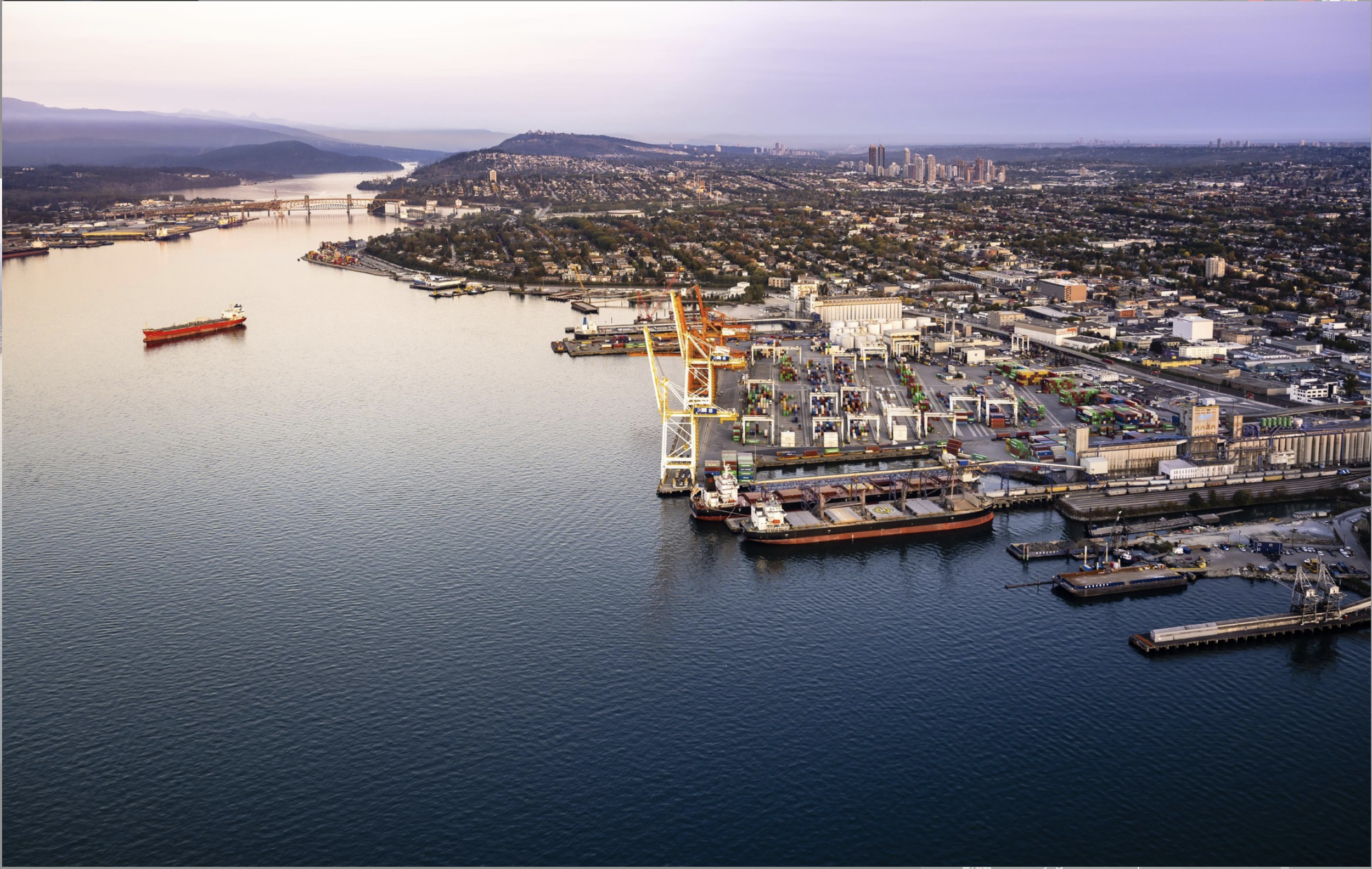
Most commercial shipments from Vietnam to Canada travel by sea. The primary route runs from Ho Chi Minh City (Cat Lai/Cai Mep ports) or Hai Phong to the Port of Vancouver on Canada's west coast.
Transit times from Vietnam to Vancouver typically range from 20 to 30 days for direct sailings or services with one transshipment. Shipments to Eastern Canada via Montreal add 7 to 14 days, depending on whether goods are transshipped through Vancouver or routed via the Suez or Panama Canal.
Full Container Load (FCL) is the most cost-effective option when you have enough volume to fill at least half a 20-foot container. A 20-foot container from Ho Chi Minh City to Vancouver typically costs between USD 1,500 and USD 3,000, depending on season and market conditions.
Less than Container Load (LCL) works for smaller shipments where your goods are consolidated with other cargo. Expect longer transit times (add 5 to 10 days for consolidation/deconsolidation) and higher per-unit costs, but lower total costs for small orders.
Air Freight
Air freight from Vietnam to Canada takes approximately 3 to 7 days. The main air cargo routes connect Tan Son Nhat International Airport (Ho Chi Minh City) or Noi Bai International Airport (Hanoi) with Toronto Pearson or Vancouver International Airport.
Air freight is significantly more expensive than ocean freight, but it makes sense for samples, urgent orders, high-value, low-weight goods, or initial test shipments.
Key Canadian Ports
Vancouver. Canada's largest port and the primary entry point for goods from the Asia-Pacific. Handles the most diversified range of cargo in North America and connects to rail and highway networks serving all of Western Canada and onward to Central and Eastern Canada.
Montreal. The largest port in Eastern Canada, with direct connections to over 140 countries. A good option if your end market is in Quebec or Ontario and you want to avoid inland rail costs from Vancouver.
Toronto. One of Canada's largest inland ports on Lake Ontario. Primarily handles bulk cargo but serves as a key distribution hub.
Prince Rupert. A growing alternative to Vancouver with less congestion and dedicated rail connections to the Canadian interior.
Regulatory Considerations
Health Canada
Products that fall under Health Canada's jurisdiction include food, drugs, medical devices, cosmetics, natural health products, and consumer chemicals. If you are importing any of these, verify the specific requirements before production. Some products require pre-market authorization or product licensing.
Canadian Food Inspection Agency (CFIA)
All food products imported into Canada must comply with the Safe Food for Canadians Regulations. Importers need a Safe Food for Canadians (SFC) licence. They must ensure products meet Canadian food safety standards, labeling requirements (including bilingual English/French labels), and any applicable standards of identity.
Consumer Product Safety
Products sold in Canada must comply with the Canada Consumer Product Safety Act. This covers a wide range of goods, including children's products, textiles, electronics, and household items. Requirements include specific labeling (bilingual), safety testing, and limits on prohibited substances.
Wood Products and the Wild Animal and Plant Protection Act
If you are importing wood or wood-based furniture from Vietnam, you need to comply with Canada's Wild Animal and Plant Protection and Regulation of International and Interprovincial Trade Act (WAPPRIITA). Similar to the US Lacey Act, this requires that imported wood be legally harvested. Maintain certificates of origin and supply chain documentation for all wood products.
Bilingual Labeling
One requirement that catches many first-time importers off guard: Canada requires bilingual labeling in English and French for most consumer products. This includes product descriptions, care instructions, fiber content (for textiles), and safety warnings. Plan for this during the product specification stage, not after the goods arrive at the border.
Top Products Imported from Vietnam to Canada
The main product categories flowing from Vietnam to Canada reflect the country's manufacturing strengths: electronics and electrical equipment, footwear, machinery, furniture, textiles and apparel, seafood, and coffee. These categories align well with what we help our clients source. For a detailed breakdown, see our guide to top products made in Vietnam.
How Canadian Imports Compare to the US
One of the biggest advantages Canadian importers currently have over their American counterparts is the CPTPP. Where US importers face a 20% reciprocal tariff on Vietnamese goods (in addition to base HTS duties), Canadian importers often pay 0% duty under the CPTPP.
This tariff differential is significant. On a USD 100,000 shipment of textiles, a US importer might pay USD 20,000 or more in duties before the goods even reach their warehouse. A Canadian importer bringing in the same goods from the same Vietnamese factory could pay zero duty, owing only 5% GST (which is recoverable as an Input Tax Credit for registered businesses).
For a deeper look at how Vietnam compares with other sourcing destinations, see our Vietnam vs. China sourcing comparison.
Practical Tips From Experience
After more than a decade of helping clients source products from Vietnam and ship them worldwide, including to Canada, a few things stand out.
Get your HS codes right before you ship. The classification determines both your duty rate and which regulatory requirements apply. A customs broker can help, but the earlier you identify the correct codes, the better you can plan your landed cost.
Do not overlook the rules-of-origin documentation. We have seen importers lose their CPTPP duty-free eligibility because they could not produce adequate proof that the goods qualified. Make sure your Vietnamese supplier can provide the necessary production records and materials sourcing documentation.
Factor in the timing of GST/HST recovery. Even though registered businesses can reclaim GST/HST as Input Tax Credits, there is a cash flow gap between paying at the border and recovering on your next return. For large shipments, this can be meaningful.
Build relationships with a Canadian customs broker before your first shipment arrives. They will handle your CARM registration, B3-3 declarations, and duty/tax calculations. A good broker pays for themselves many times over in avoided errors and delays.
For more on the overall sourcing process, our Vietnam sourcing guide covers finding suppliers, vetting factories, and managing production. And if you are still evaluating whether Vietnam is the right fit, our guide to finding manufacturers in Vietnam walks through every platform and resource available.
Ready to Import from Vietnam to Canada with Cosmo Sourcing?
We have been sourcing products from Vietnam since 2014 and have helped clients in over 40 countries, including many Canadian businesses, source more than 10,000 products. Our team in Ho Chi Minh City can help you find the right factory, manage production, coordinate quality inspections, and get your goods ready for shipment to Canada.
We charge a flat fee with no commissions or markups on factory prices. You get the original quotes and full contact details for every factory we introduce.
Email us at info@cosmosourcing.com or visit our Contact Us page to get started.