Importing from Vietnam to the UK: United Kingdom Tariffs, Regulations, and Shipping Costs
The UK imported approximately £8.6 billion in goods from Vietnam in the year to Q3 2025, a 43% increase year-on-year. Thanks to the UK-Vietnam Free Trade Agreement (UKVFTA) and the UK's membership in the CPTPP, UK businesses importing from Vietnam now benefit from reduced or zero tariffs on the majority of product categories. Here is everything you need to know about importing Vietnamese goods into the UK.
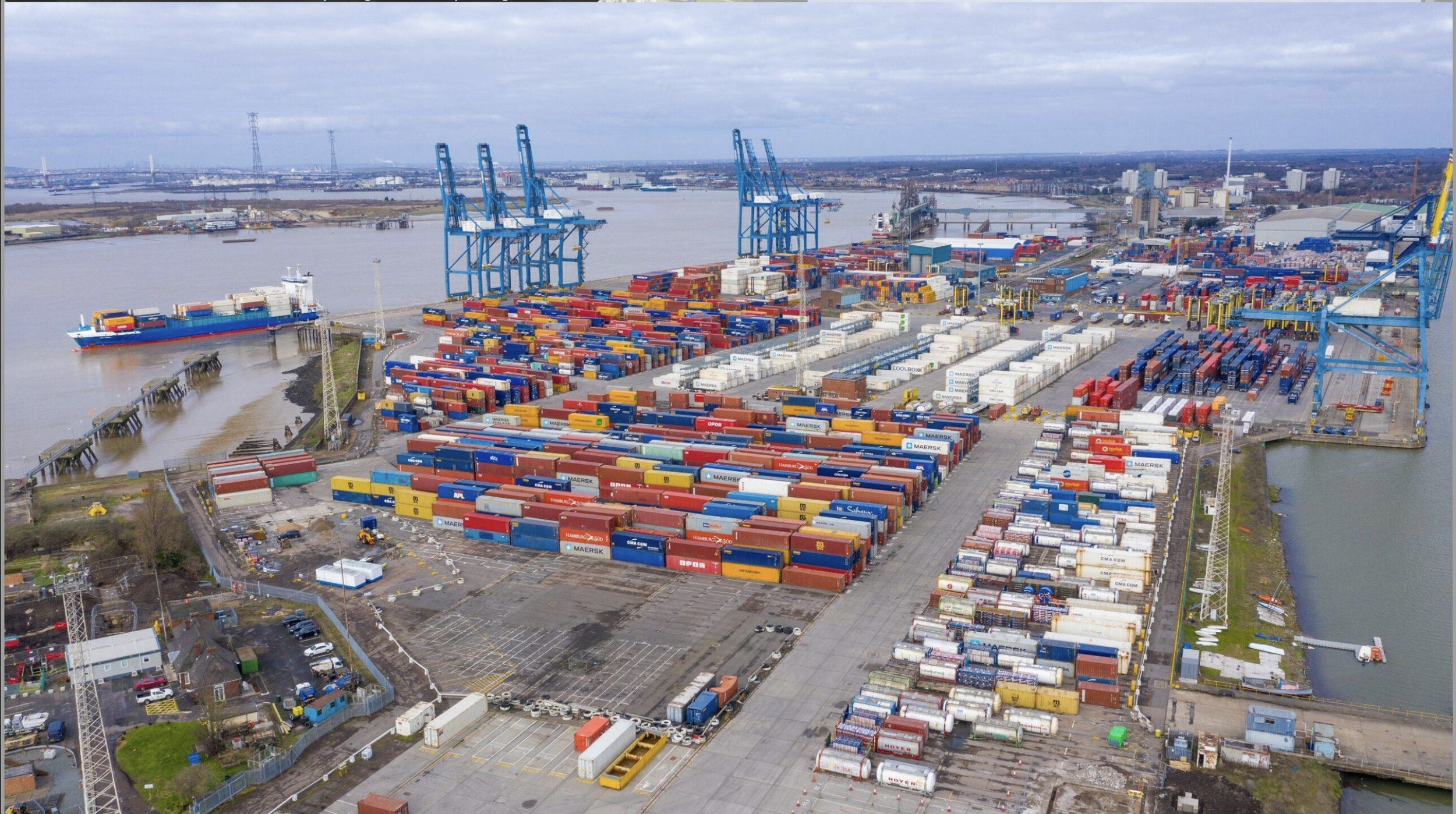
UK-Vietnam Trade Overview
Vietnam is the UK's second-largest trading partner in ASEAN and third-largest in Europe's broader trade with Southeast Asia. Total bilateral trade reached approximately £10.4 billion in the year to Q3 2025. In October 2025, the two countries elevated their relationship to a Comprehensive Strategic Partnership, signaling deeper economic cooperation ahead.
The UK's top imports from Vietnam include electronics and telecommunications equipment, textiles and garments, footwear, furniture, and seafood. Vietnam's competitive manufacturing costs, young workforce, and expanding factory base make it an increasingly attractive sourcing destination for UK businesses looking to diversify supply chains away from China.
The UKVFTA: The UK's Trade Agreement with Vietnam
The UK-Vietnam Free Trade Agreement (UKVFTA) took effect on 1 May 2021. It was negotiated post-Brexit to replicate and, in some areas, improve upon the benefits UK businesses previously enjoyed under the EU-Vietnam Free Trade Agreement (EVFTA).
Key Benefits of the UKVFTA
Tariff elimination. The UK eliminated tariffs on 85.6% of tariff lines when the agreement launched. By January 2027, this rises to 99.2% of tariff lines. The remaining 0.8% are subject to partial liberalization through tariff rate quotas (TRQs) with a preferential 0% rate for in-quota goods.
Rules of origin. Products must originate in Vietnam to qualify for preferential tariff rates. The UKVFTA uses EUR.1 certificates of origin, similar to the EVFTA system. An important provision: the agreement allows cumulation with EU materials, meaning Vietnamese manufacturers can use EU-originating inputs and still qualify for UKVFTA preferential rates.
Dual agreement advantage. The UK also acceded to the CPTPP in 2024, and Vietnam is a CPTPP member. UK importers can choose whichever agreement offers the better tariff rate or more suitable rules of origin for their specific product. This is a commercial decision, and it is worth checking both agreements before importing.
What the UKVFTA Means in Practice
For the most commonly imported product categories from Vietnam, the practical impact is significant:
Electronics (laptops, phones, components): 0% tariff under UKVFTA
Furniture (wood, rattan, bamboo): 0% or very low tariff rates
Textiles and garments: Tariffs being phased to 0% on a schedule; many categories already duty-free
Footwear: Tariffs reduced and being phased to zero
Seafood: Preferential access with TRQs on certain categories
Coffee and agricultural products: Reduced or eliminated tariffs
To confirm the exact preferential rate for your product, use the UK Trade Tariff lookup tool and enter your product's commodity code.
UK Import Duties and VAT
Understanding the full cost of importing is critical for calculating your landed cost accurately. UK import costs consist of two main components: customs duty and import VAT.
Customs Duty
Customs duty is calculated on the CIF (Cost, Insurance, and Freight) value of your goods. The rate depends on your product's commodity code and whether you claim UKVFTA or CPTPP preferential rates.
Without an FTA preference, standard UK Global Tariff (UKGT) rates apply. These vary widely by product: electronics are often 0%, textiles typically range from 8% to 12%, and some agricultural products carry higher rates. With the UKVFTA preference and proper documentation, most of these drop to 0% or near-zero.
Example: If you import £10,000 worth of knitted garments (HS code 6109.10.0090) at the standard rate of 12%, your duty would be £1,200. Under the UKVFTA preferential rate of 0%, you pay nothing in customs duty, saving £1,200.
Import VAT
Import VAT applies to nearly all goods entering the UK, regardless of any FTA preference. The standard UK VAT rate is 20%. VAT is calculated on the total of the goods' value plus customs duty plus shipping and insurance costs.
Some product categories qualify for reduced VAT rates. Children's clothing and most food items attract 0% VAT. Children's car seats are charged at 5%.
Example: For a £10,000 shipment with 0% duty under UKVFTA, plus £1,500 in freight and insurance, VAT would be calculated on £11,500. At 20%, that is £2,300.
VAT-registered UK businesses can reclaim import VAT through their VAT return, so this becomes a cash flow consideration rather than a final cost. You can also use Postponed VAT Accounting (PVA) to account for import VAT on your VAT return without paying it upfront at the border.
How to Look Up Your Tariff Rate
Find your product's commodity code using the UK Trade Tariff tool.
Enter the code and select Vietnam as the country of origin.
The tool will show the standard duty rate and any preferential rates under the UKVFTA and CPTPP.
Compare both preferential rates and choose the one that benefits you most.
Required Documentation
Getting your documentation right is essential for smooth customs clearance. Errors or missing paperwork can mean delays, additional inspections, or refusal of preferential tariff treatment.
Documents You Will Need
EORI number. All UK importers need an Economic Operator Registration and Identification number beginning with "GB." Apply through the Government Gateway; registration typically takes around three business days.
Commercial invoice. Issued by your Vietnamese supplier, detailing the goods, quantities, unit prices, total value, currency, and Incoterms.
Packing list. Itemizes the contents, weights, and dimensions of each package in the shipment.
Bill of lading (for ocean freight) or airway bill (for air freight). The transport document issued by the carrier.
Certificate of origin (EUR.1). Required to claim UKVFTA preferential tariff rates. Your Vietnamese supplier or their customs agent arranges this. For shipments under £5,500, an origin declaration on the invoice may suffice.
Customs declaration. Filed through the UK's Customs Declaration Service (CDS). Most importers use a customs broker to handle this.
Product-specific documentation. Depending on your product category, you may also need CE/UKCA conformity certificates, phytosanitary certificates (for food and plant products), test reports, or specific import licenses.
Certificates of Origin: UKVFTA vs. CPTPP
If claiming UKVFTA preferences, use the EUR.1 certificate or an origin declaration for eligible shipments. If claiming CPTPP preferences, the rules differ slightly; check the CPTPP-specific origin requirements on GOV.UK.
Shipping from Vietnam to the UK
Vietnam has well-developed shipping links to the UK, with regular services from major Vietnamese ports (Ho Chi Minh City/Cat Lai, Cai Mep, Hai Phong, Da Nang) to UK ports including Felixstowe, Southampton, London Gateway, and Liverpool.
Ocean Freight
Ocean freight is the most cost-effective option for most commercial shipments. Typical costs and transit times:
40-foot container (FCL): £2,000 to £3,500, depending on route, season, and carrier
20-foot container (FCL): £1,200 to £2,500
LCL (less than container load): approximately £90 to £130 per CBM
Transit time: 20 to 30 days, depending on whether the route is direct or goes through transshipment hubs like Singapore or Colombo
FCL is more cost-effective for shipments filling at least half a container. LCL works for smaller orders but adds a few extra days for consolidation and deconsolidation at port.
Peak season note: Shipping rates typically increase from October through January and in the weeks before Tet (Vietnamese New Year, usually late January or February). Book early during these periods.
Air Freight
Air freight is significantly faster but more expensive. Use it for urgent shipments, high-value low-weight goods, or initial sample orders.
Cost: approximately £3.50 to £5.50 per kg for standard air cargo
Transit time: 2 to 5 days
Routes: Daily departures from Ho Chi Minh City and Hanoi to London Heathrow, with connections to Birmingham and Manchester
Choosing Your Incoterms
The Incoterm you agree with your supplier determines who pays for what:
FOB (Free on Board): The most common for Vietnam imports. The supplier covers costs until goods are loaded onto the vessel. You arrange shipping from that point.
CIF (Cost, Insurance, Freight): The supplier arranges and pays for freight and insurance to the UK port. You handle import customs and delivery from port.
EXW (Ex Works): You handle everything from the factory door. Not recommended unless you have an experienced freight forwarder in Vietnam.
For most UK importers, FOB is the standard starting point. It gives you control over the shipping leg and lets you negotiate directly with freight forwarders.
Product-Specific Regulations
The UK has specific regulatory requirements for certain product categories. Key ones to be aware of when importing from Vietnam:
Textiles and Garments
Textiles are one of the largest import categories from Vietnam. Products must meet UK product safety standards and carry correct fiber composition labeling. The UK no longer uses EU textile regulations directly, but UKCA marking requirements apply for relevant products.
Food and Agricultural Products
Vietnam is a major exporter of coffee, seafood, rice, cashews, and tropical fruits to the UK. All food imports must comply with UK food safety regulations, including labeling, traceability, and phytosanitary requirements. Some products require inspection by port health authorities. Check the UK Food Standards Agency for specific requirements.
Electronics
Electronic products must meet UKCA (UK Conformity Assessed) marking requirements where applicable, including safety testing and electromagnetic compatibility standards. Many electronic components and finished goods from Vietnam already enter the UK duty-free.
Furniture and Wood Products
Wood products may need to comply with the UK Timber Regulation, which requires importers to exercise due diligence to ensure timber is legally harvested. Vietnam's growing FSC-certified plantation base helps, but documentation is important.
Top Resources for UK Importers
UK Trade Tariff lookup: trade-tariff.service.gov.uk
EORI number application: GOV.UK EORI registration
Check how to import goods: GOV.UK step-by-step guide
UK-Vietnam FTA preferential tariff rates: Annex 2-A-2 of the UKVFTA
CPTPP tariff information: GOV.UK CPTPP guidance
Vietnam trade regulations: business.gov.uk Vietnam trade page
How Cosmo Sourcing Can Help Import From Vietnam to the UK!
Navigating Vietnamese manufacturing, supplier vetting, quality control, and international logistics is complex, especially for first-time importers. That is where Cosmo Sourcing comes in.
We have been helping businesses source from Vietnam since 2014 and have worked with over 4,000 clients on more than 10,000 products. Our team is based in Ho Chi Minh City with direct access to factories across the country. We operate on a transparent flat-fee pricing model with no hidden markups or commissions on factory prices. You receive original quotes, full factory contact details, and direct introductions.
Whether you need help finding the right Vietnamese supplier, managing production, arranging quality inspections, or coordinating logistics to the UK, we handle it.
Get in touch: info@cosmosourcing.com | cosmosourcing.com/contact-us