How to Source Home Building Materials from Vietnam
Vietnam exports billions of dollars in building materials to the US every year, but not all categories are created equal. Plywood, ceramic tiles, engineered wood flooring, and wooden doors ship in massive volume from well-established Vietnamese factories. Other categories that look promising on paper (steel, aluminum windows, roofing) barely register in US customs data. If you are sourcing building materials from Vietnam, knowing which categories have real export infrastructure and which do not will save you months of wasted outreach.
We have been sourcing products from Vietnam since 2014, when we opened our Ho Chi Minh City office, and building materials have always been a consistent category for our clients. We have worked with custom home builders sourcing high-end finishes in North Carolina, apartment complex developers in Houston and Chicago, and many others across different project types and scales. This guide breaks down what Vietnam actually does well, what the sourcing process looks like for this specific product type, and how to find suppliers who can deliver at export quality and volume.
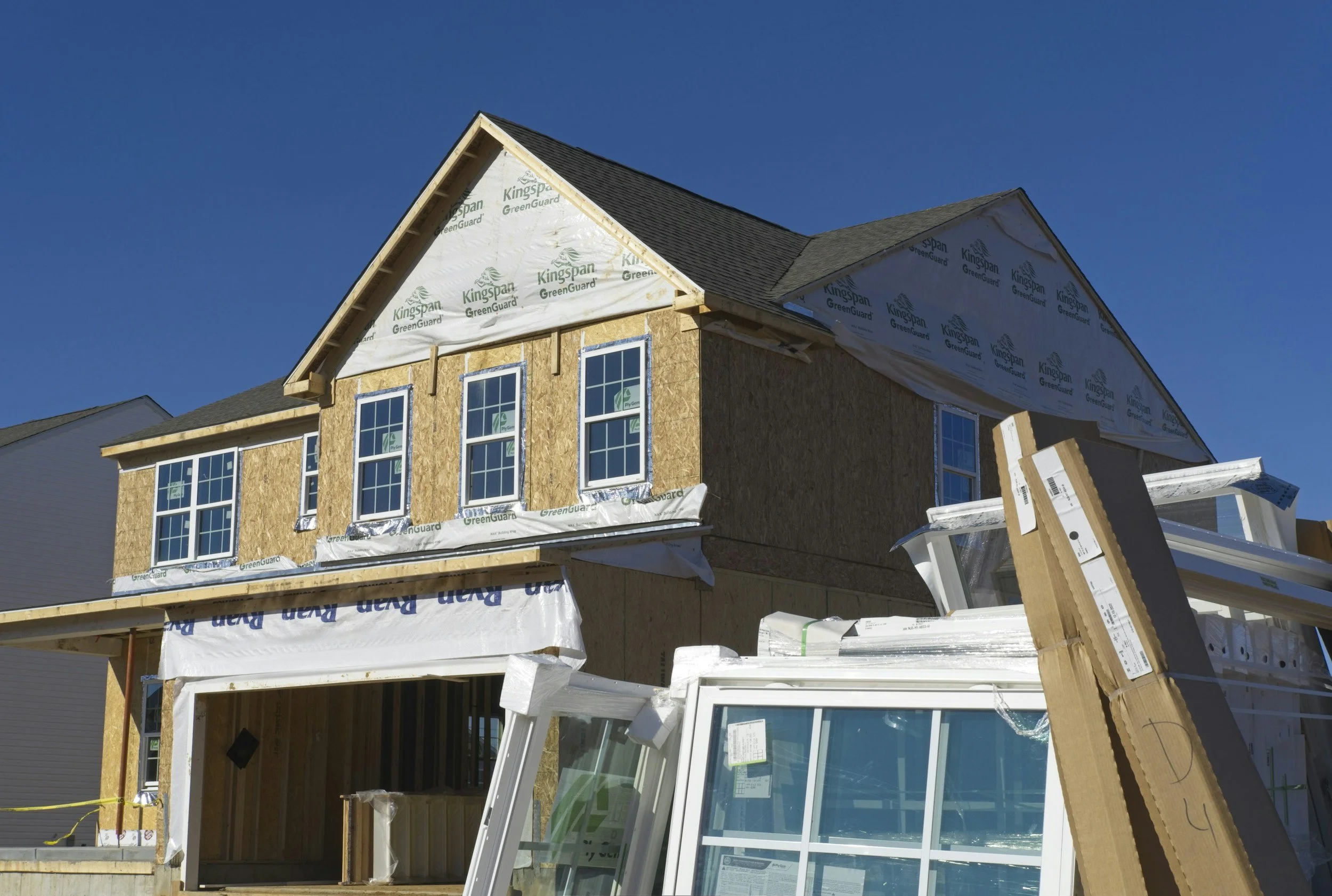
Which Building Materials Vietnam Does Well (and Where It Falls Short)
The biggest mistake buyers make is treating "building materials" as a single category. Vietnam's manufacturing strengths are concentrated in specific product types, and the export infrastructure varies dramatically between them. US customs shipment data paints a clear picture of where Vietnam has real depth and where it does not.
Plywood and Engineered Wood Panels
This is Vietnam's dominant building material export by a wide margin. Hundreds of Vietnamese suppliers ship plywood to the US, with the largest exporters moving thousands of containers annually. Birch-face plywood with acacia or eucalyptus core is the most common product, and many factories hold CARB/EPA TSCA certification for the US market. Factories are concentrated in northern provinces such as Phu Tho, Hung Yen, and Yen Bai, where plantation wood supplies are abundant. Expect MOQs of one to two containers (roughly 20 to 40 cubic meters) for standard specs, with lead times of 30 to 45 days after order confirmation.
Ceramic and Porcelain Tiles
Vietnam's tile industry is mature and well-established for export. Viglacera, the largest exporter, ships over 4,000 TEU to the US alone. Dozens of other manufacturers serve both domestic and international markets. Product range covers floor tiles, wall tiles, large-format porcelain, and decorative options. Quality has improved significantly over the past decade, with many factories now producing tiles that meet ANSI and ISO 13006 standards. Most tile factories are in the north (Vinh Phuc, Hai Duong) or around Ho Chi Minh City. MOQs typically start at one container per design/size.
Wooden Doors and Frames
A strong and growing export category. Vietnam's door manufacturers produce MDF, solid wood, and engineered wood doors for both residential and commercial projects. The largest exporters ship thousands of containers annually, with major capacity in Phu Yen and the southern provinces. Fire-rated doors and custom sizing are available from the more established factories, though you will need to verify certification carefully for fire-rated products.
Engineered Wood Flooring
Vietnam has developed a strong export capability in engineered hardwood flooring, particularly in acacia, oak veneer, and hickory finishes. Several dozen manufacturers actively export to the US, and the category is growing. SPC and vinyl flooring are emerging but still relatively small in export volume, with only a handful of factories shipping to the US. If SPC is your primary need, Vietnam is an option, but not yet a deep market.
Natural Stone
Vietnam quarries and processes marble, granite, and basalt, but export volumes to the US remain modest compared to those of wood and tile. This is partly a shipping economics issue: stone is extremely heavy, and freight costs eat into the price advantage quickly. For buyers on the US West Coast or those ordering large volumes for commercial projects, the math can work. For smaller orders, the landed-cost advantage of closer suppliers narrows.
What Building Material Sourcing Looks Like in Practice
Sourcing building materials from Vietnam is a different process than sourcing consumer goods, and buyers who treat it the same way run into problems.
Weight, Volume, and Shipping Economics
Building materials are heavy. A 20-foot container of ceramic tiles weighs roughly 25 tons, compared to 8 to 12 tons for a container of garments. This significantly changes the shipping cost equation. Ocean freight for building materials is calculated by weight, not just volume, and port handling charges are higher. Always calculate landed cost (product price plus freight plus duties plus inland transport) before committing to an order. We have seen cases where the factory price looked competitive, but the landed cost eliminated the advantage once freight was factored in.
Compliance and Certification
Building materials face stricter compliance requirements than most consumer products. Plywood needs CARB Phase 2 or EPA TSCA Title VI certification for the US market. Tiles may need to meet ANSI A137.1 or A137.2 standards. Fire-rated doors require certification from an accredited testing laboratory. Wood products must comply with the Lacey Act, which requires documentation of species and harvest origin. Check the latest tariff rates for your specific HS code before ordering, as rates change, and trade agreements like CPTPP and EVFTA can provide preferential rates for eligible markets.
MOQs and Lead Times
MOQs for building materials are typically higher than for consumer goods because production runs are less flexible. For tiles, expect a minimum of one full container per design and size combination. Plywood factories generally require a minimum of 1 to 2 containers. Custom door orders may range from 200 to 500 units, depending on complexity. Standard lead times run 45 to 75 days from order confirmation to shipment, depending on the product. Custom specs, colors, or finishes add time.
Sample and Testing Process
For building materials, sampling is not optional. Request production-run samples, not showroom pieces. For tiles, check calibration consistency across boxes (size variation between tiles is a common issue). For plywood, request formaldehyde emission test reports and verify that the testing lab is accredited. For engineered flooring, test the click-lock mechanism across multiple planks, not just the sample pair. Budget 2 to 4 weeks and $500 to $2,000 for sampling and third-party testing, depending on the product.
How to Find and Vet Building Material Suppliers
Vietbuild and Industry Trade Shows
Vietbuild is Vietnam's largest construction and building materials exhibition, held multiple times per year in Ho Chi Minh City and Hanoi. It is the single best place to meet building material manufacturers face-to-face, see product quality firsthand, and compare multiple suppliers in a few days. We attend regularly and use it to identify new factories for client projects. If your order size justifies a trip to Vietnam, timing it to coincide with Vietbuild is the most efficient approach.
Industrial Zone Visits
For plywood, the key factory clusters are in Phu Tho, Yen Bai, and Hung Yen provinces in the north. Tile manufacturers concentrate in Vinh Phuc, Hai Duong, and the greater Ho Chi Minh City area. Door and flooring factories are spread across the south, with clusters in Binh Duong and Phu Yen. Visiting the relevant industrial zones gives you a realistic picture of factory capabilities that online research cannot match.
Why Online Platforms Are Less Useful for Building Materials
Alibaba and similar platforms work reasonably well for lightweight consumer goods, but sourcing building materials does not translate well to online directories. Many of the strongest Vietnamese building material factories do not maintain active Alibaba listings because they are already operating at capacity, serving existing clients and domestic demand. Customs data (through platforms like ImportYeti) is more useful for identifying real exporters with verified shipment history than B2B marketplace listings.
Factory Audit Priorities for Building Materials
When auditing a building materials factory, priorities differ from those for consumer goods. Focus on raw material storage and sourcing documentation (especially for wood products where Lacey Act compliance matters), production consistency across runs (building materials need tight tolerances), testing equipment and QC processes (ask to see recent test reports, not just certificates), export packing capability (tiles and flooring are damage-prone if packing is poor), and actual export history (many Vietnamese building material producers serve only the domestic market).
Common Mistakes When Sourcing Building Materials from Vietnam
Ignoring Landed Cost
The factory price is only part of the equation. A tile that costs $4 per square meter FOB Vietnam may land at $8 to $10 per square meter after freight, duties, and domestic transport. Run the full landed cost calculation before comparing Vietnamese suppliers against alternatives.
Assuming Every Category Is Export-Ready
Just because Vietnam produces a building material domestically does not mean there is export infrastructure for it. Buyers who spend weeks searching for Vietnamese aluminum window exporters or structural steel suppliers are chasing a market that does not yet exist at a meaningful scale. Check customs data before investing time in sourcing for any category.
Skipping Compliance Verification
Building materials are subject to regulatory requirements that vary by destination market. A factory that sells plywood domestically may not have CARB certification. A door manufacturer may produce fire-rated products for the Vietnamese market to different standards than those required by your market. Always verify that the factory can meet your specific compliance requirements before moving to sampling.
Ordering Without a Pre-Shipment Inspection
Building materials are bulky, heavy, and expensive to return. A full container of defective tiles is not something you can easily send back. Pre-shipment inspection by an independent third party is not optional for building material orders. The cost (typically $300 to $500 per inspection) is insignificant compared to the risk.
How Cosmo Sourcing Helps with Building Material Projects
We have sourced building materials from Vietnam for clients ranging from custom home builders ordering specialty tiles and engineered flooring to apartment complex developers in Houston and Chicago purchasing containers of plywood and doors. Our team in Vietnam handles supplier identification, factory audits, sample coordination, quality inspections, and shipping logistics.
For building materials specifically, we focus on matching you with factories that have verified export history in your product category, not just factories that say they can export. We provide original factory pricing with no markups, full supplier contact details, and direct factory introductions so you can build the relationship on your terms.
Have a building material project in mind? Book a call with our team or reach out through our contact page to get started.