Best Countries to Manufacture Shoes List // Top 8 for Your Brand
Vietnam, China, and Indonesia are the best countries to manufacture shoes for most brands, and Mexico, Portugal, and Italy each win a niche. The right one for your shoe depends on four things: how it's constructed, how many pairs you're ordering, where you'll sell it, and whether it needs custom components like a new sole.
Get one of those wrong and even a good factory search can fail. Earlier this year a client asked us to find factories in Vietnam for two boots: a leather work boot and a rubber rain boot. The work boot was a fit for Vietnam. Our search pointed the rain boot to China, and the import records explained why.
I'm Jim Kennemer, founder of Cosmo Sourcing, and I've been sourcing from Asia since 2012. Cosmo Sourcing's Vietnam team has worked out of Binh Duong, now part of Ho Chi Minh City, since 2014, a short drive from the country's biggest shoe clusters. Those boots, and a custom-sole sneaker we took to factories this year, shaped this ranking as much as the trade statistics did.
This is Cosmo Sourcing's practical ranking for small and mid-size brands placing export orders, not a ranking by pairs produced, which is why Vietnam comes first even though China makes more than half the world's shoes. Capability counts most, then landed cost, minimums, trade deals, and production time. Production and export figures come from the World Footwear Yearbook 2026.
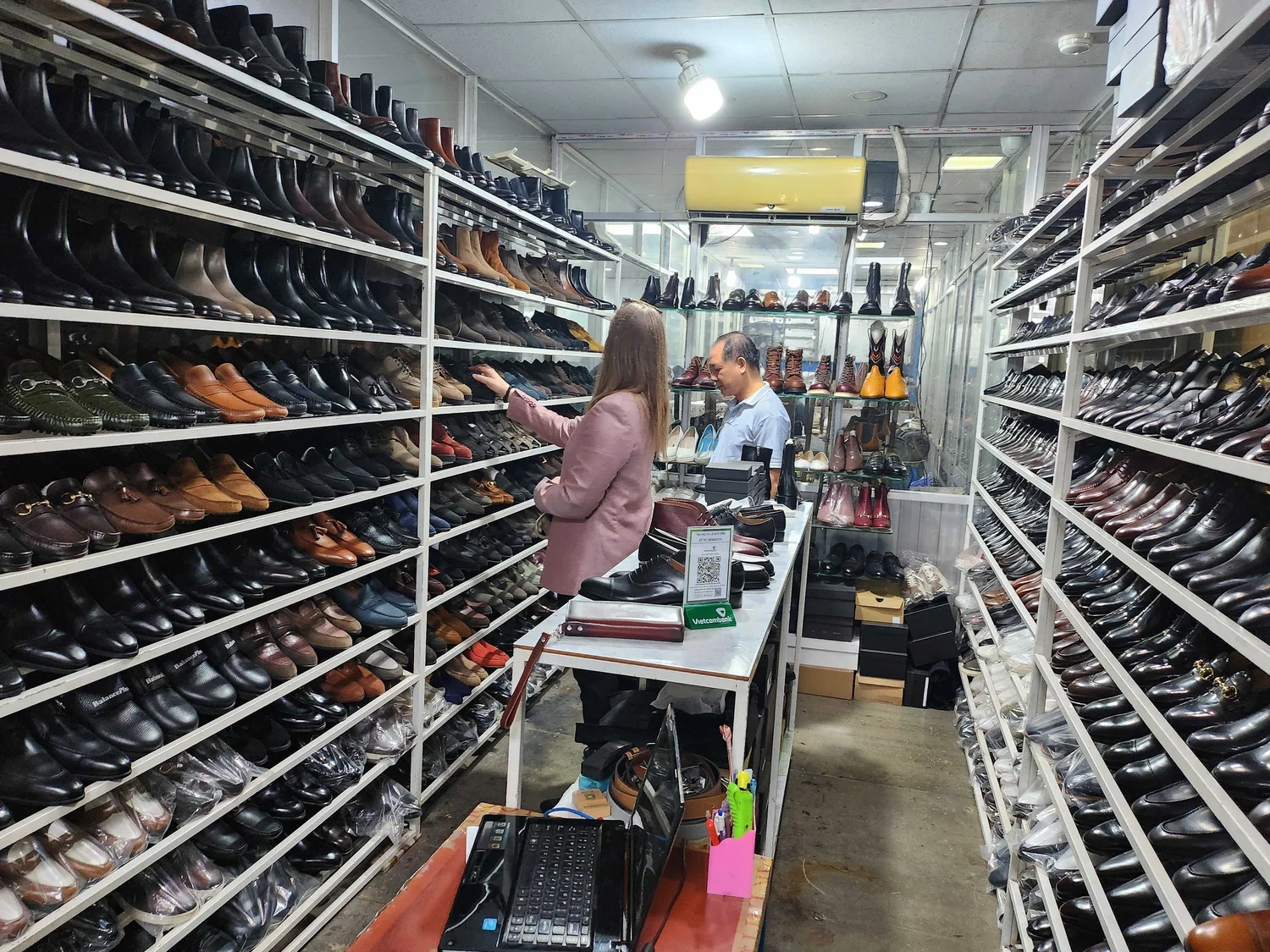
Best Country to Manufacture Shoes, by Shoe Type
Already know what you're making? Start here. These are starting points from our projects; not every factory makes every shoe in its category.
Scroll sideways to see every column.
| Shoe type | Start with | Credible alternative | Key qualification |
|---|---|---|---|
| Athletic or performance sneakers | Vietnam | Indonesia; China for small runs | Custom soles add mold costs for every size |
| Casual or canvas shoes | Vietnam | China (Guangdong) | Factories specialize in cemented or vulcanized construction |
| Leather dress shoes | Vietnam | China (Zhejiang); Portugal for premium runs | Custom lasts and unusual leathers raise minimums |
| Leather work or safety boots | Vietnam | China; Cambodia; Mexico for North America | Based partly on one project's US import data |
| Molded rubber rain boots | China | None established in our search | Most Vietnamese rubber boot makers we found made PVC work boots |
| Luxury leather shoes | Italy | Portugal | Highest factory prices; judge each workshop by its samples |
| Small first orders | China | Portugal for premium; Indonesian workshops | Minimums usually apply per style and per color |
Top Footwear Manufacturing Countries Compared
Scroll sideways to see every column.
| Country | Strengths | Cost band | Typical MOQ | Trade agreements | Production lead time (after sample approval) |
|---|---|---|---|---|---|
| 1. Vietnam | Athletic, casual, and leather shoes at export scale | Low to mid | 1,000 to 3,000 pairs per style at big factories; 500 at smaller ones | CPTPP, EVFTA (EU), UKVFTA, RCEP | 60 to 90 days |
| 2. China | Every construction and the deepest supply chain | Low to mid | Often a few hundred pairs per style | RCEP and Australia; none with the US, EU, UK, or Canada | Often the shortest in our experience |
| 3. Indonesia | High-volume athletic shoes | Low to mid | 1,000 to 3,000 pairs per style and color at large factories | RCEP, Australia, Japan; EU deal not yet in force | 60 to 120 days |
| 4. Mexico | Leather shoes and boots next to the US market | Mid | Varies; confirm in quotes | USMCA, CPTPP, EU (since 2000) | Varies; confirm in quotes |
| 5. Portugal | Premium leather shoes in small runs | High | As few as 50 to 300 pairs per style | EU single market and EU agreements | Varies; confirm in quotes |
| 6. Italy | Luxury leather and design | Highest | Small runs at premium prices | EU single market and EU agreements | Varies; confirm in quotes |
| 7. Cambodia | A fast-growing export base | Low | Mostly large export programs, in our experience | RCEP; EU access partly withdrawn in 2020 | Varies; confirm in quotes |
| 8. India | Leather shoes and a huge home market | Low | Wide range; quality varies by factory | UK (since July 2026), UAE, Australia; EU deal not yet in force | Least predictable in our experience |
How to read it: MOQ means minimum order quantity. Cost bands compare factory prices before duty, freight, and tooling; lead times cover production only, from final sample approval. The ranking, cost bands, and minimums are Cosmo Sourcing's practical assessments, not industry averages, and trade agreements cut duties only for shoes that meet their rules of origin.
This guide gets you to a shortlist. A Cosmo Sourcing product sourcing project tests it against your actual shoe: we verify factories that make your construction and collect original quotes, so you can compare minimums, tooling, sampling, and lead times. To start, send us your design or reference photos, quantity per style and color, and where you'll sell.
Discuss your footwear project1. Vietnam: Where Most Export Shoe Brands Should Start
Vietnam is the world's second-largest footwear exporter, with 11.2 percent of global exports, and it ships 90 to 95 percent of what it makes abroad. If you make athletic, casual, or leather shoes for export, this is an industry organized around buyers like you.
Check the label on your running shoes: Vietnam is the biggest source of shoes for both Nike and Adidas. Our list of shoe brands made in Vietnam shows who makes what.
Where Shoe Factories Are in Vietnam
Head south. Dong Nai has long been the country's biggest footwear province, and Ho Chi Minh City (which absorbed Binh Duong in the 2025 province mergers), Tay Ninh (which absorbed Long An), and Vinh Long in the Mekong Delta all run large athletic plants. The north is smaller, with big factories in Hai Phong, Ninh Binh, and Thanh Hoa. For the established exporters, see our list of shoe manufacturers in Vietnam.
Which Shoes Vietnam Makes Best, and Which It Doesn't
Athletic and casual shoes come first, then leather shoes and boots.
Now, back to those two boots. When the rain boot search stalled, we pulled US import records for waterproof rubber boots. China accounted for about three-quarters of the suppliers and an even bigger share of the shipments; the few Vietnamese entries under that code were leather boot makers, freight forwarders, and misfiled cargo, and most Vietnamese rubber boot makers we found made PVC work wellingtons for the home market. In US import records for leather safety footwear, Vietnam shipped more than any other country, China included.
Shoe MOQs, Tooling Costs, and Lead Times in Vietnam
In our experience, big Vietnamese export factories want 1,000 to 3,000 pairs per style, and factories serving smaller brands start at 500 to 1,000 per style and color. One that quotes 1,000 on its website may take 500 for a trial order if your shoe needs no custom lasts (foot-shaped shoe forms) or unusual leather. Watch the per-color part: two colorways can double your opening commitment.
The bigger shock for most first-time brands is the sole. For a performance sneaker with a custom sole, Cosmo Sourcing's Vietnam team approached several factories; most said they could develop the shoe, and about half quoted tooling and samples. Custom outsole molds were quoted at several thousand dollars per size, and one factory's price was roughly double another's, partly because of TPU (thermoplastic polyurethane) in the sole. One factory also wanted a sample development fee, refunded against the first production order.
The quoted timelines were just as sobering: two to three months for samples, including more than a month to make the molds, then about two months of production after approval.
Small runs can work, too. Viettano, a made-to-order dress shoe brand, needed a factory willing to build every pair to one customer's size and materials, a tough ask for factories built around bulk orders. We had quotes from a handful of Vietnamese manufacturers within a few weeks and toured factories in the north and south with the founder, who placed sample orders on the first day. Viettano launched less than a year after first contacting us.
The Downsides of Making Shoes in Vietnam
Three things catch first-time buyers. Materials: only about 55 percent of the industry's materials are made in Vietnam (closer to 70 percent for athletic shoes), and China supplies more of the rest than anyone, so an unusual leather, knit, or foam can add weeks. The calendar: factories are busiest from March to June and September to November, when lead times can stretch by 15 to 20 days. And access: some big-brand suppliers told our team this year they're under exclusive programs and not taking new customers, so the factory behind your favorite running shoe probably won't make yours.
Is Vietnam Right for Your Shoe?
- Best for
- Athletic, casual, and leather shoes and boots for export, especially to the EU, the UK, and CPTPP markets.
- Watch out for
- Imported specialty materials and per-size mold costs on custom soles.
- Ask the factory
- Which shoes like mine have you exported, and is your minimum per style or per color?
2. China: The Deepest Shoe Supply Chain and the Lowest Minimums
China is still the giant, and nothing matches its depth: materials, components, and molds can often be sourced within 50 kilometers of the factory. It builds nearly every construction, including the rubber rain boots Vietnam barely makes.
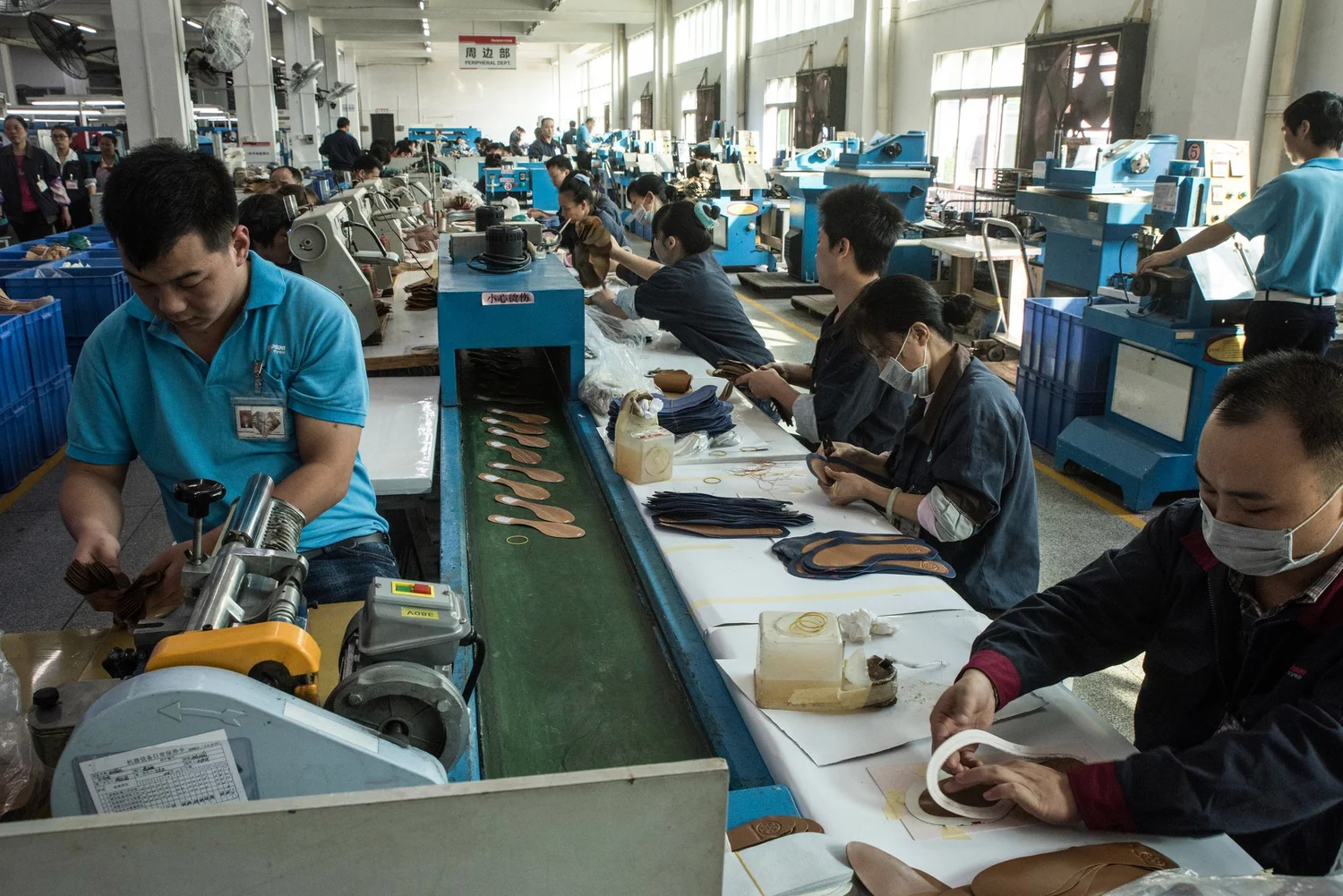
Each province has a specialty: Fujian (around Quanzhou) for athletic shoes, Guangdong (around Dongguan) for sneakers, casual, and fashion shoes, and Zhejiang (around Wenzhou) for leather and dress shoes. Minimums are the lowest of the big producers, which makes China the easiest place to launch a first shoe. Our guide to shoe manufacturers in China covers each cluster.
The catch is cost and duty. Manufacturing earnings in China, roughly $6.50 an hour by ILO estimates, have caught up with Mexico's, and with no free trade agreement with the US, the EU, the UK, or Canada, its shoes get no trade-deal discount there. That's why most of our clients now run a China Plus One strategy.
- Best for
- Small first runs, unusual constructions like molded rubber boots, and fast development.
- Watch out for
- Landed cost once duty is added, and suppliers that resell another plant's output.
- Ask the factory
- Is this your own production line, and can we see it on a live video call?
3. Indonesia: High-Volume Athletic Shoe Manufacturing
Indonesia, the world's third-largest footwear exporter by volume, is the athletic giants' second home, behind only Vietnam for both Nike and Adidas. Most of the industry sits on Java, and newer, lower-wage plants are moving into Central Java.
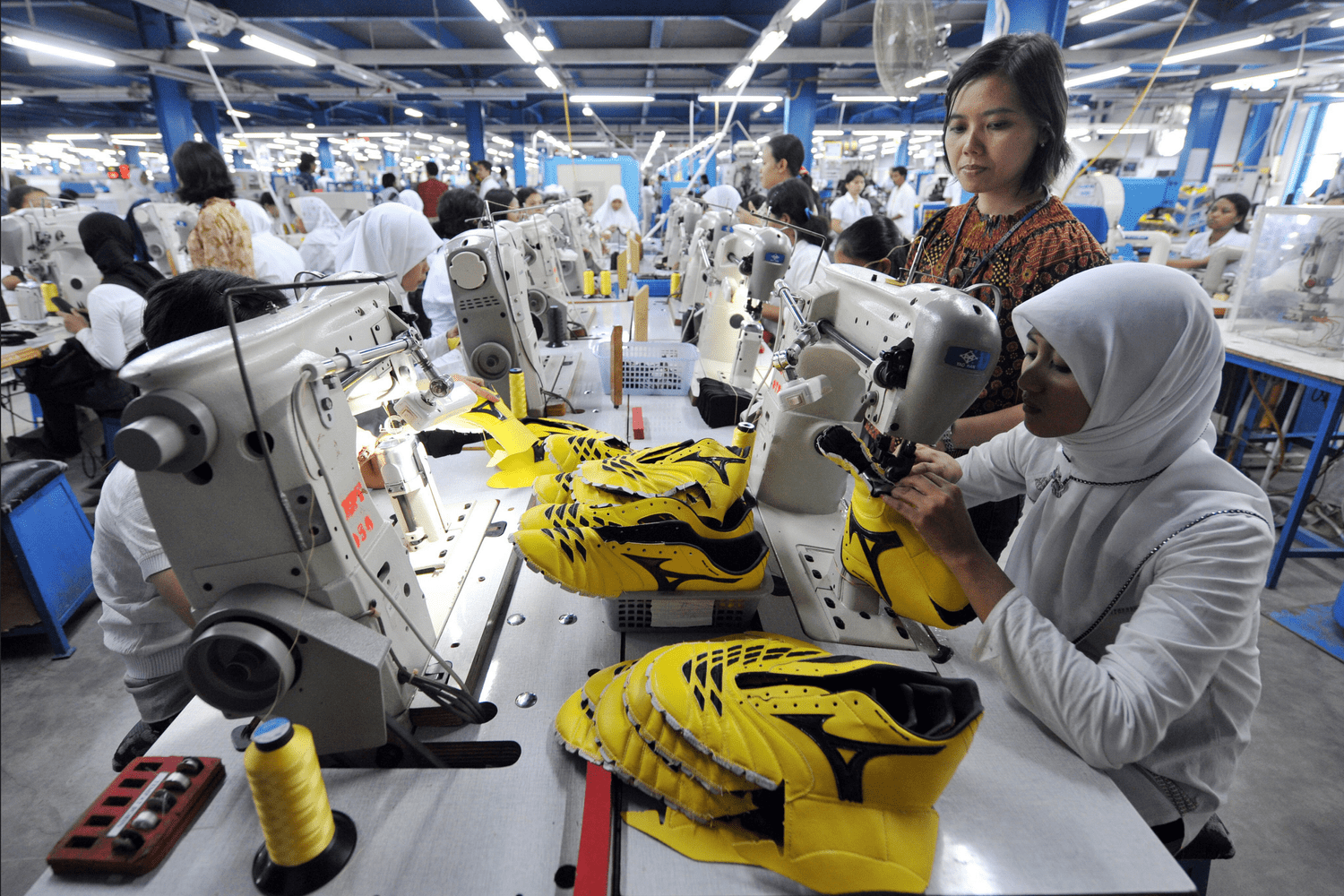
Small workshops will take as few as 100 to 300 pairs, though quality is less consistent at that scale, and athletic shoe pricing is roughly comparable to Vietnam's.
The weak spot is trade access. Indonesia has fewer deals with major importing markets than Vietnam, and its agreement with the EU had not yet taken effect as of September 2026, so check its current status when comparing landed costs for EU sales. Our guide to shoe manufacturers in Indonesia has the factory detail.
- Best for
- Athletic shoes at volume, especially for Asia-Pacific markets.
- Watch out for
- Thinner trade coverage than Vietnam, especially in Europe for now.
- Ask the factory
- Can you document origin for the trade agreement that covers my market?
4. Mexico: Leather Shoes and Boots Next Door to the US
If you sell in North America, Mexico deserves a hard look. Guanajuato is the heart of it: in 2023 it made about 163 million of Mexico's 217 million pairs, three-quarters of the total, and León anchors the industry with tanneries and component makers close by. That makes Mexico strongest in leather shoes and boots, and the industry has room for new customers: it's running at about half its installed capacity.
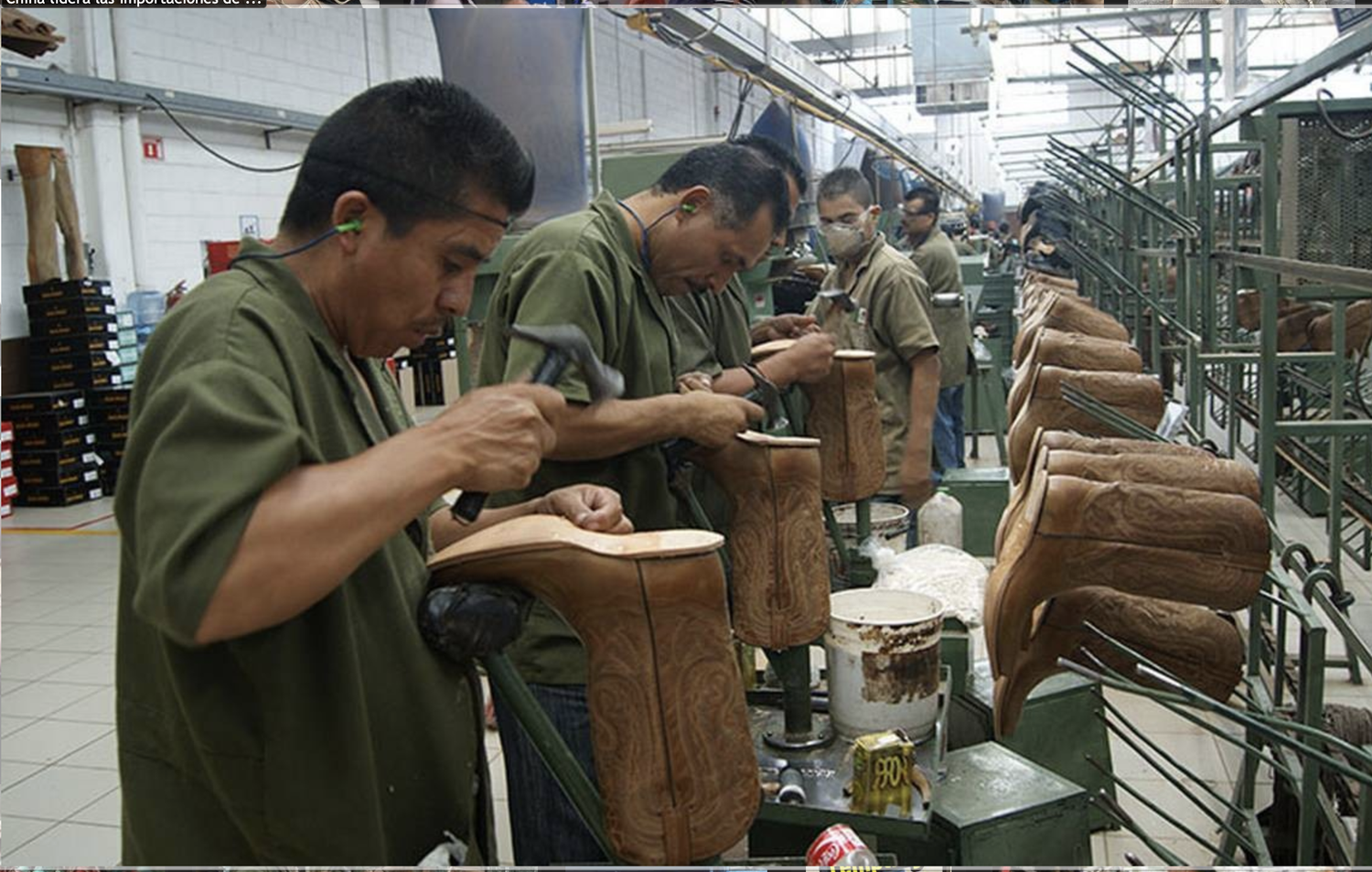
The draw is speed and duty. Shoes from Guanajuato reach the US border in one to two days by truck, and properly documented footwear that meets USMCA's rules of origin can enter the US and Canada duty-free; check current charges for your exact shoe. Mexico has also had an EU trade agreement since 2000, with an update awaiting Mexico's ratification. Labor costs more than in Vietnam: roughly $3.50 to $5.50 an hour fully loaded for entry-level operators, against about $2 to $3.
Cosmo Sourcing's Mexico team has sourced across the country since 2023; our guide on where to manufacture in Mexico covers the regions.
- Best for
- Leather shoes and boots for North American buyers who need fast replenishment runs.
- Watch out for
- Factory prices above Vietnam's; Mexico competes on speed and landed cost instead.
- Ask the factory
- Will this shoe qualify under USMCA, and what are your minimum and production time for it?
5. Portugal: Premium Leather Shoes in Small Runs
For a small premium brand, especially one selling in Europe, Portugal is hard to beat. It exports about 93 percent of the shoes it makes, and its average export price is second only to Italy's among the major exporters. Its factories, clustered in the north, are built for quality leather shoes in short runs.
The trade-off is price. By our estimate, production costs in Portugal and Italy run three to five times Vietnam's for comparable dress shoes. If your customers are in the EU, Portuguese shoes reach them with no customs duties or checks, which wins back a little of that.
- Best for
- Small premium leather collections, especially for customers in the EU.
- Watch out for
- Factory prices that only a premium retail price can absorb.
- Ask the factory
- Is your minimum per style or per color, and will it hold for reorders?
6. Italy: Luxury Leather Shoes and Design
Italy sets the standard for luxury leather. Its shoes command the highest average export price of any major exporter, and its districts specialize, from Marche's mid-to-high-end shoes and heels to the luxury designer workshops of the Riviera del Brenta near Venice.
- Best for
- Luxury shoes where "Made in Italy" is part of what you're selling and your retail price can carry it.
- Watch out for
- The highest costs on this list, and quality that varies between workshops in the same district.
- Ask the factory
- Can you sample my design in my exact leather and construction before I commit?
7. Cambodia: A Fast-Growing Footwear Exporter, but Choose Carefully
Cambodia's footwear exports jumped 24.5 percent in 2025 to $2.09 billion, outpacing its garments, and in the US import records from the boot project, Cambodian suppliers ranked just behind Vietnam and China in leather safety footwear.
The caution is depth. The manufacturing base is narrow, and not every factory can consistently meet our clients' standards, so we source there selectively. Its trade preferences will shift again, too, when it leaves the UN's least developed country list in 2029.
- Best for
- Leather footwear, including work boots, at volume, as a second source.
- Watch out for
- A narrow base of capable factories; vet harder than you would in Vietnam.
- Ask the factory
- Which export programs are you running now, and what's the smallest order you'll take?
8. India: Second in Shoe Production, Last on Our List
On paper, India belongs near the top. It made 3 billion pairs in 2025, second only to China, though almost all of them stay home: India consumed 2.8 billion pairs the same year. Trade access is improving, too: India's agreement with the UK took effect in July 2026, and an EU agreement has been concluded but not yet signed.
So why last? We've run projects in India across several categories, and the results were poor enough that Cosmo Sourcing no longer offers it as a sourcing destination. Samples came in strong but production didn't match them, and timelines slipped.
- Best for
- Large companies with their own team on the ground in India.
- Watch out for
- Production that doesn't match approved samples, and timelines that slip.
- Our take
- Cosmo Sourcing doesn't source in India or recommend it for small and mid-size brands.
Other Shoe Manufacturing Countries
Brazil: A Big Producer Focused on Its Home Market
Brazil made 847 million pairs in 2025 but exported only about one pair in eight, so its factories serve the home market first.
Bangladesh: Fast-Growing Exports, Uncertain Trade Access
Bangladesh's footwear exports grew about 30 percent in the 11 months to May 2025, and much of its appeal is duty-free EU access for qualifying goods, which comes with least developed country status. That status is due to end in November 2026 unless the UN grants a requested delay, and the EU keeps the access for three more years after graduation. We include it for context only: Cosmo Sourcing doesn't recommend Bangladesh as a sourcing destination.
How to Choose the Best Country to Manufacture Your Shoes
Cosmo Sourcing runs the six-factor test from our low-cost country sourcing guide whenever a client asks where to source footwear.
Manufacturing Capability
Capability is construction-specific: a cemented athletic shoe, a molded rubber boot, and a Goodyear-welted dress shoe need different equipment, so ask every factory for shoes it has already made in your construction.
Total Landed Cost
Factory price is only the start. Add duty, freight, inspection, and tooling before you compare countries: on a new sole, molds alone can run to tens of thousands of dollars across a full size run.
Trade Agreements and Tariffs
EVFTA favors Vietnam for the EU, CPTPP covers Vietnam and Mexico for Canada, Japan, and Australia, and of these eight, only Mexico has a US free trade agreement. Savings depend on your shoe's classification and rules of origin, and rates vary by importing country and change often, so check current rates for your exact product.
Political and Economic Stability
Trade preferences move with politics, as Cambodia and Bangladesh show. Build a second option before you need one.
Ease of Doing Business
Visit before you commit; a day on the factory floor tells you more than weeks of email.
Supply Chain Depth
Ask each factory where its outsoles, foams, and leathers come from and how long they take to arrive. When materials are imported, that wait is built into every order.
Footwear Manufacturing and Sourcing FAQ
Where are most shoes made?
In China, which made 13.7 billion of the world's 24.6 billion pairs in 2025. Asia as a whole makes 88.7 percent of the world's shoes, and India and Vietnam are the next-largest producers.
Where are most athletic shoes made?
In Vietnam, Indonesia, and China. Nike made 52 percent of its footwear in Vietnam, 27 percent in Indonesia, and 16 percent in China in fiscal 2026, according to its 10-K filing, and Adidas's 2025 split was 41, 31, and 14 percent, according to its annual report.
How do I find a reliable shoe manufacturer overseas?
Check three things before you commit. Confirm the supplier owns or operates the factory: match its business registration to the factory address, look for export records in your kind of shoe, and see the line in person or on video. Protect your designs with the right agreement for the country and project, often an NNN (non-disclosure, non-use, non-circumvention), and share full tech packs only with shortlisted factories. And ask whether you can start from lasts and soles the factory already has, which can cut tooling costs and minimums. Cosmo Sourcing checks factory ownership and production capability before presenting a supplier to a client.
How long does it take to make a new shoe?
Plan on four to five months from the start of sampling to finished shoes, before shipping, if your design needs a custom sole, and a month or so less if the factory already has molds for your sole.
Find Out Where Your Shoe Belongs with Cosmo Sourcing
A footwear sourcing project with Cosmo Sourcing turns your shortlist into real options: we verify factories that make your construction, collect original quotes, typically from two to six vetted factories, and introduce you directly. Unlike a commission-based sourcing agent, Cosmo Sourcing works on a fixed fee, with no commissions and no markups on factory quotes, and introductions usually come four to six weeks after kickoff.
Your next step: send your footwear project brief, with design files or reference photos, pairs per style and color, and where you'll sell. We'll reply within one business day with next steps and a fixed-fee quote, with no obligation. Email info@cosmosourcing.com or use our contact page.