Furniture Brands Made in Vietnam: Top 14 Brands and the Factories Behind Them
Many big furniture brands make part of their range in Vietnam. RH sourced 39 percent of its fiscal 2025 purchases by value there, Hooker Furnishings 87 percent of its fiscal 2026 import purchases, and Williams-Sonoma, owner of Pottery Barn and West Elm, 16 percent of its fiscal 2025 merchandise purchases companywide. Ashley and Nitori run their own Vietnamese factories.
Cosmo Sourcing's Vietnam team has worked out of Binh Duong, in the middle of the country's southern furniture belt, since 2014, and we've sourced furniture across Vietnam for everyone from a US cabinet company installing more than 10,000 units a year to a founder with a single working prototype. The factories we work with belong to an industry that exported a record $17.2 billion of wood and wood products in 2025. According to Vietnamese customs and trade figures, Vietnam is now also the largest supplier of wooden furniture to the United States, holding about 45 percent of that import market in the first eight months of 2025, against China's 10 percent.
Below are 14 brands, what each one makes in Vietnam and where, the factories behind them, and what it all means if you're a smaller brand trying to get into the same factories. If you're new to the country, start with our guide to sourcing in Vietnam.
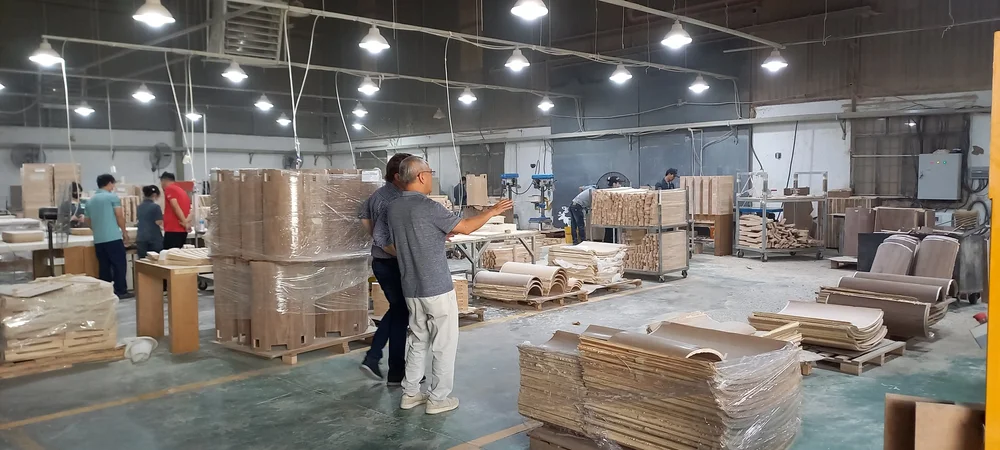
Furniture Brands Made in Vietnam at a Glance
Casegoods means non-upholstered furniture such as dressers, tables, cabinets, and bed frames.
Scroll the table sideways to see what each brand makes and where.
| Brand | Segment | What is made | Where in Vietnam |
|---|---|---|---|
| Pottery Barn and West Elm (Williams-Sonoma) | Home retail | Wood furniture | Contract factories; locations not confirmed here |
| RH | Home retail | Furniture, including casegoods | Ho Chi Minh City (the old Binh Duong) and other contract factories |
| Arhaus | Home retail | Furniture | Ho Chi Minh City (the old Binh Duong) and Tay Ninh |
| Crate & Barrel | Home retail | Furniture | Contract factories; locations not confirmed here |
| Lovesac | Home retail | Sactionals modular sofas | Contract suppliers; locations not confirmed here |
| IKEA | Mass market | Wood furniture, including outdoor | Ho Chi Minh City (the old Binh Duong) and other suppliers |
| Ashley | Mass market | Casegoods and upholstery components | Own plants in Ho Chi Minh City (the old Binh Duong) and Quang Ngai |
| Nitori | Mass market | Casegoods, sofas, bed frames, mattresses, and curtains | Own plants in Hanoi, Ho Chi Minh City (the old Ba Ria-Vung Tau), and Phu Tho (the old Vinh Phuc) |
| Hooker Furnishings | Wholesale | Casegoods, plus some upholstery | Contract factories; locations not confirmed here |
| Bassett | Wholesale | Bedroom and dining casegoods, some leather upholstery | Contract plants; locations not confirmed here |
| La-Z-Boy | Wholesale | Imported wood furniture | Dong Nai and other contract factories |
| Flexsteel | Wholesale | Seating and casegoods | Contract suppliers; locations not confirmed here |
| Theodore Alexander | Wholesale | Luxury casegoods | Own plants in Ho Chi Minh City's Linh Trung export zone |
Brand names link to their profiles below. The figures come from company reports and the factory names from dated US customs records, which show trading relationships, not ownership. Province names are the ones in place since July 2025, with the old name where it helps.
Home Retail Brands: Pottery Barn, RH, and Crate & Barrel
These brands design their own ranges and buy from contract factories. Williams-Sonoma and RH, the two that publish country figures, both shifted purchases from China toward Vietnam in fiscal 2025.
Pottery Barn and West Elm
Williams-Sonoma doesn't break out Pottery Barn or West Elm, so its figures cover the whole company. In fiscal 2025, about 16 percent of its merchandise purchases came from Vietnam, up from 14 percent a year earlier, while China fell from 23 percent to 19 percent. About 19 percent of its products were made in the US, including upholstered furniture from its own plants. Williams-Sonoma also runs a local sourcing office in Vietnam that handles product development and quality assurance. US customs listings compiled in 2025 show Vietnamese makers such as Johnson Wood and Yang Cheng Wooden Industries shipping to its importing arm, though not which brand each shipment was for.
RH
RH made 39 percent of its fiscal 2025 purchases, by dollar value, in Vietnam, up from 35 percent a year earlier, while China fell from 23 percent to 13 percent. In fiscal 2017, China supplied about 40 percent. RH says it moved most of its China production to Vietnam after the first round of US tariffs on China, and some to its own North Carolina upholstery plant. US customs listings from early 2025 show Kaiser, in Binh Duong (now part of Ho Chi Minh City), and Rochdale Spears among its suppliers.
Arhaus
Arhaus makes much of its upholstery in the US: about 70 percent of its 2025 upholstery sourcing was domestic, with the largest share from its own North Carolina plant. It buys from nearly 400 vendors worldwide and doesn't disclose a Vietnam share. US customs records from March 2025 show furniture shipping to Arhaus from AA Tay Ninh and from Sacred Earth Vietnam in Binh Duong.
Crate & Barrel
Crate & Barrel is privately owned and doesn't publish a sourcing split. US customs records do show it importing from Vietnam, including a June 2022 shipment from Royal Corinthian Vietnam listed as metal furniture.
Lovesac
Lovesac, the direct-to-consumer brand behind the Sactionals modular sofa, owns no factories. Its latest annual report lists Sactionals suppliers in Vietnam and five other countries.
Mass-Market Brands: IKEA, Ashley, and Nitori
At the value end, the models split. IKEA buys from contract suppliers, while Ashley and Nitori own their Vietnamese factories.
IKEA
IKEA doesn't break out how much it buys in Vietnam, but it has sourced there since 1993 and says Vietnam's acacia, grown on plantations certified by the Forest Stewardship Council (FSC), is well suited to its outdoor furniture. A February 2025 US customs record shows Vietnam Hang Lam Furniture, in Binh Duong's My Phuoc 2 industrial park, shipping to IKEA's US purchasing arm.
Ashley
Ashley's subsidiary Wanek Furniture has invested more than $200 million in Vietnam since 2008 and runs factories in Binh Duong and Quang Ngai with about 16,000 workers. In March 2025, Vietnam's state news agency reported that Wanek, drawing on more than 120 other Vietnamese factories as suppliers, exports about 2,400 containers of wooden furniture a week to 48 countries. Not all of the output is finished furniture: in 2021, two Wanek plants were making cut-and-sew upholstery kits for Ashley's US factories.
Nitori
Nitori, the owner of Japan's biggest furniture chain, has about 10,000 employees across three Vietnamese factories: in Hanoi since 2004, in the former Ba Ria-Vung Tau province (now part of Ho Chi Minh City) since 2017, and at a newer branch in the former Vinh Phuc province (now part of Phu Tho). Across the three sites, it makes kitchen storage cabinets, wardrobes, TV stands, dining sets, bed frames, sofas, and mattresses, plus bedding and curtains.
Wholesale Brands: Hooker, Bassett, La-Z-Boy, and Flexsteel
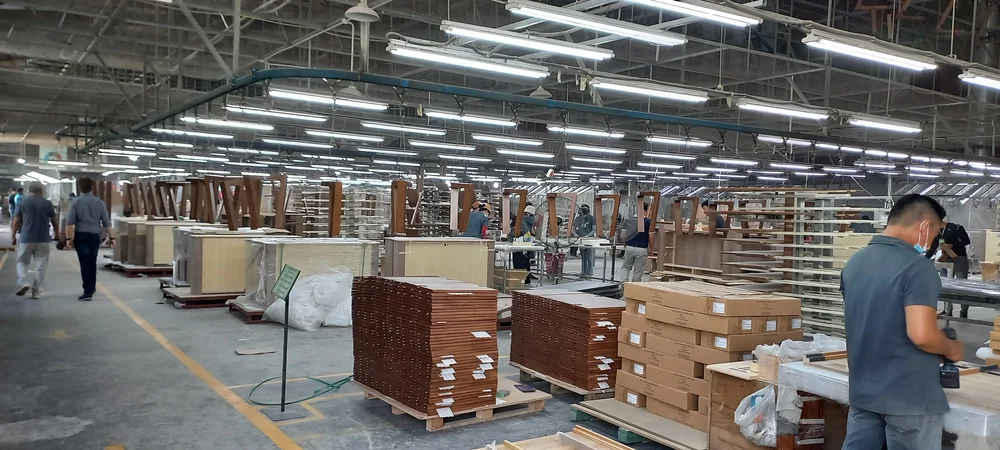
Wholesale brands sell through furniture stores, their own galleries, and designers, and their filings are unusually specific about where imported casegoods come from.
Hooker Furnishings
In fiscal 2026, 87 percent of Hooker Furnishings' import purchases came from Vietnam and just 5 percent from China, and its top five Vietnamese suppliers accounted for 69 percent of import purchases. In fiscal 2016, the split ran the other way: China 68 percent, Vietnam 26 percent. Hooker has since opened its own warehouse in Vietnam so it can combine products from different suppliers into shared containers.
Bassett
Bassett makes most of its wholesale line in the US: over 75 percent of its wholesale revenue comes from US-made products. The exception is casegoods. It sources most of its formal bedroom and dining room furniture, plus some leather upholstery, from several foreign plants, primarily in Vietnam.
La-Z-Boy
La-Z-Boy is mainly an American upholstery maker: about 90 percent of the upholstered units it sold in North America in fiscal 2026 were made in the US. Its Vietnam connection is imported wood furniture. Imported finished goods were 5 percent of its fiscal 2026 sales, and it bought more than 90 percent of them from Vietnam. In May 2026, it sold its Kincaid and American Drew wholesale casegoods businesses to Banner House, though it still imports casegoods under the Hammary and Joybird names.
Flexsteel
Vietnam and Mexico carry most of Flexsteel's production. After moving its finished goods out of China, it said in April 2025 that production in Vietnam supported roughly 55 percent of its revenue and its own Mexican operations almost 40 percent. It keeps a representative office in Ho Chi Minh City.
Theodore Alexander
Theodore Alexander, a luxury casegoods brand founded in 1996 that sells to interior designers and retailers, makes its furniture in its own factories in Ho Chi Minh City's Linh Trung export processing zone. In 2022, it said it had added three plants in the region since late 2020.
What Gets Made: Wood, Upholstered, and Outdoor Furniture
Wood furniture runs through most of the list, upholstery splits between Vietnam and plants in the brands' home markets, and outdoor furniture has its own supply base.
Wood Furniture and Casegoods
Most of the brands above buy wood furniture here, from bedroom and dining sets to dressers, tables, and cabinets. Rubberwood and acacia, both grown in Vietnam, are the main species, and more than 520,000 hectares of its planted forest are FSC-certified, according to Forest Trends. Premium lines still run on imported oak, walnut, and ash.
Paperwork follows the wood. Certified forest doesn't mean every factory can make an FSC claim, so if you need FSC-labeled product, check that the factory's chain-of-custody certificate covers your product and that the order paperwork carries the claim. Many US wood imports also need a Lacey Act declaration of the species and country of harvest, and the EU has its own deforestation rules. Our guide to the kinds of wood that come from Vietnam covers the species. Kitchen cabinets, which carry their own US duty, come from specialist makers, and our list of cabinet manufacturers in Vietnam covers them.
Upholstered Furniture
Upholstery is where the brands split. Vietnam makes some of Lovesac's Sactionals, seating for Flexsteel, and upholstery components for Ashley, and Binh Duong has large sofa and recliner plants, including the one Hong Kong's Man Wah bought in 2018. La-Z-Boy and Arhaus make or source most of their upholstery in the US, and Williams-Sonoma makes upholstered furniture in its own US plants. For a sofa, the label matters more than the brand name.
Outdoor Furniture
Outdoor furniture is mostly acacia, the plantation hardwood IKEA points to for its own outdoor range, often combined with aluminum frames and woven synthetic or natural fiber. It has its own supply base in the coastal center of the country.
The Factories Behind the Brands
Two models sit behind that list. Ashley, Nitori, and Theodore Alexander own manufacturing plants in Vietnam. The rest buy from Vietnamese contract factories, even where they own plants elsewhere: RH, Williams-Sonoma, and Arhaus in the US, and Flexsteel in Mexico. A shipment record shows a trading relationship, not current capacity or whether a factory will take on a new client. For a ranked view of the established exporters, with customs data for each, see our list of Vietnam furniture manufacturers.
Where Vietnam's Furniture Factories Are
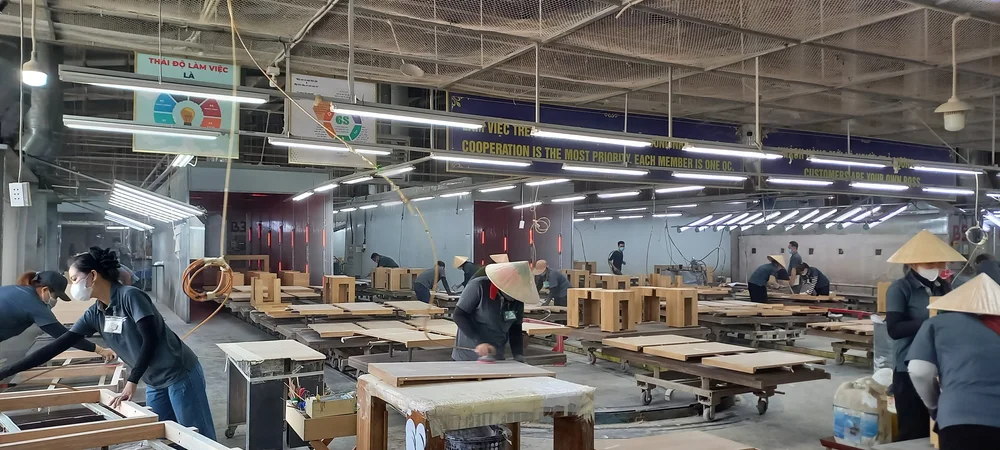
Most of the industry sits in the south. A 2020 US Department of Agriculture report counted about 5,000 wood-processing companies in Vietnam, 80 percent of them in Ho Chi Minh City, Binh Duong, Dong Nai, and Binh Dinh. Indoor casegoods and upholstery have long clustered around Ho Chi Minh City, Binh Duong, and Dong Nai, with outdoor furniture centered on Binh Dinh, around the port city of Quy Nhon.
One practical note: Vietnam merged its provinces on July 1, 2025. Binh Duong and Ba Ria-Vung Tau are now part of Ho Chi Minh City, Binh Dinh is part of Gia Lai, and Vinh Phuc is part of Phu Tho. Newer factory paperwork uses the new names, while older certificates and customs records still use the old ones.
These Are the Biggest Names, Not Your Shortlist
Vietnam has thousands of furniture and wood-processing companies, and the best factory for your line probably isn't on this page. Cosmo Sourcing's Vietnam team finds and vets factories that fit your order, on a fixed fee. See how our Vietnam sourcing company works.
Why Furniture Brands Manufacture in Vietnam
It Started with the 2005 Duties on Chinese Bedroom Furniture
Vietnam's head start goes back to January 2005, when the US put antidumping duties on wooden bedroom furniture from China and bedroom production began moving to Vietnam. The 2018 and 2019 US tariffs on China pushed more of the category along. Hooker's and RH's filings above show how far that went.
Tariffs and Trade Agreements
Vietnam's trade agreements, including the EVFTA with the EU, the UK-Vietnam agreement, CPTPP, and RCEP, can give its furniture preferential access to Europe, the UK, Japan, Canada, Australia, and much of Asia, as long as the product meets each agreement's rules of origin and the paperwork is in order. US duties are the moving part.
Upholstered wood furniture, kitchen cabinets, and vanities have carried their own product-specific US tariff under Section 232 since October 2025, separate from the country tariffs on other furniture, so check the current treatment for your product and importing country before calculating your landed cost. The same agreements cover what else is made in Vietnam, not just furniture.
How a Smaller Brand Gets Furniture Made in Vietnam
The factories on this page are built around retail programs: large repeat orders and product lines planned a season ahead. That doesn't mean a smaller brand can't get furniture made in Vietnam. It means matching a factory's capabilities, minimums, and interest in your project, and showing up prepared.
Pick the Right Tier of Factory
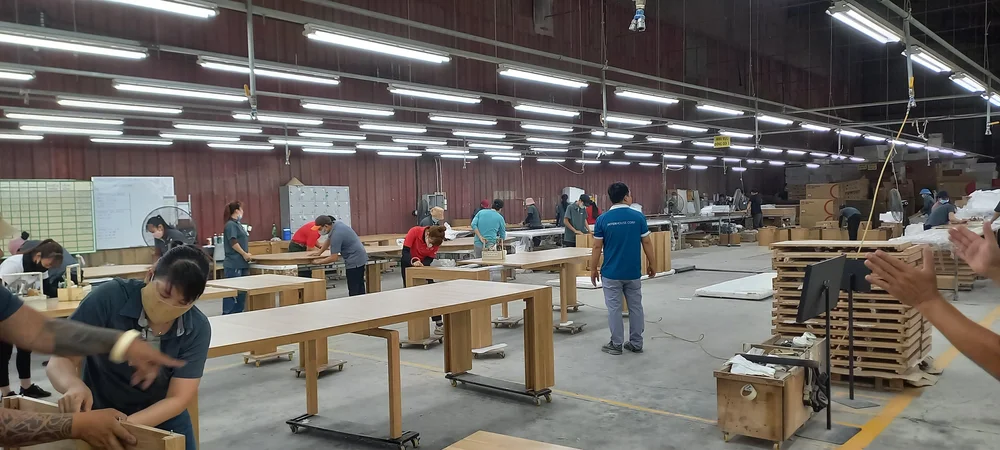
Some of the factories that ship to these brands do take on smaller projects. Cosmo Sourcing has run sourcing projects with San Lim, which customs records show shipping furniture to a La-Z-Boy importing entity as recently as May 2026, and with Interwood, part of the UK's Interwood Group. Others are harder to reach: Kaiser prioritizes large retailers with consistent volume.
For many first orders the better match is a factory that's flexible on minimums, like Minh Duong, a Binh Duong group Cosmo Sourcing's Vietnam team has visited and found consistent on solid-wood dining and living-room work. Mid-size factories often don't show up in English-language search results, which is why Cosmo Sourcing starts from a database of 14,000+ vetted Vietnamese factories rather than a public list.
Not every order has to fill a container, but the per-design minimum and the total shipment size both matter, so ask each factory about both, and whether it will mix designs in one shipment. You'll get faster, more accurate quotes if you bring:
- Drawings or dimensions for each design
- Materials and finishes
- Quantity per design
- Assembly and packing requirements
- Your destination market
- Your target delivery date
Complex Products Narrow the Field
One client brought Cosmo Sourcing a working prototype of a wellness furniture piece combining hardwood, an adjustable metal frame, and multi-density upholstery. His project needed a factory that could do all three in-house, and most furniture factories specialize in one material. Cosmo Sourcing had every factory sign an NNN, the confidentiality agreement used with factories, before it saw the drawings, guided his factory visits, and stayed involved through sample development, from Pantone-matched metal finishes to wood stain approvals. The wellness furniture project was forecast at 15 to 30 containers in its first year.
From Wholesaler to Direct Factory Buying
A US kitchen cabinet company installing more than 10,000 units a year was buying everything through a domestic wholesaler. After a two-week factory tour Cosmo Sourcing organized in Vietnam, it picked a factory, and by the time we wrote up the project in April 2026, it had been buying directly, by the container, for more than two years.
Furniture Made in Vietnam: Common Questions
Is Pottery Barn furniture made in Vietnam?
Yes, some of it is. Its owner, Williams-Sonoma, runs a sourcing office in Vietnam and reports that about 16 percent of its fiscal 2025 merchandise purchases came from Vietnam, though that figure covers the whole company, not Pottery Barn alone. For a specific piece, check its country of origin.
Is Ashley furniture made in Vietnam?
A lot of it is. Ashley's subsidiary Wanek runs factories in Binh Duong and Quang Ngai and buys from more than 120 other Vietnamese factories, but Ashley also makes furniture in the US, so origin varies by collection.
Is La-Z-Boy furniture made in Vietnam?
It depends on the product. Its recliners and sofas for North America are mostly made in the US, while the wood furniture it imports comes mainly from Vietnam.
Is furniture made in Vietnam good quality?
It depends on the factory, not the country: the same industry makes luxury casegoods for Theodore Alexander and flat-pack furniture for value retailers. Judge quality against your own specification, with production samples and an inspection before shipment. Certificates answer different questions: FSC covers wood sourcing, and US formaldehyde rules under TSCA Title VI apply to composite panels such as MDF and particleboard.
Can a small brand use the same factories as these brands?
Sometimes. A few of the big exporters take smaller projects and many don't, so ask about minimums and mixed-design shipments before you send drawings.
How can I find out where a piece of furniture was made?
Start with the country-of-origin label on the piece itself; it shows where that item was made. For a brand's overall picture, check its annual report, and customs shipment records, searchable through tools like ImportYeti, can help cross-check which factories ship to it, though they don't catch everything.
Make Your Own Furniture in Vietnam With Cosmo Sourcing
Unlike a commission-based sourcing agent, Cosmo Sourcing works for a fixed fee, with no commissions and no markups. A typical furniture sourcing project takes four to six weeks, before sampling and production, and delivers original quotes from two to six factories and direct introductions to the ones that fit, so you deal with the factory yourself. Here's how our Vietnam sourcing services work.
To get started, tell us your furniture type, approximate quantity per design, destination market, and whether you're at the drawing, prototype, or production stage. You can also email info@cosmosourcing.com.