How To Find Shoe Manufacturers In Indonesia // Top Footwear Suppliers And Factories In Indonesia List
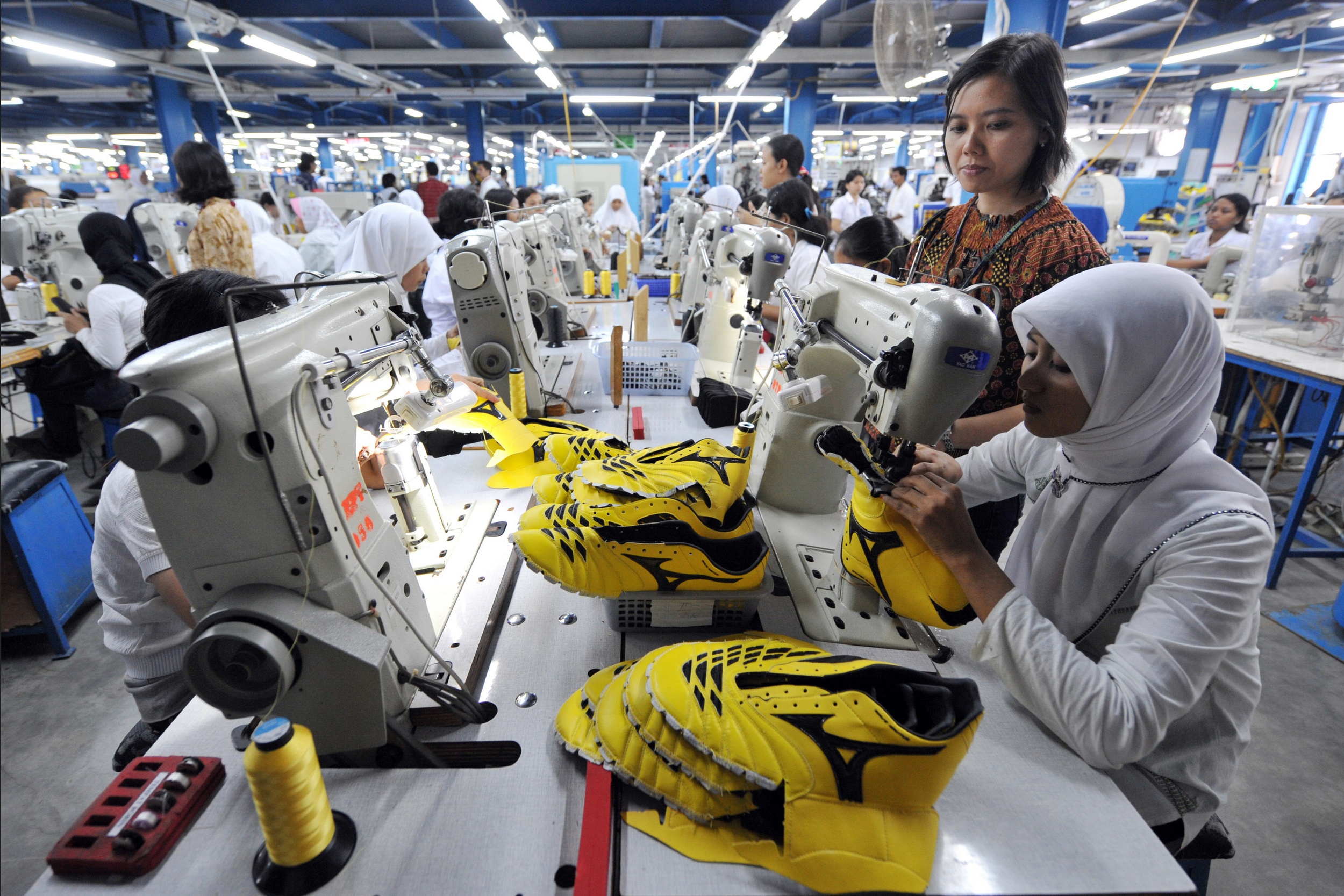
Indonesia is the world's fourth-largest footwear producer and sixth-largest footwear exporter, with annual exports exceeding $7.28 billion in 2024 according to UN COMTRADE data. The country's factories produce athletic shoes, leather dress shoes, sandals, safety footwear, and more for brands like Nike, Adidas, Puma, and Converse. If you're looking to source footwear from Indonesia, this guide covers the industry landscape, major production hubs, how to find and vet suppliers, and what to expect on pricing, MOQs, and lead times.
Updated Feb 19, 2026
Product Sourcing Methods at a Glance
Comparison for Online Sellers
Why Source Shoes From Indonesia
Indonesia has structural advantages that make it a strong alternative to China and a complement to Vietnam for footwear production. For a broader look at Indonesia's sourcing landscape, see our sourcing guide for Indonesia.
Labor Costs and Competitiveness
Labor costs vary significantly by region. In 2025, Central Java's minimum wage is approximately IDR 2.17 million/month (~$135 USD), while Banten Province (near Jakarta) is around IDR 2.9 million/month (~$180 USD). These rates are lower than comparable zones in China and competitive with Vietnam's southern provinces ($230-$320/month).
Proven Manufacturing Scale
Nike alone sources from 58 factories across Indonesia employing over 285,000 workers (December 2025 supplier list), accounting for roughly 28% of Nike's global footwear output. Adidas, Puma, Converse, and numerous South Korean manufacturers also operate large-scale production here. For a full breakdown, see our article on where Nike makes its shoes.
Favorable Tariff Position
As of July 2025, the U.S. and Indonesia reached a preliminary agreement setting a 19% reciprocal tariff rate, the lowest among ASEAN nations. Vietnam sits at 20%, and China's cumulative rates exceed 50% on many footwear categories. Indonesia also recently finalized a draft EU free trade agreement (expected implementation 2027), which would eliminate most tariffs on footwear imports to Europe.
Workforce Depth
Indonesia's leather and footwear sector employs roughly 961,000 workers directly. The workforce is concentrated in regions with decades of manufacturing experience, giving factories deep pools of trained workers for cutting, stitching, lasting, and finishing.
Where Shoes Are Made in Indonesia
Almost all footwear production is on the island of Java, spread across four main regions. Geography affects labor costs, factory capabilities, and the types of shoes produced.
West Java
Bandung, Bogor, Cianjur, Karawang, and Sukabumi form the largest footwear cluster and the primary hub for athletic and performance shoes. Most of Nike's Indonesian factories are concentrated here, along with well-established supply chains for synthetic materials, rubber, and foam components. Cibaduyut in Bandung is also a traditional shoemaking center with smaller leather workshops.
Banten Province
Tangerang and Serang, adjacent to Jakarta, are a major industrial zone for footwear and leather processing. However, higher minimum wages compared to Central Java have led some manufacturers to relocate production eastward in recent years.
Central Java
Semarang, Solo, Batang, and Magelang are growing rapidly as a footwear production base because wages are 25-30% lower than in West Java and Banten. The Batang Industropolis Special Economic Zone is a notable development, with PT Yih Quan Footwear Indonesia producing Converse shoes for export from this zone.
East Java
Surabaya, Sidoarjo, Jombang, Mojokerto, and Malang are known for leather footwear, including formal shoes, children's shoes, and handcrafted products. Sidoarjo has a cluster of leather tanneries and factories with strong export ties to Europe.
The primary export ports are Tanjung Priok (Jakarta) for western Java and Tanjung Perak (Surabaya) for the east. Transit times to the U.S. West Coast range from 18 to 25 days.
What Types of Shoes Does Indonesia Produce?
Athletic and Performance Footwear
This is Indonesia's strongest category. Large factories with injection molding, automated cutting, and high-volume assembly lines serve Nike, Adidas, and Puma. If you're developing sneakers or performance shoes, Indonesia has the deepest bench of experienced factories outside Vietnam and China.
Leather Shoes and Boots
Indonesia has a domestic leather supply chain (cattle, goat, and sheep hides from Java, Sumatra, and Sulawesi), supplemented by imported premium hides from Australia and New Zealand. East Java is particularly strong for dress shoes, boots, Oxfords, Derbies, and children's leather footwear.
Sandals, Safety Shoes, and Casual Footwear
With abundant natural rubber, Indonesia produces sandals and flip-flops at competitive prices in high volume. Several specialized factories also produce safety shoes meeting EN ISO 20345 and ASTM standards. For casual categories like loafers, espadrilles, slip-ons, and canvas shoes, mid-sized factories typically offer more flexible MOQs.
Top Shoe Manufacturers in Indonesia
Below is a list of established Indonesian footwear manufacturers across different categories and scales. This is not an exhaustive list, and the best factory for your project will depend on your specific product, volume, and target market.
Large-Scale Athletic and Sports Footwear
TKG Taekwang Indonesia. Located in Subang, West Java, Taekwang was established in 2011 and manufactures Nike footwear at scale. It is part of the South Korean TKG Group, one of the largest Nike contract manufacturers globally.
PT Yih Quan Footwear Indonesia. Based in the Batang Industropolis Special Economic Zone in Central Java, this factory produces Converse shoes for export. It is a notable example of the manufacturing migration toward Central Java's lower-cost labor markets.
PT Dwi Prima Sentosa (DPS). A sports footwear manufacturer with two factories in Mojokerto and Ngawi (East Java), operating since 2002. DPS produces for international brands including Yonex, Moonstar, Decathlon, and Diadora, exporting to Japan, France, the UK, and South Korea. The company also manufactures phylon and outsole components.
Leather Footwear and Export-Oriented Factories
PT Gradial Perdana Perkasa. Based in Surabaya, East Java, Gradial has been manufacturing leather footwear for export since the late 1980s. They specialize in men's, women's, and children's leather shoes and have a strong client base in Europe. One of East Java's longest-running OEM leather footwear exporters.
PT Goldenstep Indonesia. Located in Sidoarjo, East Java, Goldenstep was established in 2009 and focuses on high-quality leather children's footwear. The factory is partnered with Total Concept Hong Kong, which develops and sources shoe collections for European retailers. They emphasize European-standard quality at Asian-competitive pricing.
DiS Bali Leather. Known for producing leather shoes and handbags for export to Europe and the U.S., they combine traditional Indonesian leather craftsmanship with export-oriented production. Based in Bali.
PT Kezia Solindo International. Focuses on women's footwear, particularly high-end leather shoes for export markets.
Specialty and Niche Manufacturers
Grand Shoe Industry. Established in 1976 in Yogyakarta, Grand Shoe Industry is considered a pioneer of safety footwear manufacturing in Indonesia, with over 30 years of experience producing industrial and protective shoes.
Aggio. Based in Indonesia with over 30 years of shoemaking experience, Aggio has produced footwear for high-end international brands including Prada, Fischer Sports, and Lacoste.
PT Johan Jaya Putra (Shoes Factory Indonesia). A Bandung-based manufacturer producing shoes and sandals for men, women, children, and infants. They offer OEM production with approximately 7,000 pairs per month and welcome factory visits.
Top Torch International. Produces high-end footwear for export to European and Asian luxury markets, with 18 years of operations.
How to Find Shoe Suppliers in Indonesia
Indonesia's factory base is less visible on global B2B platforms than China's, so direct outreach, trade shows, and sourcing partners play a bigger role. For more on supplier discovery, see our product sourcing guide.
Direct Outreach and Online Search
Many Indonesian factories have their own websites and can be found through targeted Google searches (e.g., "leather shoe manufacturer Sidoarjo" or "athletic footwear factory West Java"). WhatsApp is the dominant business communication tool in Indonesia; most factories prefer it over email for day-to-day communication.
Trade Shows and B2B Platforms
The ILF Expo (Indonesia Leather and Footwear Expo) is the most relevant industry event. On the platform side, Alibaba lists some Indonesian manufacturers, but coverage is thinner than for China, and you'll need to verify whether they're factories or trading companies. IndoTrading.com is a local option. See our guide to B2B platforms and Alibaba alternatives for more.
Sourcing Companies
A sourcing partner with on-the-ground presence is often the most efficient path, especially for first-time buyers who need help verifying factory capabilities and navigating the language barrier (English proficiency at the factory level varies widely).
What to Expect: MOQs, Lead Times, and Pricing
MOQs. Large factories typically require 1,000-3,000 pairs per style per color. Mid-sized factories may work with 500-1,000 pairs. Smaller workshops in East Java or Bandung's Cibaduyut might accept 100-300 pairs, though quality systems at that scale are less standardized. Sample orders of 1-5 pairs are standard before committing to production.
Lead times. Expect 60-120 days from sample approval to finished production. Sample development takes 2-4 weeks. Shipping adds 18-25 days to the U.S. West Coast or 25-35 days to Europe.
Pricing. Indonesia is competitive but not the cheapest globally. For athletic shoes, pricing is roughly comparable to Vietnam. For leather shoes, it's attractive versus China or Europe, though not as low as India or Bangladesh.
Payment terms. Most factories require a 30-50% deposit before production, with the balance due before shipment.
How to Vet Indonesian Shoe Manufacturers
Verify factory ownership. Request a business license (SIUP) and company registration (NIB). Cross-reference the address and confirm that actual production facilities exist.
Order samples before committing. Evaluate construction, sole bonding, stitching consistency, sizing accuracy, and finishing against your spec sheet. Non-negotiable.
Check export experience. A factory already exporting to the U.S. or EU will understand compliance requirements (labeling, testing, documentation) better than one serving only the domestic market.
Conduct a factory audit. For significant orders, have a third-party or sourcing partner verify on-site capacity, quality management, and working conditions.
For a comparison of approaches across the region, see our Southeast Asia sourcing guide.
2025 U.S. Tariff Situation for Indonesian Footwear
In April 2025, the U.S. announced reciprocal tariffs on most countries, initially imposing a 32% tariff on imports from Indonesia. In July 2025, the two countries reached a framework agreement reducing this to 19%, in addition to existing product-specific HTS duties that vary by shoe type and material.
Vietnam's reciprocal rate is 20%, and China's cumulative rates exceed 50% on many footwear categories, making Indonesia the most tariff-competitive major footwear exporter for U.S. importers right now. However, the deal remains a framework, not a finalized agreement, and terms could shift. Any sourcing strategy should maintain flexibility. Our Vietnam vs. China sourcing comparison covers additional country-level tradeoffs.
Work With Cosmo Sourcing to Find Indonesian Shoe Manufacturers
At Cosmo Sourcing, we help businesses source footwear and other products from Indonesia, Vietnam, China, and across Southeast Asia. Since 2012, we've helped over 4,000 clients source more than 10,000 products. We identify factories, vet them on-site, obtain original quotes with full transparency (flat-fee model, no markup on supplier prices), provide direct factory introductions, and support production oversight. You'll typically receive 2-6 original factory quotes per project so you can compare options with complete pricing transparency.
Contact us here or email info@cosmosourcing.com. View our pricing to see how the flat-fee model works.