Top 10 Vietnam Uniform Manufacturers List // How to Find Great Factories for Your Uniforms
Vietnam's uniform export base is concentrated in medical scrubs, hospitality wear, industrial workwear, and knit corporate polos. The most reliable way to identify a real uniform factory is verified customs shipment data, not directory listings. Uniform MOQs typically run 300 to 1,000 pieces per style and color, with 30 to 60 days for bulk production once materials arrive.
Uniforms are one of the categories we handle most often at Cosmo Sourcing: work uniforms, school uniforms, sports team uniforms, hotel uniforms, and most of what falls in between. We have had a team on the ground in Vietnam since 2014, based in Binh Duong province outside Ho Chi Minh City, and we have helped thousands of clients source more than 10,000 products across Southeast Asia and Mexico. This guide profiles the uniform manufacturers with real, verifiable export records, and is honest about the ones it misses.
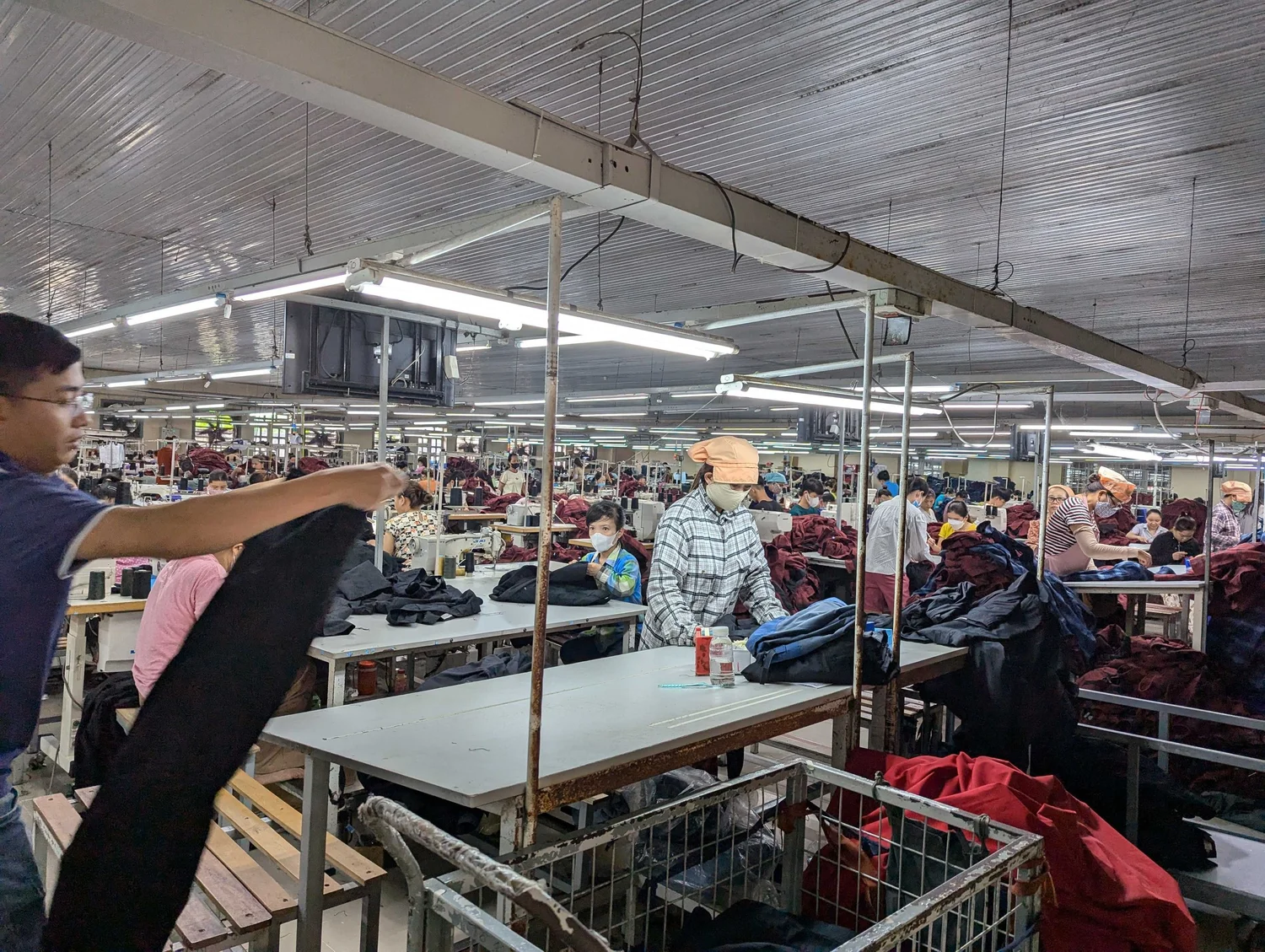
Top Vietnam Uniform Manufacturers
Here is what that looks like in practice. Cosmo Sourcing sourced for an Australian school uniform supplier serving dozens of schools, and not one manufacturer on this list appears anywhere in that supply chain, because that program ships to Australia and never touches US customs at all. Their absence tells you something about the data. It tells you nothing about the factories. Vietnam has nearly 6,000 garment, textile, and clothing factories, and most cut-and-sew apparel factories can make uniforms. If you need 800 branded polos rather than 80,000 scrubs, your best-fit manufacturer is almost certainly a smaller specialist that appears on no English-language list, including this one.
The largest verified uniform exporter in this dataset. Both of their HS codes sit in the women's man-made fiber lines, 6211.43 for other garments and 6204.63 for synthetic fiber trousers, which lines up with scrub tops and scrub pants. Volume at that level means they are already a tier-one supplier to at least one major medical uniform brand, and it also means a small first order is unlikely to interest them.
- Specialization
- Medical scrubs and lab coats
- Verified shipments
- Roughly 500
- Ships from
- Vung Tau to the US West Coast
- HS codes
- 621143, 620463
One of the highest-volume medical uniform exporters in Vietnam, shipping to both US coasts. Worth knowing before you engage: some of their shipments route through Yantian and Shanghai, which can indicate Chinese-origin fabric or transshipment. Establish fabric origin in the first conversation, not the fifth. It determines your duty treatment, and it is the thing buyers discover too late.
- Specialization
- Medical scrubs, tops, and pants
- Verified shipments
- 500+
- Ships from
- Southern Vietnam to the US East and West Coasts
Customs records show shipments consigned to Careismatic Brands, the parent company of Cherokee and Dickies Medical, which places Thanh Truc inside the supply chain of well-known American medical uniform labels. If your specification is demanding and you want a factory that has already passed someone else's audit, that is about as strong a signal as customs data gives you.
- Specialization
- Medical uniforms
- Verified shipments
- Roughly 80
- Ships from
- Vung Tau to Los Angeles and New York
- Named clients
- Careismatic Brands (Cherokee, Dickies Medical)
Customs data references Barco Uniforms, one of the leading premium scrubs brands in the United States. Producing at Barco's specification level demonstrates real quality control. The shipment count is modest, which in practice often means available capacity, and capacity is worth more to a mid-sized buyer than a giant that never returns the email.
- Specialization
- Medical uniforms
- Verified shipments
- Roughly 21
- Ships from
- Southern Vietnam to Los Angeles
- Named clients
- Barco Uniforms
Location matters more here than volume. Almost every uniform exporter in the customs data sits in the south, so if you are deliberately diversifying within Vietnam, or you already run northern production and want your uniform supplier nearby, northern manufacturers like V J One are a short list rather than a long one.
- Specialization
- Medical uniforms
- Verified shipments
- Roughly 27
- Ships from
- Hai Phong, northern Vietnam
The only true specialist on this list. Sao Mai makes law enforcement and security uniforms: polyester protective vests, ripstop tactical uniforms, woven duty shirts. Security, police, and tactical uniforms are a niche with a very small pool of qualified Vietnamese factories, and Sao Mai is one of the few with a verified export record in it.
- Specialization
- Law enforcement, security, and tactical uniforms
- Verified shipments
- Roughly 75
- Ships from
- Vung Tau to New York and Newark
Customs records show shipments to Aramark Uniform Services across Norfolk, Oakland, and Savannah. Aramark spun that business off in 2023 and it now trades as Vestis, one of the two largest uniform service companies in North America, so supplying them indicates consistency, scale, and the ability to hold a corporate specification across repeat runs. If your program is branded polos or knitted corporate wear, this is the most relevant profile on the list.
- Specialization
- Knitted performance polo shirts
- Ships to
- Norfolk, Oakland, and Savannah
- Named clients
- Aramark Uniform Services (now Vestis)
Hospitality rather than medical. Their export records show polyester woven blouses and shirts for housekeeping staff. Smaller and specialized, which makes them a realistic option for hotels, resorts, and facility management companies that need woven hospitality uniforms rather than a scrubs line.
- Specialization
- Hospitality and housekeeping uniforms
- Verified shipments
- 13 or more
- Ships from
- Southern Vietnam to New York, Newark, and California
A specialist in martial arts uniforms: taekwondo uniforms, belts, and accessories. Narrow, but genuinely differentiated. If you are sourcing martial arts or athletic uniforms, this is a verified exporter in a category most Vietnamese factories do not touch.
- Specialization
- Martial arts and athletic uniforms
- Verified shipments
- Roughly 15
- Ships from
- Hai Phong to Baltimore, New York, and Long Beach
Men's woven nylon and polyester uniforms carrying recycled fabric designations, with product references pointing to outdoor and industrial workwear brands. If your uniform program has a sustainability requirement that has to survive a supplier audit rather than just a marketing page, Grand Twins proves the capability exists inside Vietnam's export base.
- Specialization
- Industrial workwear, recycled and sustainable fabric
- Ships from
- Southern Vietnam
Vinatex, Thygesen, and Vietnam's Largest Uniform Manufacturers
Ask about uniform manufacturing in Vietnam and the same names come back every time: Vinatex, the state-linked group that dominates the country's textile chain, along with Nha Be Garment, TNG Investment and Trading, Scavi Vietnam, Hoa Tho Textile and Garment, Thygesen Textile Vietnam, and Dugarco. All of them make uniforms. None of them is a uniform specialist. They are large general apparel manufacturers, and uniforms sit in the order book alongside activewear, outerwear, underwear, and fashion.
Garmex Saigon still appears on most published lists of Vietnam's biggest garment makers. It suspended production in 2023, cut its workforce from roughly 4,000 to a few dozen, and was delisted from the Ho Chi Minh Stock Exchange in January 2025. That is a useful illustration of the problem with sourcing from a list: names stay on the internet long after the factory has stopped taking orders. Customs records do not have that problem, because a factory that has stopped shipping stops showing up.
We have placed multiple production orders through Thygesen for apparel clients, and I have walked Dugarco's facilities personally, so the capability is real and the operations are well run. But minimums at that tier typically start in the thousands of pieces per style, which puts them out of reach of most uniform programs. If your order is large enough to interest them, they are excellent. If it is not, chasing them costs you months. We cover them properly in our guide to Vietnam's clothing manufacturing base.
What Types of Uniforms Does Vietnam Manufacture?
Scrubs and Medical Uniform Manufacturers in Vietnam
By a wide margin, Vietnam's strongest uniform export category. Scrubs, lab coats, nursing uniforms, and surgical gowns account for most uniform-related customs records, and the factories supplying major American medical apparel brands cluster around Ho Chi Minh City. If this is your category, you have the deepest pool of qualified manufacturers and the most leverage on price. We go deeper in our guide to scrub and medical gown manufacturers in Vietnam.
Polo Shirt and Corporate Uniform Manufacturers in Vietnam
Branded polos, button-downs, and coordinated office wear. Vietnam has deep capacity in both cotton and synthetic knits, and the factories serving global uniform service companies sit here. Much of the capability overlaps with the country's T-shirt manufacturers in Vietnam, since a corporate polo and a retail polo come off similar lines.
Hotel and Hospitality Uniform Manufacturers in Vietnam
Front-desk attire, restaurant service wear, housekeeping uniforms, and spa staff clothing. Vietnamese factories in this category are experienced with the wrinkle-resistant and stain-resistant fabric treatments that international hotel groups specify, which is a real technical requirement and not a marketing line.
Workwear Manufacturers in Vietnam
High-visibility vests, flame-resistant coveralls, construction site uniforms, and factory floor wear. Northern Vietnam, around Hanoi, Hai Duong, and Thai Binh, has a concentration of heavy-duty workwear factories, and some southern factories now work in recycled materials. If you need EN ISO or CE certification for a European market, ask for the certificate number and the test report, not the claim.
School Uniform Manufacturers in Vietnam
Polo shirts, pleated skirts, trousers, and school sportswear. These are high-volume orders on annual repeat cycles, which makes consistency across years your central problem rather than unit price. As noted above, school uniform export barely registers in US customs data, because the biggest school uniform markets are Australia, the United Kingdom, and the Gulf. The capability is there. The paper trail is not, which is a good example of why sourcing from Vietnam rewards people who go and look.
Sports Team Uniform Manufacturers in Vietnam
Jerseys, team apparel, and martial arts gear. We sourced hockey uniforms for a Swiss amateur hockey league, and team sport is a genuinely different problem from corporate uniforms: volumes per design are small, the number of designs is large, and every team wants its own colorway and crest. That pushes you toward factories comfortable with sublimation printing and short runs, not the high-volume cut-and-sew operations that dominate the export tables. Our guide to activewear manufacturers in Vietnam is usually the better starting point.
Security and Tactical Uniform Manufacturers in Vietnam
Guard uniforms, duty shirts, tactical wear, and protective vests. A specialized niche with a small pool of qualified factories, though the export records show the capability exists. Expect a longer search and fewer options.
What Vietnam Does Not Manufacture Well
- Very small runs. Below roughly 300 pieces per style and color, export factories will not quote you seriously, and the ones who say yes are often trading companies who will subcontract you out anyway.
- Structured tailoring. Vietnam's strength is volume cut-and-sew. A properly canvassed blazer with hand-set sleeves belongs with a suiting specialist, in another country.
- Speed at small scale. If you need 200 shirts in three weeks, do not source them from Vietnam. Between sampling, production, and ocean freight, the math does not work.
- Exotic fabric. If your specification demands a mill-specific fabric made only in Italy or the United States, the fabric import will dominate your lead time and landed cost, and erase most of the reason you came to Vietnam.
Uniform Manufacturing Costs and MOQs in Vietnam
Almost no uniform sourcing guide gives a straight answer on cost. Here is what actually drives the number.
- Fabric is the largest single variable. Basic poly-cotton is cheap. Moisture-wicking, antimicrobial, flame-resistant, and high-visibility fabrics are not, and most of them are imported. On technical uniforms, fabric can be 40 to 60 percent of unit cost.
- Order size moves the price more than any negotiation will. The step changes are real: crossing from 500 to 2,000 pieces per style typically drops the unit price sharply, and it keeps dropping to around 3,000 before it flattens out.
- Decoration is routinely underestimated. Embroidery costs more than screen printing. Woven labels cost more than heat transfer. Multi-position branding multiplies handling. Have it quoted as a separate line item, not folded into the garment price.
- Complexity, not fabric, is what makes workwear expensive. A knit polo and a lined structured jacket are not the same product. Pockets, plackets, reinforced seams, and reflective tape all add labor.
- Certification costs money. WRAP, OEKO-TEX, BSCI, and ISO 13485 for medical. Certified factories charge more, and for good reason. In healthcare and most corporate CSR programs, this is not optional.
On minimums, be skeptical of what you read. Several Vietnam-facing uniform suppliers publish standard minimums of 3,000 pieces with a floor around 1,000. In practice, uniform MOQs at real export factories generally run 300 to 1,000 pieces per style and color, and some will go lower on simple garments. If someone quotes a 3,000-piece floor as though it were a law of nature, they are describing their own preference, not the market. Expect to pay 50 to 150 US dollars per pre-production sample depending on complexity, and expect many factories to credit that against your bulk order.
Vietnam, China, or Mexico for Uniform Manufacturing?
Uniforms behave differently from most apparel, and it changes the country calculation. A fashion brand does a seasonal drop and moves on. A uniform program reorders, every year, for years, and every reorder has to match the last one. That makes lead time and consistency worth more than they are in fashion, and it is why the cheapest unit price is frequently the wrong answer.
For most buyers, Vietnam is the right call, and the medical, hospitality, and workwear depth is the reason. China remains broader and often cheaper on minimums, at the tariff exposure that sent most people looking for an alternative in the first place. But if your program is genuinely replenishment-driven, if you reorder in small batches against real demand rather than once a year against a forecast, a fifteen to twenty-five day overland lead time from Mexico can be worth more than a lower unit price from Asia. It lets you hold less inventory and reorder against what actually sold. That is a real trade, and it deserves the arithmetic before you commit. See our guide to clothing manufacturers in Mexico.
How to Evaluate a Vietnamese Uniform Manufacturer
Use Customs Data, Not Directories
Platforms like ImportYeti, Panjiva, and Import Genius show which Vietnamese companies are actually shipping uniform products, how often, to which ports, and under which HS codes. It filters out every company that claims to make uniforms without ever having exported one. Directories give you names, but listings are often outdated or ranked by who paid, and Alibaba is particularly unreliable for Vietnam, where a large share of listings labeled Vietnamese are run by Chinese trading companies. Treat directories as a way to build a shortlist, never as verification.
Check Category Experience, Not Just Capacity
A factory that excels at basic tees may be poor at tailored corporate wear. Ask for photographs and references from previous uniform orders in your specific category, then verify against customs data. Volume is a signal of capability. It is not a signal of fit.
Confirm Decoration Is In-House
Embroidery, screen printing, woven labels, custom buttons, reflective tape. Confirm these happen in-house rather than being subcontracted. Subcontracting adds time and destroys your quality control, and on a uniform the decoration is the entire point.
Verify Certifications, Including the Expiry Date
ISO 9001, WRAP, OEKO-TEX, BSCI, SA8000, and ISO 13485 for medical apparel. Ask for the certificate number and the expiry date, not the logo. I have seen factories display expired certificates and certificates that cover only one of their production lines.
Ask Where the Fabric Comes From
Does the factory buy fabric domestically or import it, and from where? The answer determines your duty treatment, which is covered in the next section. Ask it early.
Visit, or Send Someone Who Can
Trade shows (SaigonTex and HanoiTex) are worth the trip, though be clear on what they are: the exhibitor base is weighted toward machinery, fabric mills, trims, and accessories rather than cut-and-sew factories, so treat them as a way to understand the supply chain feeding your uniform program rather than a place to meet your factory. To judge embroidery and customization quality you still have to put your hands on it, which means a factory visit. That is the part that goes wrong and the part you cannot assess from a photograph. No video call or certificate substitutes for a person standing on the production floor.
Fabric Origin and Tariffs for Vietnam Uniform Manufacturing
This matters more for uniforms than for almost any other apparel category. Vietnam's domestic fabric supply has improved, but it is still weakest in exactly the fabrics uniforms need: moisture-wicking knits, antimicrobial finishes, flame-resistant weaves, and high-visibility treatments. Most of those are imported from China, South Korea, or Taiwan. A uniform program is structurally more exposed to fabric-origin questions than one making cotton tees.
The CPTPP carries a yarn-forward rule of origin: both the yarn and the fabric have to originate inside the trade bloc for the finished garment to claim the preferential duty. The EVFTA is looser but still strict, using a fabric-forward rule, so the fabric has to be woven or knitted in Vietnam or the EU while the yarn can come from anywhere, and Korean fabric counts through a cumulation clause. Under either agreement, fabric bought in China can disqualify your shipment even when every cut-and-sew operation happened in Vietnam. And transshipment routing (the DNC entry above is a live example) can raise country-of-origin questions at the border that are expensive to resolve after the container has sailed.
On tariff rates themselves, we are deliberately not publishing a number here. US rates on Vietnamese goods have moved three times in twelve months and are scheduled to change again shortly. Any figure printed in an article would be wrong within weeks. Check the current rate before you commit to a purchase order, either with a customs broker or with our tariff calculator, and build your landed cost from that number rather than from a blog post.
Uniform Sampling, Quality Control, and Reorder Consistency
Never skip the pre-production sample. I have watched buyers try to save three weeks by going straight to bulk on the strength of a factory's previous work, and it goes wrong nearly every time: color mismatches, fit problems, logo placement errors, fabric that is not what was agreed. Get the sample, approve it in writing, then authorize bulk. A detailed product specification sheet is what makes that approval mean anything: measurements, fabric specifications, Pantone references, logo files, and construction details, all documented before a machine starts. Schedule a final inspection at roughly 80 percent of production, because catching a defect on the factory floor is always cheaper than finding it in your warehouse.
The Part Nobody Warns You About: Uniform Reorders
Uniforms are a repeat-purchase product, and consistency across production runs is the problem that actually bites. On the Australian school program mentioned at the top of this guide, the hard part was never the first production run. It was making sure the polo a student bought in January matched the one their older sibling bought two years earlier, across dozens of separate school color schemes.
Dye lots drift. That is not a factory failing, it is chemistry, which is why the fix has to be procedural. Lock the dye lot where you can. Leave approved samples and fabric swatches physically at the factory, so the next run has something to match against rather than a Pantone number and a hope. Agree size ratios up front instead of renegotiating them every season. And put annual volume commitments in writing, because a factory that knows your reorder is coming will hold your fabric and your quality, and one that does not will treat you as a one-off.
Vietnam Uniform Manufacturing FAQ
Typically 300 to 1,000 pieces per style and color at a genuine export factory, and lower on simple garments. Some suppliers publish 3,000-piece minimums, but that reflects their own preference rather than a market rule.
Roughly 7 to 10 days for initial sampling if fabric is in stock, 5 to 7 days for a formal quotation, and 30 to 60 days for bulk production once materials arrive. Add 20 to 30 days ocean transit to the US West Coast and 30 to 40 days to the East Coast. Europe currently runs 30 to 42 days, because most carriers are still routing around the Cape of Good Hope instead of the Suez Canal, which adds roughly two weeks to the Asia to Europe leg.
Often, but not always. And unit price is the wrong question. China has broader capability and frequently lower minimums. Vietnam's advantage is competitive pricing combined with strong medical and workwear depth, and a tariff position many buyers now prefer. Compare landed cost, not factory quotes.
Yes, and Vietnam suits it well, because school uniform orders are high-volume with annual repeat cycles. Be aware that school uniform export barely appears in US customs data, since the largest markets are Australia, the United Kingdom, and the Gulf. The manufacturers exist. They are simply invisible in the American import records that most factory lists are built from.
Check customs export records for their shipment history. A company that has genuinely exported uniform products has a documented consignee, port, and HS code. A company that only claims to make uniforms has a website. The gap between those two is where most sourcing projects go wrong.
Somebody does. It does not have to be you, but no photograph, video call, or certificate substitutes for a person standing on the production floor. If you cannot go, send someone who can.
Work with Cosmo Sourcing for Your Uniform Program
The manufacturers listed above have the clearest verified export records in Vietnam's uniform sector, and they are a good starting point for research. But as I said at the top, they are ten factories out of thousands capable of the work, and for a large share of projects they are not the right ten. Finding the smaller specialist that fits your category, your volume, and your reorder cycle is the hard part of the job, and it is not something a list can do for you.
Uniforms are one of our most active categories at Cosmo Sourcing. We have been on the ground in Vietnam since 2014, working from Binh Duong province with a vetted database of more than 14,000 Vietnamese factories, and we have sourced work uniforms, school uniforms, sports team uniforms, and hotel uniforms. Unlike commission-based sourcing agents, we charge a fixed fee, with no commissions and no markups on factory quotes, so our incentive is to find the factory that fits your program rather than the one that inflates the invoice. On a typical uniform project we introduce you directly to two to six manufacturers matched to your specification, collect and compare the quotes, coordinate sampling, and manage quality inspection through production. You get the full factory contact details and direct introductions, so the relationship is yours.
Email info@cosmosourcing.com, send your brief through our contact page, or book a 30-minute call.
Whether you need 500 branded polos for a restaurant group or 50,000 industrial coveralls, we can help you find the factory that fits.