Top 8 Vietnam Lacquerware Manufacturers // How to Find and Vet the Best Factories
Vietnam is one of the world's top producers of lacquerware, with factories concentrated around Hanoi and Ho Chi Minh City that export trays, bowls, vases, home decor, and custom OEM products to buyers in the US, EU, Japan, and beyond. Finding the right manufacturer requires knowing where production is concentrated, how to evaluate quality (especially the difference between natural and synthetic lacquer), and how to connect with factories that are actually set up for export.
This guide covers where lacquerware is made in Vietnam, how to find and evaluate manufacturers, and a list of verified exporters based on customs shipment data.
Updated March 2, 2026
What Is Vietnamese Lacquerware and Why Source It Here?
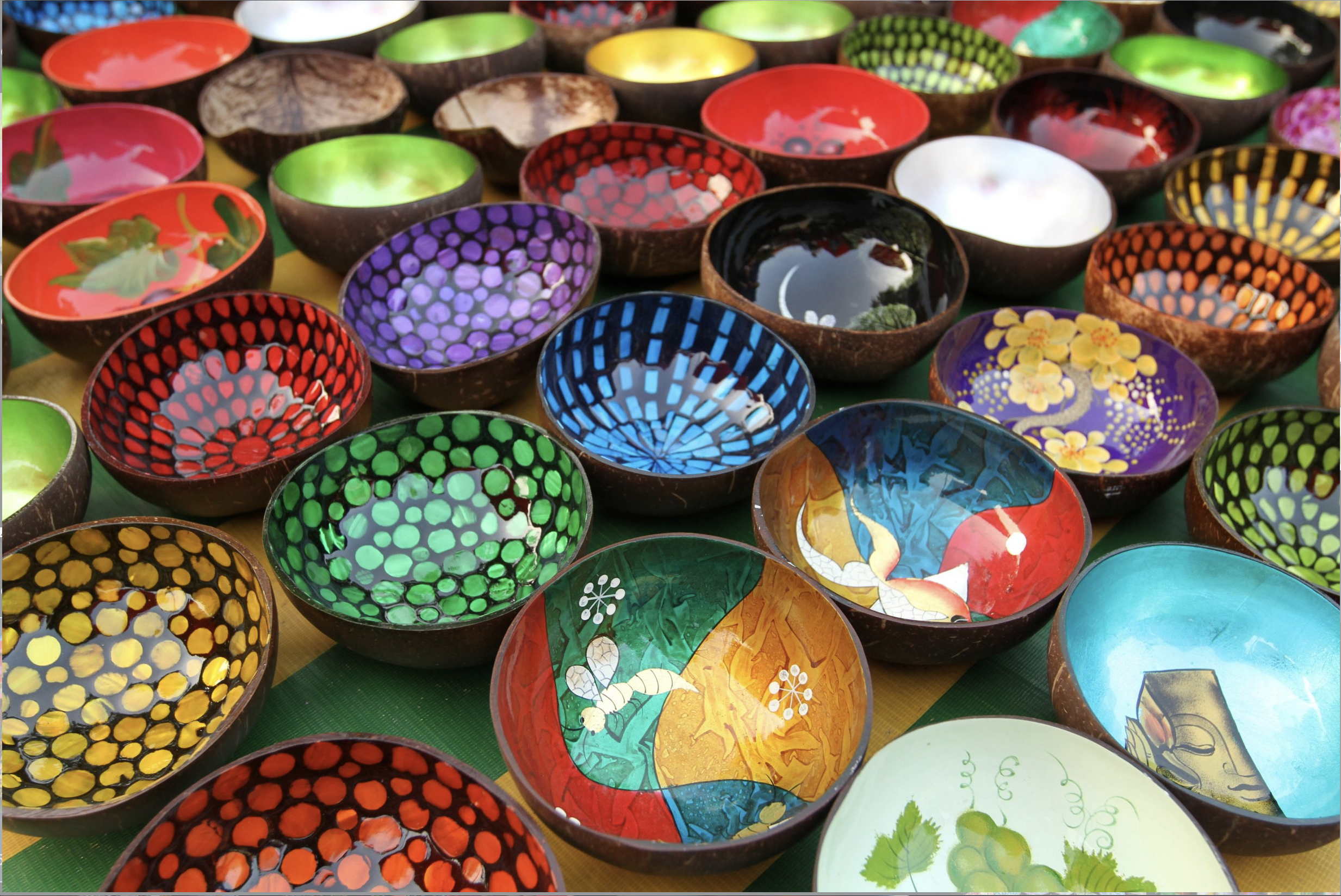
Vietnamese lacquerware involves applying multiple layers of lacquer resin (traditionally from the Rhus succedanea tree) over a base material like wood, bamboo, MDF, or compressed paper. Each layer is sanded and polished before the next is applied, a process that can take weeks to complete for high-quality pieces. The result is a smooth, durable, glossy finish that can be hand-painted, inlaid with eggshell or mother-of-pearl, or finished in solid contemporary colors.
The most commonly sourced lacquerware products from Vietnam include decorative trays, bowls, vases, picture frames, coasters, servingware, jewelry boxes, and large-scale furniture accents such as cabinets and wall panels. Custom OEM lacquerware for private-label brands is also common, particularly among home decor retailers and hospitality buyers.
Vietnam is a strong sourcing option for lacquerware because the craft tradition here goes back centuries, labor costs remain competitive, and many factories are already set up for international export. Vietnam's broader handicraft sector exported roughly $2 billion in 2024, with lacquerware among the key product categories, alongside bamboo, rattan, and ceramics. The country is also part of multiple eco-friendly product supply chains because of its use of natural, renewable materials.
Where Lacquerware Is Made in Vietnam
Lacquerware production in Vietnam is concentrated in a few key regions, each with a different character.
Ha Thai Village and Greater Hanoi
Ha Thai Village (Hạ Thái) in Thuong Tin District, about 30 kilometers south of Hanoi, is Vietnam's most famous lacquerware production center. Families here have been making lacquerware for generations, and the village remains a hub for traditional handcrafted pieces, especially items with eggshell inlay, mother-of-pearl work, and hand-painted designs. Several of Vietnam's largest lacquerware exporters ship from Hai Phong port, which serves the northern production cluster. If you are looking for artisan-quality, handmade lacquerware with traditional techniques, the Hanoi area is where most of it comes from.
Binh Duong Province and Ho Chi Minh City
The southern region, including Binh Duong Province and Ho Chi Minh City, houses larger-scale manufacturers with more industrial production facilities. These factories tend to focus on MDF-based lacquerware, contemporary designs, and higher-volume orders. They primarily ship through the Vung Tau and Cat Lai ports. If your product needs lean more toward modern finishes, solid-color lacquerware, or large furniture-scale pieces, the South is where you will find the capacity.
Other Regions
Smaller lacquerware operations exist in provinces like Nam Dinh and Quang Ninh in the north. Some ceramic production centers (such as Bat Trang near Hanoi) also produce lacquer-finished ceramics, though this is a niche segment.
How to Find Lacquerware Manufacturers
Finding Vietnamese lacquerware factories is harder than finding suppliers in China. Most Vietnamese manufacturers do not actively market on international B2B platforms, and the ones that do often have outdated profiles. Here are the methods that actually work, in order of effectiveness.
Work with a Vietnam-Based Sourcing Company
The most reliable way to connect with vetted lacquerware factories is through a sourcing company with an on-the-ground presence in Vietnam. A sourcing company like Cosmo Sourcing can match your product requirements to specific factories, handle communication in Vietnamese, arrange factory visits, and manage quality control. This is especially important for lacquerware because quality varies significantly between manufacturers, and the differences between natural and synthetic lacquer are not always obvious from product photos alone.
Trade Shows and Exhibitions
Attending Vietnamese trade fairs lets you meet manufacturers face-to-face and inspect product quality firsthand. The key events for lacquerware include the Vietnam International Furniture and Home Accessories Expo (VIFA), the Hanoi Gift Show, and the Vietnam Expo. Our guide to visiting manufacturers in Vietnam covers logistics, visas, and what to expect during factory visits.
Online Platforms and Directories
Global Sources is the most useful online platform for finding Vietnamese suppliers, though the lacquerware listings are limited. VietFactory and the HAWA (Handicraft and Wood Industry Association) directory are also worth checking. We have a full breakdown of every platform and directory for finding Vietnamese suppliers, covering what works and what does not. Alibaba is not effective for sourcing Vietnamese lacquerware. Most Vietnamese lacquerware factories do not use it, and the listings that do appear are often trading companies rather than actual manufacturers.
Trade Associations
VIETCRAFT (Vietnam Handicraft Exporters Association) and HAWA both maintain member directories that include lacquerware producers. These associations also organize trade delegations and can provide introductions, though the directories are often basic and require follow-up research to identify which members are actually active exporters.
How to Evaluate a Lacquerware Factory
Not all lacquerware is made to the same standard. Before committing to a supplier, evaluate these areas carefully.
Materials and Lacquer Type
The most important quality factor is whether the factory uses natural lacquer resin or synthetic alternatives. Natural lacquer (sơn ta) produces a deeper, more durable finish, but it is more expensive and takes longer to apply. Many factories use a blend or fully synthetic lacquer to reduce costs. Ask directly which resin they use and request test samples for comparison.
Production Process and Layering
High-quality lacquerware involves 15 to 20+ layers of lacquer with sanding between each coat. Cheaper production skips layers or uses thicker coats to speed up the process, resulting in a finish that looks similar initially but chips, cracks, or fades faster. Ask the factory how many layers their standard process uses and what their typical production timeline is for a finished piece.
Base Materials
The substrate matters. Solid wood and bamboo bases are more durable, but heavier and more expensive. MDF and compressed paper are lighter and cheaper, which makes them well-suited for trays, frames, and decorative items, but they are less suitable for products that need to withstand heavy use.
MOQs and Production Capacity
Lacquerware MOQs in Vietnam typically range from 200 to 1,000 pieces per design, depending on the factory size and product complexity. Artisan workshops in Ha Thai may accept smaller orders but with longer lead times. Larger southern factories have higher minimums but faster turnaround.
Export Experience and Packaging
Lacquerware is fragile, and improper packaging is a common source of damage claims. Work with factories that have experience packing for international sea freight. Look for protective layering, individual wrapping, and proper cushioning inside cartons. Factories that regularly ship through Hai Phong or Vung Tau ports will be familiar with export packaging standards.
Top Lacquerware Manufacturers in Vietnam
The following manufacturers are verified exporters based on US customs shipment records (ImportYeti data). This is not an exhaustive directory. Many excellent factories do not show up in English-language research, which is one reason working with a sourcing company that knows the landscape is valuable. Shipment volumes reflect recorded US-bound sea freight and do not capture shipments to the EU, Japan, or other markets.
Cat Dang Handicraft (Catdang Handicraft Production Export Co., Ltd.)
Based in Nam Dinh Province. The largest lacquerware exporter by US customs volume, with over 100 recorded shipments. Ships MDF lacquerware, lacquered wares, and solid wood lacquer products primarily through Vung Tau port.
Casablanca Viet Nam JSC
Ships from Hai Phong with roughly 50 recorded shipments. Produces lacquer trays, vases, sculptures, and stools. One of the more diversified lacquerware producers in the northern region.
Thang Long Crafts Manufacture and Export JSC
A well-established northern exporter shipping from Hai Phong with 46+ recorded shipments. Specializes in lacquerware and bamboo lacquer products, including vases and home accessories.
Lacquerworld
Ships from Hai Phong with approximately 45 combined shipments across related entities. Focuses on lacquer trays, bowls, photo frames, and coasters.
Far Eastern Handicraft JSC
Ships from Hai Phong with approximately 19 combined shipments. Produces lacquer handicraft products, including tables, stools, and decorative items.
Mondoro
Based in Vietnam with 12 recorded shipments through Hai Phong. Produces lacquer trays, MDF lacquer items, and faux shagreen products. Known for working with international home decor brands.
Huong Dang Artistic Handicrafts and Lacquerwares Co., Ltd.
A Hanoi-based manufacturer with recorded shipments through Hai Phong. Produces lacquer panels, cabinets, and decorative lacquerware. One of the most frequently cited lacquerware companies in Vietnamese trade directories.
Ha Thai Bamboo Lacquer Co., Ltd.
Based near Ha Thai Village outside Hanoi. Ships from Hai Phong. Produces MDF lacquer sculptures, bamboo vases, and traditional lacquerware. Named after the historic lacquerware village and connected to the traditional craft community there.
For a broader list of manufacturers that match your specific product requirements, contact Cosmo Sourcing, and our team can provide tailored introductions.
Working with a Vietnamese Lacquerware Factory
Once you have identified potential suppliers, the production process follows a fairly standard pattern. Start by requesting samples before placing any production order. For lacquerware, it is worth ordering samples from two or three factories to compare finish quality, color consistency, and durability side by side. Sample lead times are typically 2 to 4 weeks.
Discuss MOQs, pricing tiers, and lead times upfront. Production timelines for lacquerware are longer than those for most products due to the layering process. A typical order takes 45 to 90 days from confirmation to shipment, depending on complexity and quantity. Hand-painted or inlay pieces will be on the longer end.
Implement quality control checks, ideally through a third-party inspection, before shipment. For lacquerware, inspectors should check for finish consistency, layer adhesion, color matching against approved samples, and packaging integrity. Lacquerware QC is visual and tactile, so having someone physically inspect the goods before they ship is important.
For a deeper look at how to find manufacturers across all product categories in Vietnam, check our full guide.
Cosmo Sourcing: Your Partner for Lacquerware Sourcing in Vietnam
Sourcing lacquerware from Vietnam requires navigating a fragmented supplier landscape where the best factories are often invisible in online research. At Cosmo Sourcing, we have spent over a decade building relationships with Vietnamese manufacturers across the handicraft and home decor space. We work on a flat-fee model (not commission-based), which means our recommendations are based on the best fit for your product, not on who pays us the highest margin.
Whether you need traditional handcrafted lacquerware, modern minimalist designs, or custom OEM production, we can connect you with verified factories, manage sampling and quality control, and oversee the production process from start to shipment.
Contact us at info@cosmosourcing.com or visit our contact page to discuss your lacquerware sourcing project.