What Are the 7 Types of Products? A Guide to Product Classification
The seven types of products are divided into two groups: consumer products (convenience, shopping, specialty, and unsought) and industrial products (entering, foundation, and facilitating). Each type reflects how and why people buy, and understanding which category your product falls into shapes everything from how you market it to how you source and manufacture it.
Convenience products: low-cost, frequently purchased items like toiletries and snacks
Shopping products: higher-cost items consumers compare before buying, like clothing and electronics
Specialty products: premium or unique items consumers seek out by brand, like luxury goods
Unsought products: items consumers do not think to buy until a need arises, like insurance
Entering products: raw materials and components used in manufacturing other goods
Foundation products: major equipment and installations that support business operations
Facilitating products: supplies and services that keep operations running day to day
At Cosmo Sourcing, we work with thousands of clients manufacturing products across all seven categories. The product type a client brings us determines which factories we approach, how we structure quality control, and what kind of supply chain makes sense. A convenience product like a household cleaning brush requires a completely different sourcing strategy than a specialty product like a custom-engineered electronic accessory. This guide covers what each category means and, just as importantly, what each one means when you are the one getting the product made.
Why Product Classification Matters
Product classification is not just a marketing framework. It drives real decisions at every stage of a product's life: pricing, distribution, promotion, and (for anyone reading this who is planning to manufacture something) finding the right factory and managing production.
The core logic: products that consumers buy without much thought require different marketing than products they research for weeks. Products that businesses buy to run their operations require different sales approaches than products sitting on a retail shelf. When you understand which type your product is, you can make better decisions about product sourcing, pricing strategy, and go-to-market planning.
For sourcing buyers specifically, classification determines your MOQ expectations, your factory shortlist, and the level of quality control you need to build into the process.
Consumer Products
Consumer products are goods purchased by individuals for personal or household use. Marketing theory divides them into four subcategories based on how consumers shop for them.
Convenience Products
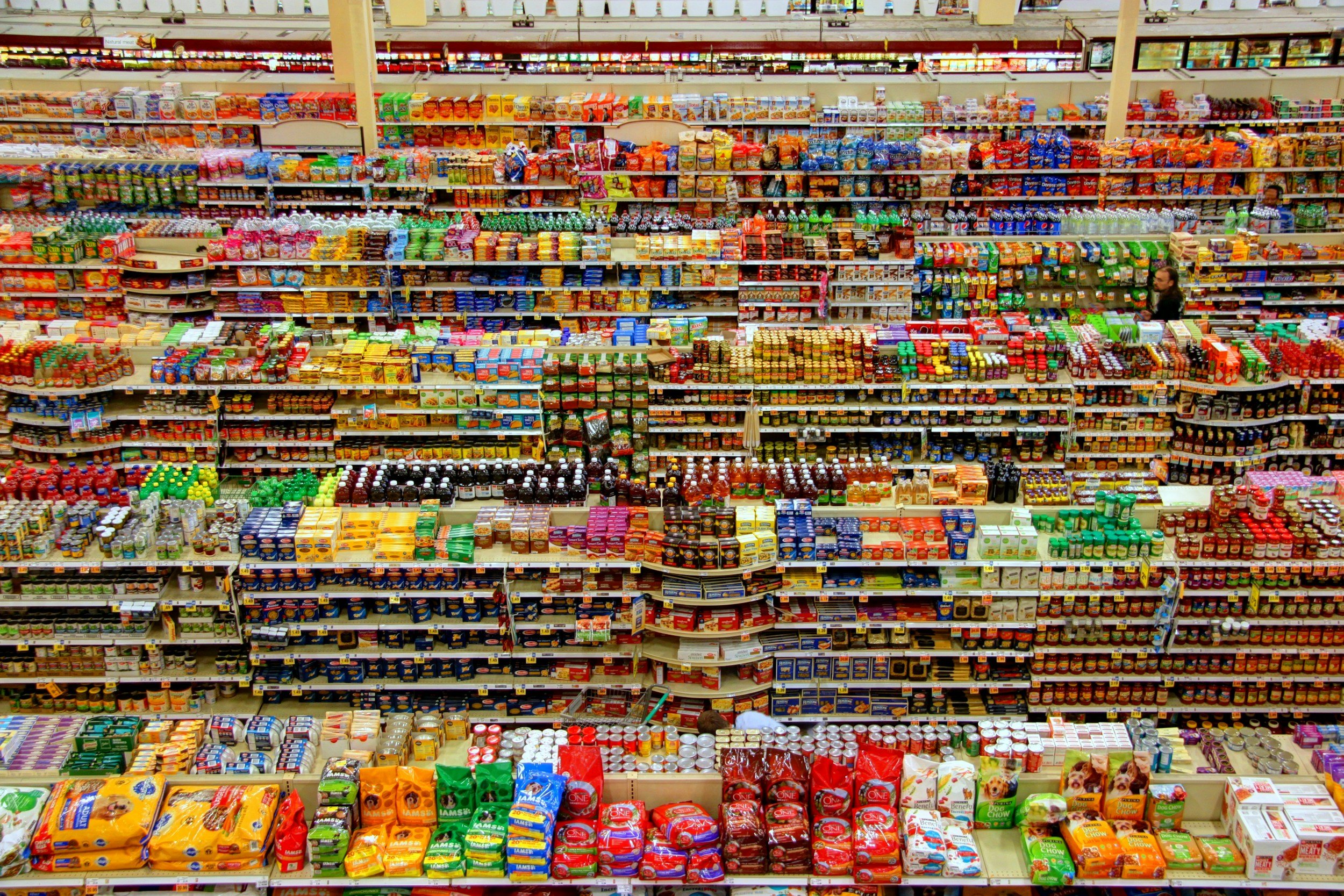
Convenience products are items people buy frequently, quickly, and with minimal comparison shopping. Think toothpaste, snacks, batteries, paper towels, and basic cleaning supplies.
These products tend to be low-priced, widely available, and purchased habitually. Branding and packaging drive purchasing decisions more than features or specifications. A shopper grabbing laundry detergent at the store is not comparing ingredient lists across five brands; they are reaching for the one they always buy or the one on sale.
For manufacturers and sourcing buyers, convenience products mean high-volume production runs, tight cost control, and consistent packaging quality. Factories producing convenience goods typically operate at scale in major manufacturing clusters such as Guangdong Province or the Mekong Delta, with minimum order quantities of thousands or tens of thousands. Margins per unit are thin, so landed cost optimization matters enormously.
Shopping Products
Shopping products are goods that consumers compare across brands before purchasing. Clothing, furniture, electronics, and home appliances all fall under this category. These purchases happen less frequently than convenience buys, cost more, and involve active research.
Consumers weigh quality, design, features, and price when choosing between shopping products. A buyer looking for a winter jacket will check three or four brands, read reviews, and compare materials before committing. This comparison behavior means branding alone is not enough; the product itself has to hold up against competitors on real attributes.
From a sourcing perspective, shopping products sit in a middle zone. MOQs are lower than for convenience goods (often 300 to 1,000 units per style for garment factories in Ho Chi Minh City or Binh Duong), but quality expectations are higher. Color matching is one of the most common QC failures we see with shopping products: a buyer approves a Pantone swatch, but the bulk production comes back two shades off because the factory skipped the lab dip stage. This is where sample approval and pre-production QC become critical.
Specialty Products
Specialty products have unique characteristics, strong brand identity, or premium positioning that make consumers seek them out specifically. Luxury handbags, high-end electronics, designer furniture, and artisan goods all qualify. Consumers buying specialty products are not comparison shopping; they want a specific brand or product and will go out of their way to find it.
Price sensitivity is low in this category. Buyers are paying for exclusivity, craftsmanship, brand prestige, or a combination of all three. Marketing focuses on brand story and perceived value rather than competitive pricing.
Sourcing specialty products requires a different factory relationship than sourcing commodity goods. You typically work with smaller, more specialized manufacturers that have specific capabilities (precision tooling, premium materials handling, handcrafted techniques). Lead times often run 60 to 90 days from sample approval to shipment, compared to 30 to 45 days for a standard convenience product run. The factory selection process is more intensive because quality tolerances are tighter. A specialty product with a visible defect is not just a QC failure; it undermines the brand's entire positioning.
Unsought Products
Unsought products are items consumers do not actively think about purchasing until a specific need or situation arises. Life insurance, fire extinguishers, funeral services, and emergency preparedness kits are classic examples. Newly invented products also start here before awareness builds.
Marketing unsought products is uniquely challenging. Since consumers are not actively searching for these items, companies must create awareness through advertising, personal selling, or educational content that highlights a risk the consumer has not considered.
For sourcing, unsought products are a mixed bag. Some (like fire extinguishers) are heavily regulated and require factories with specific safety certifications. Others (like novelty emergency kits) are straightforward to manufacture but harder to sell. If you are sourcing products for an online store in this category, be prepared to invest more in marketing than in product development.
Industrial (Business) Products
Industrial products are purchased by organizations rather than individual consumers. They are used in operations, resale, or as inputs for the manufacture of other goods. The buying process is typically more rational, involves multiple decision-makers, and focuses on specifications, reliability, and total cost of ownership rather than emotional appeal.
Entering Products (Raw Materials and Component Parts)
Entering products into the finished product during manufacturing. This category includes raw materials (cotton, lumber, crude oil, steel) and parts (circuit boards, zippers, hinges, lenses).
Raw materials are sourced based on grade, origin, and price stability. Parts are sourced based on specifications, tolerance levels, and compatibility with the final product's design. In both cases, supply chain reliability is paramount because a disruption in the supply of incoming products shuts down the entire production line.
This is where the sourcing process gets technical. When a client comes to us needing parts manufactured to spec, the factory vetting process involves checking precision capabilities, material certifications, and production consistency over time, not just pricing. Understanding the difference between trading companies, wholesalers, and manufacturers is important here because you need to work directly with the producer, not a middleman who cannot control quality.
Foundation Products (Installations and Equipment)
Foundation products are major capital assets that organizations use over the long term. This breaks into two sub-groups:
Installations are large-scale, high-cost purchases, such as factory machinery, warehouse systems, commercial vehicles, and industrial equipment. These are treated as fixed assets and depreciated over years. The buying process is long, involves engineering teams and finance departments, and usually includes installation, training, and ongoing service agreements.
Accessory equipment includes smaller items that support operations but are not central to the production process: office computers, hand tools, printers, and basic workshop equipment. These cost less, are replaced more frequently, and are purchased with less deliberation than installations.
For businesses looking to outsource manufacturing, understanding this category is important because the equipment a factory uses directly determines what it can produce. When we evaluate factories for clients, the machinery on the floor tells us more than the sales pitch. A garment factory running 20-year-old single-needle machines is not equipped for the same work as one with modern programmable multi-head embroidery equipment.
Facilitating Products (Supplies and Services)
Facilitating products keep an organization running, but do not become part of the finished product. Office supplies, cleaning materials, lubricants, IT support, consulting services, and maintenance contracts all fall here.
These are the industrial equivalent of convenience products: purchased routinely, usually from established suppliers, with minimal comparison shopping. Organizations want reliability and hassle-free procurement. Nobody wants to spend a week evaluating paper towel suppliers.
From a sourcing perspective, facilitating products represents a high-volume, low-margin category. Factories supplying these goods compete primarily on price and delivery reliability. The good news for sourcing buyers is that this category tends to have the most supplier options and the most straightforward negotiations.
How Product Type Affects Your Sourcing Strategy
Here is why this classification matters if you are sourcing or manufacturing a product. Every category implies a different set of factory requirements, cost structures, and risk profiles. Getting these decisions wrong costs time and money.
Factory Selection
Your product's classification determines the type of factory you need. Convenience products need high-capacity factories built for volume and cost efficiency, often large operations with hundreds of workers and automated production lines. Specialty products need smaller, skilled operations with tighter quality control and more hands-on craftsmanship. Parts for industrial use need precision manufacturing with certifiable tolerances and material traceability.
Matching your product type to the right factory type is one of the first decisions a product sourcing company will help you make. We regularly see clients waste months approaching the wrong type of factory. A startup with a premium specialty product contacts a mass-production facility that quotes rock-bottom pricing but cannot deliver the finish quality the brand requires. Or a high-volume convenience product buyer approaches a boutique manufacturer that can only handle 500 units per run. The classification framework helps you filter your factory shortlist before you start requesting quotes.
MOQ and Pricing Structure
Product classification shapes your MOQ expectations. A factory producing convenience goods in bulk might require minimums of 10,000 units. A specialty manufacturer might start at 200 to 500 units but charge a premium per piece. Shopping products tend to land somewhere in between, with MOQs of 500 to 2,000 units depending on the product and the factory.
Trying to force a specialty product into a high-volume, convenience-factory environment (or vice versa) is a common mistake that leads to quality problems, pricing mismatches, or outright refusals from factories that know the job is not a fit. The pricing models differ fundamentally as well. Convenience product pricing is driven by material and labor efficiency at scale. Specialty product pricing includes a premium for skill, precision, and overhead associated with smaller batch management. Payment structures are generally similar across categories (typically 30% deposit, 70% balance before shipment by T/T wire transfer). Still, specialty factories are more likely to require a higher deposit or charge separately for tooling and sample development.
Quality Control
Quality control requirements scale with product type. Convenience products need consistency checks at volume: random sampling, AQL (Acceptable Quality Level) inspections at standard levels, and packaging verification. The goal is to catch systemic defects, not inspect every unit.
Specialty products often require piece-by-piece inspection or, at a minimum, tighter AQL levels (1.0 for major defects versus the standard 2.5, with 0.65 or zero tolerance for critical defects). When your retail price is high, and your brand reputation is on the line, a single defective unit reaching a customer can do real damage.
Industrial parts add another layer entirely. Dimensional verification, material composition testing, tensile strength testing, and compliance documentation are standard requirements that consumer products rarely need. If you are sourcing parts that feed into another manufacturer's assembly line, their incoming QC standards become your outgoing QC standards.
Supply Chain and Logistics
Product classification also influences your supply chain model. Consumer convenience goods ship in bulk containers on predictable, repeating schedules. Specialty products may ship in smaller quantities with more protective packaging, sometimes via air freight to meet seasonal launch windows. Industrial entering products often follow just-in-time delivery schedules tied to the buyer's production calendar, where a late shipment can idle an entire factory floor.
Getting the logistics model wrong adds unnecessary cost and risk. Shipping specialty goods in bulk packaging designed for convenience products leads to damage claims. Shipping convenience goods by air because you missed a production deadline destroys your per-unit margin.
Frequently Asked Questions
What Is the Difference Between Consumer and Industrial Products?
The distinction comes down to who is buying and why. Individuals purchase consumer products for personal use. Organizations purchase industrial products for use in their operations, resale, or manufacturing. The same physical product can be either, depending on context: a laptop bought for personal use is a consumer product, but the same laptop bought by a company for its employees is an industrial product (accessory equipment).
Can a Product Fall Into More Than One Category?
Yes. A product can shift categories depending on the buyer's intent. It can also sit on the boundary between subcategories. A high-end kitchen appliance might be a shopping product for most consumers, but a specialty product for cooking enthusiasts who will only buy one specific brand. The classification is about buying behavior, not the product itself.
How Does Product Type Affect Pricing?
Convenience products compete on price and availability, which means margins are thin and volume is everything. Specialty products command premium pricing because buyers are paying for brand, exclusivity, or performance. Shopping products fall in the middle, where price matters but is weighed against quality and features. For sourcing buyers, this pricing dynamic directly impacts which factories and which countries make sense for production. High-volume, low-margin convenience goods often point toward large-scale manufacturers in China or Vietnam. Smaller, more specialized operations might better serve premium specialty goods.
Every product type needs the right factory. Cosmo Sourcing finds it.
We work on a flat-fee model with full transparency: you see every factory quote, every cost breakdown, and you make the final decision. We source original quotes from two to six vetted factories so you can compare pricing, capabilities, and lead times before committing. When the fit is right, we provide direct introductions so you can build a relationship with the factory from day one. With over a decade of on-the-ground experience in Vietnam, China, and Mexico, we match your product type to factories that actually fit your volume, quality level, and budget.
Get in touch at info@cosmosourcing.com or visit cosmosourcing.com/contact-us to start the conversation.