
China Sourcing Ultimate Guide 2026: When China Still Wins, and When to Diversify
China is still the most capable factory floor on earth, and for many products it is still the right call in 2026. It is no longer the automatic one. We help you work out when to keep production in China, when to add a second country, and when to walk, then we run the sourcing whichever way the answer goes.
China sourcing means finding the right Chinese factory for your product, getting it made to your standard, and moving it through quality control, customs, and freight to your door. The hard part was never the manufacturing. It is working out which of the thousands of suppliers waving at you actually owns a factory, what an honest price looks like, and whether China is even where your product belongs anymore. We have answered those questions for clients since 2012, before we ever opened in Vietnam or Mexico, and we still answer them every week.
Here is the part that many sourcing companies will not say out loud, because they earn their money by keeping your orders in one place. For some products, China is still the best answer in the world, and nothing else is close. For others, the math has quietly flipped, and a buyer who has been in Guangdong for fifteen years is paying for a habit rather than an advantage. This guide is the honest version of both: what China still makes better than anyone, how to source there without getting fleeced, and the specific moments when Vietnam or Mexico is the smarter call. If your real question is how to lean off China rather than how to source in it, jump to our guide to China Plus One sourcing or our breakdown of the best countries to source outside of China.
The Practical Answer: Should You Source From China in 2026?
Three situations, three answers:
If your product is complex, component-heavy, electronics-adjacent, custom-tooled, or still the lowest on landed cost after duties.
If your China supply chain still works, but concentration risk, customer pressure, or tariff exposure is becoming a problem. Add Vietnam, Mexico, or another country alongside it.
Only if you have a hard requirement: customer restrictions, government-contract rules, brand positioning, or tariffs that clearly break the landed-cost model.
The right move is not simply "China" or "not China". It is choosing the country mix that gives you the best combination of cost, quality, speed, and risk for your product. The rest of this page is how to make that call, and how to source well once you have.
Why Source From China in 2026
China has lost its monopoly on cheap labor, and tariffs and rising wages have shaved a slice off its cost edge. What it has not lost is the thing that took thirty years and trillions of dollars to build: a complete, dense, fast manufacturing ecosystem that no other country has come close to matching. For a huge share of products, that ecosystem is still the whole reason to be there.
Scale and supply chain depth
The reason a factory in Guangdong can quote faster, sample faster, and produce faster than a comparable factory elsewhere is rarely the factory itself. It is everything around the factory. The component supplier is twenty minutes away. The fabric mill, the plating shop, the mold maker, the packaging printer, and the testing lab all sit inside the same industrial cluster. When a product requires 40 different parts, China is often the only country where all 40 are made locally and in volume.
That depth is why China still wins on anything with a complex bill of materials. We see it most clearly when a client tries to move a multi-component product out of China too quickly: the assembly moves, but half the components still ship in from China, and the supposed exit becomes a more expensive, more fragile version of what they had. Our comparison of sourcing from Vietnam versus China gets into where that component-depth gap actually bites.
Capability and speed for complex products
China's factory base is not just large, it is wide. For a given product, you can find a workshop running manual processes at a low price and, in the same city, a highly automated plant exporting to demanding, regulated markets. That range means China can handle both simple commodities and technically complex products, often better than countries that only have the middle of the market. For mature products with a stable design, the tooling exists or can be cut quickly, the workers have made the product ten thousand times, and the supply chain backs them up.
Where China still beats the alternatives on cost
Tariffs have narrowed the gap for buyers selling into the United States, and for some categories they have closed it. They have not made China expensive in absolute terms. For high-component-count goods, for products that require specialized materials made only in China, and for any product where the alternative country imports its inputs from China anyway, China frequently remains the lowest-cost option even after duties. The only way to know for your product is to price it properly, which means using a landed-cost comparison rather than a sticker-price comparison.
The honest caveats
Three things have genuinely changed, and ignoring them is how buyers get caught flat-footed. Tariffs and trade policy now move fast and can rewrite your costs between the quote and the shipment. Rates on Chinese goods into the US have been volatile and differ sharply by product category and destination, so treat any number you read as a starting point and check the latest rates before you commit. Our tariff calculator is kept up to date for this. Concentration risk is real: a supply chain that runs entirely through one country carries a single point of failure your customers and board increasingly ask about, which is the core argument for a China Plus One strategy. And some buyers now face a flat "not manufactured in China" requirement from their own customers, a government contract, or a brand decision. When that is the constraint, the question stops being about cost and becomes which non-China country can actually make the product. That is the Anywhere But China situation, a different exercise from sourcing in China.
Where China Is a Strong Fit, and Where It Is Not
| China is usually a strong fit for | China may be a weaker fit for |
|---|---|
| Electronics and PCB-based products | Simple labor-heavy goods exposed to high duties |
| Custom plastic parts and tooling | Products with strict non-China origin requirements |
| Lighting and electrical assemblies | Standard apparel that Vietnam can match in quality |
| Products with many components | Products where customers demand supply-chain diversification |
| High-volume mature designs | Low-volume experimental runs with heavy customization |
China vs. Vietnam vs. Mexico at a glance
This is the comparison we walk almost every new client through. It is deliberately qualitative, because the right answer depends on your specific product and end market, not on a league table.
| Factor | China | Vietnam | Mexico |
|---|---|---|---|
| Manufacturing scale and capacity | Deepest in the world | Large and growing fast | Smaller, concentrated by sector |
| Supply chain and component depth | Unmatched | Improving, still imports many inputs | Strong in autos, thin elsewhere |
| Product complexity ceiling | Highest | High and rising | High in specific sectors |
| Relative labor cost | Higher than it was | Lower than China | Higher than Asia, offset by logistics |
| US tariff exposure | Highest, check the latest rates | Lower, check the latest rates | Lowest under USMCA, check the latest rates |
| Proximity to the North American market | Far | Far | Closest |
| Typical ocean transit to the US | Longer | Longer | Days, often by truck or rail |
| Best fit | Complex, component-heavy, scale | Apparel, furniture, footwear, electronics assembly | Nearshoring, autos, speed to the US |
For the full three-way breakdown by product, see our guide to Vietnam vs. China vs. Mexico for product sourcing.
When China Still Wins, and When to Diversify
The box above is the short version. Here is the longer one, built from the same conversation we have with almost every client who calls. Knowing which of these three situations you are actually in is worth more than any rule of thumb, because the wrong move in any direction burns real money.
Keep production in China when
China is the right call when your product has a deep bill of materials, relies on materials or processes concentrated in China, runs at high volume on a stable design, or when the realistic alternative would still source its inputs from China. In those cases, moving rarely saves money once you count imported components, new tooling, and months of requalification.
A situation we see constantly is a client with a multi-component consumer product who wants to move out of China to dodge tariff pressure. We price the alternative honestly, and it still relies on Chinese components, adds new tooling costs, and stretches the lead time, so the landed cost does not actually drop. China is the lower-risk choice. The smart move is usually to peel one simpler product line off to a second country and leave the complex hero product where it already works.
Add a second country (China Plus One) when
The most common situation is a supply chain that still works but now carries a risk the buyer is no longer comfortable with: a tariff swing, a customer question, or a near miss during a shutdown. The answer is usually not to leave China; it is to add a second country alongside it so the products that drive your business are no longer single-sourced. You keep the working supply chain and build the second one next to it. Our guide to diversifying with China Plus One lays out the patterns and the cost math, and for the most common path we run, see how to move manufacturing from China to Vietnam.
Move out of China entirely when
A smaller group has a hard constraint: a customer requirement, a contract clause, a tariff exposure that has broken the model, or a brand decision that production cannot be in China. The work then is to find a non-China country that can actually make the product to your standard, which is not always the lowest-labor option and is rarely a one-for-one swap.
The mirror image, just as common: a standard apparel program with stable specs and no exotic trims. Vietnam matched the quality and beat the landed cost into Western markets, so that category moved while the technical pieces stayed in China. Our rundown of the best countries to source outside of China and our list of the top metal fabrication countries outside China are good starting points.
Because we are paid the same regardless of where you end up producing, our recommendation to stay, hedge, or move is never tied to keeping your volume in any one country.
Not Sure Whether China Is Still the Right Country?
Send us your product and target market, and we will tell you plainly whether China, Vietnam, Mexico, or a mix of them is the right place to start.
Start Your Sourcing ProjectWhat China Makes Well (and Where to Be Careful)
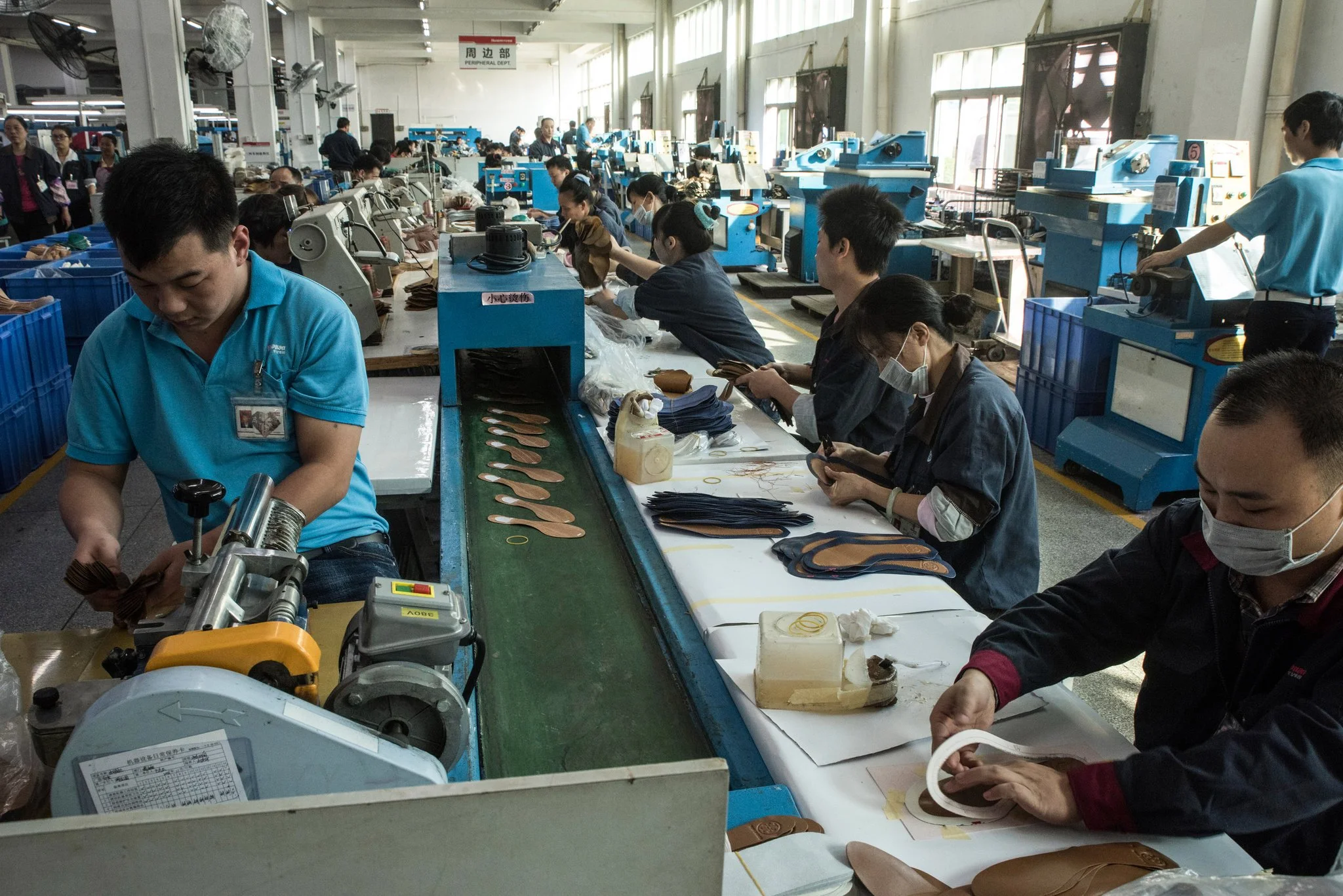
China makes almost everything, which is a useless thing to say on its own. What matters is where China is genuinely the best place on earth to make your product, and where its reputation is writing checks that the real advantage cannot cash. From a broader perspective, our list of the top 20 products manufactured in China covers the categories where China's depth is hardest to replace. Here is how we sort the rest.
Electronics and complex assemblies
China's strongest category, and the one where the alternatives are furthest behind. The component ecosystem around Shenzhen and the Pearl River Delta means a product with dozens of electronic parts can be designed, prototyped, and built inside a single cluster. For consumer electronics, IoT devices, and anything with a PCB and a complex housing, China is usually the right answer even after tariffs, because the alternatives still buy most of their components from China. See our guide to the top electronics manufacturers in China.
Plastics, molding, and tooling
China's mold-making and injection-molding base is enormous and competitive, which matters for any product with custom plastic parts. The country can cut tooling quickly and cheaply, and the range of molders runs from basic to highly precise. The caution here is intellectual property: a custom mold is your design, and protecting it depends on the right agreements and the right factory selection rather than trust.
Toys, hardware, and small commodities
For toys, household goods, hardware, and the long tail of small manufactured products, China's scale and the dense wholesale markets around Yiwu make it hard to beat on selection and price. Our guide to the top toy manufacturers in China shows how that category works, including the safety-testing requirements that come with it.
Lighting and fixtures
Lighting combines electronics, metal, plastics, and assembly, all of which sit in the same clusters, so China offers both range and value. See our breakdown of lighting and light-fixture manufacturers in China.
Apparel, textiles, and footwear
This is where the China question is most alive. China still makes excellent apparel and footwear, especially technical pieces, and its fabric and trim supply chain is deep. But for many standard garment and footwear programs, Vietnam now offers comparable quality at a lower delivered cost to Western markets, which is why so much of this category has already moved there. Compare the two: see our guides to clothing and shoe manufacturers in China, then weigh them against our Vietnam coverage.
Where to be careful
China is the wrong starting point in a few clear cases. If your customers or market require non-China production, capability is beside the point. If your product is labor-light and your main exposure is tariffs into the US, the duty can outweigh China's efficiency. If your product is simple, low-component, and high-volume, the China advantage is thinnest. And for any product where intellectual property is the core asset, factory selection and contracts matter more in China than anywhere else we work, so this is not a place to cut corners on vetting.
Where China's Factories Are
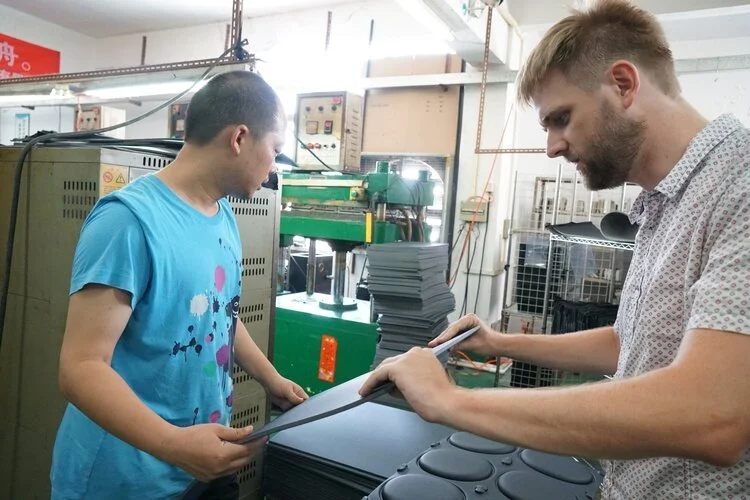
China's manufacturing is regional and clustered, and knowing the clusters saves you time, because the right factory for your product is usually concentrated in one or two areas rather than spread across the country.
| Region | Hub cities | Known for |
|---|---|---|
| Pearl River Delta (Guangdong) | Shenzhen, Dongguan, Guangzhou, Foshan | Electronics, lighting, plastics, hardware, furniture |
| Yangtze River Delta | Shanghai, Suzhou, Ningbo, Hangzhou | Machinery, textiles, auto parts, higher-end manufacturing |
| Zhejiang and the Yiwu cluster | Yiwu, Wenzhou, Taizhou | Small commodities, toys, accessories, the world's largest wholesale markets |
| Fujian | Quanzhou, Xiamen | Footwear, apparel, stone, paper products |
| Shandong and the north | Qingdao, Tianjin | Heavy industry, machinery, food processing, textiles |
You do not need to travel to a region to source from it, but you do need to know which region your product belongs to, so you are talking to the right factories rather than to traders who will subcontract the work back into the cluster. The dense wholesale markets, Yiwu above all, are useful for discovery but are not the same as a factory. For the online side of these markets, our list of the top 30 China wholesale websites beyond Alibaba maps the platforms that sit atop these clusters.
How Long Does China Sourcing Take
Timelines vary with product complexity, tooling, and season, but the shape of a China sourcing project is consistent. The steps below are the range we plan around for a custom product. Mature products that reuse existing tooling move faster, and the Chinese New Year shutdown in late January or February can add several weeks if your production lands near it, so plan around it rather than into it.
If you are working to a hard launch date, plan backward from it and build in a buffer, because the stage most likely to slip is sampling, not production. We map this timeline against your deadline at the start of every project so there are no surprises.
How to Find and Vet China Factories

Finding a Chinese supplier is easy. Finding the actual factory that makes your product to your standard at an honest price is the hard part, and it is where most of the money is won or lost. The single most important thing to understand is that the market is full of middlemen: trading companies, brokers, and agents who present as factories, take a cut you cannot see, and stand between you and the people actually making your goods. China has more capable factories than anywhere we work, and it also has more middlemen, more recycled photos, and more polished sellers who have never run a production line. What separates a good China sourcing process from an expensive one is control over who you actually work with, transparency on what you actually pay, and visibility into what is actually produced.
Online platforms, and what they actually are
Alibaba is a directory, not a guarantee. It is a good place to discover suppliers and a poor place to assume you have found a factory, because many of the best-presented listings are trading companies rather than manufacturers. Understand what the badges mean before you rely on them: read our explainer on Alibaba Verified Suppliers and our honest answer to whether Alibaba is legit. Because the platform attracts both real factories and opportunists, it helps to know the common Alibaba supplier scams and the right questions to ask a supplier on Alibaba before you send money. Alibaba is not the only option: 1688 is the domestic Chinese marketplace, cheaper and closer to the source but built for the local market, while Made-in-China and Global Sources are alternative directories, and the platforms in our guide to Alibaba alternatives widen the net further.
Trade shows
The Canton Fair in Guangzhou is the largest trade fair in China and one of the largest sourcing events in the world, and it is still one of the fastest ways to meet a wide range of real manufacturers in person across most categories. For specialized products, the category-specific shows are often more efficient. Meeting a supplier at a show tells you they exist and present well. It does not tell you that their factory matches the booth.
What proper vetting looks like
A "verified" badge confirms that a platform has checked a business license. It does not confirm that the company owns a factory, that the factory can hold your tolerances, or that the line you saw in a video is the line that will run your order. Real vetting means confirming the supplier is the manufacturer and not a trader subcontracting the work, checking the business license and export history, assessing real production capacity against the floor rather than the claim, reviewing the relevant certifications and test reports, and walking the floor to see the equipment, the conditions, and the actual products coming off the line. In China, the gap between the best presentation and the actual operation can be wide, which is why an on-the-ground check matters more here than almost anywhere else.
Using a sourcing company
This is what we do. We confirm you are dealing with the real manufacturer, vet the factory in person, collect competitive quotes so you see the genuine market price, and hand you the full factory contact details and original quotes with no markup and no commission. You own the relationship and the pricing. We charge a fixed fee for the work, so we have no reason to steer you toward a particular factory or country. See exactly how we work and what is included in our product sourcing service.
What We Do on a China Sourcing Project
When you run a China sourcing project with us, you get:
- Confirmation of whether China is the right country for the product in the first place
- The correct factory cluster identified for your product
- A shortlist of actual manufacturers, not traders
- Suppliers vetted and capabilities verified, in person where it matters
- Original factory quotes collected and handed to you
- Pricing, MOQ, tooling, lead time, and payment terms compared side by side
- Support on samples, quality control, factory communication, and shipping coordination as needed
You keep the factory relationships and the original pricing. Tell us about your project, and we will honestly tell you whether China is the right call.
MOQs, Pricing, and Payment

Minimum order quantities
Minimums vary enormously by category and by how custom your product is. Stocked or lightly customized products from the wholesale clusters can have lower minimums, while custom-tooled products have higher minimums because the factory must justify the setup costs. The ranges below are typical, not rules, and a good sourcing relationship can often move them.
| Product type | Typical MOQ behavior |
|---|---|
| Wholesale or stocked goods | Low, sometimes single cartons |
| Standard apparel and textiles | Moderate, per color and size |
| Custom plastics with tooling | Higher, to amortize the mold |
| Electronics with custom PCBs | Higher, driven by component buys |
| Fully custom or branded products | Highest, negotiable with volume commitments |
How to negotiate without getting a worse product
Price in China is real, but the first quote rarely is. The most reliable way to get an honest price is to get several quotes for the same specification, which both reveals the market and signals that you know it. Be precise in your specification, because vague requests get padded quotes. Negotiate on total value, not just unit price, since payment terms, tooling cost, and MOQ are all levers. And be wary of a quote far below the others, which usually means a different material, a cut corner, or a trader who will make the margin back later. A price that looks too good in China is a question, not a win.
How to pay a Chinese supplier
Most factory payments are made by telegraphic transfer (bank wire), commonly with a deposit before production and the balance before shipment. For larger orders, a letter of credit protects both parties. For a first order with a new supplier, an escrow or trade-assurance service reduces risk. The rule that protects you most is simple: never pay a supplier you have not worked with the full amount up front, because once the money is gone, your leverage is gone with it. Staged payments tied to milestones keep everyone honest.
Quality Control in China
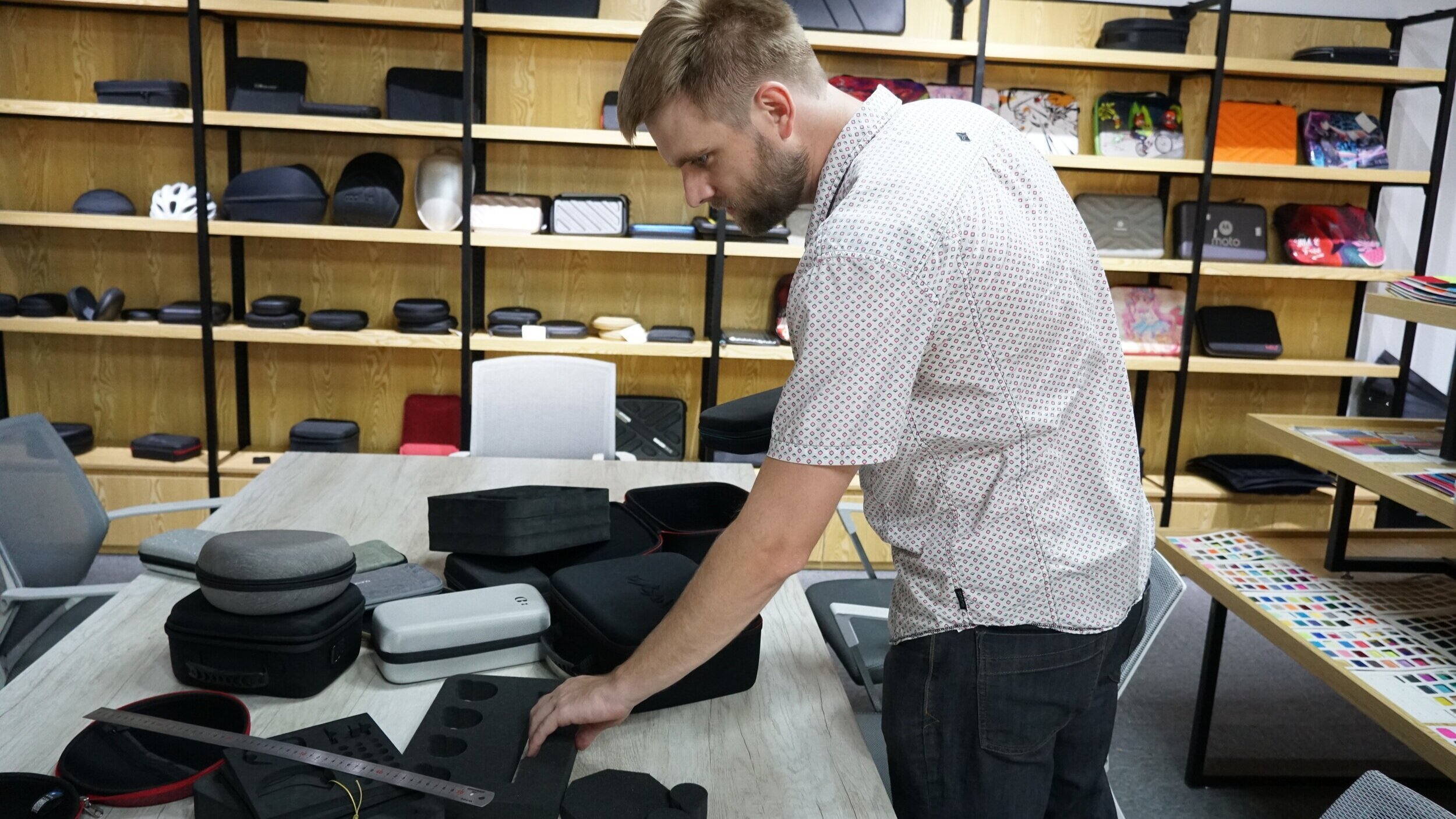
China can produce world-class quality and can produce junk, often within the same city, so quality is something you build into the process rather than hope for at the end. We run quality control at three checkpoints, and we recommend the same whether you use us or not.
1. Before production
Lock a signed reference sample, the golden sample, that both you and the factory agree is the standard, and confirm the incoming materials and components match the specification before the line starts. Most quality disputes trace back to a vague or missing standard at this stage.
2. During production
An in-line inspection partway through the run catches a systematic defect while there is still time and material to fix it, rather than after the whole order is built wrong. For a first order with a new factory, this is money well spent.
3. Before shipment
A pre-shipment inspection against a recognized sampling standard, checking finished goods, packaging, and quantity before the balance is paid and the container is sealed, is the single most important QC step. It is your last chance to catch a problem while you still hold leverage.
Two China-specific risks are worth naming. The first is quality fade, where the first order is excellent and later orders quietly slip as the factory trims cost, which is why ongoing inspection matters, not just the first run. The second is unauthorized subcontracting, in which your approved factory assigns part of the work to a workshop you never vetted. Both are manageable, but only if you are watching.
Importing and Compliance
Roughly half of the buyers we work with are not importing into the United States, so this is useful for both sides of the ocean. Wherever your goods are headed, sourcing is complete only when the product clears customs and complies with your market's rules.
If you are importing to the United States
Goods from China carry additional duties that have been volatile and that differ sharply by product category, so the most important step is to confirm your product's classification and check the current rate before you commit, rather than working from a figure you read months ago. Our tariff calculator is maintained for this. Beyond duty, you will act as the importer of record. Your product must meet the relevant agency rules (consumer product safety for toys and many household goods, communications rules for electronics, and food and drug rules for items in those categories), and the goods must carry the correct country-of-origin marking. Documentation showing your supply chain is free of forced labor has also become a practical requirement for Chinese-origin goods, so build that into your supplier paperwork from the start.
If you are importing to the EU, the UK, or elsewhere
In the European Union, most regulated products require CE marking and must comply with the relevant directives, with chemical rules under REACH applying to a wide range of materials. The United Kingdom uses its own UKCA marking alongside continuing CE acceptance in many cases, so confirm which applies to your product. You will need an EORI number to clear customs in the EU or the UK, and you will account for VAT on import. Australia, Canada, and other markets each have their own standards and duty treatment. The principle is the same everywhere: know your market's rules before production, not after the container lands.
Documents you will need
Across most destinations, expect to handle a commercial invoice, a packing list, a bill of lading or air waybill, a certificate of origin, and any product-specific test reports or certificates your market requires. Getting these right is routine when planned and expensive when improvised.
Shipping From China
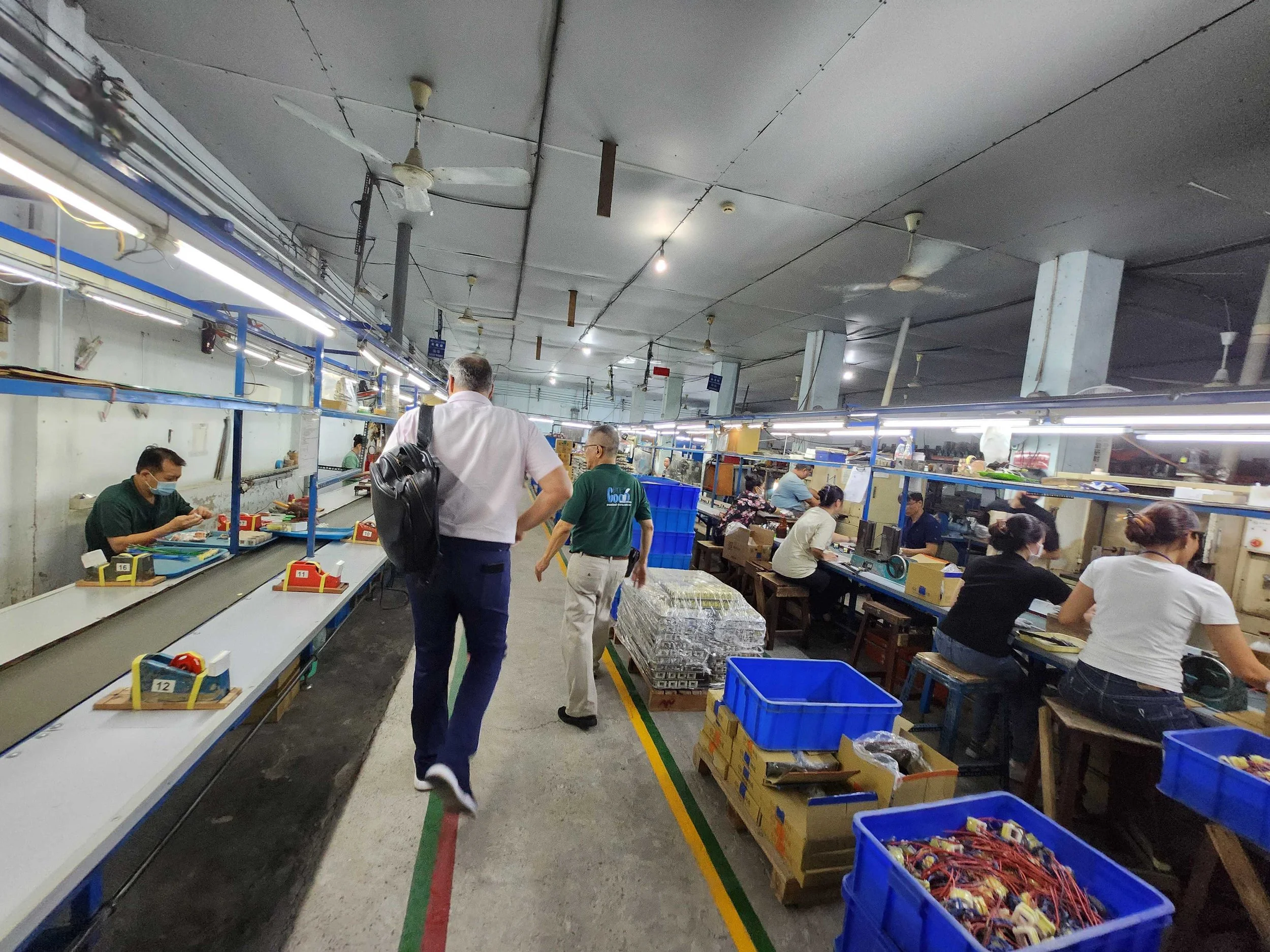
China's export logistics are the most developed in the world, which is another reason it remains competitive. Most of our clients ship FOB, which means the factory delivers the goods loaded at a named Chinese port, and you control the freight and the forwarder from there. FOB gives you visibility and control over the most expensive leg, which is usually better than letting the factory arrange everything and bury the cost.
China's major export ports include Shenzhen and Yantian in the south, Shanghai and Ningbo on the central coast, and Qingdao and Tianjin in the north. Your factory's region usually dictates the port. For most shipments, ocean freight is the default: full container load when you have the volume, and shared container load when you do not. Air freight is worth it for urgent, light, or high-value goods, and rarely otherwise.
| Destination | Typical ocean transit from China |
|---|---|
| US West Coast | Roughly two to three weeks |
| US East Coast | Roughly four to six weeks |
| Northern Europe | Roughly four to six weeks |
| United Kingdom | Roughly four to six weeks |
| Australia | Roughly two to four weeks |
Transit times vary with the season, port congestion, and carrier schedules, so treat them as planning ranges and build a buffer rather than promising a customer the bottom of the range.
Common China Sourcing Mistakes (and How to Avoid Them)
These are the mistakes we see most often, and they are all avoidable.
| Mistake | What goes wrong | The fix |
|---|---|---|
| Treating a "Verified" or "Gold" badge as proof | Badges confirm a license, not a factory or its quality | Verify independently that the supplier is the real manufacturer |
| Paying 100% up front to a new supplier | If the order goes wrong, your leverage is gone with the money | Use staged payments tied to milestones, plus escrow on the first order |
| Approving production from photos or one sample | Mass production can drift from the sample | Lock a signed golden sample and run a pre-shipment inspection |
| Assuming the cheapest quote is a factory | It is often a trader who subcontracts and adds margin later | Confirm you are dealing with the actual manufacturer |
| Assuming China is always the cheapest option | Tariffs and wages have flipped the math for some categories | Run a landed cost comparison against Vietnam or Mexico before deciding |
If you recognize your own setup in that last row, our guide to Vietnam vs. China vs. Mexico and our complete China Plus One guide are the natural next reads.
China Sourcing FAQ
Is China still cheaper than Vietnam or Mexico?
For some products, yes, and for others, no longer. China usually wins on products with many components, goods that rely on materials made mainly in China, and cases where the alternative country imports its inputs from China anyway. Vietnam often wins on standard apparel, footwear, and furniture in Western markets, and Mexico can win for North American buyers once tariffs and faster logistics are accounted for. The only reliable answer is a landed cost comparison for your specific product.
Should I move my production out of China?
Only if you have a real reason: a customer or market that requires non-China production, a tariff exposure that has broken your model, or a concentration risk you can no longer accept. If your supply chain still works and you only want to reduce dependence, a China Plus One approach, keeping China and adding a second country, is lower risk than a full exit.
Do I need a sourcing company to source from China?
No. Many buyers source from China on their own. A sourcing company earns its place when you need a factory verified in person, competitive quotes that reveal the true market price, on-the-ground quality control, and someone who can tell a real manufacturer from a polished trader. We charge a fixed fee, take no commission or markup on factory quotes, and hand you the factory contacts and original pricing.
How do I find a manufacturer in China?
Build a shortlist from the directories and wholesale platforms, then confirm each candidate actually owns a factory rather than subcontracting your order, and verify the strong ones in person before you commit. The platforms are for discovery, not proof. A sourcing company shortcuts this by confirming the manufacturer and gathering competitive quotes for you.
How much does a China sourcing agent or company cost?
It depends on the model, and the model matters more than the number. Some agents work on commission, taking a percentage of your order, and some add a hidden markup to the factory quote. Others, including Cosmo Sourcing, charge a fixed fee and take no commission or markup, so you see the original factory pricing. Ask how a provider is paid before you ask what they charge.
How do US tariffs affect sourcing from China?
Significantly, and they change often. Duties on Chinese goods into the US have been volatile and vary by product category, so treat any figure as a starting point and check the current rate for your product before you commit. We keep a tariff calculator updated for this.
Is Alibaba safe for finding factories in China?
Alibaba is a useful directory, not a guarantee. Many strong listings are trading companies rather than manufacturers, and the verification badges confirm a business license rather than factory capability or quality. Use it to discover suppliers, then verify independently before you send money.
Can I source from China, Vietnam, and Mexico at the same time?
Yes, and many of our clients do. We run sourcing across China, Vietnam, Mexico, and the rest of Southeast Asia from a single team, making a China Plus One setup or a multi-country program practical to manage. Our dual-country and global sourcing packages exist for exactly this.
What is the minimum order to manufacture in China?
It depends on the product. Stocked or lightly customized goods can have low minimums, while custom-tooled products have higher minimums because the factory must recover the setup cost. Minimums are often negotiable, especially with repeat volume.
How long does sourcing and production from China take?
Plan for a few weeks to find and vet factories and gather quotes; a few weeks for sampling and approval; several weeks to a couple of months for production; and shipping time on top of that. Mature products with existing tooling move faster. See the timeline section above for the full breakdown.
Next Steps
Use this as a checklist before you contact a single factory.
- Prepare a real spec sheet that includes materials, dimensions, tolerances, packaging, certifications, target MOQ, destination market, and target landed cost. Vague requests get padded quotes.
- Decide whether China is the right base, or whether a China Plus One or non-China approach fits better. If you are unsure, our guide to China Plus One sourcing is the place to start.
- Identify the right factory cluster for your product and shortlist real manufacturers, not traders.
- Get several competitive quotes for the same specification so you see the true market price.
- Order samples, lock a signed golden sample, and set your three quality checkpoints.
- Confirm the current duty rates for your product and destination, and plan logistics and compliance before placing the order.
Or hand the whole process to a sourcing company. Tell us about your project, and we will honestly tell you whether China is the right call.
Work With Cosmo Sourcing in China
We have sourced from China since 2012, and we still do it every week, right alongside our teams in Vietnam and Mexico. That range is the whole point. We can put your product in front of the right Chinese factories and tell you straight when Vietnam or Mexico would serve you better, because we are paid a fixed fee either way, with no commissions and no markups on factory quotes. You get verified factories, the real pricing, and you own the relationship. No part of our paycheck depends on which country you pick.
If you want to keep China and add a second country, read our complete China Plus One guide. If you are weighing China against Vietnam, see our Vietnam sourcing guide; for nearshoring to North America, see our Mexico sourcing guide. For ongoing production, our dedicated buying office runs China sourcing as a managed service.