
Vietnam Clothing Manufacturing in 2026: The Definitive Sourcing Guide
How to find and vet Vietnam garment factories, navigate MOQs and certifications, price production end-to-end, and run the process from tech pack to FOB shipment.
Vietnam is the world's second-largest exporter of clothing and textiles, with apparel and textile exports reaching roughly 46 billion US dollars in 2025 according to the Vietnam Textile and Apparel Association. The country's largest factories, including Vinatex, TAL Apparel, Maxport, Phong Phu, TNG, and Thygesen, supply Nike, Lululemon, Uniqlo, H&M, Decathlon, Levi's, Tommy Hilfiger, Calvin Klein, and most other global apparel brands you would name.
This guide walks through how to find and vet Vietnam clothing factories in 2026, covers minimum order sizes and certifications, and lays out the practical process of getting a sample and a production order moving. It is written by the team at Cosmo Sourcing, where we have placed apparel orders through Vietnam factories continuously since 2014.
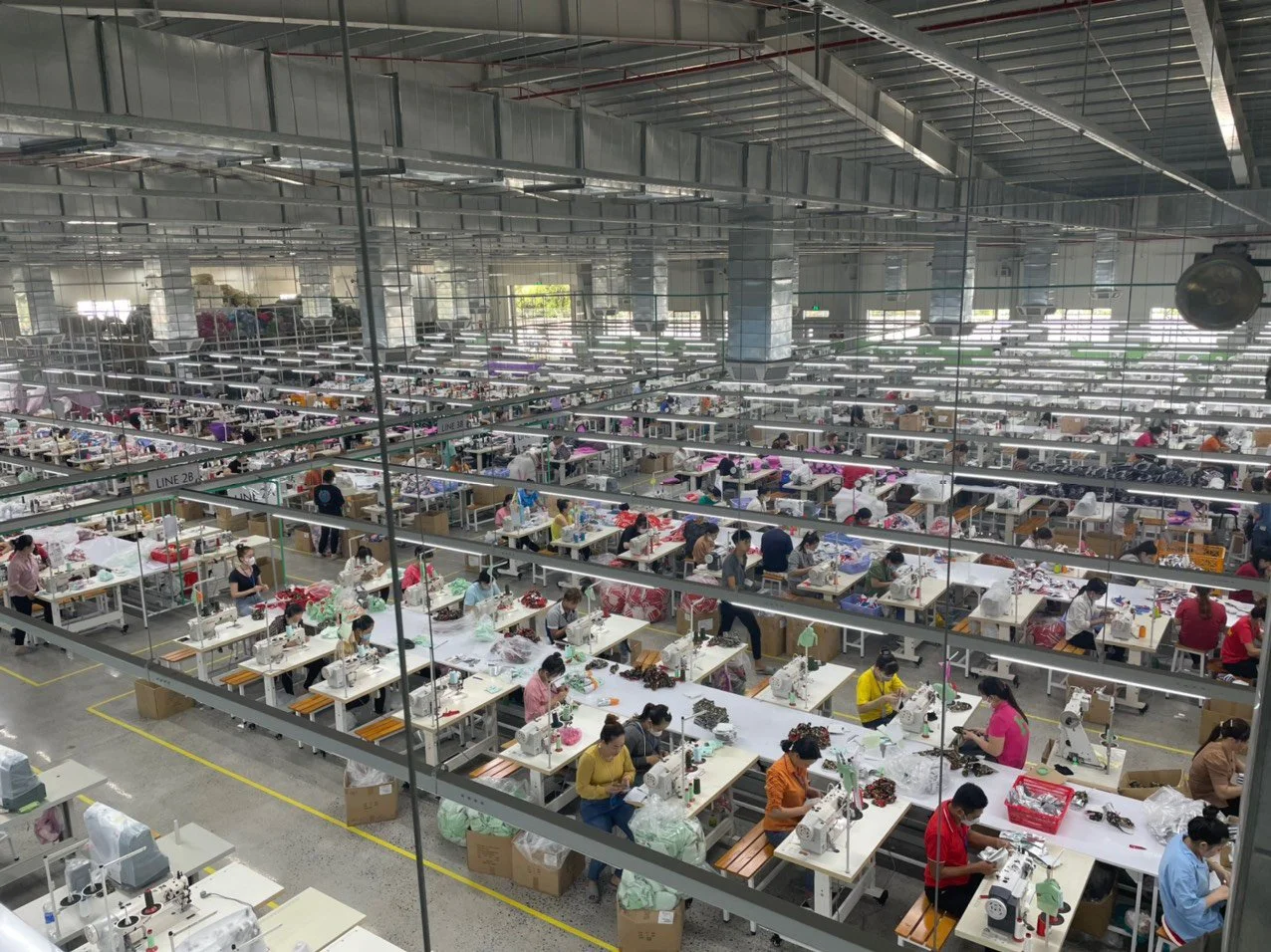
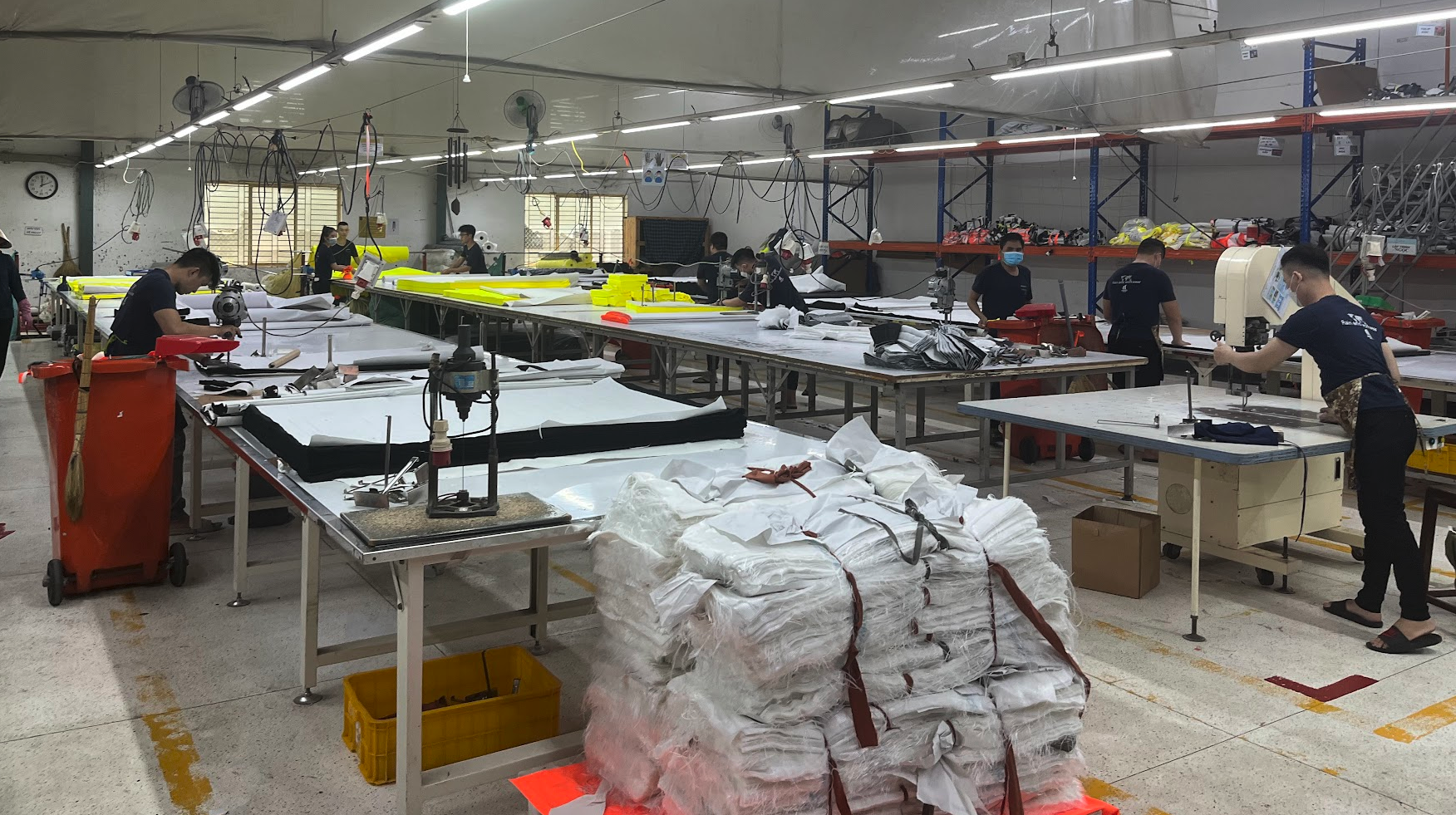
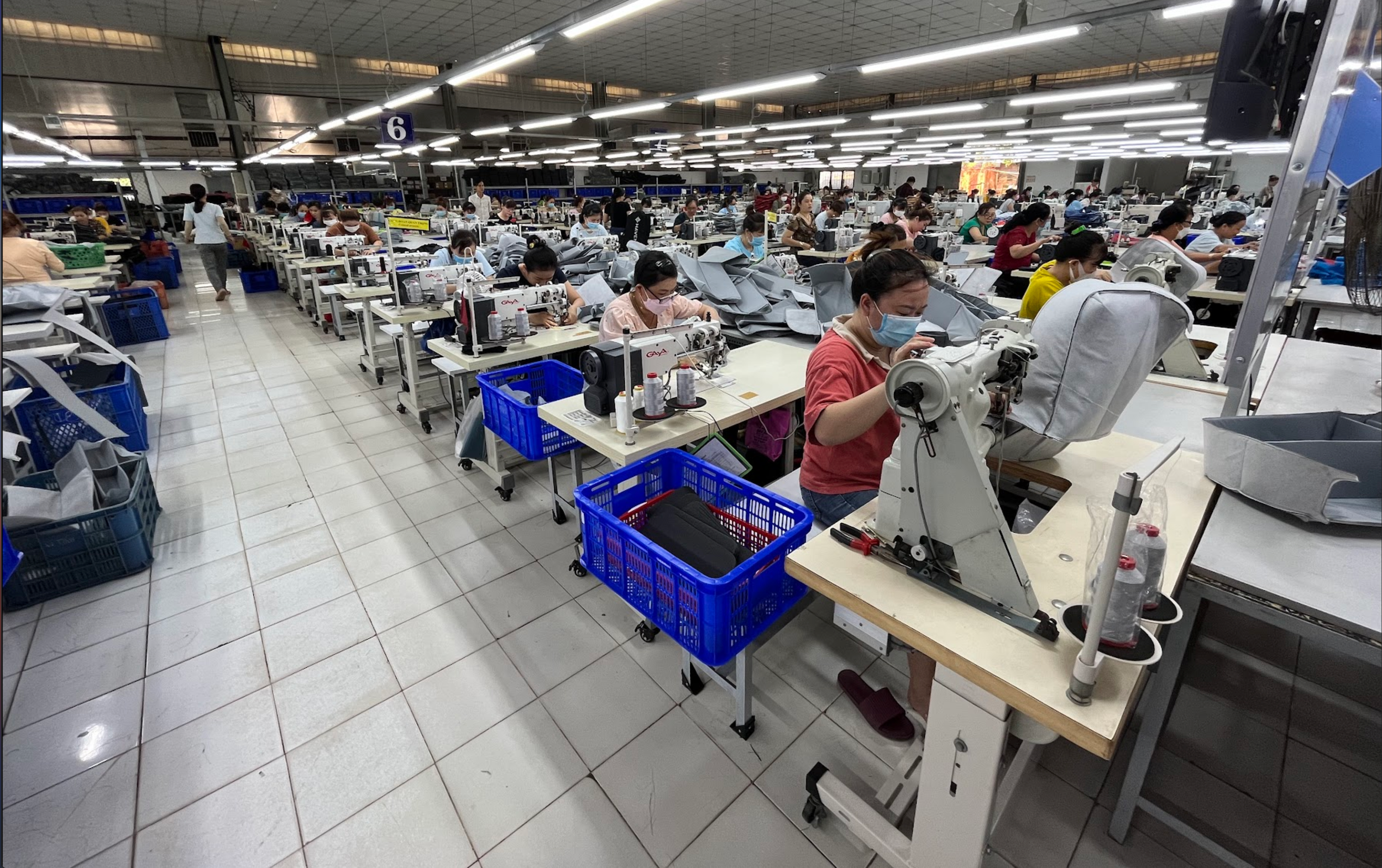
All factory photos in this guide were taken by the Cosmo Sourcing team on Vietnam factory visits.
What's on this page
On this page
Why Vietnam for Clothing Manufacturing in 2026
Vietnam has spent the last decade building the deepest apparel manufacturing base of any country except China, and the gap with China is closing for brands that need a credible second supply base.
Vietnam's position in global apparel manufacturing
The Vietnam Textile and Apparel Association puts 2025 textile and garment exports at roughly 46 billion US dollars, up about 5 percent year over year, with apparel alone above 38 billion. Vietnam ships to 138 markets, and the United States remains the single largest destination at over 18 billion US dollars in 2025. Across the country there are nearly 6,000 garment, textile, and clothing factories employing in the range of 2.5 to 2.7 million workers. That depth of capacity, including yarn, knit fabric, woven fabric, dyeing, finishing, washing, and full-package CMT and FOB production, is what separates Vietnam from smaller Southeast Asian competitors that can sew but cannot produce the upstream inputs.
Trade agreements that lower duty exposure
Vietnam has signed more than 15 active free trade agreements covering nearly every major apparel-buying market, and a buyer placing orders here typically benefits from at least one of them. The Comprehensive and Progressive Agreement for Trans-Pacific Partnership (CPTPP) covers Canada, Australia, Japan, Mexico, the United Kingdom, and others. The European Union-Vietnam Free Trade Agreement (EVFTA) brings duty rates down toward 0 percent on qualifying garments imported into the EU, subject to rules of origin (typically a fabric-forward rule for apparel). The Regional Comprehensive Economic Partnership (RCEP) covers most of Asia.
US tariff status as of May 2026: After the US Supreme Court's February 20, 2026 decision striking down the IEEPA-based reciprocal tariffs (including the 20 percent Vietnam-specific rate imposed in mid-2025), US duties on Vietnamese apparel reverted to standard Most-Favored-Nation rates under the Harmonized Tariff Schedule, generally 10 to 32 percent depending on the garment HTS classification, plus a temporary 10 percent Section 122 universal baseline currently scheduled to expire mid-2026. The USTR opened new Section 301 investigations into Vietnam and others in March 2026, so further changes are possible. This is fast-moving policy: always confirm the current US rate for your specific HTS classification before finalizing landed-cost calculations.
For a deeper read on the trade-agreement side, see our guide to Vietnam's free trade agreements. For destination-specific importing walkthroughs, see our guides for the US, the EU, the UK, Canada, and Australia.
Vietnam vs China clothing manufacturing
| Factor | Vietnam | China |
|---|---|---|
| Apparel labor cost | Roughly 250 to 350 USD/month | Roughly 500 to 700 USD/month (coastal) |
| Trade agreement coverage | CPTPP, EVFTA, RCEP, UKVFTA, others | Limited preferential coverage for Western markets |
| Sample-to-bulk speed | Slower (longer sample cycles) | Faster |
| Fabric variety | Strong in basics, growing in technical | Deepest variety, especially synthetics and novelty |
| MOQ flexibility | Moderate; small-batch is harder to find | Higher flexibility; deeper SME base |
| Fast-fashion turnaround | Limited | Strong |
| Tariff exposure (US) | MFN rates (10 to 32 percent by HTS), in flux; check current rates | Section 301 tariffs apply on most apparel HTS codes |
| Political risk for Western buyers | Lower | Higher |
| Quality reputation (export-tier) | High and rising | High but uneven |
For a wider survey of categories Vietnam handles well, see what products can be sourced in Vietnam and the directory of Vietnam's top manufacturing cities.
Vietnam vs Bangladesh, Indonesia, India, and Mexico
For brands diversifying out of China, Vietnam is usually evaluated alongside Bangladesh, Indonesia, India, and Mexico. Each has a different sweet spot.
| Country | Strongest for | Weaker for | Practical note |
|---|---|---|---|
| Vietnam | Activewear, technical outerwear, structured tailoring, performance knits, denim, dress shirts | Smallest pilots (MOQ harder to land below 500), fast-fashion novelty | The most balanced second supply base for brands moving out of China. Deeper trade-agreement coverage (CPTPP, EVFTA) than the others. |
| Bangladesh | Volume knit basics (tees, polos, sweats), value-tier wovens, large retail programs | Technical apparel, complex construction, smaller MOQs | Lower unit cost than Vietnam on basics, but compliance and political-stability profile has been more volatile in recent years. |
| Indonesia | Sportswear, footwear, synthetic knits, swimwear, activewear at mid scale | Smaller fabric base than Vietnam; longer sample cycles for technical pieces | Comparable cost to Vietnam. Strong for athletic and synthetic; weaker for cotton wovens and dress shirts. |
| India | Cotton wovens, hand-finished fashion, embroidered and embellished pieces, ethnic and home textiles | Technical fabrics, synthetic performance, fast turnaround | Best-in-class for design-heavy and embellished work; lead times and consistency vary widely by region and factory tier. |
| Mexico | Denim (Torreon cluster), basics, T-shirts, US-market nearshoring, fast replenishment programs | Technical and synthetic performance apparel, complex sewn goods, smaller fabric base than Asia | USMCA yarn-forward rules of origin give duty-free access to the US for qualifying goods. Higher labor cost than Vietnam, but 1 to 2 week ground or sea shipping to the US versus 30 to 45 days from Asia. |
For most brands diversifying out of China at scale, Vietnam wins the head-to-head on technical, performance, and structured categories. Bangladesh wins on commodity knit volume cost. India and Indonesia are stronger picks for narrower specialties. Mexico is the strongest nearshore option for US-bound buyers prioritizing speed-to-shelf and USMCA duty advantages. For a country-by-country pillar comparison see our guides to Vietnam sourcing and Mexico sourcing.
Moving clothing production from China to Vietnam
Cosmo experience
More than 1,000 products moved from China to Vietnam since 2014
The most common Cosmo project pattern is brands moving production from China, driven by US Section 301 tariff exposure and broader supply-chain diversification. The transition has real costs: factory matching against your current China supplier's spec sheet, fabric sourcing in Vietnam (longer sample cycles than China), pattern transfer, and reorder cadence rebuilt around 60 to 90 day Vietnam lead times versus 30 to 45 day China lead times.
Categories that transfer cleanest from China are knits, basic wovens, outerwear, and uniformwear. Categories that transfer with friction are fast-fashion novelty, embellished pieces requiring weekly samples, and any high-mix low-volume program. Tariff exposure drives most moves (US Section 301 plus ongoing trade-policy uncertainty), but supply-chain risk diversification is the second motivator: a "China plus one" structure that doesn't collapse if a single port closes or a single tariff schedule shifts.
Cosmo also works with brands launching first-time Asia supply chains, with no prior China history. The challenges look different: tech-pack development from scratch, factory tier matching to first-order volume, and sample cycles that build in extra time for fabric sourcing. Both pathways work with Cosmo's fixed-fee model.
For the broader cross-country comparison see our Vietnam sourcing pillar, and for the nearshore alternative see our Mexico sourcing pillar.
The Major Players in Vietnam Clothing Manufacturing
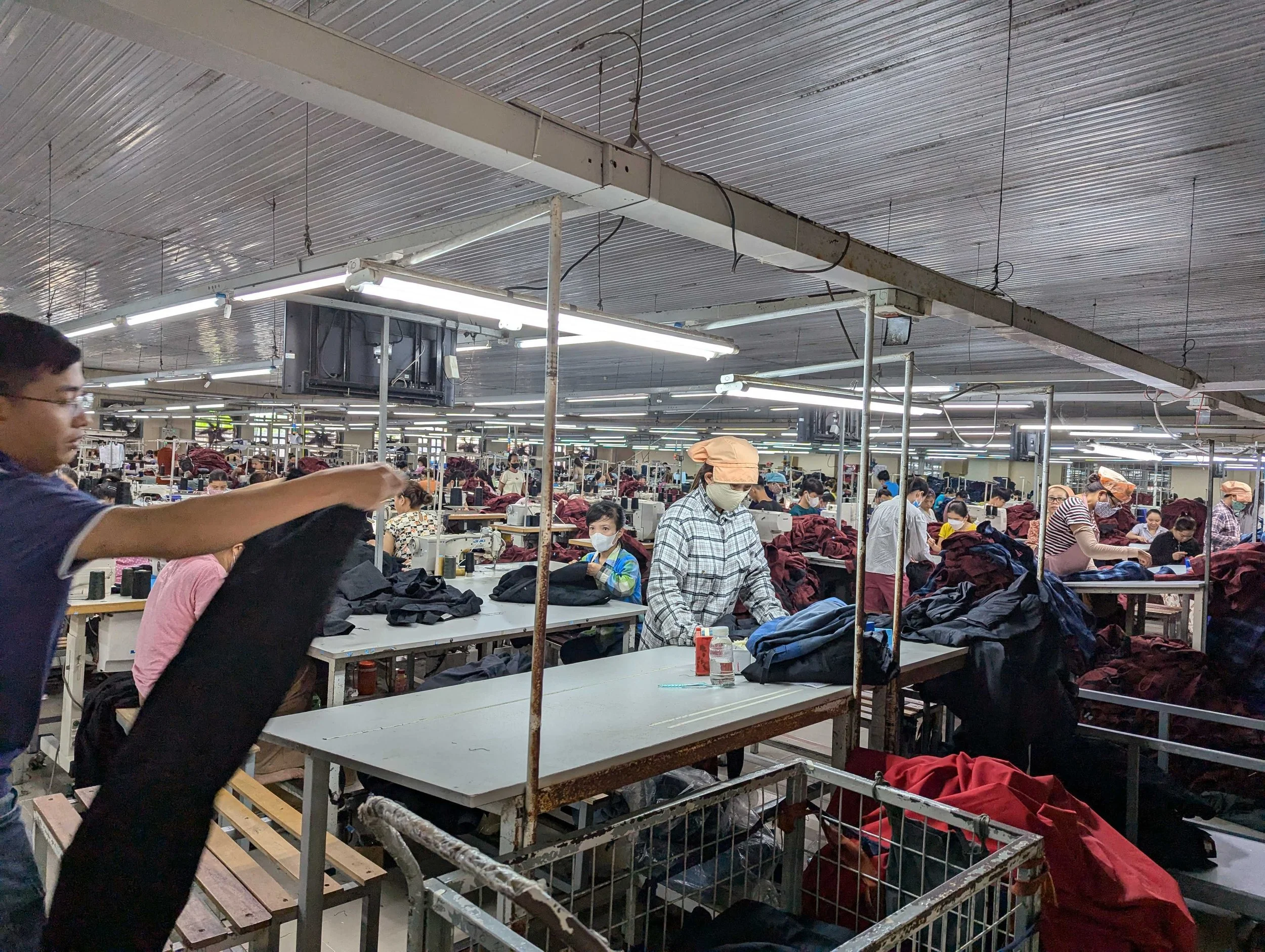
Vietnam's export apparel tier is anchored by a handful of large groups. Vinatex, the state textile group, controls most of the country's yarn production and runs more than 50 subsidiaries. TAL Apparel makes one in six men's dress shirts sold in the United States, and Maxport builds technical and performance apparel for Nike, Lululemon, and Arc'teryx. Phong Phu (PPJ), TNG, Viet Tien, FGL, and Thygesen cover denim, outerwear, tailoring, and knits at export scale. Vietnam has close to 6,000 garment factories in total, and for most projects under roughly 3,000 units per style, the best-fit factory is a smaller specialist that never appears on ranked lists at all, which is why the rest of this guide focuses on finding and vetting the right factory rather than picking a name from the giants.
Looking for the ranked factory list?
Full profiles of the 12 biggest names, with locations, specializations, certifications, MOQs, and named brand clients, live in a dedicated post we keep updated.
Need help narrowing the list?
Send us your apparel brief and we'll shortlist 2 to 6 vetted factories matched to your spec.
Our Vietnam team in Binh Duong matches your spec, MOQ, fabric, and certifications against factories we have on-the-ground experience with. Fixed fee, no commissions, direct factory contact.
Vietnam Clothing Manufacturers by Product Category
Different apparel categories have different Vietnam-specific considerations: what fabrics are realistically sourceable in-country, which certifications retailers expect, where the production clusters sit, and where Vietnam is strong versus where you may need to look elsewhere. The cards below cover the 18 categories Cosmo runs most often.
T-shirts and basic knit apparel
Vietnam handles T-shirt and basic-knit production at every volume tier, with strong domestic knit-fabric supply through Vinatex subsidiaries and the Phong Phu / Hanosimex chain. Bangladesh undercuts Vietnam on the cheapest commodity T-shirts; Vietnam wins above the basic tier, especially at 240 gsm+ heavyweight terry hoodies and structured polos.
Activewear and sportswear manufacturers in Vietnam
Vietnam produces a large share of Nike, Lululemon, Adidas, Asics, Arc'teryx, and Decathlon's high-volume Asia production. Technical fabrics widely sourceable (polyester-spandex, recycled poly, Cordura, Tactel). Santoni seamless capability for sports bras and leggings. Sublimation and seam-sealed construction also available. Cosmo placed COR Surf's changing ponchos and backpacks through Vietnam factories after moving them from China.
Women's clothing manufacturers in Vietnam
Structured tailored work (blouses, dress pants, suits) sits with the larger woven specialists; soft knit work (dresses, tops, loungewear) sits with knit-vertical factories. MOQ for women's wovens with a top export factory is typically slightly higher than men's because of size-grading complexity.
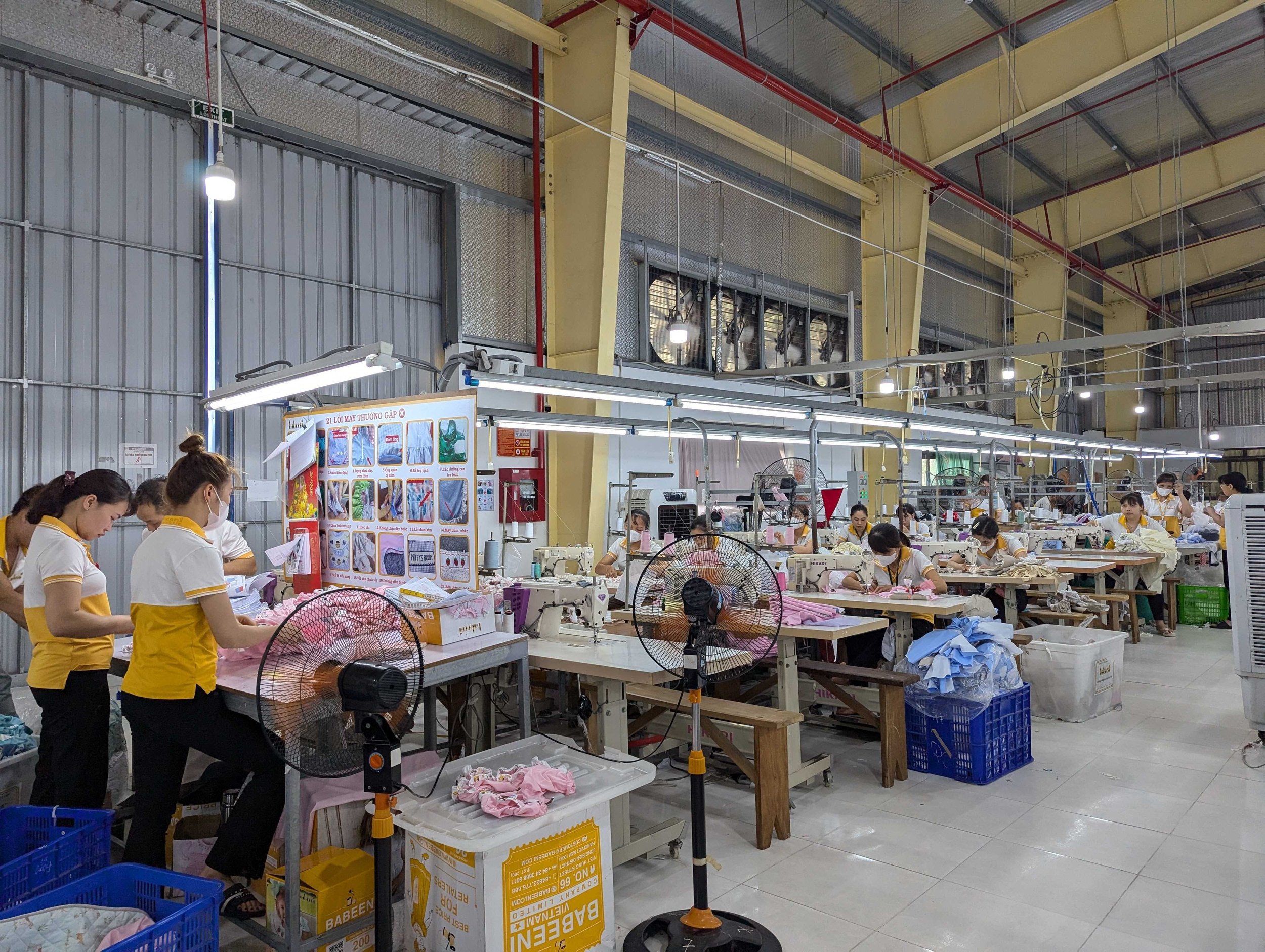
Children's clothing manufacturers in Vietnam
OEKO-TEX Standard 100 on fabric is effectively mandatory for kidswear destined for US or EU retail. Thygesen and several Vinatex subsidiaries hold the cert and run dedicated kidswear lines. The Children's Place sources a significant share of its production through TNG. Size-banding (8 to 14 points) raises sample dev cost.
Uniform and workwear
Vietnam has solid industrial uniform and workwear capacity. Larger producers handle PPE, scrubs, hospitality, and corporate uniforms. Durability fabrics (heavy ripstop, twill, fluorescent-treated) are sourceable. CE and EN ISO certifications available for European PPE markets.
Knitwear and sweaters
Vietnamese knit sweaters and cardigans run from commodity acrylic at the low end through merino-blend mid-market through cashmere-blend premium. Vertical knit-to-garment chains (Vinatex subsidiaries, Phong Phu group) give Vietnam an edge on yarn cost control. Ask about gauge, yarn-dye vs piece-dye, and intarsia or jacquard capability.
Outerwear and jackets
Technical down jackets, padded parkas, soft shells, and hard shells are produced for The North Face, Arc'teryx, Spyder, and Patagonia. RDS certification available for Responsible Down Standard claims. Seam-sealing and waterproof-membrane lamination capability. Synthetic insulation (PrimaLoft, Thermolite) is widely sourceable.
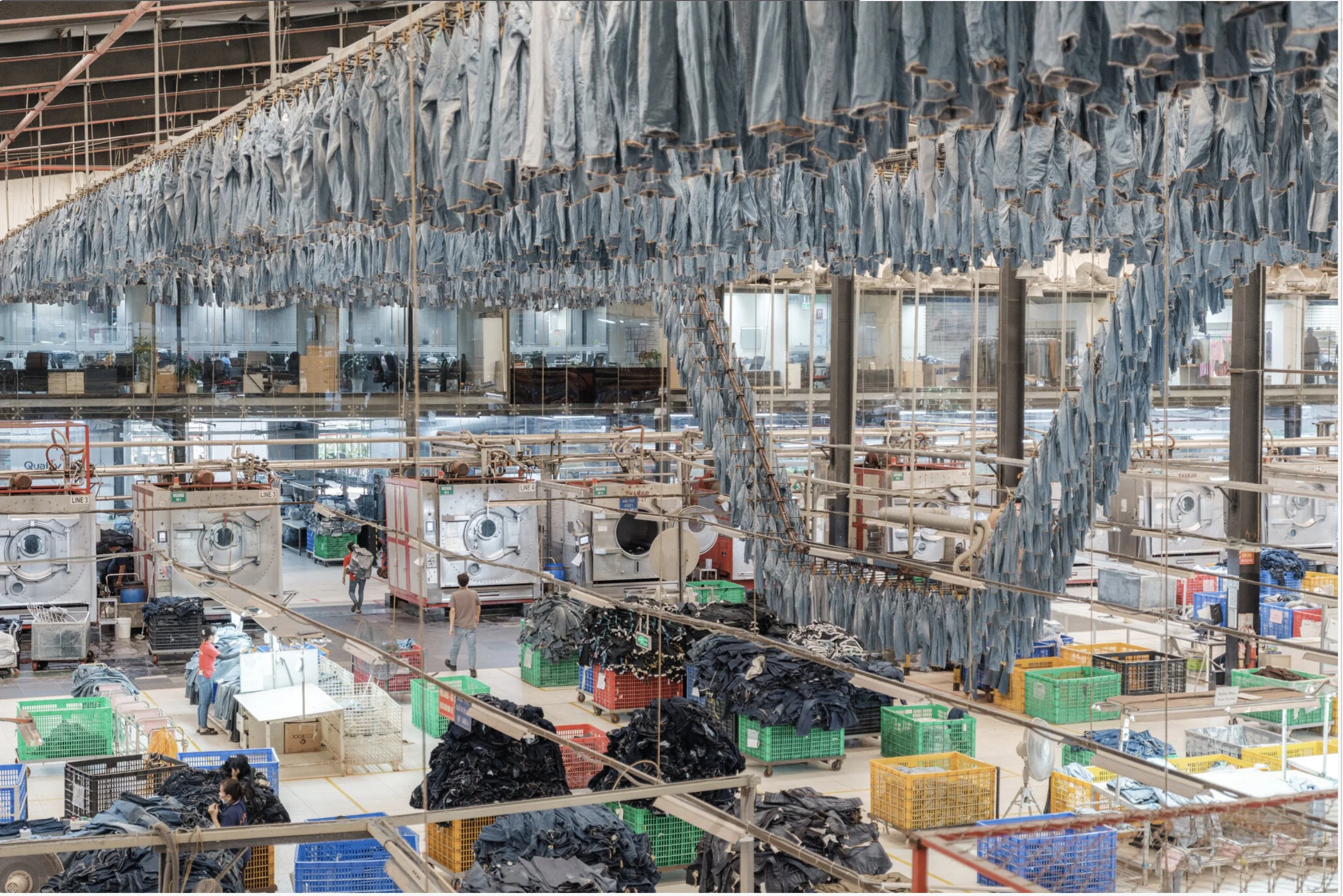
Denim and jeans
Vietnam emerged in the last decade as a credible denim center. Phong Phu, TCE Denim, Saitex (Dong Nai), and Tuong Long lead, with Saitex known internationally for water-saving denim processing. Localization for denim fabric now sits around 55 to 60 percent. Ask about wash type, fabric weight (10 to 14 oz typical), and stretch vs rigid.
Swimwear manufacturers in Vietnam
Specialist factories handle bikinis, one-pieces, board shorts, rash guards, and surf-tech swim. Key questions: chlorine-resistant fabric (PBT-blend or XLANCE-blend), recycled nylon (ECONYL is the most common premium option), lining type, and sublimation versus screen-print capability.
Underwear manufacturers in Vietnam
Vietnam is one of the world's larger underwear producers, with both seamless (Santoni) and traditional cut-and-sew capacity. Thygesen produces underwear and intimates with seamless technology. Lingerie is a separate, more specialized cluster with stricter fit-development and sample-cycle requirements.
Sustainable clothing manufacturers in Vietnam
Most factories profiled here hold at least one major sustainability cert. Vietnam-specific positioning includes Better Work program participation (ILO/IFC) and EDGE gender-equality certification. The most common mistake: choosing a factory on a single cert rather than the cert stack required for your specific claim.
Private label and OEM clothing manufacturers in Vietnam
Most Vietnam clothing factories above the smallest tier accept private label work. The giants (Vinatex, TAL) often decline private label because retail-program work crowds it out. OEM is the dominant model; pure CMT is less common than Bangladesh because Vietnam's fabric supply makes OEM more efficient.
Golf apparel manufacturers in Vietnam
Vietnam handles golf shirts, performance shorts, outerwear, and branded headwear at MOQs from 500 pieces per style. Performance polyester-spandex and lightweight technical fabrics are widely sourceable. Cosmo placed Paradax Golf's apparel line (golf shirts, performance shorts, travel bags) through Vietnam factories after the brand won the 2023 PGA Pinnacle Award for Best in Show on its core bag product.
Hunting and outdoor clothing manufacturers in Vietnam
Specialist factories cover technical hunting apparel (waterproof shells, brushed fleece, camo-print fabric) and casual outdoor lines (hoodies, shorts, basics). Seam-sealing and performance fabric sourcing available. Cosmo placed Hunting & Fishing New Zealand's first 15,000-piece order through Vietnam factories Lam vetted across Ho Chi Minh City and Hanoi.
Lingerie manufacturers in Vietnam
Vietnam's lingerie capacity is smaller than its activewear or denim base but credible. Specialist factories handle bras, briefs, bralettes, and sleepwear in stretch lace, nylon-spandex, and modal blends. Mold cup construction and underwire integration are sourceable at the right factories; sleepwear MOQs sit lower than structured intimates.
Pickleball sportswear manufacturers in Vietnam
The fastest-growing apparel niche in the US is reachable through Vietnam's mainstream activewear factories. Pickleball-specific apparel (skirts, polos, dri-fit tees, performance shorts) runs through the same Santoni and sublimation-capable factories serving Nike and Lululemon. MOQs typically 1,000 to 3,000 per style; brands new to the category often start with white-label and progress to custom.
Running clothes manufacturers in Vietnam
Running gear (shorts, singlets, lightweight tops, jackets) runs through the same activewear factories that produce for Nike, Lululemon, and Asics. Moisture-wicking polyester, mesh paneling, sublimation, and reflective trim are standard capabilities. MOQs typically 1,000 to 3,000 per style. Brands building marathon-finisher merch or branded running gear should ask specifically about silicone-print durability through wash cycles.
Scrubs and medical gown manufacturers in Vietnam
Vietnam's uniform and workwear base produces scrubs, lab coats, isolation gowns, and reusable PPE for the healthcare sector. Antimicrobial-treated fabrics, fluid-resistant constructions, and barrier-tested gowns are sourceable. Higher-volume programs run through factories like Thygesen and other Vinatex subsidiaries; smaller boutique scrub brands route through mid-tier specialists.
For sub-specialty deep-dives that sit inside the categories above, see our guide to hoodies, plus our reference pieces on activewear fabric sourcing and where Nike makes apparel.
Vietnam Clothing Manufacturers by Order Size and MOQ
The minimum order quantity question is the single most common reason a buyer-factory match fails before any sample leaves the factory. Vietnam covers the full spectrum from 100-piece pilots to million-piece programs; the issue is knowing which tier to approach.
| Tier | Volume per style | Best for | Typical lead time |
|---|---|---|---|
| Tier 1 Small batch |
100 to 500 | Cut-and-sew knits; premium woven shirts can sometimes go to 50 pieces. Family-owned operations of 50 to 300 workers, rarely listed on Google. Example: Thai Son S.P at 200 to 300 pieces per style. | 45 to 75 days |
| Tier 2 Mid-volume |
1,000 to 10,000 | The sweet spot for challenger brands and direct-to-consumer apparel labels. Dozens of mid-sized export factories (500 to 2,000 workers) quote here comfortably, though most prefer the upper end. | 60 to 90 days |
| Tier 3 Enterprise |
10,000+ | Vinatex, TAL, Maxport, PPJ, FGL, TNG, and Viet Tien all run here. A 50,000-unit-per-style commitment per season is typical for retail-program work. Unit costs are the most competitive. | 90 to 120 days |
| Tier 4 Wholesale |
500 to 2,000 | Different model from the three above: in-stock or near-stock orders through HCMC wholesale showrooms, Hanoi-based wholesale agents, or Vietnamese export trading companies. Buyers placing branded wholesale orders rather than custom manufacturing. | 2 to 6 weeks |
The first three tiers are custom manufacturing. Tier 4 (wholesale) is a different channel set and is included here only because it overlaps the same volume range as Tier 1 but with much shorter lead times.
How to Find Clothing Manufacturers in Vietnam
A sourcing decision in Vietnam fails for predictable reasons: paid for fabric that never arrived, paid a deposit to a trading company that subcontracted the order to a factory that could not actually make it, signed off on a sample that was hand-finished in the factory's sampling room and then production-finished on a different line.
Vietnam's clothing manufacturing hubs
Vietnam's apparel base concentrates in three regions: the northern hub around Hanoi and the Red River Delta, the smaller, faster-growing central hub around Da Nang, and the largest by volume, the southern hub around Ho Chi Minh City.
Cosmo's Vietnam team is based in Binh Duong, adjacent to Ho Chi Minh City. That is the most efficient operational base for southern apparel work and accessible to northern factories on a same-day flight when needed.
How to verify a factory exists and exports
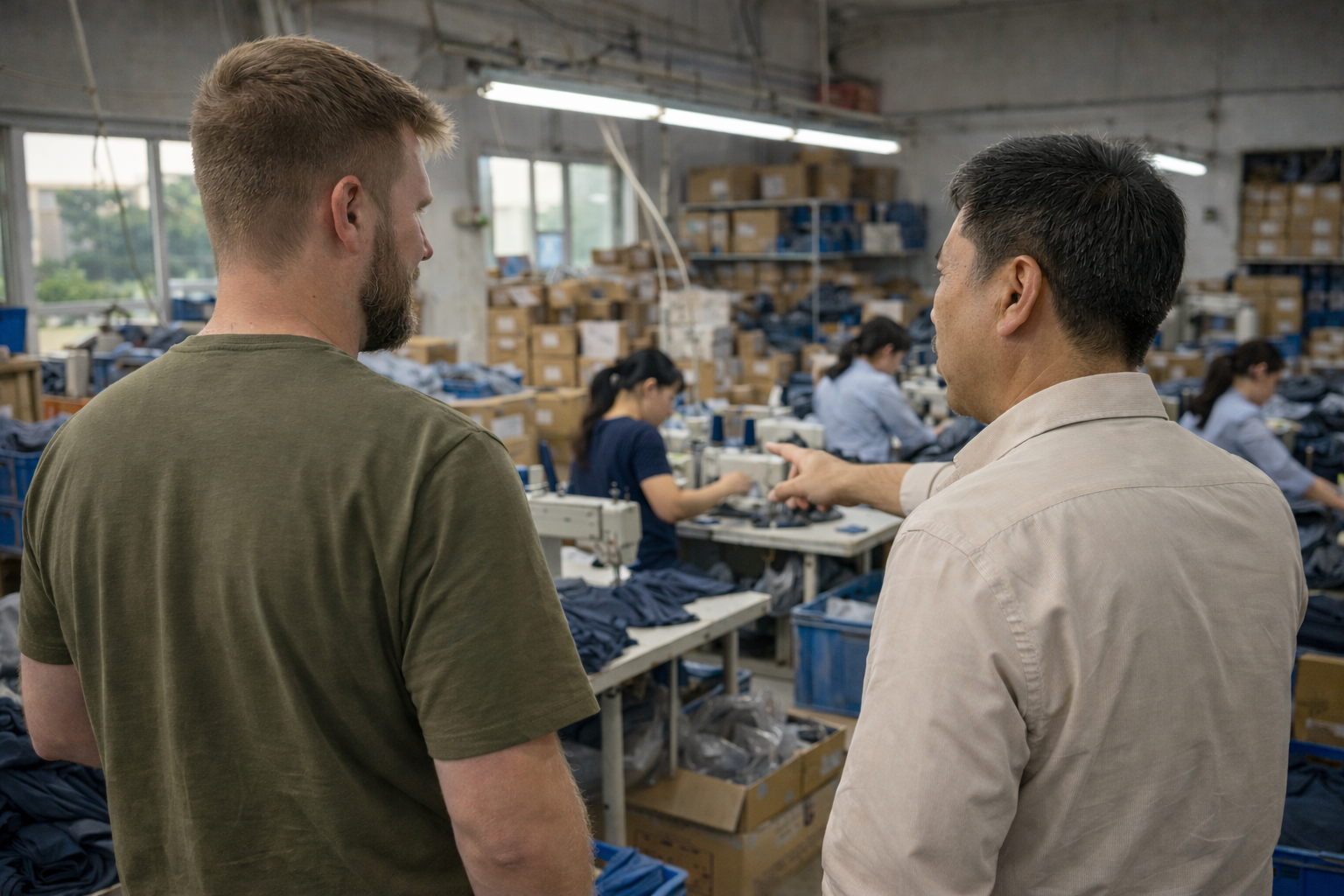
Three checks worth running on any new factory before you wire a deposit. First, business registration: every legitimate Vietnamese factory has an Enterprise Registration Certificate, issued by the Department of Planning and Investment, and a sourcing team can pull and verify it. Second, customs export records: ImportYeti and similar US customs databases show actual shipment history by HS code, brand consignee, and volume. A factory that claims Nike as a client should appear in customs data shipping to Nike or its logistics partners. Third, a physical visit, either by you or by a sourcing partner on the ground. Photos and video tours can be staged. A factory visit cannot. Cosmo offers paid factory visits and audits in Vietnam (see Vietnam factory visits) for buyers who cannot fly themselves. For a broader walkthrough of finding Vietnam manufacturers across categories, see our Vietnam manufacturing companies guide.
Fabric sourcing in Vietnam: what to expect
Vietnam's biggest practical weakness versus China is upstream materials. The garment manufacturing base is deep, but the local fabric and trim base is shallower, especially for synthetics, novelty knits, and specialty weaves. Most Vietnam factories source basic cotton knits, fleece, French Terry, denim, and standard wovens domestically (Phong Phu, Vinatex subsidiaries, and Taiwanese/Korean-invested mills like Far Eastern, Hyosung, and Eclat run inside Vietnam). Performance synthetics, technical membranes, and novelty fabrics still get imported, mostly from China, Taiwan, or Korea, which adds 2 to 4 weeks to the sample cycle compared to a comparable China project.
Two operational consequences. First, build extra time into your timeline: Vietnam fabric sourcing is the single biggest reason first-order timelines run 4 to 5 months instead of the 2 to 3 months that buyers expect from a China spec sheet. Second, watch the rules of origin. The CPTPP and EVFTA carry a yarn-forward rule of origin for apparel, meaning yarn and fabric must originate in the trade-bloc country (or qualifying partner) for the finished garment to claim preferential duty. Fabric sourced from China can disqualify your shipment from the duty break even if every cut-and-sew step happens in Vietnam. For technical and performance categories where Vietnam-origin fabric is hard to find, talk to your factory about Korean or Taiwanese mill alternatives that may qualify under specific FTA rules.
Trade shows and discovery routes for smaller factories
For finding factories beyond the named giants, the working route is in-person trade-show legwork. The biggest Vietnam apparel shows are Saigontex, Vietnam International Fashion Sourcing, and the Vietnam Textile & Garment Industry Expo. See our 2026 Vietnam trade show calendar for dates and locations. Industry associations like VITAS (Vietnam Textile and Apparel Association) also maintain member directories that include smaller specialist factories not searchable through Google.
Certifications that actually matter
Apparel certifications fall into three buckets. Quality systems: ISO 9001 (basic quality management) and ISO 14001 (environmental). Social compliance: SA8000 (workplace conditions), BSCI (Business Social Compliance Initiative audit), WRAP (Worldwide Responsible Accredited Production), Better Work participation (joint ILO/IFC program). Material and product safety: OEKO-TEX Standard 100 (chemical safety, required for kidswear by most retailers), GOTS (Global Organic Textile Standard, for organic cotton claims), GRS (Global Recycled Standard, for recycled fabric claims), OCS (Organic Content Standard), FSC (for fiber sourcing). For a basic US or EU retail program, the practical floor is BSCI or WRAP plus OEKO-TEX. For sustainability storytelling, add GOTS or GRS depending on whether the claim is organic or recycled.
Sample evaluation and the golden sample process
A "golden sample" is the approved production reference sample. The discipline is: you receive an initial sample, request fixes, receive a revised sample, approve it as the golden sample, and then every production unit ships against that reference. The mistake brands make is approving a sample without locking it in writing as the golden sample. Without one on file, a factory has no fixed point of reference for production QC, and the buyer has no recourse when production drifts. Always tag and photograph the golden sample, store it with the factory, and reference it in the production contract.
Production quality control and pre-shipment inspections
Three QC stages: pre-production (raw materials in, before cut), in-line (during sewing, typically at 30 to 50 percent completion), and pre-shipment (before goods leave the factory, typically at AQL 2.5 inspection). For first-time orders or any order over 5,000 units, a third-party inspection at pre-shipment is standard practice and costs around 200 to 400 US dollars per inspection day. See our Vietnam factory inspection and quality control guide for the full process.
The sourcing timeline at a glance
-
1
Week 1 to 2Tech pack and factory shortlist
Brief, factory matching, NDA, initial quotes from 2 to 6 vetted candidates.
-
2
Week 3 to 6Fabric sourcing and first sample
Swatch round to lock fabric, sample-making, first review against your spec sheet.
-
3
Week 7 to 10Golden sample sign-off
Revisions until approval. Sample tagged, photographed, and stored at the factory.
-
4
Week 11 to 16Bulk production
Production runs after materials in-house. Inline QC at 30 to 50 percent.
-
5
Week 17 to 20QC and shipping
Optional third-party pre-shipment inspection, FOB handoff, shipping docs.
End-to-end, expect roughly 4 to 5 months from kickoff to FOB shipment for a first order. Repeat orders compress to 2 to 3 months because the fabric search and golden-sample work are already done. Seasonal compression also applies around Tet (Lunar New Year, late January or February each year). Most factories close one to three weeks for Tet, with the surrounding 4 to 6 weeks running compressed capacity. Plan production timelines around Tet, not into it.
Common red flags when sourcing from Vietnam
Quotes priced suspiciously below the market suggest the factory is either subcontracting the order, cutting corners on fabric, or running a deposit scam. Reluctance to share certifications, or producing scanned PDFs that do not match the issuing authority's database, is a hard fail. A factory that will not host an in-person visit on reasonable notice is almost certainly not doing the work you think it is. Trading companies presenting themselves as factories are common; the giveaway is no production line in any photo or video. For a wider list, see our Vietnam sourcing resources guide.
Common buyer mistakes when sourcing from Vietnam
Red flags are about what factories do wrong. The other side is what buyers do wrong. Three mistakes show up in Cosmo's project intake more than any others, and each of them is buyer-side, not factory-side.
Underestimating Vietnam fabric sourcing lead times. Vietnam's garment manufacturing base is deep, but the upstream fabric and trim base is shallower than China's. Cotton knits, fleece, French Terry, denim, and standard wovens are available domestically. Performance synthetics, technical membranes, and novelty fabrics still get imported, mostly from China, Taiwan, or Korea, adding 2 to 4 weeks to sample and production cycles. Build that lead time into the project schedule from the first round of planning, not after the first sample comes back late.
Scheduling production into Tet instead of around it. Tet (Lunar New Year) shuts Vietnamese factories for one to three weeks each year, with a surrounding 4 to 6 weeks of compressed capacity as workers travel home and return. Tet falls in late January or February depending on the lunar calendar. Buyers regularly book production windows that overlap this period and then absorb a 30-day surprise. Plan around Tet, not into it.
Treating CMT and FOB as interchangeable in early quoting. CMT (cut, make, trim) means you supply fabric and trim to the factory; FOB means the factory does the fabric and trim sourcing to your specification. Approaching a factory with one scope and then switching to the other mid-quote wastes the first round and signals to the factory that the buyer has not done internal homework. Decide which model you want before the first RFQ, even if you change later.
Vietnam Clothing Manufacturing Costs
Vietnam's cost structure for apparel is competitive against China at the unit level and against most other apparel-exporting countries on the combined metrics that matter for serious buyers. The numbers below are industry benchmarks, not Cosmo's quotes, and they vary widely with fabric, MOQ, finishing, and trim.
Vietnam labor costs in 2026
Garment workers in Vietnam earn roughly 250 to 350 US dollars per month in 2026, depending on region (north generally lower, south slightly higher) and skill level. Vinatex reports its average employee monthly income at 11.7 million VND in 2025, around 445 US dollars, which sits at the upper end because the Vinatex average includes managerial and skilled production roles, not just entry-level sewers. Labor cost is rising at roughly 8 to 10 percent per year, so the spread against China is gradually narrowing but not closing.
FOB pricing benchmarks by product category
The ranges below assume a 5,000-piece run at mid-tier export factory quality. Actual quotes depend heavily on fabric, trim, finishing, and order volume.
| Product category | FOB range | What drives the spread |
|---|---|---|
| Basic short-sleeve knit T-shirt | $1.80 to $3.50 | Cotton weight (140 to 220 gsm), neck construction, hem treatment, single vs combed yarn. |
| Polo shirt | $4 to $7 | Pique gauge, collar construction, button quality, brand label and care label complexity. |
| Cotton woven shirt | $6 to $12 | Fabric weight, weave, button quality, plackets, pocket structure, finishing. |
| Jeans | $7 to $18 | Wash type, fabric weight (10 to 14 oz typical), stretch content, trim and rivet quality. |
| Technical jacket | $15 to $60+ | Insulation type, fabric (membrane, DWR coating), seam sealing, zipper quality, lining. |
These are 2026 benchmark ranges, not quotes; your actual price depends heavily on the specifications.
Vietnam-versus-China cost spread
Industry estimates put Vietnam roughly 5 to 15 percent below coastal China on FOB unit cost for comparable mid-tier export apparel. The gap is widest at the higher labor-content end of the range (technical outerwear, structured tailoring) and narrowest on commodity knits where automation matters more than wage rates. For a brand making a multi-country decision rather than a unit-cost-only decision, see our pillar guides to Vietnam sourcing and Mexico sourcing. For category-direct comparisons, see our breakdowns of clothing manufacturers in Mexico and clothing manufacturers in China.
Hidden costs buyers underestimate
The unit FOB price is rarely the final landed cost. Factor in: fabric and trim sourcing costs if you buy CMT rather than FOB, sample development charges (typically 50 to 200 dollars per sample), tooling and pattern grading (one-time), inspection costs at 200 to 400 dollars per day, ocean freight (spot rates from Ho Chi Minh to US West Coast vary significantly; check current rates before quoting), import duty (varies by HS code and country), and customs brokerage. For a deeper walkthrough of shipping logistics, see our Vietnam shipping and freight forwarding guide. A landed-cost-per-unit calculation, not a unit-FOB calculation, is the only number that matters for margin decisions.
Frequently Asked Questions About Vietnam Clothing Manufacturers
Do I need to visit Vietnam in person to source clothing from there?
No, but at least one in-person visit per supplier relationship is a good practice once an order is at scale. For first-time orders or smaller pilots, virtual due diligence (video factory tours, third-party audit reports, customs database checks, and references from other buyers) is enough for many brands.
For ongoing seasonal programs or orders above 10,000 units per style, an in-person visit during pre-production or pre-shipment lifts both quality outcomes and supplier accountability significantly. Cosmo's Vietnam team handles factory visits and audits on buyers' behalf for clients who cannot fly themselves.
What payment terms are typical for Vietnam clothing factories?
Standard payment terms for Vietnam apparel orders are T/T (telegraphic transfer or wire) with 30 percent deposit at purchase order and 70 percent on bill of lading copy. Some factories accept LC (Letter of Credit) for buyers with established trading relationships. Smaller factories sometimes require 50 percent deposit. PayPal is not standard for production orders and should be avoided.
Always wire to the factory's registered corporate bank account, never to a personal account, and verify the bank details match the Enterprise Registration Certificate. For a full guide on payment methods and avoiding scams, see our Vietnam supplier payment guide.
What is the difference between OEM, ODM, and CMT in Vietnam?
CMT (Cut-Make-Trim) means you supply the design, tech pack, fabric, and trims; the factory only does construction. OEM (Original Equipment Manufacturing) typically means CMT plus the factory sourcing fabric and trims to your specification. ODM (Original Design Manufacturing) means the factory provides design assistance, develops the product with you, sources materials, and manufactures the finished good.
CMT gives the lowest unit cost but requires the most buyer-side capability. ODM is the most turnkey for buyers without in-house design teams.
How do I protect my designs when manufacturing in Vietnam?
Three layers. First, sign an NDA before sharing detailed designs. Second, register trademarks for your brand name and logo at the Intellectual Property Office of Vietnam if you plan to sell into the Vietnamese market, and in your home market for export sales (trademark protection in the destination country is what matters for enforcement against counterfeits, regardless of where they are manufactured).
Third, a signed manufacturing contract with confidentiality, exclusivity, and unique-design clauses gives you contract-law recourse if a factory replicates or resells your designs. Vietnam respects IP at the legal level but enforcement at the small-factory level varies, so factory selection matters as much as paperwork.
Is clothing made in Vietnam ethical?
It depends on the factory. Vietnam has stronger labor protections than several apparel-exporting countries and government participation in the ILO/IFC Better Work program. Top-tier factories like Maxport, TAL, Thygesen, and TNG hold internationally recognized certifications (Fair Labor Association, BSCI, WRAP, SA8000) that require regular third-party audits.
Unaudited factories at the smaller end of the market, like in any apparel-producing country, can be a different story. Buyers concerned about supply chain ethics should require certifications, audit reports, and where possible an in-person factory audit before placing production orders.
How do I get samples from a Vietnam clothing factory?
Send a complete tech pack (sketches, measurements, fabric specifications, trim details, label and care label specs, packaging requirements). Request a fabric swatch round before sample-making to lock fabric. Pay the sample fee (typically 50 to 200 US dollars per sample, sometimes refundable against bulk PO).
Receive the sample, mark up changes, and request a revised sample. Repeat until you have a golden sample. Tag and photograph the golden sample, send a signed copy back to the factory, and reference it in the production contract.
Can I private-label or white-label apparel in Vietnam?
Yes. Most Vietnam clothing factories accept private-label work, which means manufacturing your designs under your brand label. White-label work (manufacturing a generic product with no buyer-specific design input) is less common at top-tier factories because most prefer custom orders for margin reasons, but several mid-tier factories run white-label loungewear, basics, and uniforms at scale.
MOQs for private-label are typically the same as OEM (1,000 to 5,000 pieces per style for mid-tier factories).
What language do Vietnam clothing factories work in?
Export-tier factories employ English-speaking sales and merchandising staff. Communication with sales teams works in English. Production-floor communication is in Vietnamese, which can become a friction point when tech-pack details get reinterpreted on the shop floor. Mid-tier and smaller factories often have one English-speaker handling all foreign accounts, which can create bottlenecks.
Working with a sourcing company on the ground in Vietnam removes the language friction at the production layer and tightens the link between your tech pack and what comes off the line.
Can I tour multiple factories on one Vietnam visit?
Yes. A typical buyer trip covers 5 to 10 factory visits across 3 to 5 days, split between Ho Chi Minh City and Hanoi based on category. Cosmo's Vietnam team handles scheduling, transport, translation, and the actual factory walkthroughs.
A recent example: Hunting & Fishing New Zealand's CEO flew in for a 3-day tour across HCMC and Hanoi. Our specialist Lam ran 7 factory visits across technical outdoor apparel and casual private label. The first production order was 15,000 pieces. See the full case study for the trip structure.
Do you handle CMT, FOB, or both?
Both. FOB is the default for Cosmo apparel projects unless the client specifically requests CMT. With FOB, the factory handles fabric and trim sourcing to the buyer's spec. CMT (buyer supplies fabric and trim, factory does cut-make-trim only) works for buyers who already have their own fabric mill relationships or for specific yarn-forward rule-of-origin programs.
CMT typically gives a lower unit cost but requires more buyer-side capability. FOB is the more turnkey route.
What's the minimum project size to make working with Cosmo worthwhile?
Cosmo does not set a minimum project size. The real floor comes from the factories. Most Vietnam apparel factories have MOQs in the range of 500 to 1,000 pieces per style for cut-and-sew work. A small number of Tier 1 specialty factories like Thai Son S.P. accept 200 to 500-piece pilots. Below the factory floor, buyers running smaller pilots are usually better served by direct outreach to those small-batch factories.
Cosmo's fixed fee is independent of order size, so larger programs see a better fee-to-volume ratio. For ongoing seasonal programs needing dedicated factory-side project management, see our dedicated buying office service.
How does Vietnam compare to Bangladesh, Indonesia, India, or Mexico for apparel?
Vietnam is the most balanced of the five for brands diversifying out of China at scale, especially for activewear, technical outerwear, structured tailoring, performance knits, and denim. Bangladesh wins on commodity knit unit cost (basic tees, polos, sweats, fast fashion). Indonesia is strong on sportswear, footwear, and synthetic knits. India leads on cotton wovens, hand-finished fashion, embroidery, and embellished pieces. Mexico is the strongest nearshore option for US-bound buyers prioritizing speed-to-shelf and USMCA duty advantages, particularly on denim, basics, and replenishment programs.
For the full head-to-head, see the comparison table in the Why Vietnam section above.
What happens if quality issues come up after shipment?
This is where pre-shipment inspection at AQL 2.5 does most of the work: defects caught at the factory, before goods leave, are the factory's problem. Defects caught at the destination are harder. A signed manufacturing contract with explicit quality standards, liquidated damages, and warranty terms gives buyers contract-law recourse against the factory, but enforcement requires having that paperwork in place before the order ships.
Cosmo does not perform inspections directly. For buyers wanting pre-shipment inspection coverage, Cosmo coordinates a third-party inspection company at the client's request, billed separately from the sourcing fee. For buyers running ongoing programs, we recommend a written manufacturing contract with the chosen factory; see our manufacturing contracts guide for the standard clauses.
How Cosmo Sourcing Helps Brands Source Clothing from Vietnam
Apparel is sensitive to factory selection in a way that, for example, packaging or hardware is not. The same product brief sent to two different Vietnam factories will come back with two different fabrics, two different fits, and two different price points. Choosing the factory is most of the work.
Vietnam team since 2014
Cosmo Sourcing was founded in 2012 with operations in China. We established Vietnam operations in 2014. Our Vietnam team runs from Binh Duong, adjacent to Ho Chi Minh City. We have placed hundreds of apparel projects through Vietnam factories since 2014, across knits, wovens, denim, outerwear, activewear, and kidswear. Our team has had direct supplier engagement with every major manufacturer named in this guide, and placed production orders with Thygesen, Maxport, TNG, and Thai Son S.P.
How our process works
Brief and tech pack review, factory shortlist (typically 2 to 6 quotes), sample request and golden-sample approval, production negotiation, factory communication and progress tracking, and shipping documentation handoff. Third-party factory audits and pre-shipment inspections are coordinated at client request and billed separately, not part of the standard fixed-fee scope. The buyer makes the factory selection. We do the diligence, vetting, and on-the-ground project management. For the full process, see how we work.
Fixed-fee, no markups
We charge a fixed fee for our sourcing work. We do not take commission from factories. We do not mark up factory quotes. Buyers receive the original factory quote, the factory's contact details, and full ownership of the relationship. For ongoing apparel programs needing dedicated capacity and weekly factory visits, see our dedicated buying office service. For details on the Vietnam service specifically, see our Vietnam sourcing company page.
Featured client outcomes
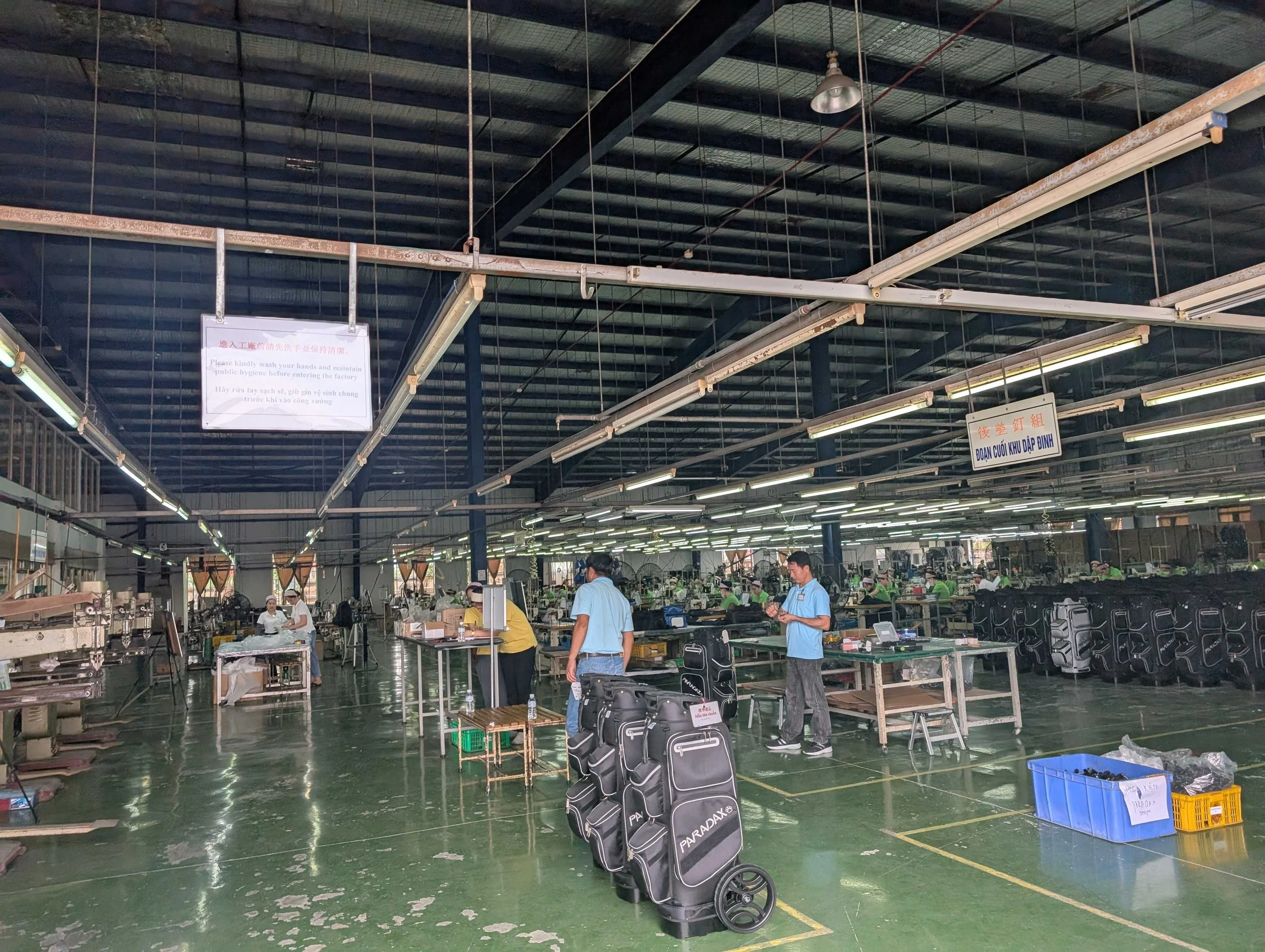
Paradax Golf
Jeff Hanning's patented cart bag won the 2023 PGA Pinnacle Award for Best in Show. Cosmo connected Paradax with a Hanoi-area factory, then expanded into golf shirts, performance shorts, travel bags, and umbrellas as the brand grew.
Read the case study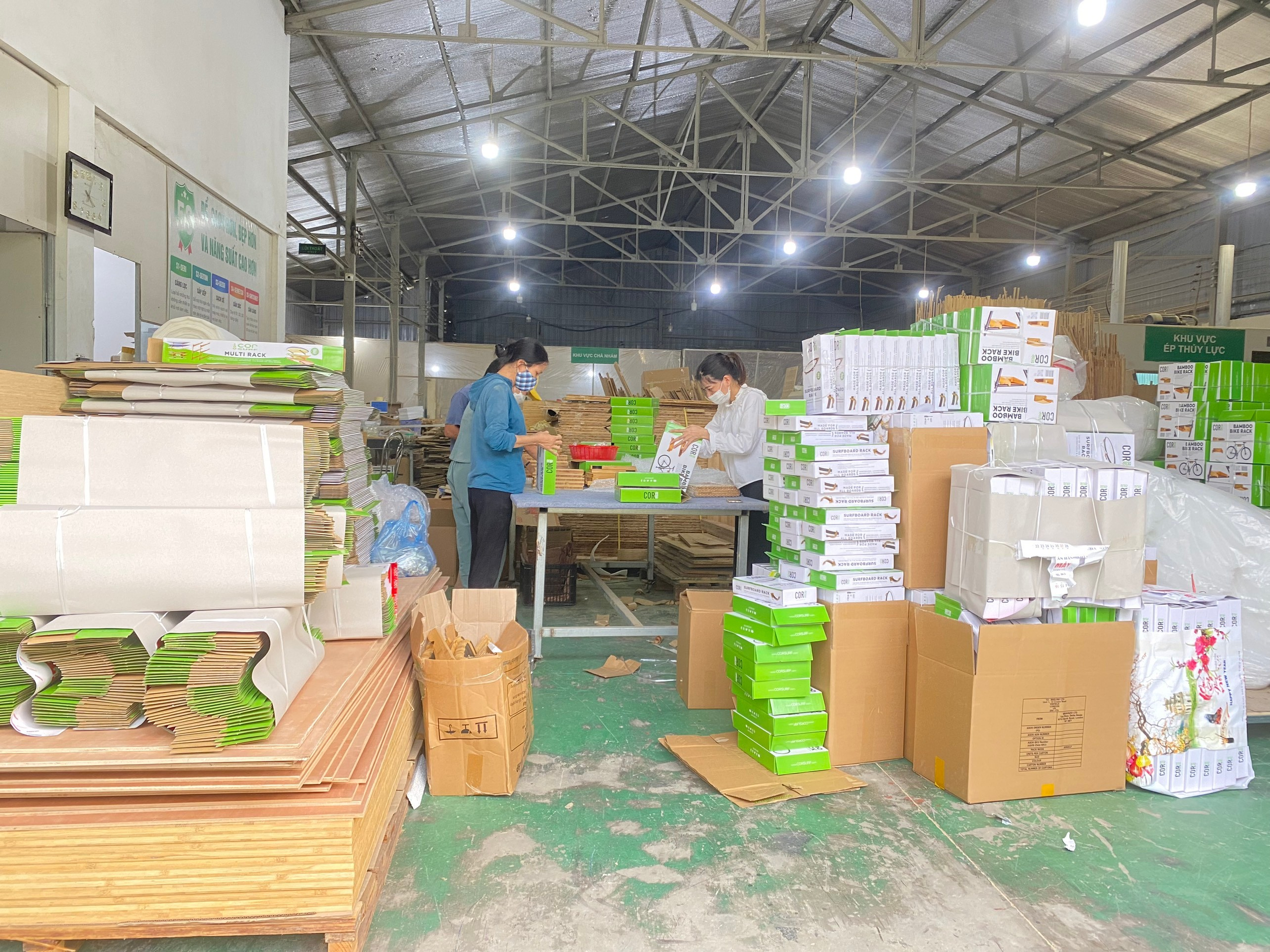
COR Surf
Huntington Beach surf brand COR Surf came to Cosmo to move bamboo rack production from China to Vietnam. Three years and five product categories later, including changing ponchos, backpacks, and car roof rack pads, the relationship is still expanding.
Read the case study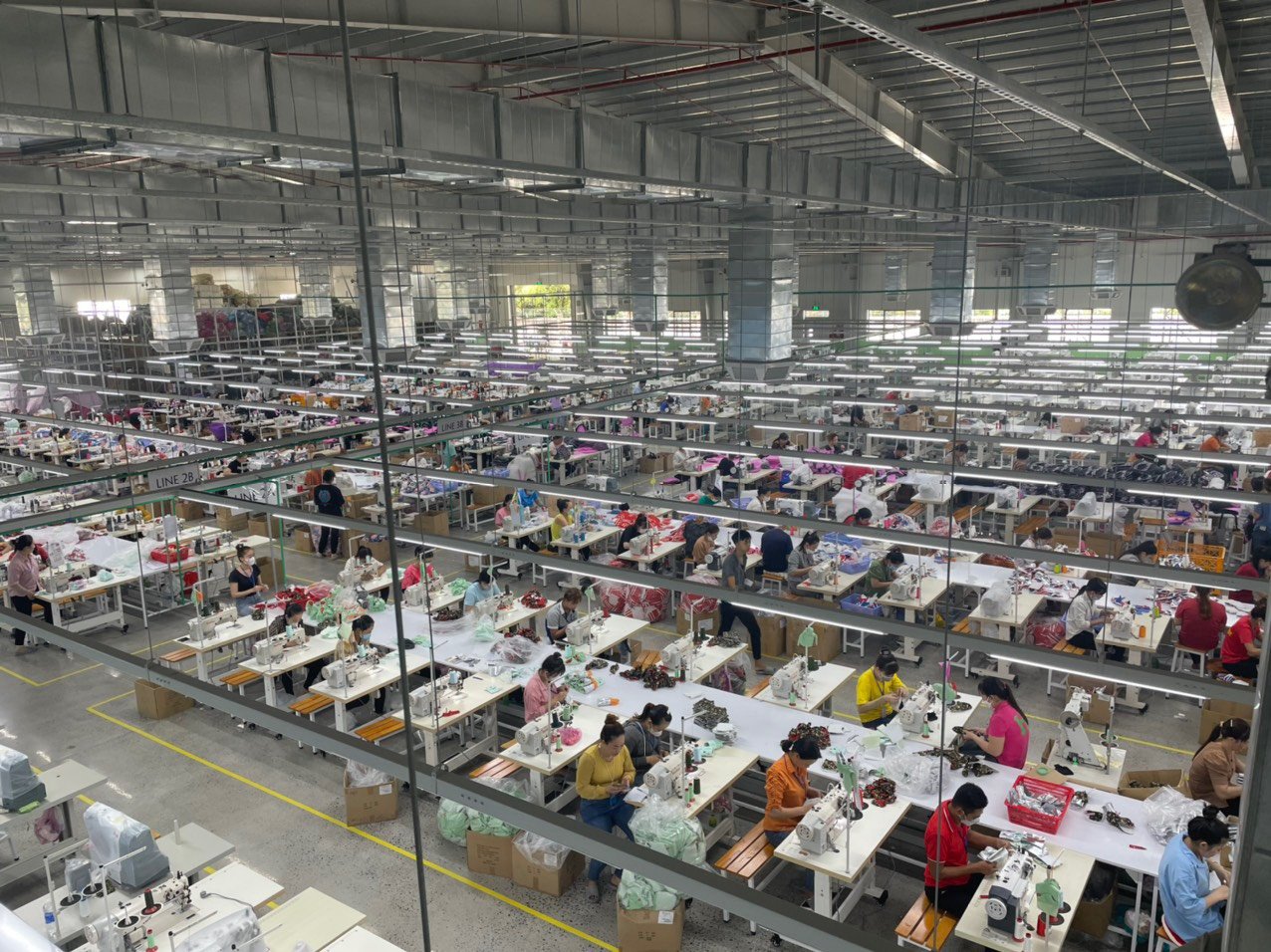
Hunting & Fishing New Zealand
Grant Sheridan, CEO of New Zealand's largest outdoor retail chain, flew to Vietnam for a 3-day factory tour across HCMC and Hanoi. Our specialist Lam ran 7 factory visits across technical outdoor apparel and casual private label. First production order: 15,000 pieces.
Read the case studyReady to source clothing from Vietnam?
Tell us your spec. Style, target volume, target landed cost, target launch date, and any fabric or certification requirements. Our Vietnam team in Binh Duong will respond with a vetted shortlist of factories, sample timelines, and a fixed-fee scope. No commissions. No markups. You own the factory relationship from day one.
Style, target volume, target landed cost, launch date, fabric or certification needs.
2 to 6 vetted candidates from our Binh Duong team. Sample timelines and fixed-fee scope included.
Full factory contact details handed over. You own the relationship from sample through reorder.