Vietnam Children's Clothing Manufacturers: How to Source Kids' and Baby Apparel
Vietnam is one of the world's leading manufacturers of children's and baby clothing. The combination of an experienced garment workforce, competitive pricing, strict safety compliance capabilities, and access to favorable trade agreements makes it a practical choice for brands sourcing kids' apparel at scale.
This guide covers the types of children's clothing produced in Vietnam, how to find and evaluate the right factory, which safety standards apply, and which manufacturers specialize in kids' apparel.
At a glance: Vietnam exported $44 billion in textiles and garments in 2024, making it the world's second-largest apparel exporter. Children's clothing is a well-established production category, with factories across the country producing everything from baby basics to licensed character apparel for major international brands. Key trade agreements like the CPTPP and EVFTA provide reduced or zero-tariff access to major import markets, though rates vary by country and product category.
Updated Febraury 23, 2026

Why Vietnam Works for Children's Clothing
Several factors make Vietnam particularly well-suited for kids' and baby apparel production, beyond the general advantages the country offers for garment manufacturing.
Safety Compliance Infrastructure
Children's clothing has stricter regulatory requirements than adult apparel. Vietnamese garment factories that supply international brands are already set up to meet standards like OEKO-TEX, CPSIA (for the U.S. market), and EN safety standards (for the EU). Many factories maintain third-party testing relationships and have experience producing garments that pass lead content, flammability, and chemical restriction testing. This compliance infrastructure is a meaningful advantage over newer manufacturing markets where kids' apparel experience is limited.
Fabric Sourcing for Children's Products
Kids' clothing requires soft, skin-safe materials, particularly for baby and infant products. Vietnam has a well-developed domestic textile supply chain, including mills producing organic cotton, bamboo blends, and certified fabrics (GOTS, OEKO-TEX Standard 100). Factories with experience in children's apparel know how to source and test these materials properly, which reduces the risk of quality issues down the line.
Competitive Pricing at Reasonable MOQs
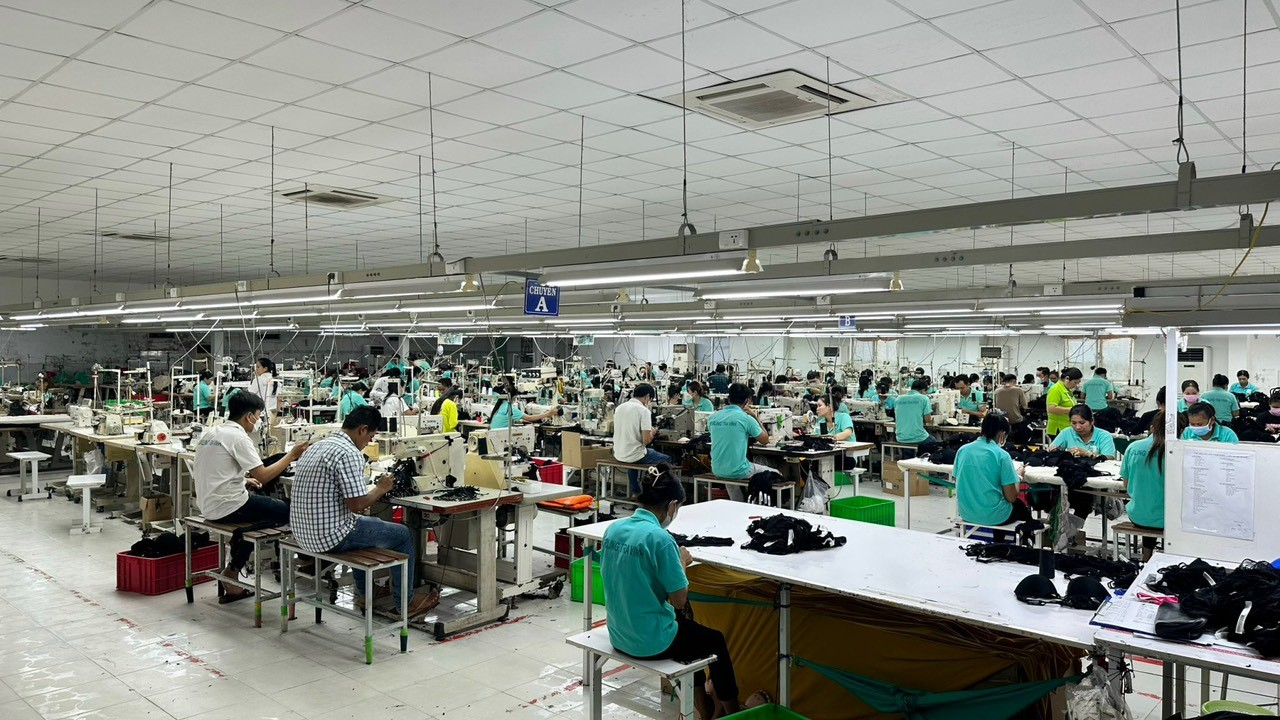
Labor costs in Vietnam remain lower than in China, which translates directly to garment pricing. For children's clothing specifically, you can expect MOQs of 300 to 500 pieces per style and color at smaller factories, and 1,000 to 3,000+ at larger operations. Factories that specialize in children's clothing often price more competitively than general apparel factories handling kids' products as a sideline.
Trade Agreement Access
Vietnam's free trade agreements, including the CPTPP (covering markets such as Canada, Australia, Japan, and Mexico) and the EVFTA (with the European Union), reduce or eliminate import duties on qualifying garments. Tariff rates vary by product classification and importing country, so check the latest applicable rates for your specific market before finalizing cost calculations.
Types of Children's Clothing Made in Vietnam
Vietnamese factories produce the full range of kids' and baby apparel. Here are the main categories buyers typically source.
Baby Basics and Newborn Essentials
Onesies, bodysuits, rompers, sleep sacks, swaddle cloths, and infant sets. These products require ultra-soft fabrics and strict safety compliance. Vietnam has multiple factories with dedicated baby product lines using certified organic and hypoallergenic materials.
Everyday and Casual Wear
T-shirts, shorts, leggings, skirts, pants, and dresses for toddlers through older children. This is the highest-volume category and where Vietnam's competitive pricing is most apparent. Production runs can scale efficiently for both basics and trend-driven pieces.
Sleepwear and Pajamas
Pajama sets, nightgowns, and sleep separates. Sleepwear for children has specific flammability requirements in many markets (notably the U.S. and EU), and factories experienced in this category build those testing requirements into their production process.
Outerwear and Activewear
Jackets, windbreakers, hoodies, tracksuits, and sports-oriented clothing. Vietnam's established activewear and sportswear manufacturing base extends to children's products, with factories equipped to handle technical fabrics, moisture-wicking materials, and insulation.
School Uniforms
A significant production category, particularly for export to markets in Australia, the Middle East, and Southeast Asia. Factories producing uniforms prioritize durability, colorfastness, and consistent sizing across large batch runs.
Eco-Friendly and Organic Children's Clothing
A growing segment. Several Vietnamese manufacturers now offer GOTS-certified organic cotton lines, recycled polyester options, and non-toxic dye processes specifically for children's products. For more on this, see our guide to sustainable clothing sourcing in Vietnam.
How to Find the Right Children's Clothing Manufacturer
Finding a factory that can produce your specific product well, at the right price, and in compliance with the proper standards is the core challenge. Here is a practical approach.
Define Your Product Requirements First
Before contacting any factory, clarify your specifications: fabric type and weight, sizing range, construction details (embroidery, appliqué, screen printing), target price point, and order volume. Factories respond much more usefully to specific inquiries than to vague requests. If you have a tech pack, send it; if you have a sample, even better.
Know Where to Look
The most visible factories on Google and Alibaba are not necessarily the best fit for your product. Large manufacturers like Nha Be or Thanh Cong are excellent operations, but their MOQs often start at 3,000 to 5,000 pieces per style, which prices out many emerging brands. Smaller, specialized children's clothing factories often lack English-language websites and are harder to find through online research alone. Trade shows like SaigonTex and VietnamTex, B2B platforms, and on-the-ground sourcing in manufacturing clusters around Ho Chi Minh City, Binh Duong, and the northern provinces are more effective ways to find mid-size factories with relevant specialization.
Vet for Children's Apparel Specifically
Not every garment factory is suitable for children's clothing. When evaluating a potential manufacturer, ask about their specific experience with kids' products and verify these points:
Do they hold OEKO-TEX Standard 100 certification (particularly Class I for baby products)?
Do they have metal detection equipment on the production line? (Standard requirement for children's garments.)
Can they provide third-party test reports for lead content, phthalates, flammability, and azo dye restrictions?
What children's brands or products have they manufactured before?
Do they have experience with the safety labeling requirements for your target market?
A factory that primarily makes adult clothing and "can also do kids' stuff" is a different proposition from one that runs dedicated children's apparel lines with tested compliance processes.
Request Samples Before Committing
Always order pre-production samples and test them. For children's clothing, pay particular attention to fabric softness after washing, colorfastness, hardware security (snaps, buttons, zippers), and whether small parts pose a choking hazard. Testing is not optional for kids' products, and it is far cheaper to catch problems at the sample stage than after a production run.
Understand Pricing Structure
Children's garments are typically priced per piece, and the cost depends on fabric type, construction complexity, order volume, and trim details. As a rough benchmark, simple knit basics (onesies, t-shirts) from Vietnam can range from $1.50 to $4.00 per piece at reasonable volumes. At the same time, more complex items (outerwear, embellished dresses) will be higher. These ranges vary significantly by factory, fabric, and order size. Always request itemized quotes that separate fabric, trims, labor, and packaging so you can understand where costs sit.
Safety Standards and Compliance for Children's Apparel
Children's clothing is one of the most heavily regulated product categories in consumer goods. The specific requirements depend on your target market, but there are common themes across most countries.
Key Compliance Areas

Every market regulates children's apparel for chemical safety (restrictions on lead, phthalates, formaldehyde, and certain dyes), flammability (particularly strict for sleepwear), mechanical safety (drawstrings, small parts, and sharp edges), and labeling (fiber content, care instructions, country of origin, and tracking labels).
In the U.S., the Consumer Product Safety Improvement Act (CPSIA) is the governing framework. The EU applies REACH regulations, the General Product Safety Directive, and specific EN standards for cords, drawstrings, and flammability. Australia, Canada, the UK, Japan, and South Korea each have their own standards, though many overlap in substance.
Practical Advice for Buyers
Rather than trying to become an expert in every regulation, focus on three things. First, identify which specific standards apply to your target market and clearly communicate those requirements to your factory. Second, require third-party testing from an accredited lab (SGS, Bureau Veritas, Intertek, or TUV are common choices) before shipment. Third, build testing costs into your budget from the start. Testing a children's garment for CPSIA compliance typically costs a few hundred dollars per style, and it is a non-negotiable cost of doing business in this category.
The right factory will already understand these requirements and factor them into its production process. If a factory seems unfamiliar with children's product safety testing, that is a significant red flag.
Top Children's Clothing Manufacturers in Vietnam
The factories below are among the most established producers of children's apparel in Vietnam. This is not a comprehensive directory. Many of the best-fit factories for a given product do not appear in English-language search results. This list demonstrates the range of what is available and provides a starting point for research.
Thygesen Textile Vietnam
Part of the Danish-owned Thygesen Textile Group, with factories in northern Vietnam. Thygesen is one of the few manufacturers that explicitly specializes in children's and baby clothing alongside activewear. They offer OEM and ODM services, work with GOTS- and OEKO-TEX-certified materials, and have a strong track record of supplying European and North American brands. Best for mid- to large-sized orders with a sustainability focus.
Nha Be Garment Corporation (NBC)
One of Vietnam's largest garment manufacturers employs over 30,000 workers. NBC has dedicated children's garment production lines and an OEKO-TEX certified factory specifically for kids' apparel. They produce for international markets, including the U.S., Europe, and Russia. Their scale makes them best suited for larger orders (typically 3,000+ pieces per style).
Thanh Cong Textile Garment (TCM)
A publicly listed company with modern manufacturing facilities and a strong emphasis on sustainable production. TCM produces children's clothing alongside their broader product range and holds multiple certifications, including ISO, WRAP, and OEKO-TEX. Known for consistent quality and the ability to handle technical fabrics.
Worldon (Vietnam) Co., Ltd.
Part of China's Shenzhou International Group, one of the largest knitwear manufacturers globally. Worldon's Vietnam operations produce for major international brands, including children's apparel lines. Their strength lies in high-volume knit production with strict quality control. MOQs tend to be higher.
Dong Nai Garment Corporation (Donagamex)
Based in Dong Nai province near Ho Chi Minh City, Donagamex has decades of export experience and produces a wide range of children's clothing. They focus on quality, timely delivery, and compliance with international standards. A solid option for buyers looking for established production capabilities.
Babeeni
A Hanoi-based manufacturer and wholesaler that specializes specifically in children's clothing. Founded in 2007, Babeeni focuses on smocked, embroidered, and boutique-style children's garments, which sets it apart from large-volume commodity producers. Worth considering for brands with more specialized or decorative product lines.

Phong Phu Corporation
A vertically integrated textile company that handles everything from spinning and weaving to finished garment production. Phong Phu produces children's wear with a focus on quality and has invested in eco-friendly manufacturing practices. Their vertical integration gives them more control over fabric quality, which matters for sensitive children's skin.
When evaluating any manufacturer on this list or beyond, conduct your own due diligence. Request factory certifications, review recent test reports, and if possible, visit the facility or arrange a third-party audit. For a broader overview of Vietnam's garment manufacturing landscape, see our full guide to clothing manufacturers in Vietnam. You can also see which major international brands are manufactured in Vietnam to understand the country's production capabilities at scale.
Source Children's Clothing from Vietnam with Cosmo Sourcing
Finding the right children's clothing factory in Vietnam takes more than a Google search. The best-fit manufacturers for your product, order volume, and compliance needs are often smaller, specialized operations that do not appear in English-language directories.
Cosmo Sourcing has been connecting brands with vetted garment manufacturers in Vietnam since 2012. We have sourced thousands of products across every major apparel category, including children's and baby clothing. Our team on the ground in Ho Chi Minh City handles supplier identification, factory vetting, price negotiation, sampling, quality inspections, and logistics coordination.
We operate on a flat-fee pricing model, which means you get original quotes directly from factories, with full contact information and complete transparency. No commissions, no markups on your orders. We typically present 2 to 6 factory quotes per product so you can compare options and make an informed decision.
For children's apparel specifically, we prioritize factories with documented compliance experience, proper testing infrastructure, and relevant certifications, because kids' products leave zero room for cutting corners on safety.
Get started: info@cosmosourcing.com | cosmosourcing.com/contact-us