How To Find Linen Manufacturers in Vietnam // What Type of Linen Goods And Clothing Is Made In Vietnam
Vietnam is one of the stronger countries in Southeast Asia for linen garment manufacturing, particularly for apparel brands and home textile companies looking for an alternative to China. We have placed a few dozen linen projects with Vietnamese factories at Cosmo Sourcing since 2012, spanning women's dresses, casual pants, dress shirts, resort wear, and linen-blend home textiles. This guide covers what linen products Vietnam produces, where the factories are, and how to find the right manufacturing partner for your project.
One thing buyers should know upfront: Vietnam does not grow flax (the plant from which linen comes). Vietnamese factories import linen yarn or fabric, primarily from France, Belgium, and China, then cut, sew, and finish the garments domestically. This is standard across the industry and does not affect quality. What it does mean is that your fabric lead time and cost depend partly on where the linen is sourced, so ask your factory about their flax supply chain early in the conversation.
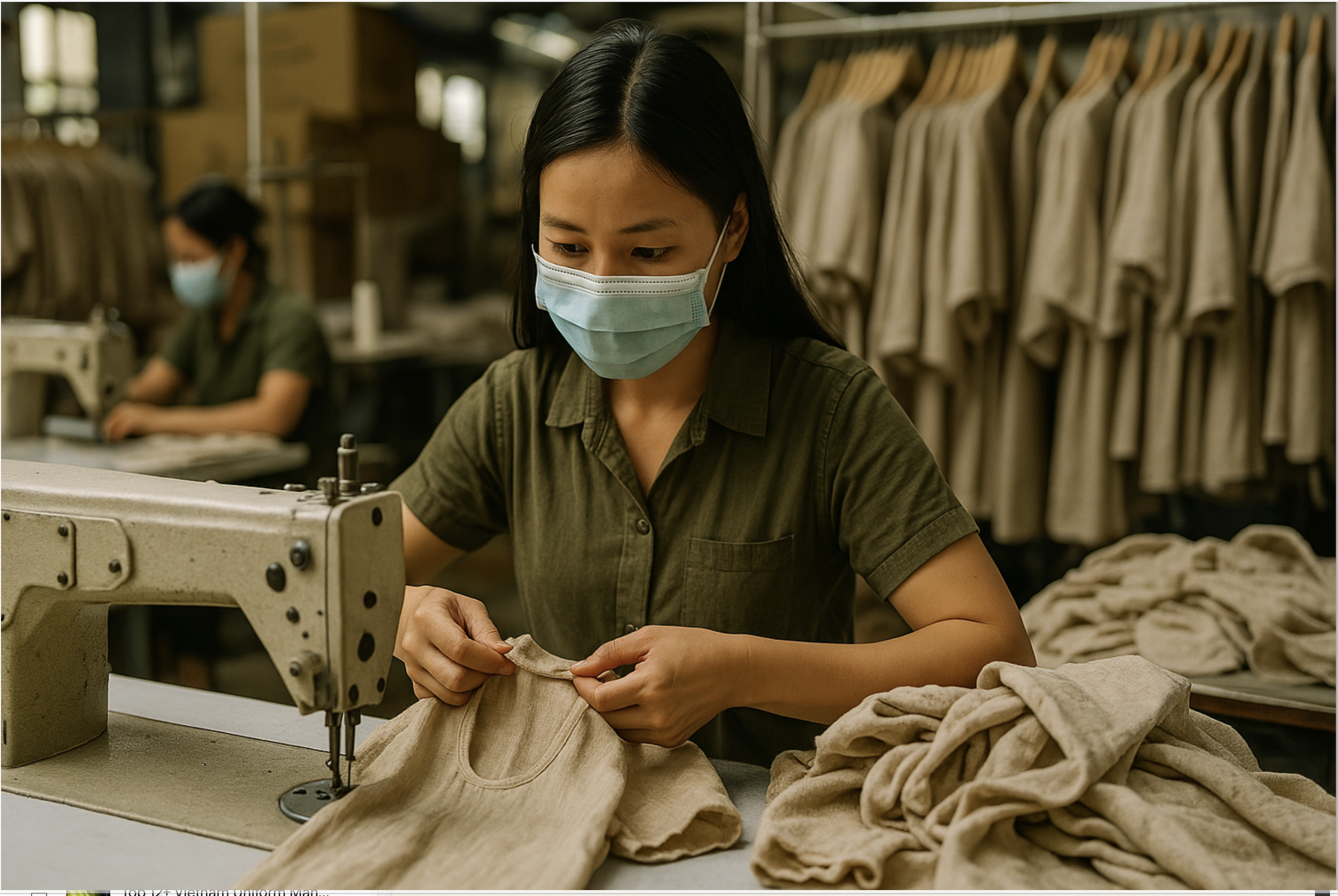
What Linen Products Can You Source from Vietnam?
According to U.S. Customs data, more than 100 Vietnamese manufacturers export linen products, with the heaviest concentration in apparel. The most commonly exported linen categories from Vietnam include shirts and blouses (the single largest category), women's dresses, shorts and casual pants, blazers and lightweight jackets, and knit polo shirts and pullovers in linen-cotton blends.
For a deeper look at Vietnam's broader clothing manufacturing capabilities, see our guide to finding clothing manufacturers in Vietnam and our list of top clothing manufacturers.
Linen Apparel
Vietnam's strongest linen manufacturing capability is in woven apparel: dresses, blouses, shirts, trousers, and shorts. Many of the factories we work with produce linen-rayon and linen-cotton blends alongside pure linen, which gives brands flexibility on price point and hand feel. Resort wear and casual collections are particularly well suited to Vietnamese production, as factories have deep experience with lightweight, breathable fabrics.
Common linen apparel products sourced from Vietnam include women's dresses and jumpsuits, men's dress shirts and casual button-downs, wide-leg pants and cropped trousers, drawstring shorts, linen-cotton blend polo shirts, and blazers and unstructured jackets.
Linen Home Textiles
Vietnam also produces linen home goods, though the volume is smaller than apparel. Factories in the northern provinces (particularly Nam Dinh) produce bed linen, table linens, napkins, and duvet covers. For a detailed breakdown of this category, see our guides to home textile manufacturers in Vietnam and to bedding manufacturers.
Small-Batch and Artisan Linen
Smaller workshops in Hoi An, Da Nang, and parts of Hanoi specialize in hand-dyed, stonewashed, and small-batch linen production. These workshops typically accept lower MOQs (sometimes as low as 50-100 pieces per style) and appeal to emerging designers and ethical fashion brands. The tradeoff is higher per-unit cost and longer lead times compared to larger factory production.
Why Vietnam Works for Linen Manufacturing
Vietnam's garment industry is the country's largest manufacturing sector, employing roughly 2.5 to 3 million workers. While linen is a niche within that broader industry, the factories that handle it benefit from the same infrastructure, workforce training, and export logistics that make Vietnam competitive across all apparel categories.
Several factors make Vietnam particularly attractive for linen sourcing. Trade agreements reduce costs for many buyers: the CPTPP provides preferential access to Canada, Japan, Australia, and other member countries, while the EU-Vietnam Free Trade Agreement (EVFTA) has progressively eliminated tariffs on Vietnamese textiles entering Europe. These agreements can translate into meaningful duty savings depending on your importing country. For U.S. importers, tariff rates on linen apparel vary and have recently changed, so check current rates with your customs broker before finalizing landed cost calculations.
MOQ flexibility is another advantage. Many mid-sized Vietnamese garment factories accept MOQs of 300 to 500 pieces per style for linen apparel, which is lower than what you would typically get from larger Chinese operations. For custom-dyed linen fabric, expect minimums of 1,000 to 3,000 meters per color from fabric mills.
For a broader overview of Vietnam as a manufacturing destination, see our Vietnam sourcing guide.
Where Linen Factories Are Located in Vietnam
Vietnamese linen production is split between two main regions, with a smaller cluster in the center.
Southern Vietnam (Ho Chi Minh City, Binh Duong, Dong Nai, Long An)
The south is Vietnam's most diverse manufacturing zone and accounts for the largest share of linen exports by the number of factories. Factories here tend to be more export-oriented, with established logistics connections to major shipping ports (primarily Vung Tau/Cat Lai). The HCMC area is where you will find the widest range of factory sizes and specializations, from large operations producing for global brands to smaller private-label factories that work with independent brands. If you are producing linen apparel for the U.S. or Australian markets, southern Vietnam is likely where your order will ship from.
Northern Vietnam (Hanoi, Hai Phong, Bac Giang, Hung Yen, Nam Dinh)
The north is Vietnam's traditional textile heartland and home to many of the country's largest garment producers. Several major linen exporters ship from Hai Phong, including Song Hong Garment, Viet Pan Pacific, and operations in the Bac Giang industrial zones. The northern provinces also have a stronger concentration of woven fabric mills, which matters if you need custom linen fabric produced domestically rather than imported. Nam Dinh is particularly strong for home textiles and bed linen.
Central Vietnam (Hue, Da Nang, Hoi An)
Central Vietnam's linen production is on a smaller scale but notable for artisan- and boutique-quality work. Hoi An, in particular, has a cluster of workshops producing small-batch linen clothing, often with hand-finishing details such as embroidery and natural dyeing. These workshops cater to designers and emerging brands that prioritize craftsmanship over volume.
How to Find the Right Linen Manufacturer
Work with a Sourcing Company
For most brands, especially those placing their first linen order in Vietnam, working with a sourcing company is the most efficient path to finding the right factory. A sourcing company with a team on the ground can match your product specifications (linen weight, blend, construction, finishes) to factories that actually specialize in what you need, rather than factories that technically can produce linen but do not regularly handle it.
One thing we have learned from running linen projects is that factory selection matters more with linen than with most other fabrics. Linen wrinkles easily, shrinks if it is not pre-washed properly, and the hand feel varies significantly depending on the weave and finishing. We have had clients come to us after failed attempts with factories that were great at cotton or polyester but lacked the pressing equipment or finishing experience to handle linen well. Getting the factory match right from the start saves months of back-and-forth on samples.
Attend Trade Shows
The Vietnam International Textile and Garment Industry Exhibition (VTG) in Ho Chi Minh City and HANOITEX in the north are the two most relevant annual textile sourcing events. Both bring together fabric suppliers and garment manufacturers in one venue. For international shows, look for Vietnamese pavilions at Texworld in Paris or Intertextile Shanghai. Trade shows are most useful for building a shortlist, but they require follow-up factory visits and sampling before you can evaluate production quality.
Use Online Directories and Trade Data
Platforms like ImportYeti, Panjiva, and the VITAS (Vietnam Textile and Apparel Association) member directory can help you identify active linen exporters. ImportYeti is particularly useful because it shows actual U.S. customs shipment records, so you can verify that a factory is actively exporting linen products (not just claiming to do so). However, treat these as lead generation tools, not as a final sourcing decision. A factory's customs record tells you what they ship, not how well they manage quality or communicate with overseas buyers.
How to Evaluate a Vietnamese Linen Manufacturer
Production Capabilities and Linen Specialization
Not every garment factory that can technically sew linen does it well. Linen fabric is stiffer and more prone to wrinkling than cotton or polyester, which means cutting, pressing, and finishing require different techniques. Ask specifically how many linen orders the factory has produced in the past 12 months, what linen weights and blends they work with regularly, whether they source linen fabric themselves or require you to supply it, and whether they handle pre-washing and shrinkage treatment in-house. Factories that regularly produce linen will have answers to these questions without hesitation. If a factory seems to be guessing, they are probably not a linen specialist.
Certifications and Quality Standards
For linen apparel, the most relevant certifications are OEKO-TEX (chemical safety, important for direct-to-skin garments), GOTS (if you are marketing organic linen), and BSCI or WRAP (social compliance, required by many retailers). Ask to see current certificates and check the scope: some factories hold certifications that apply only to specific product lines, not to their entire operation.
MOQs, Lead Times, and Payment Terms
Typical ranges for linen apparel production in Vietnam:
MOQs: 300 to 500 pieces per style per color for cut-and-sew garments. Some factories will go lower (100 to 200 pieces) at a higher per-unit cost. Custom linen fabric: 1,000 to 3,000 meters per color.
Lead times: 45 to 75 days from sample approval to shipment for a standard linen apparel order. Add 2 to 3 weeks if the factory is sourcing custom fabric.
Payment terms: 30% deposit upon order confirmation, 70% balance due before shipment (T/T) are standard. Some established factories offer 30/70 with a balance against a copy of the bill of lading.
Shipping: 14 to 18 days by sea from HCMC to the U.S. West Coast. 25 to 30 days to the U.S. East Coast. 18 to 25 days to most European ports.
Ready to Source Linen from Vietnam with Cosmo Souring?
If you are exploring linen manufacturing in Vietnam and want to skip the guesswork, we would be glad to help. At Cosmo Sourcing, we have been on the ground in Vietnam since 2014, and we have helped over 4,000 clients source more than 10,000 products. Our team can match you with vetted linen manufacturers based on your specific product, volume, and budget, then support you through sampling, production, and shipment.
Reach out to us at info@cosmosourcing.com or visit our contact page at https://www.cosmosourcing.com/contact-us to get started.