AQL (Acceptable Quality Level): Inspection Levels for Product Sourcing
AQL, or Acceptable Quality Level, is the statistical standard behind AQL sampling inspections: it determines how many units to inspect from a production batch and how many defects are allowed before the batch is rejected. Defined in ISO 2859-1, it is the universal language that buyers, factories, and inspection companies use to make objective pass/fail decisions before shipment.
At Cosmo Sourcing, we coordinate pre-shipment inspections on nearly every production run we manage. The single biggest mistake we see from first-time buyers is skipping AQL entirely or leaving it up to the factory to decide what "good enough" means. That is how you end up with 200 units of handbags with misaligned stitching sitting in your warehouse.
This guide explains AQL in practical terms: what the numbers mean, how to read AQL tables (sometimes called AQL charts), and what to write in your purchase order so your inspector knows what to check.
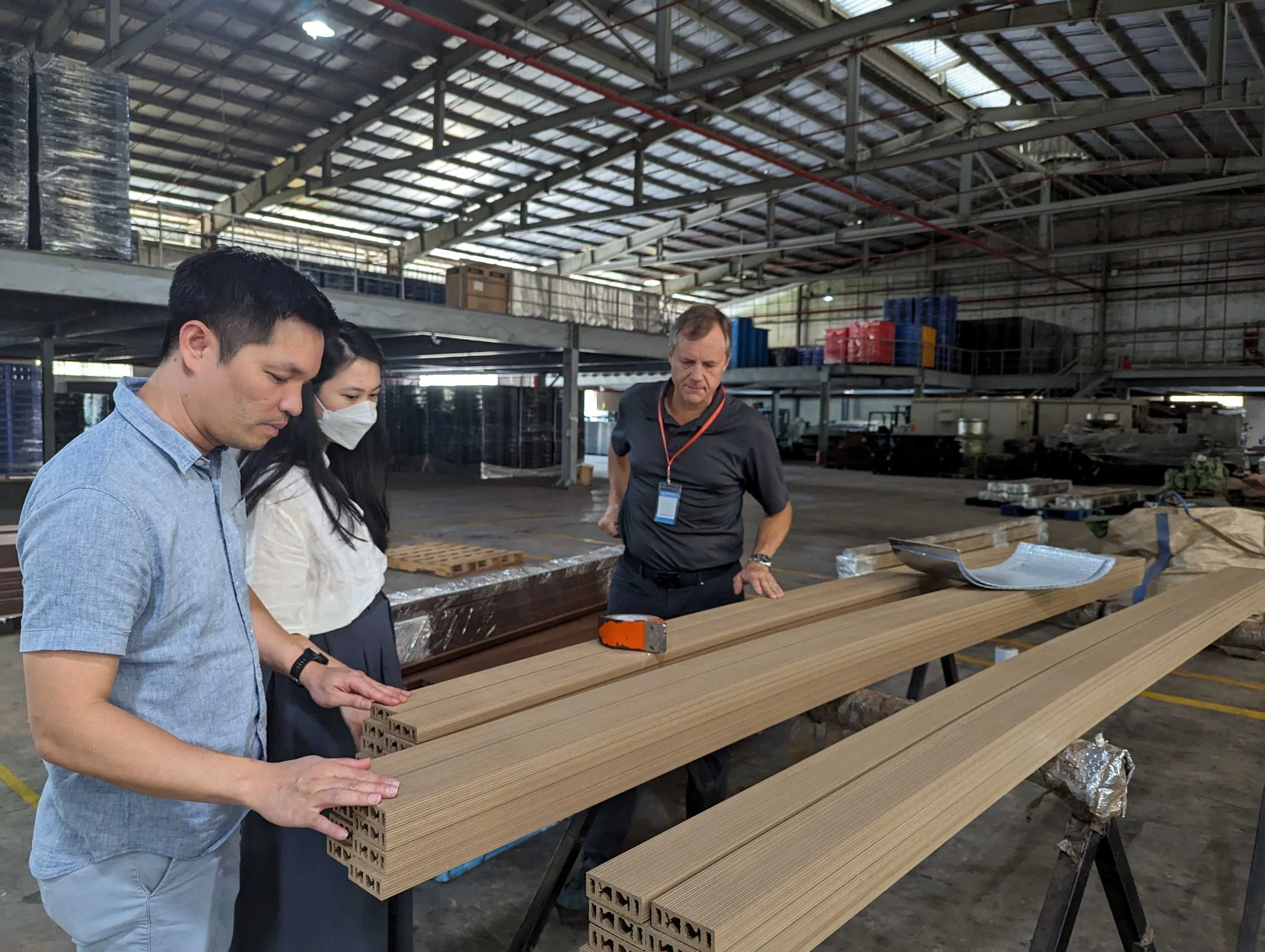
Why AQL Matters for Product Sourcing Buyers
Inspecting every unit in a production run of 5,000 or 10,000 pieces is not realistic. AQL sampling solves this by using statistical methods: you inspect a defined number of randomly selected units and use the results to make a decision about the entire batch.
Without an AQL specified in your purchase order, your factory runs its own internal QC with standards that may not match yours, your inspector has no clear pass/fail criteria, and when a dispute arises, you have no agreed standard to reference.
We have seen buyers lose weeks of time and thousands of dollars arguing with a factory over whether scratches on injection-molded parts are "acceptable." When AQL is specified in the PO upfront, that conversation takes five minutes instead of five emails.
How to Read the AQL Tables
The AQL system is built on two ISO 2859-1 lookup tables, often called the AQL sampling tables. When we onboard new clients, we walk them through these because they look intimidating at first, but the logic is straightforward.
Table 1 uses your lot size (total units produced) and your inspection level to assign a code letter (A through R).
Table 2 takes that code letter and your chosen AQL percentage, and gives you the sample size (how many units to inspect) and the accept/reject numbers (how many defects are allowed).
If the number of defects found is equal to or below the acceptance number, the lot passes. If it equals or exceeds the reject number, the lot fails.
Below are simplified versions of the standard AQL tables covering the most common lot sizes and AQL levels in product sourcing. These are based on ISO 2859-1 single sampling plans for normal inspection.
AQL Table 1: Lot Size to Sample Size Code Letter (General Inspection Levels)
| Lot Size | Level I | Level II | Level III |
|---|---|---|---|
| 2 – 8 | A | A | B |
| 9 – 15 | A | B | C |
| 16 – 25 | B | C | D |
| 26 – 50 | C | D | E |
| 51 – 90 | C | E | F |
| 91 – 150 | D | F | G |
| 151 – 280 | E | G | H |
| 281 – 500 | F | H | J |
| 501 – 1,200 | G | J | K |
| 1,201 – 3,200 | H | K | L |
| 3,201 – 10,000 | J | L | M |
| 10,001 – 35,000 | K | M | N |
| 35,001 – 150,000 | L | N | P |
| 150,001 – 500,000 | M | P | Q |
| Over 500,000 | N | Q | R |
For most AQL inspections of consumer products, you will use General Level II (the highlighted column). Find your lot size, read across to Level II, and note the code letter.
AQL Table 2: Sample Size and Accept/Reject Numbers (Normal Inspection)
| Code | Sample size | AQL 0.65 | AQL 1.0 | AQL 1.5 | AQL 2.5 | AQL 4.0 |
|---|---|---|---|---|---|---|
| A | 2 | 0 / 1 | 0 / 1 | 0 / 1 | 0 / 1 | 0 / 1 |
| B | 3 | 0 / 1 | 0 / 1 | 0 / 1 | 0 / 1 | 0 / 1 |
| C | 5 | 0 / 1 | 0 / 1 | 0 / 1 | 0 / 1 | 1 / 2 |
| D | 8 | 0 / 1 | 0 / 1 | 0 / 1 | 0 / 1 | 1 / 2 |
| E | 13 | 0 / 1 | 0 / 1 | 0 / 1 | 1 / 2 | 1 / 2 |
| F | 20 | 0 / 1 | 0 / 1 | 1 / 2 | 1 / 2 | 2 / 3 |
| G | 32 | 0 / 1 | 1 / 2 | 1 / 2 | 2 / 3 | 3 / 4 |
| H | 50 | 0 / 1 | 1 / 2 | 2 / 3 | 3 / 4 | 5 / 6 |
| J | 80 | 1 / 2 | 2 / 3 | 3 / 4 | 5 / 6 | 7 / 8 |
| K | 125 | 1 / 2 | 3 / 4 | 5 / 6 | 7 / 8 | 10 / 11 |
| L | 200 | 2 / 3 | 5 / 6 | 7 / 8 | 10 / 11 | 14 / 15 |
| M | 315 | 3 / 4 | 7 / 8 | 10 / 11 | 14 / 15 | 21 / 22 |
| N | 500 | 5 / 6 | 10 / 11 | 14 / 15 | 21 / 22 | 21 / 22 |
Standard AQL Levels and When to Use Each
AQL is expressed as a percentage, and different levels are used for different defect severities. For most consumer products, the industry standard we use on Cosmo projects is:
0% for critical defects. These are defects that make the product unsafe or violate regulations. A children's toy with a detachable small part that poses a choking hazard, or an electrical product with exposed wiring. Zero tolerance. Even a single critical defect in the sample renders the entire lot defective.
2.5% for major defects. These are defects that make the product unsellable or unusable to the end customer. A backpack with a broken zipper, a ceramic mug with a visible crack, and electronics that do not power on. AQL 2.5 is the standard for major defects across most consumer goods categories.
4.0% for minor defects. These are cosmetic issues that most customers would not notice or would consider trivial. A slight color variation between units, a small scratch on an interior surface, and minor thread trimming on a garment. AQL 4.0 gives reasonable tolerance for these.
These are starting points. In our experience, the right AQL levels vary by product category:
For apparel and soft goods, AQL 2.5 / 4.0 (major/minor) is standard. Minor cosmetic issues, such as slight thread differences, are expected at scale.
For electronics and electrical products, tighten major defects to AQL 1.0 or 1.5. A non-functioning unit is a safety issue and a brand credibility problem.
For children's products and safety-critical items, use AQL 0.65 for major defects. Regulatory exposure (CPSIA, EN 71) makes tighter thresholds worth the extra cost.
For promotional goods or low-cost items, AQL 4.0 for major defects is sometimes acceptable when re-inspection costs outweigh the cost of a few defective units.
The key is to decide before production starts, not after the inspector arrives at the factory.
Inspection Levels: General I, II, and III
The inspection level determines the size of your sample relative to the lot.
General Level II is the default for virtually all routine consumer product inspections. Unless you have a specific reason to change it, use Level II.
General Level I uses a smaller sample size. We use this when inspection is expensive or destructive (for example, testing waterproofing on bags). Reduces cost but increases the risk of missing defects.
General Level III uses a larger sample size. Use it when the quality history with a factory is poor, when the product has safety implications, or on a first production run with a new supplier.
How Sample Size Works in Practice
Here is a practical example of AQL sampling based on a scenario we deal with regularly. You have a lot of 5,000 backpacks and are using General Inspection Level II.
From Table 1 above, a lot size of 3,201 to 10,000 at Level II gives you code letter L.
According to Table 2 above, code letter L indicates a sample size of 200 units. For AQL 2.5 (major defects), the accept number is 10, and the reject number is 11.
Your inspector randomly selects 200 backpacks from the production floor, inspects each one, and counts major defects. If they find 10 or fewer major defects, the lot passes. If they find 11 or more, it fails. That same inspector is also checking for critical defects (AQL 0, so even one fails the lot) and minor defects (AQL 4.0, with its own accept/reject threshold from the same table).
One thing that trips up first-time buyers: AQL 2.5 does not mean 2.5% of your sample size. If it did, 2.5% of 200 would be 5 defects allowed. But the actual accepted number from the table is 10. The numbers come from statistical probability calculations in ISO 2859-1, not simple multiplication. Always use the tables rather than trying to calculate accept/reject numbers yourself.
Here is a second example with a smaller order. You have 800 ceramic mugs at General Level II. From Table 1, a lot size of 501 to 1,200 corresponds to code letter J. From Table 2, code letter J at AQL 2.5 corresponds to a sample size of 80 units, with an accept number of 5 and a reject number of 6. We regularly source ceramics from Vietnam, and on a typical mug order of this size, the most common major defects are hairline cracks and uneven glaze. Five or fewer in the 80-unit sample and the lot ships. Six or more, and the factory reworks.
How to Specify AQL in Your Purchase Order
This is where most sourcing guides stop, and it is exactly where buyers need the most help. From our experience managing thousands of purchase orders, knowing what AQL means is only useful if you communicate it clearly to your factory and your inspection company.
Defining Critical, Major, and Minor Defects
Do not rely on generic definitions. Before production starts, create a defect classification list specific to your product. We build these for every product category we source. Your product samples are the reference point for what "acceptable" looks like.
For a garment order, your list might include:
Critical: Needle left in garment, broken snap that creates a sharp edge, fabric fails flammability testing.
Major: Wrong color (outside approved tolerance), seams unraveling, incorrect label placement, zipper does not function, sizing more than 1cm off spec.
Minor: Loose thread (under 3cm), minor color shading variation between units, slight puckering at non-visible seam.
This list goes into your purchase order and your inspection checklist. The factory signs off on it. Everyone works from the same document.
What to Tell Your QC Inspector
When you book an AQL inspection (typically a pre-shipment inspection), provide your inspector with four things:
The AQL levels for each defect category (for example: critical 0, major 2.5, minor 4.0).
The inspection level (General Level II unless otherwise specified).
Your defect classification list with specific examples for your product.
Your approved sample or product specification sheet is the golden reference.
If you are working with a sourcing company that manages QC, they will handle this communication. But if you are managing inspections yourself, do not assume the inspector knows your standards. They inspect dozens of different products every week.
At Cosmo Sourcing, we build defect classification lists during the sampling phase for every product we manage. By the time production starts, the factory, the inspector, and the client are all aligned on what passes and what does not.
What Happens When a Shipment Fails AQL?
A failed inspection does not mean you throw away the entire production run. We handle failed inspections regularly, and the outcome is rarely as dramatic as buyers fear. What happens next depends on the severity of the failures and your relationship with the factory.
Re-Inspection, Rework, and Rejection
The most common outcome is 100% rework and re-inspection. The factory sorts through the entire lot, identifies and fixes defective units, and you (or your inspector) return for a second inspection. We see this most often with garment orders where defects like loose threads or missing buttons are straightforward to fix. For structural issues like cracked plastic housings or warped metal, rework may not be possible.
If rework is not feasible or the defect rate was extremely high, you may reject the lot and negotiate a replacement production run or a price reduction. This is where having AQL in your purchase order protects you legally. In rare cases of minor failures, some buyers choose to accept with a price concession, depending on whether the specific defects will actually affect end customers.
Negotiating with the Factory After a Failed Inspection
A failed AQL inspection should be a data-driven conversation. Share the inspection report with the factory showing exactly how many defects were found, in which categories, and against what standard.
In our experience, factories accustomed to working with international buyers expect AQL-based inspections and take failed results seriously. A factory that pushes back hard against a fair AQL standard is telling you something about how they will handle quality control in the future.
One negotiation point worth knowing: discuss in advance who will pay for a reinspection if the failure was clearly due to the factory's negligence. This should be part of your manufacturing agreement, not something you negotiate for the first time when a shipment fails.
On the documentation side, a certificate of conformance confirms that finished goods meet your agreed specifications, and a thorough factory audit before production starts can help you assess whether a supplier has the quality systems in place to meet your AQL standards consistently.
Get AQL Right from the Start with Cosmo Sourcing
AQL is not complicated once you understand the basics, but getting it right requires clear defect definitions, proper communication with your factory, and an inspector who knows what to look for.
Cosmo Sourcing manages quality control throughout every sourcing project. We build defect classification lists during sampling, specify AQL in every purchase order, and coordinate pre-shipment inspections with trusted third-party inspectors across Vietnam, China, and Mexico. Our flat-fee model means you get transparent pricing with no commissions or markups. On a typical project, we provide original quotes from 2 to 6 vetted factories and introduce you directly to the manufacturers.
If you want to ensure your next production run ships on spec, reach out to info@cosmosourcing.com or visit cosmosourcing.com/contact-us.