
Simple Sourcing: fixed-fee product sourcing services.
Cosmo Sourcing is a product sourcing company with our own teams in Vietnam and Mexico, and sourcing reach across China and Southeast Asia. Tell us what you need made, and we find, vet, and introduce you to the right factory.
What it is
Simple Sourcing, explained.
With Simple Sourcing, you own your factory relationships instead of renting them through an agent. Every quote comes straight from the factory with nothing added on top, every contact is yours to keep, and our fee stays fixed no matter how large your order. Whether you are sourcing from Vietnam, Mexico, China, or elsewhere in Southeast Asia, you choose the package that matches your goal. Weighing it against our other services? The services overview lays them all out.
The entire experience has been life-changing for me. I know I couldn't have tackled it without your help.
The Four Packages
Simple Sourcing packages.
Each package covers one product category, meaning a group of related items the same type of factory can produce. Products that need a different kind of manufacturer are handled as separate projects.
Single Country Sourcing
One country, one product category. Any country of your choice.
For example: a brand launching a kitchenware line in a country it has already chosen.
Best for a focused launch in a market you are confident about.
Get started →Dual Country Sourcing
Two countries, one product category. Compare pricing and capability across markets.
For example: comparing denim factories in Vietnam and Mexico before committing.
Best for comparing two manufacturing hubs before you commit.
Get started →Anywhere But China Sourcing
Multiple countries, excluding China, one product category. A supply chain that does not touch China at all.
For example: moving a product line out of China across two or three alternative countries.
Best for diversifying your supply chain or exiting China.
Get started →Global Sourcing
Any country in the world, including China, one product category.
For example: finding the strongest factory for a technical product, wherever it is.
Best for finding the best manufacturing partner anywhere.
Get started →How It Works
From kickoff to direct introductions.
One clear process, the same for every package. At the end, the factory relationship is yours, not ours.
Kickoff and brief
We map your product, target markets, and volumes, then turn your requirements into a clear request for quote so factories can price accurately.
Source and shortlist
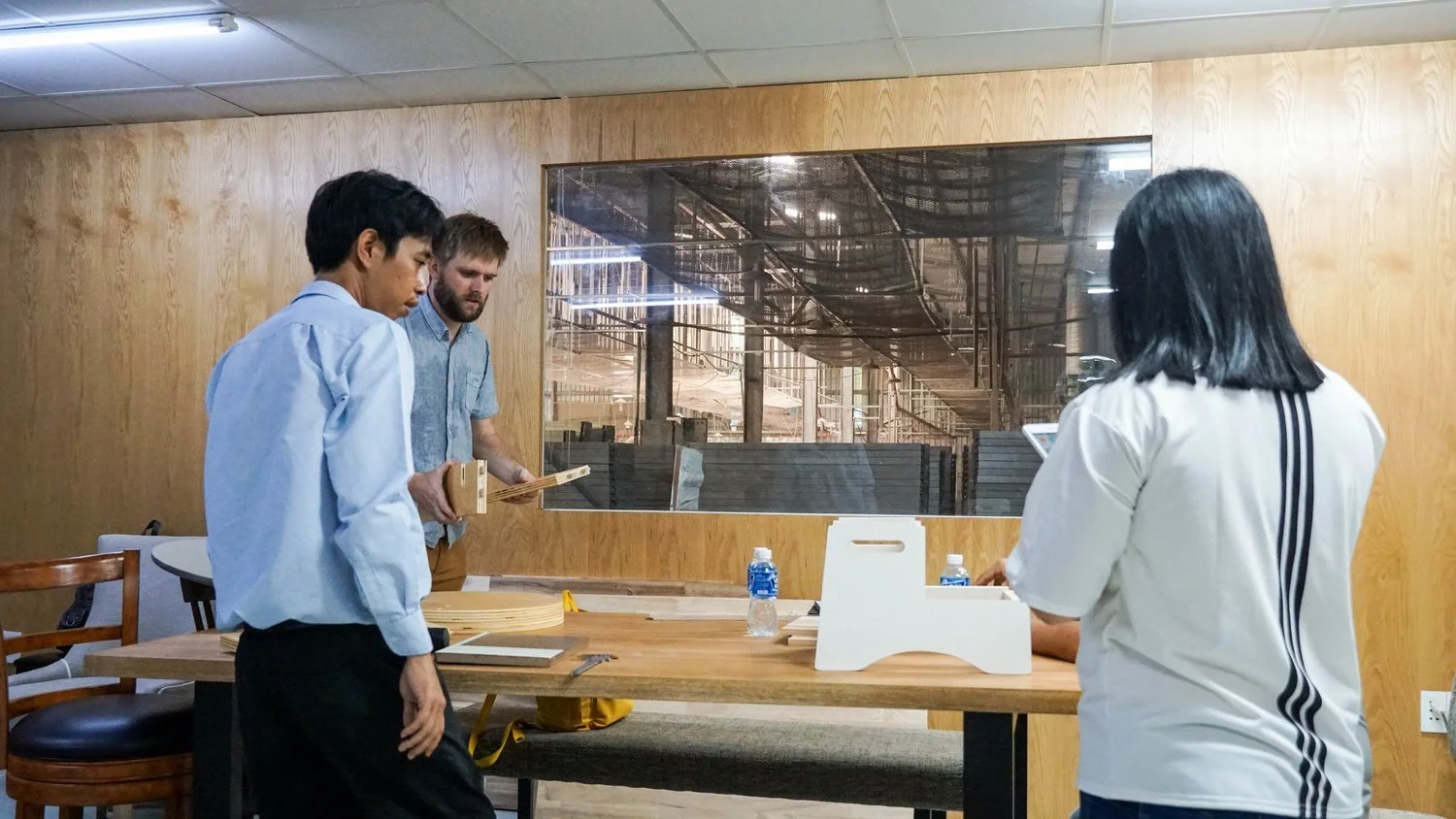
Our team on the ground researches and pre-qualifies factories against your requirements across the countries in your package.
Quote and vet
We collect multiple original quotes, vet each factory, and assess capabilities, certifications, and fit. Formal inspections and audits are available as an add-on.
Report and recommend
You receive a full sourcing report: supplier profiles, original pricing, and our honest read on each option.
Introduce and hand off
We introduce you directly to the factories you choose. You work with them directly, and we never take a commission or mark up a quote.
Most projects target 4 to 6 weeks from kickoff to introductions, though the exact timeline depends on your product. On a deadline? The Rush add-on targets completion in under four weeks.
What You Receive
Everything you need to go direct.
Every package ends the same way: with real factory options in your hands and the relationship in your name.
Original Quotes
Straight from the factory, no markup, no commission. You see exactly what the manufacturer charges.
Sourcing Report
Supplier profiles, quotes, capabilities, certifications, and our honest assessment of each factory.
Full Contact Details
Names, emails, phone numbers, and addresses for every vetted manufacturer.
Direct Introductions
We connect you directly with your chosen factories, so communication is yours from day one.
Want to see what the sourcing report looks like before you commit? Ask for a sample on your call.
Jim's team helped us find our fabulous manufacturer in HCMC.
Why Cosmo
Why work with a fixed-fee product sourcing company.
A product sourcing company should put your product and your margins first. Here is what that looks like.
On the Ground in Vietnam Since 2014
We put our own team on the ground in Vietnam in 2014, early among sourcing companies. That head start means deeper factory networks and faster, more confident vetting.
You Own the Relationship
We introduce you directly to the factory. You see every quote unaltered, get full contact details, and decide whether to keep us involved.
American Company, Global Teams
A US-incorporated company with American management and enforceable contracts, backed by sourcing teams on the ground in Vietnam and Mexico.
Fixed Fee, Full Transparency
No commissions, no markups on factory quotes, no hidden costs. Clear, upfront pricing so you can budget with confidence.
Optional Add-Ons
Bolt on what your product needs.
Available with any Simple Sourcing package.
Rush Projects
Expedited sourcing, typically in under four weeks, with priority scheduling.
Complex Products
Footwear, precision items, children's products, medical-grade goods, and other advanced builds.
Landed Cost Analysis
Full cost breakdown including manufacturing, shipping, customs, taxes, and tariffs.
Confidentiality Agreements
Signed NNN and NDA agreements with each supplier to protect your designs and IP.
Certification Verification
Compliance verification such as BSCI, FSC, and Sedex for ethical and regulatory standards.
Beyond the package
Support that goes as far as you need.
When sourcing is done, you choose how to move forward. Take the project in house with everything we have gathered at no extra cost, or keep our team on board.
Beyond Sourcing
Our team stays with you through development and production, tracked transparently and invoiced monthly.
- ✓Sample and prototype management
- ✓Contract negotiation and agreements
- ✓Production oversight and QC
- ✓Shipping and logistics coordination
Available to clients who have completed a Simple Sourcing package.
Vietnam Factory Visits
See production with your own eyes. We line up a vetted, pre-qualified itinerary and guide you through it in person.
- ✓Pre-qualified, verified factories
- ✓Bilingual associate as your guide
- ✓Car and driver arranged
- ✓Quotes collected before you arrive
Third-Party Services
Specialist partners we plug into your project when you need deeper scrutiny or documentation.
- ✓Product spec sheets and tech packs
- ✓Factory inspections and audits
- ✓Lab testing: REACH, CPSC, UL, BSCI, FSC
Coordinated through our trusted partner network.
Ongoing service, monthly retainer
Need more than a single project?
Sourcing many product categories, a product with many components, or managing ongoing production across multiple factories? Running separate projects gets expensive. The Dedicated Sourcing Office puts your entire overseas supply chain under one team and one retainer.

One team on the ground covers the entire manufacturing side:
As featured in





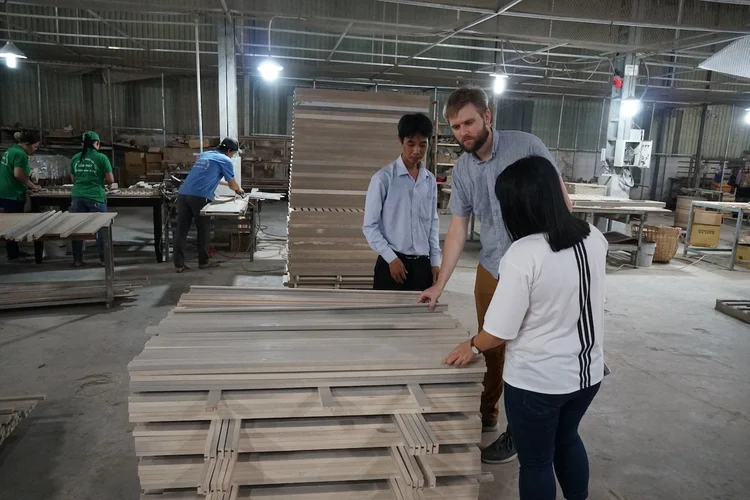
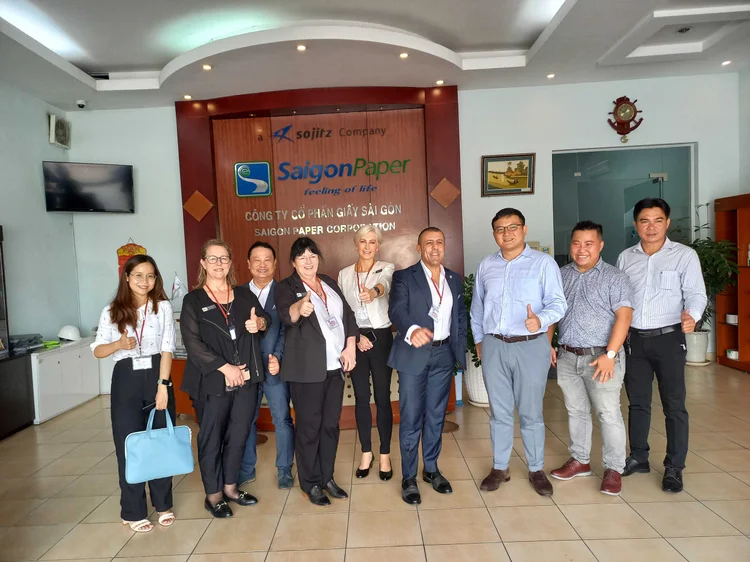
On the ground
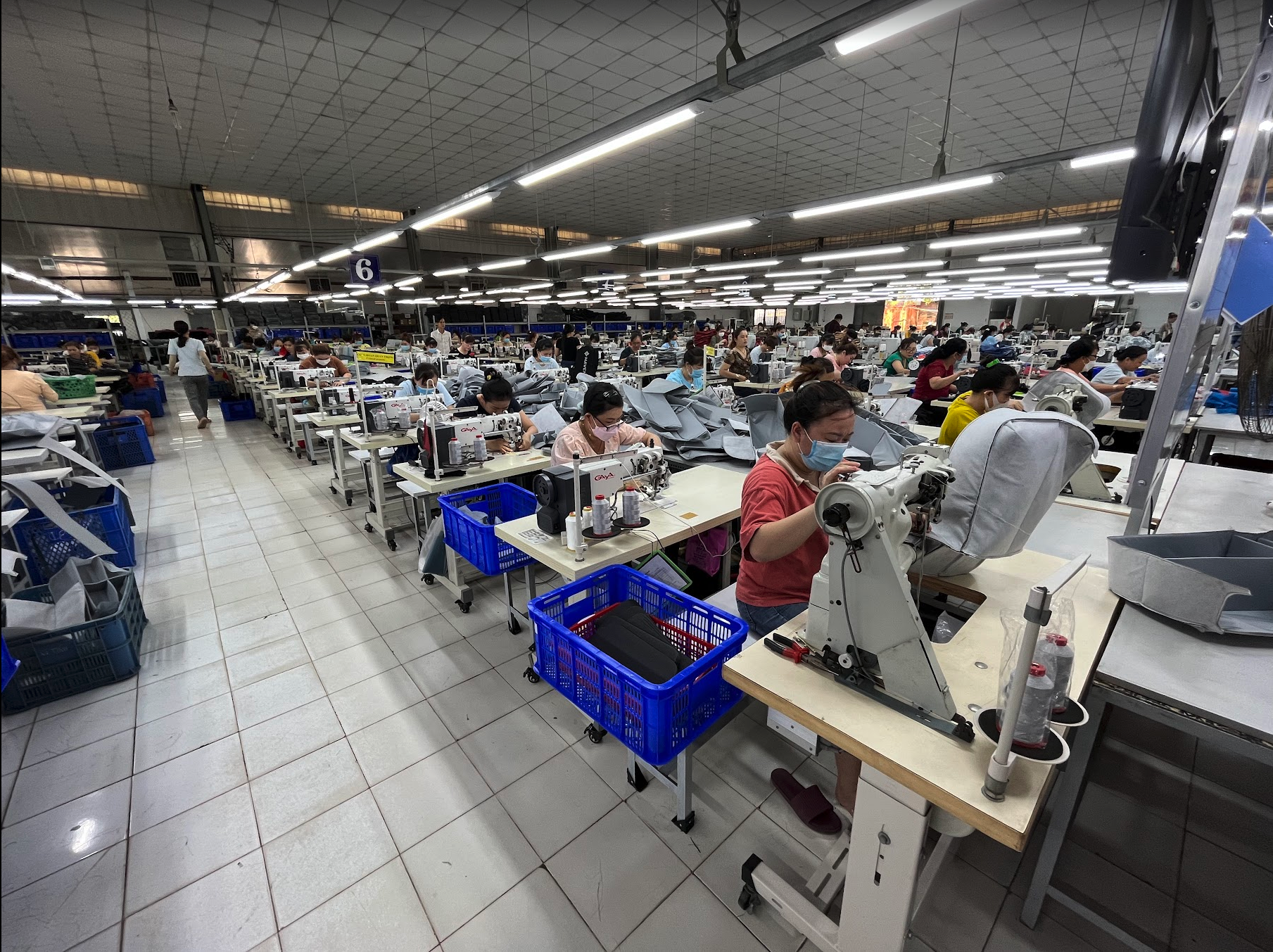
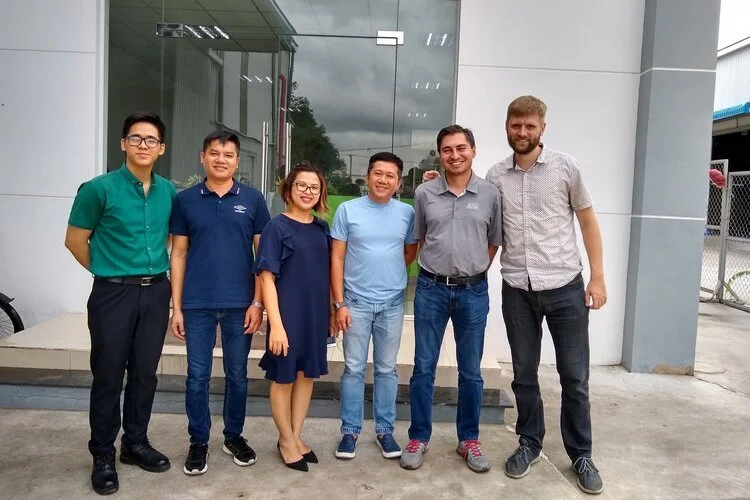
More than a decade on the factory floor.




Product Sourcing FAQ
Questions about working with us.
A product sourcing company finds, vets, and qualifies factories for you, collects competitive quotes, and connects you directly with the manufacturers. Cosmo Sourcing does all of this for a fixed fee, with no commissions and no markups on factory pricing.
A product category is a group of related items the same type of factory can make, for example a line of ceramic mugs or a set of cotton t-shirts. Products that need a different kind of manufacturer, such as adding a metal water bottle to that mug project, are handled as a separate project so each gets the right factories.
A traditional sourcing agent often earns a commission or marks up factory prices, which can hide the real cost and tie you to their suppliers. Cosmo Sourcing charges a fixed fee, shows you every quote unaltered, and hands you the factory contacts so you own the relationship directly.
Yes. If you start with a single country and decide you want to compare another, we can expand the scope. The fee adjusts to match the new scope, and we talk it through with you before anything changes.
It rarely comes to that, because we pre-qualify factories against your requirements before quoting. If the first round does not surface a strong fit, we go back and source additional options within the scope of your package. We would rather take a little longer than push you toward a supplier that is not right.
Most add-ons run alongside sourcing and do not slow it down. The Rush add-on speeds it up, targeting under four weeks. Add-ons like lab testing or certification verification depend on lab turnaround, so we flag any timing impact upfront.
Simple Sourcing is one fixed project fee based on scope, such as how many countries you want quoted, rather than a commission or a percentage of your order. There are no markups on factory quotes and no hidden costs. Contact us for a quote on your specific project.
You choose. Take the project in house with everything we have gathered at no extra cost, or keep our team on board through sampling, contract negotiation, production oversight, and shipping coordination. If you are scaling into ongoing production, a Dedicated Sourcing Office may be the better long-term fit.
Source your next product with us.
Send us what you need made. We will map out the countries, the factories, and the timeline, and send you a fixed-fee quote for the project, with no obligation to move forward.
The call is free, with no obligation, and everything we find is yours to keep.