How to Find Rattan and Wicker Suppliers in Vietnam: Top Suppliers Guide
Vietnam is one of the top four global exporters of rattan and bamboo products, with exports reaching roughly $600 million in the first nine months of 2024 alone. The country has over 1,000 rattan and bamboo craft villages, around 342,000 workers in the sector, and ships natural fiber goods to more than 130 countries. If you are looking to source rattan furniture, wicker baskets, or any natural fiber product, Vietnam should be near the top of your list.
At Cosmo Sourcing, we have visited dozens of rattan and natural fiber workshops across Vietnam, from large-scale factory operations near Ho Chi Minh City to artisan villages in the Red River Delta. This guide covers what you need to know to find the right supplier: what Vietnam actually produces, where production is concentrated, how to distinguish quality, and common mistakes to avoid.
Updated Feb 21, 2026

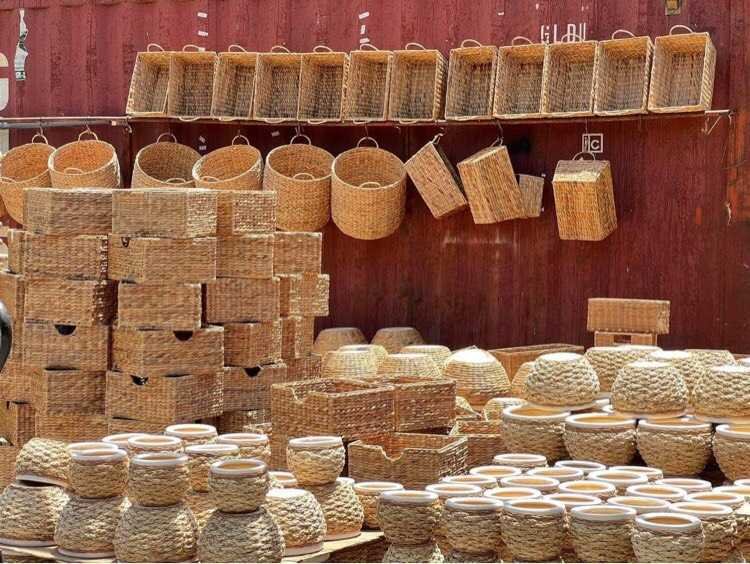
Rattan baskets being prepared for deliver to a client.
Rattan vs. Wicker: Know What You Are Asking For
This is the first thing to sort out before contacting any supplier, because getting it wrong leads to wasted quotes and sample rounds.
Rattan is a material: the solid, flexible stems of a climbing palm native to Southeast Asia. Wicker is a weaving technique, not a material. Wicker products can be woven from rattan, bamboo, seagrass, water hyacinth, or synthetic fibers like PE (polyethylene) resin.
The distinction affects everything. Natural rattan is beautiful and durable indoors, but it is not water-resistant, so it is a poor choice for outdoor furniture. Synthetic wicker (also called poly rattan) on aluminum frames is designed for outdoor use: UV-resistant, weatherproof, and low-maintenance. Most Vietnamese factories I have worked with produce both types, but some specialize in one or the other. Knowing which you need before you start reaching out will immediately narrow your search and get you better quotes.
What Vietnam Produces
Vietnamese rattan and wicker production covers most product categories you would expect, plus a few you might not.
The highest-volume export categories are poly rattan outdoor furniture (dining sets, sofas, loungers on aluminum frames) and handwoven hohandwoven(baskets, trays, lampshades, pendant lights, storage bins). These two categories account for the bulk of what I see moving through factories during visits. Beyond those, Vietnam produces rattan fashion accessories (handbags and totes have been strong sellers for boutique and e-commerce brands), hospitality furniture for resorts and hotels, and a wide range of kitchen items like serving trays, placemats, and bread baskets.
Most factories also work with complementary natural materials: bamboo, seagrass, water hyacinth, jute, and palm leaf. If you are exploring a broader range of sustainable products, we have a separate guide to eco-friendly categories sourced from Vietnam.
Where Production Is Concentrated
Vietnam's rattan production is regional, and each area has its own strengths. Knowing this saves you from visiting the wrong type of factory.
Red River Delta (Northern Vietnam, near Hanoi): This is where traditional craft villages are located. About 40% of Vietnam's rattan enterprises are here. Villages like Phu Vinh in Chuong My district have been making rattan products for generations. When I visit these villages, I am always struck by the skill level, as some of these weavers have been doing this work for 30 or 40 years. The trade-off is that production is distributed across many household workshops rather than centralized in a single factory. That means beautiful artisan-quality work, but it can make consistency and volume harder to manage.
Southeast region (near Ho Chi Minh City): This is where the larger, export-oriented factories are concentrated, particularly for synthetic wicker furniture. Operations here tend to have more standardized quality control, higher production capacity, and staff experienced with international buyers. If you need volume and consistency for poly rattan outdoor furniture, I usually start sourcing in this region.
North Central (Nghe An, Thanh Hoa provinces): Significant rattan processing here, often supplying semi-finished goods to larger exporters. Some factories in this region have relationships with major international brands.
Mekong Delta: More focused on water hyacinth and palm leaf than rattan, but worth knowing about if you are sourcing across multiple natural fiber types.
How to Find and Evaluate Suppliers
Here is the process I follow, and the mistakes I see buyers make most often.
Get specific before you reach out. The single biggest time-waster I see is buyers sending vague inquiries to a dozen factories. Vietnamese rattan producers respond much better to detailed requests: material type (natural rattan or PE wicker), dimensions, finish, target volume, and whether you need custom designs or catalog items. A vague "what rattan products do you make?" email will either get ignored or produce useless responses.
Do not rely on one sourcing channel. Trade platforms like Global Sources and TradeKey list Vietnamese rattan manufacturers, but many of the best workshops, particularly in the northern craft villages, have no online presence. VIETCRAFT (Vietnam Handicraft Exporters Association) is a useful resource for connecting with vetted producers. Trade shows like Lifestyle Vietnam and VietHome Expo let you see products in person and compare multiple suppliers in a day. For general guidance on where to look, our guide on finding manufacturers in Vietnam covers the main channels.
Always order samples and compare. Rattan quality varies more than most buyers expect. I have seen two factories quote the same product at similar prices, only for the samples to be completely different in weave tightness, finish smoothness, and rattan treatment quality. When evaluating samples, check for consistent weave tension, smooth and even finishes, properly treated rattan (untreated rattan will crack and develop mold), and sturdy frame joints.
Check export readiness. Not every rattan producer in Vietnam is set up for international shipping. Ask about previous export markets, container loading experience, and whether they handle fumigation and phytosanitary certificates, which are required for natural fiber exports to most Western countries. A factory that has shipped to the EU or the US before will understand compliance expectations. One that has only sold domestically will need significant hand-holding on documentation and packaging.
Visit the factory. I say this in every sourcing guide because it is always true: you cannot fully evaluate a supplier from samples and emails alone. A factory visit reveals production capacity, working conditions, raw material storage, and whether the quality you saw in the sample is representative of what comes off the line. If you cannot travel, a sourcing partner on the ground can visit on your behalf. We have a detailed guide to planning factory visits in Vietnam.
Challenges Worth Knowing About
Raw material supply is not guaranteed. Vietnam has around 30,000 hectares of rattan across 28 provinces, but domestic supply often fails to keep up with demand. Some factories supplement with rattan from Laos or Cambodia. I have seen this cause lead-time delays when cross-border shipments are held up. Always ask where a factory sources its raw rattan.
Artisan production does not scale the same way. If you are buying handwoven craft from a village, production is spread across dozens of household workshops. The quality of individual weavers varies. Experienced exporters manage this by setting clear standards and running in-process checks, but it takes effort. First-time buyers sometimes underestimate this.
Communication requires patience. Many rattan producers, particularly in rural areas, have limited English-speaking staff. Detailed specs, reference photos, and ideally a Vietnamese-speaking intermediary make a real difference. We cover this and other practical realities in our guide on sourcing challenges in Vietnam.
Shipping is bulky. Rattan and wicker items take up a lot of container space relative to their weight. Experienced exporters know how to nest and stack products to maximize container utilization. Inexperienced ones will ship you a container that is half air. Ask how they pack containers and what their typical loading ratio is.
Rattan and Wicker Suppliers in Vietnam
The list below includes Vietnamese rattan and wicker producers that I have either visited, seen at trade shows, or encountered through sourcing work over the years. This is not an endorsement or a ranked recommendation. Supplier capabilities change, staff turnover, and a factory that was great two years ago may not be the right fit for your project today. Treat this as a starting point for your own research, not a shortlist. Always request samples, verify export experience, and visit (or have someone visit) before placing a production order.
ATC Furniture Corp operates a 30,000-square-meter facility and is one of Vietnam's larger manufacturers of rattan and wicker furniture. They focus on outdoor patio and hospitality furniture and export to over 45 countries. Based in the Ho Chi Minh City area.
AD Furniture Corp (Artistic Decor Furniture Corp) specializes in handcrafted furniture using poly rattan, natural rattan, water hyacinth, seagrass, and other natural materials. They produce a wide range of wicker furniture (sofas, dining sets, loungers, swing chairs) and accessories. Located in Ho Chi Minh City.
Viet Products Corporation is a long-standing manufacturer and exporter of rattan, bamboo, resin wicker, water hyacinth, and seagrass products. They work with both custom designs and their own catalog and have an established export operation.
Keico is a rattan and bamboo factory producing pendant lights, furniture, bread baskets, display racks, and home decor items. They also work with coconut fiber and seagrass. They appear to have a newer product development focus and export to European markets.
Viettimecraft is a handicraft wholesaler offering rattan baskets, trays, storage items, and home decor products. They focus on wholesale volume with MOQs typically starting around 100 pieces. Based in Vietnam with an online catalog.
Song Phuong Trading Company has been operating since 1984 and produces handicrafts from rattan, bamboo, seagrass, fern, and jute. Their facilities are near Hanoi, roughly 40 minutes from Noi Bai International Airport. They work with multiple natural material combinations (wood and rattan, ceramic and rattan).
Viet Source Handicraft (VietS Handicraft) produces rattan, wicker-rattan, water hyacinth, bamboo, seagrass, and jute products. They transitioned from working through third-party exporters to direct exporting, a move that typically signals a more mature operation.
Elegant Trading Co., Ltd is based in Ho Chi Minh City and works with bamboo, rattan, palm leaf, seagrass, and water hyacinth. They also handle agricultural products. They export to Europe, the US, and Asian markets.
Oceans Republic positions itself as a large-scale exporter of eco-friendly rattan products, including coasters, trays, bags, storage boxes, and furniture. They emphasize fair trade practices and work with artisan networks.
For buyers who want to cast a wider net, VIETCRAFT (Vietnam Handicraft Exporters Association) maintains a directory of vetted producers, and B2B platforms like Global Sources and TradeKey list additional Vietnamese rattan manufacturers. Trade shows like Lifestyle Vietnam and VietHome Expo are also worth attending if your timeline allows.
Source Rattan and Wicker Products with Cosmo Sourcing
Cosmo Sourcing has been helping businesses source products from Vietnam since 2012, and rattan and natural fiber goods are one of the product categories where our on-the-ground experience matters most. These are not commodities you can evaluate from a spec sheet alone.
We work on a flat-fee model with transparent pricing, not commission on your order value. For a typical rattan project, we source quotes from two to six factories, coordinate samples, conduct factory visits and inspections, and manage the process through to shipment.
Email: info@cosmosourcing.com Get started: cosmosourcing.com/contact-us