Top Clothing, Garment, and Apparel Manufacturing Countries Guide
China dominates global garment exports at $165 billion annually, but the best manufacturing country for your brand depends on what you're making, how many units you need, and where you're selling. After helping over 4,000 clients source more than 10,000 products across Asia, we've learned that choosing the wrong country costs more than choosing a slightly more expensive one.
This guide compares 12 major clothing manufacturing countries, including China, Bangladesh, Vietnam, Turkey, India, Cambodia, Pakistan, Indonesia, Italy, Mexico, Portugal, and Sri Lanka, using verified 2024 export data, real-world sourcing considerations, and what we've seen firsthand at Cosmo Sourcing.
This guide compares 12 major clothing manufacturing countries using verified export data, real-world sourcing considerations, and firsthand experience at Cosmo Sourcing.
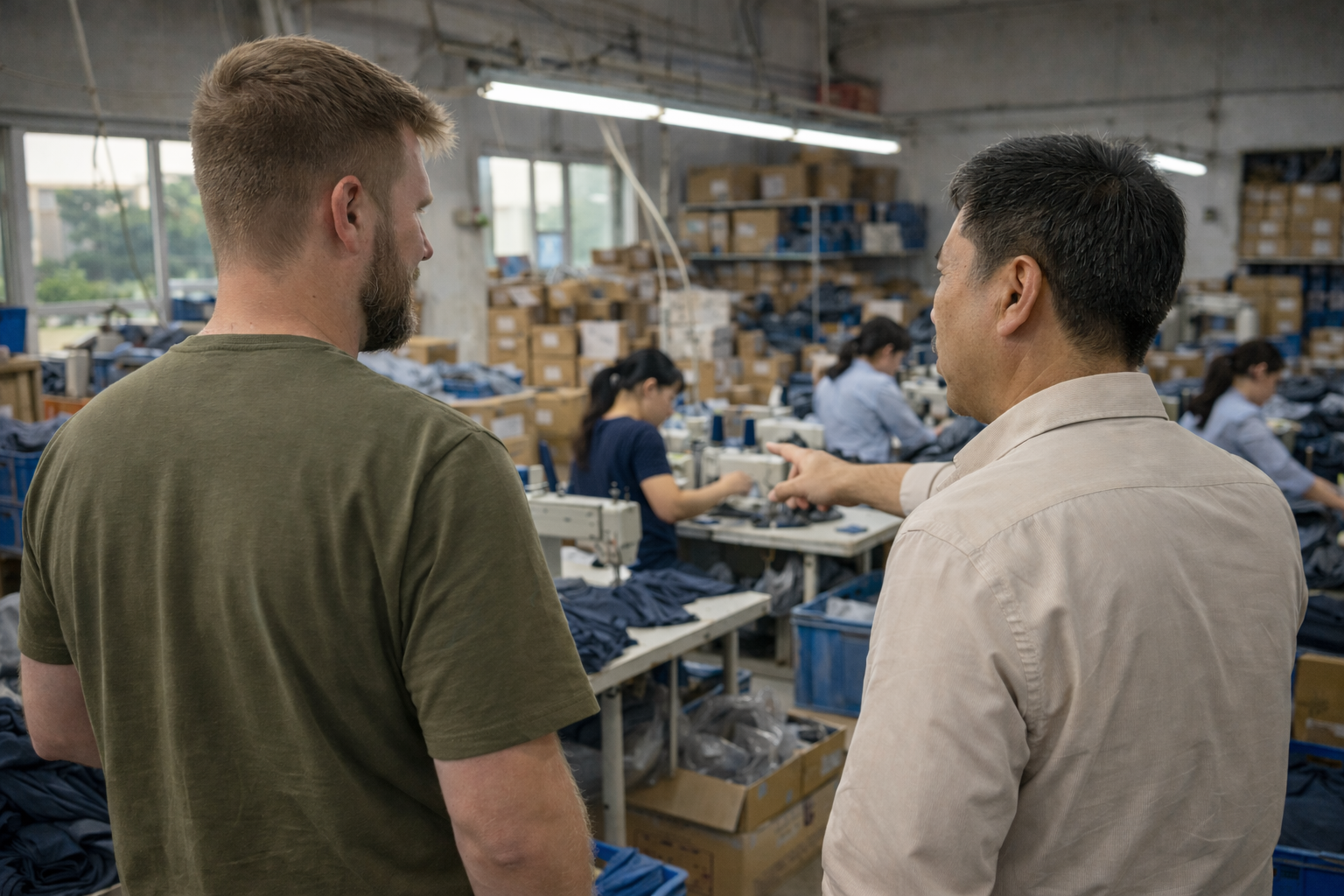
Quick Comparison - Top 12 Clothing Manufacturing Countries
| Country | Apparel Exports (2024) | Avg. Monthly Wage | Typical Lead Time | Typical MOQ | Best For |
|---|---|---|---|---|---|
| China | $165.2B | $500–800 | 30–45 days | 300–500+ | Full supply chain, any product type |
| Bangladesh | $38.5B | $115–135 | 90–120 days | 1,000–3,000+ | High-volume basics, knitwear, t-shirts |
| Vietnam | $34B | $250–350 | 45–60 days | 200–500 | Sportswear, outerwear, technical apparel |
| Turkey | $17.9B | $500–700 | 20–30 days | 100–300 | Fast fashion, knitwear, denim, EU-focused brands |
| India | $16.4B | $150–250 | 60–90 days | 300–1,000 | Cotton garments, embellished/artisan apparel |
| Cambodia | $9.9B | $200–220 | 60–90 days | 1,000–3,000 | Budget basics, casualwear |
| Pakistan | $9.3B | $150–200 | 60–90 days | 1,000–3,000 | Denim, cotton knitwear, home textiles |
| Indonesia | $8.7B | $200–280 | 45–75 days | 500–1,000 | Sportswear, activewear, outdoor apparel |
| Italy | ~$14B | $1,800–2,500+ | 30–60 days | 50–200 | Luxury fashion, premium outerwear, tailoring |
| Mexico | ~$7B | $300–450 | 15–25 days | 100–500 | Nearshoring for US brands, fast replenishment |
| Portugal | ~$5B | $800–1,200 | 25–40 days | 50–300 | Premium European production, small batches |
| Sri Lanka | ~$5B | $150–250 | 45–60 days | 500–1,000 | Ethical sportswear, intimates, swimwear |
Apparel export data: WTO/Fibre2Fashion 2024. Wages and lead times are approximate ranges based on industry data and sourcing experience. Actual figures vary by factory, region, and product complexity.
How to Choose the Right Manufacturing Country
The country comparison table is a starting point, but the right choice depends on your specific situation. In our experience sourcing over 10,000 products, these are the factors that matter most.
What Are You Making?
Your product type immediately narrows the list. Cotton basics like t-shirts and underwear are often sourced from Bangladesh, India, or Pakistan, where raw cotton supply chains are established. Technical sportswear and activewear are sourced from Vietnam or Indonesia, where factories have invested in bonding, seam sealing, and performance fabric handling. Denim is made in Pakistan, Turkey, or Vietnam. Luxury and premium garments are made in Italy, Portugal, or Turkey.
How Many Units Do You Need?
Order volume is often the deciding factor. If you need 5,000+ units per style, Bangladesh and Cambodia offer the lowest per-unit cost. If you're a smaller brand running 200-500 units, you'll struggle to find willing factories in those countries and should look at Vietnam, Turkey, Portugal, or Mexico instead. For ultra-small runs under 100 units, Italy and Portugal are among the few options, though you'll pay significantly more per piece.
Where Are Your Customers?
Shipping costs and duties can erase any savings from cheaper labor. US-focused brands should consider Mexico (duty-free under the USMCA for qualifying goods, with 15-25-day lead times) or Vietnam (despite current tariff uncertainty). EU-focused brands benefit from Turkey's proximity (20-30 day lead times by road) and duty advantages, or from Bangladesh and Cambodia's duty-free EU access under the Everything But Arms program. Vietnam's EU-Vietnam Free Trade Agreement (EVFTA) is also reducing tariffs on garment exports to Europe.
How Fast Do You Need It?
If speed-to-market matters more than cost per unit, Turkey and Mexico are hard to beat. Turkey can turn around small orders in three to four weeks, and Mexico can replenish US inventory in two to three weeks. Compare that to Bangladesh's typical 90-120-day lead time, and the cost savings can quickly be offset by the need to carry more inventory and forecast further ahead.
Top Countries for Clothing Manufacturing List
China
Apparel exports (2024): $165.2 billion | Global share: 29.6% | Workforce: 10+ million garment workers
China remains the world's largest garment exporter by a wide margin, accounting for nearly a third of global apparel trade. No other country comes close to matching its combination of scale, speed, supply chain depth, and product range. If you can think of a garment, someone in China is making it.
The real advantage of Chinese manufacturing isn't just low cost (it isn't even the cheapest option anymore). It's the complete supply chain. Fabric mills, trim suppliers, dyeing facilities, and garment factories often cluster within the same industrial zone. That vertical integration means faster sampling, easier quality control over materials, and the ability to produce almost any product category, from technical outerwear to fast fashion basics to tailored suits.
The challenges are well known. US tariffs under Section 301 add 7.5-25% to most Chinese apparel imports, and the effective tariff rate on Chinese goods reached roughly 35% by late 2025. Combined with rising wages (garment workers in coastal hubs now earn $500-800 per month) and ongoing geopolitical tension, many brands are actively diversifying away from China. But "diversifying" doesn't mean "leaving." Most brands we work with are shifting some production to Vietnam or other Southeast Asian countries while keeping their most complex, high-SKU, or fast-turn production in China.
Typical MOQs range from 300 to 500 units per style and color, though some factories will go lower for higher-margin products. Lead times of 30-45 days are standard. For more on finding Chinese garment factories, see our guide to China's top clothing manufacturers.
Bangladesh
Apparel exports (2024): $38.5 billion | Global share: 6.9% | Workforce: 4+ million garment workers
Bangladesh is the world's second-largest garment exporter and the go-to destination for high-volume, cost-sensitive production. The minimum wage for garment workers was raised to 12,500 BDT (roughly $113) per month in December 2023, which remains among the lowest in the world. If you're producing tens of thousands of basic T-shirts, polo shirts, or knitwear, and cost per unit is your primary metric, Bangladesh is likely where you'll end up.
The country's strength lies in the mass production of relatively simple garments. Knitwear, t-shirts, trousers, and sweaters dominate its export mix. Factories are geared toward long runs with minimal style changes. The EU is Bangladesh's largest market (about 50% of RMG exports), followed by the US (roughly 19%), and both benefit from preferential trade terms. EU buyers get duty-free access under the Everything But Arms program. US buyers pay standard MFN duties but still benefit from the low base cost.
The trade-offs are significant. Lead times of 90-120 days are common because most fabrics are imported (Bangladesh manufactures about 85% of its own knit fabric, but only 40% of its woven fabric needs). Factory compliance has improved substantially since the Rana Plaza disaster in 2013, with programs like the Accord on Fire and Building Safety driving upgrades. However, due diligence for your specific factory remains essential. Political instability flared in mid-2024 when a student-led movement led to a change of government, temporarily disrupting some production. MOQs are typically high, ranging from 1,000 to 3,000 units per style, making Bangladesh impractical for small and midsize brands.
Vietnam
Apparel exports (2024): $34 billion (apparel), $44 billion total textile and apparel | Global share: 6.1% | Workforce: 2.7+ million garment workers
Vietnam is the world's third-largest garment exporter and has been the single biggest beneficiary of the shift away from Chinese production. Export value grew by over 9% in 2024 and reached an estimated $46 billion in total textile and apparel exports for 2025 (VITAS data). It's where we do most of our sourcing at Cosmo Sourcing, and it's the country we know best.
Vietnam's sweet spot is mid-range to premium apparel: sportswear, outerwear, technical jackets, activewear, and workwear. The factory base has invested heavily in the equipment and training needed for complex construction, bonded seams, waterproof membranes, and performance fabrics. Major global brands, including Nike, Adidas, North Face, and Lululemon, have significant production in Vietnam. It's also competitive for denim, casual basics, and cut-and-sew knits. For more depth, see our Vietnam clothing manufacturing guide and our list of top Vietnam clothing manufacturers.
The trade agreement landscape is a major draw, but it is currently complicated. The CPTPP reduces tariffs on Vietnamese exports to Canada, Australia, Japan, and other member countries. The EVFTA has been progressively cutting EU tariffs on Vietnamese garments (heading toward 0% for many categories). However, the US tariff situation has been volatile since April 2025, when a 46% reciprocal tariff was initially announced. After negotiations, the rate was set at 20% as of July 2025, with a 40% penalty on goods found to be transshipped through Vietnam from other countries. Check the current rate before making sourcing decisions, as this situation continues to evolve.
Typical MOQs start at 200-500 units per style per color, more accessible than Bangladesh but higher than Turkey or Portugal. Lead times run 45-60 days. Monthly garment wages typically range from $250 to $ 350, higher than in Bangladesh or Cambodia but well below China. One ongoing limitation is Vietnam's reliance on imported fabrics, particularly from China and South Korea, which can affect both lead times and compliance with rules of origin for trade agreements.
Turkey
Apparel exports (2024): $17.9 billion | Global share: 3.2% | Workforce: 1+ million garment workers
Turkey is the fastest option for European brands and one of the most versatile manufacturing countries on this list. Its geographic position between Europe and Asia means garment shipments reach EU warehouses by road in as little as one to two weeks. That proximity, combined with relatively low MOQs and strong capabilities across knitwear, denim, and woven garments, makes Turkey the go-to for brands that need speed and flexibility over the lowest possible cost.
Turkish manufacturers are known for fast-fashion production with quick turnarounds on new styles, denim production rivaling that of any country in the world, premium knitwear and jersey, and strong capabilities in sustainable and organic textiles. The quality tier is generally higher than that of Southeast Asian alternatives, making Turkey particularly suited to mid-range to premium positioning.
The challenge is cost. Garment workers' wages of $500-700 per month are comparable to those in China's coastal hubs, and high domestic inflation in recent years has further eroded Turkey's cost competitiveness. Apparel exports actually declined slightly in 2024 as some brands shifted production to cheaper markets. The Turkish government is encouraging investment in sustainable manufacturing and technical textiles to maintain the industry's value proposition. For US-focused brands, Turkey is less compelling due to distance and lack of preferential trade agreements, but for anyone selling primarily in Europe, it should be near the top of your list.
Typical MOQs are among the lowest of any major manufacturing country, starting at 100-300 units. Lead times of 20-30 days are standard. That combination of low minimums and fast delivery makes Turkey ideal for brands running frequent small collections.
India
Apparel exports (2024): $16.4 billion | Global share: 2.9% | Workforce: 45+ million in the broader textile sector
India is the world's largest cotton producer and one of its most diverse textile ecosystems, but its garment export performance has historically underperformed its potential. Total textile and apparel exports were roughly $34-37 billion in fiscal year 2024-25, with ready-made garments accounting for about $16.4 billion of that. The government has set a goal of growing the sector to $350 billion by 2030, supported by incentive programs such as the Production Linked Incentive (PLI) scheme.
India's strengths are its cotton supply chain (from farm to finished garment), its embellishment and handwork capabilities (embroidery, beading, printing, block printing), and its range from ultra-high-volume commodity production in places like Tirupur to small-batch artisan work in Jaipur or Delhi. If your brand features intricate embellishment, natural fibers, or a "crafted" story, India offers elements no other country on this list can match.
The challenges are infrastructure and consistency. India's manufacturing base is fragmented across many states, each with different labor laws and varying levels of factory compliance. Lead times tend to be longer (60-90 days) due to a less consolidated supply chain than in Vietnam or China. Bureaucratic processes can be slow. Quality consistency across large orders requires more hands-on oversight than in countries with more standardized factory environments. India is also increasingly competitive for orders that shifted away from Bangladesh during the 2024 political disruption.
Typical MOQs range from 300 to 1,000 units, depending on the product and factory. Monthly garment wages vary enormously by state and skill level, ranging from $150 to $250.
Cambodia
Apparel exports (2024): $9.9 billion | Global share: 1.8% | Workforce: 700,000+ garment workers
Cambodia is a low-cost manufacturing option positioned between Vietnam and Bangladesh on both price and capability. The garment industry accounts for the majority of the country's export earnings and has grown steadily, though it remains dependent on a narrow product range. Cambodia's strength is basic to mid-range casualwear: t-shirts, shorts, trousers, and simple woven garments.
The cost advantage is real. The minimum wage for garment workers is around $204 per month (2024), lower than in Vietnam but higher than in Bangladesh. Cambodia benefits from duty-free access to the EU under the Everything But Arms program (though this was partially suspended in 2020 over human rights concerns and should be verified for current status). For US importers, Cambodia faced a high reciprocal tariff threat of 49% in April 2025, though the situation has been evolving alongside broader tariff negotiations.
Cambodia's limitations include a smaller, less diversified factory base than Vietnam's or Bangladesh's, a heavy reliance on imported fabrics (primarily from China), and less developed infrastructure. The country is a realistic option for brands that are already comfortable sourcing in Southeast Asia and want to diversify production across multiple countries for risk management. Typical MOQs are 1,000-3,000 units, and lead times run 60-90 days.
Pakistan
Apparel exports (2024): $9.3 billion | Global share: 1.7% | Workforce: 15+ million in the textile sector
Pakistan is one of the world's top cotton producers, and its textile industry reflects that. The country's core strength is cotton-based products: denim, knitwear, hosiery, and home textiles. Pakistan's denim production in particular is globally competitive, supplying major international brands with both fabric and finished jeans. Textile and garment exports account for roughly 60-70% of the country's total exports.
The EU is a key market for Pakistani apparel, and the GSP+ program provides preferential tariff rates that make Pakistani goods significantly more competitive in Europe. The domestic cotton supply chain is a genuine advantage, reducing reliance on imported raw materials and giving Pakistani manufacturers greater control over lead times and costs than manufacturers in countries that import most of their fabric.
The trade-offs include political and economic instability, energy shortages that periodically affect production schedules, and a compliance and sustainability profile that lags behind countries like Vietnam or Bangladesh (which has made significant post-Rana Plaza reforms). Quality is strong in Pakistan's core categories (denim, cotton knitwear), but less developed for technical or performance apparel. Typical MOQs are 1,000-3,000 units, wages run $150-200 per month, and lead times are 60-90 days.
Indonesia
Apparel exports (2024): $8.7 billion | Global share: 1.6% | Workforce: 3+ million in textiles
Indonesia is Southeast Asia's largest economy and a significant garment manufacturer, though its export growth has slowed in recent years. The country's strength lies in sportswear, activewear, and outdoor apparel, with major factories supplying Nike, Adidas, and Puma. Indonesia has invested in synthetic and technical fabric processing, making it competitive for performance garment categories.
The country's large domestic market and growing middle class mean that Indonesian manufacturers aren't as export-dependent as those in Bangladesh or Cambodia, which can affect pricing and capacity allocation for foreign buyers. Wages vary significantly by province (Jakarta is substantially more expensive than central Java), but generally fall between $200 and $ 280 per month. Indonesia is a member of RCEP, which provides tariff benefits for trade with other member countries, including China, Japan, South Korea, and Australia.
For sourcing activewear specifically, see our guide to the best countries for activewear sourcing. Typical MOQs are 500-1,000 units, and lead times run 45-75 days.
Italy
Apparel exports (2024): ~$14 billion | Workforce: Concentrated in northern and central regions
Italy is not a mass manufacturing destination. It's on this list because it remains the global benchmark for luxury garment production, and certain categories (premium outerwear, tailored suiting, leather goods, high-end knitwear) are still best produced in Italian factories. If your retail price point is premium to luxury, Italian manufacturing signals quality and craftsmanship that adds real brand value.
The Italian textile districts in Prato (fabrics), Biella (wool), and the Veneto region (sportswear, outerwear) cluster expertise in ways that are difficult to replicate. You're not just paying for labor. You're paying for generations of textile knowledge, access to premium European fabrics, and manufacturing processes refined over decades.
The cost is obviously the barrier. Monthly wages of $1,800-2,500+ put Italian manufacturing in a completely different tier. But Italy is one of the few countries where MOQs can be genuinely low (50-200 units), making it accessible for emerging luxury brands. Lead times of 30-60 days are reasonable given the product complexity. Italy is a viable option only if your margin structure and brand positioning justify the cost.
Mexico
Apparel exports (2024): ~$7 billion | Workforce: 400,000+ in garments
Mexico is the nearshoring play for US-focused brands. Under the USMCA, garments that meet the rules of origin (generally meaning the yarn, fabric, and garment are produced within North America) enter the US duty-free. In a tariff environment where Vietnamese goods face 20% duties and Chinese goods face 25-35%, the zero-rate access is a significant competitive advantage.
Beyond tariffs, Mexico's proximity means lead times of 15-25 days from factory to US warehouse, compared to 45-60 days from Vietnam (not counting production time). That speed enables replenishment models, smaller initial orders with faster reorders, and less capital tied up in inventory. For basics, uniforms, and replenishment-driven categories, Mexico makes strong financial sense even if per-unit production costs are higher than in Southeast Asia.
The limitations are the capacity and the range of capabilities. Mexico's garment industry is substantially smaller than those of Vietnam and Bangladesh, and finding factories with the right specialization can be challenging. The country is strongest in knits, basics, and denim. Technical outerwear, performance sportswear, and complex constructions are harder to source. For more on Mexican garment sourcing, see our guide to Mexico's clothing manufacturers.
Typical MOQs are 100-500 units, and wages run $300-450 per month. Also see our comparison of nearshoring vs. low-cost-country sourcing.
Portugal
Apparel exports (2024): ~$5 billion | Workforce: 120,000+ in textiles and garments
Portugal has emerged as the premium European manufacturing alternative. It offers significantly lower costs than Italy (monthly wages of roughly $800-1,200) while maintaining high quality standards, strong sustainability credentials, and proximity to EU markets. Many fast fashion and mid-range European brands (including several owned by Inditex) produce in Portugal.
Portugal's advantages include very low MOQs (50-300 units), fast delivery within Europe (25-40 days), strong capabilities in jersey, knitwear, and woven garments, and a manufacturing culture that embraces small-batch production. It's one of the best options for emerging brands that want European-made quality without Italian pricing.
The downsides are that Portugal isn't cost-competitive with Asia on any metric except speed to the EU market and minimum order size. For US-focused brands, logistics make less sense than in Mexico or even Turkey. Capacity is also limited relative to that of major Asian exporters.
Sri Lanka
Apparel exports (2024): ~$5 billion | Workforce: 300,000+ in garments
Sri Lanka has carved out a distinct position as a premium, ethically focused garment manufacturer. The country hosts some of the world's most advanced apparel factories, with companies like Brandix, MAS Holdings, and Hirdaramani supplying top-tier brands in sportswear, intimates, and swimwear. Sri Lanka's factories regularly earn the highest compliance ratings from global brands, and several are certified carbon-neutral.
The product focus is sportswear, activewear, intimates, loungewear, and swimwear. Sri Lankan manufacturers have invested heavily in vertical integration, with several major groups operating their own fabric mills alongside garment production. This gives them better control over quality and lead times than countries that rely entirely on imported fabrics.
Wages are in the $150-250 per month range, competitive with India and lower than Vietnam. MOQs typically start at 500-1,000 units, and lead times run 45-60 days. The main limitation is the narrow product focus. If you're making basic t-shirts or tailored suiting, Sri Lanka isn't the right fit. But for anything in the sportswear or intimates space, it's among the best options globally.
Key trade agreements for garment sourcing:
The CPTPP benefits Vietnam, Mexico (pending ratification), and other member countries with reduced tariffs among members. The EVFTA is progressively cutting EU duties on Vietnamese garments. Bangladesh and Cambodia benefit from the EU's Everything But Arms program, which provides duty-free access to the EU market. USMCA provides duty-free US access for qualifying North American-made goods. RCEP covers China, Vietnam, Indonesia, and other ASEAN nations, facilitating intra-regional trade in fabrics and components.
The bottom line: tariffs are now a core variable in your sourcing math, not an afterthought. A country that appears cheapest on a per-unit production basis may not be the cheapest once you factor in the duty rate applied in your customer's country. We regularly help clients model total landed cost across different country options to find the genuine lowest-cost solution.
Choosing Between 12 Countries Is Complicated. Cosmo Sourcing Can Help!
Cosmo Sourcing has been helping brands navigate international garment manufacturing since 2012. We've sourced over 10,000 products for more than 4,000 clients across Vietnam, China, Mexico, and Southeast Asia.
Unlike agents who take a commission from the factory (which means they're incentivized to steer you toward the factory that pays them the most, not the one that's best for your product), we work on a flat-fee model. That means our only incentive is finding the right manufacturer for your specific needs.
Whether you're exploring Vietnam for the first time, diversifying out of China, or trying to figure out which country makes sense for your product, reach out. We'll give you an honest assessment based on what we've actually seen in the market.
Contact us: info@cosmosourcing.com | cosmosourcing.com/contact-us
If you're still early in the process and figuring out how to work with garment manufacturers, our complete guide to starting a clothing line covers the process from concept to production.