T-Shirt Manufacturers in Vietnam // How to Find the Right Factory
Vietnam is one of the best countries in the world for T-shirt manufacturing, and finding the right factory comes down to knowing what to look for, where to look, and how to vet what you find. The country exported $44 billion in textiles and garments in 2024 (per VITAS, the Vietnam Textile and Apparel Association), with an industry target of $46 to $48 billion for 2025. Brands like Nike, Adidas, Uniqlo, and Patagonia all produce T-shirts here, and so do thousands of smaller brands you've never heard of.
This guide covers the practical steps for finding a T-shirt manufacturer in Vietnam: the types of factories available, where they're concentrated, the MOQs and lead times to expect, how to evaluate quality, and when it makes sense to work with a sourcing company. I've spent over a decade sourcing products from Vietnam and have visited hundreds of garment factories across the country.
We've sourced T-shirt projects of all types at Cosmo Sourcing, from small custom printed runs to large-scale production, including all-cotton basics, heavyweight streetwear tees, athletic performance tops, and everything in between. This guide is based on what I've seen firsthand, not what I've read online.
Updated February 24, 2026
Why Vietnam for T-Shirts
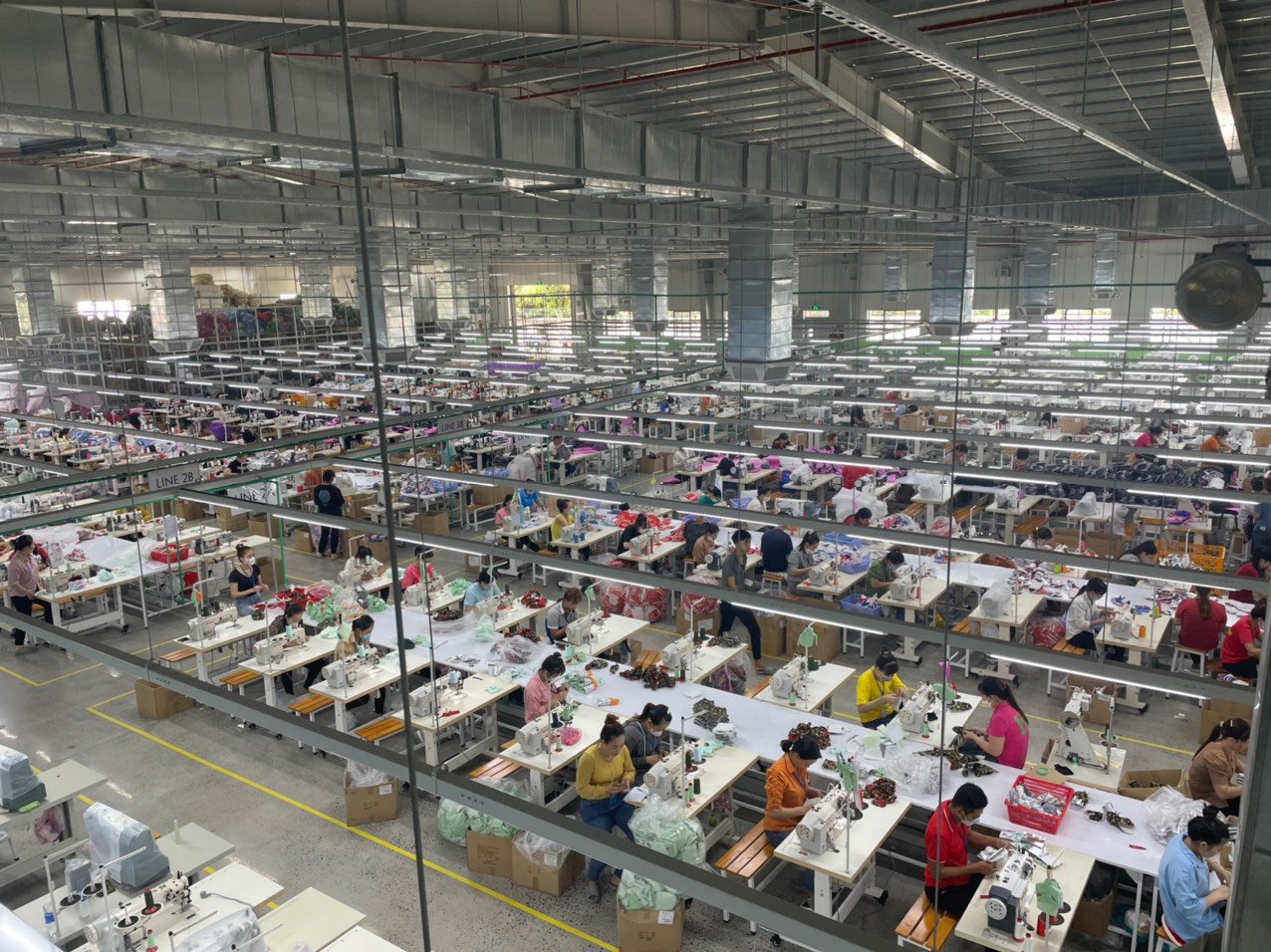
Vietnam's garment industry is genuinely world-class for T-shirt production. The country ranks as the world's third-largest textile and garment exporter, and apparel is its single largest manufacturing sector by employment, with roughly 2.5 to 3 million workers across more than 6,000 factories.
A few things make Vietnam especially strong for T-shirts, specifically. The workforce has deep experience with knit garment construction (T-shirts are knit, not woven, and that distinction matters when choosing a factory). I've seen buyers waste months talking to woven garment factories that technically "can do T-shirts" but don't specialize in them, and the results show in inconsistent stitching and poor fabric handling. Vietnam has a large concentration of factories that specialize in knit fabrics, which is exactly what you want for T-shirt production. Cotton, polyester, and blended fabrics are widely available domestically or through established import channels from countries like India, China, and South Korea. And Vietnam's trade agreements, including the CPTPP and the EU-Vietnam Free Trade Agreement (EVFTA), provide preferential tariff rates for buyers in many markets. Tariff rates vary by country, so check the latest rates applicable to your specific importing market.
For buyers currently manufacturing in China who are exploring alternatives, Vietnam is the most common China+1 destination for apparel. Labor costs are competitive, quality is consistent at the mid-to-premium level, and the supplier base for T-shirts is deep enough that you won't struggle to find options.
Types of T-Shirt Factories in Vietnam
Not every garment factory is the same, and understanding the different production models will save you time when you start reaching out to manufacturers.
CMT (Cut, Make, Trim) Factories
CMT factories handle cutting, sewing, and finishing. You supply the fabric and trims, and they assemble the garments. This model gives you the most control over materials but requires you to manage fabric sourcing separately. CMT is common for buyers who already have established fabric suppliers or who need very specific materials.
FOB (Full-Package) Factories
FOB factories handle everything: fabric sourcing, cutting, sewing, finishing, packing, and sometimes even shipping coordination. For most buyers sourcing T-shirts for the first time, FOB is the more practical option. The factory manages the supply chain, and you receive finished goods ready for your warehouse or fulfillment center. Most of the larger garment factories I visit in southern Vietnam operate on an FOB model, and it's the model we use for the majority of our T-shirt projects, whether it's a 100% cotton streetwear tee with heavyweight fabric or a moisture-wicking athletic top with sublimation printing.
OEM and ODM Factories
OEM (Original Equipment Manufacturer) factories produce T-shirts to your specifications and designs. ODM (Original Design Manufacturer) factories can also help develop designs, patterns, and tech packs if you don't have them finalized. If you're launching a brand and need design support, look specifically for factories with in-house development teams. Not all factories offer this, and the ones that do tend to be mid-size or larger operations.
Where T-Shirt Factories Are Concentrated
Vietnam's garment manufacturing is heavily concentrated in the south, though the north also has significant capacity. Understanding the regional landscape helps you target your search. For a deeper breakdown of each region, see our guide to Vietnam's top manufacturing cities.
Ho Chi Minh City and Surrounding Provinces
The greater HCMC area, including Binh Duong and Dong Nai provinces, is the center of gravity for T-shirt manufacturing. Our main office is in Binh Duong, and the density of garment factories within a 30- to 50-kilometer radius of HCMC is remarkable. You'll find everything from small workshops producing 5,000 pieces per month to large-scale operations producing hundreds of thousands of units per month. Port access through Cat Lai and Cai Mep is straightforward, and the logistics infrastructure is the most developed in the country.
Northern Vietnam (Hanoi, Nam Dinh, Hai Phong)
The north also has a strong garment sector, with some of Vietnam's largest publicly traded apparel companies headquartered there. Northern factories tend to serve Japanese, Korean, and European buyers and often have stricter quality control cultures influenced by those markets. If your T-shirt line requires a higher quality threshold, the north is worth exploring.
Central Vietnam
Central provinces like Thanh Hoa and Nghe An have growing garment sectors with lower labor costs than the south. These regions are better suited to higher-volume, price-sensitive production, where the logistics trade-off (further from major ports) is acceptable.
What to Expect: MOQs, Lead Times, and Pricing
One of the most common questions I get from buyers is what to expect in terms of minimums and timelines for T-shirt production in Vietnam. Here's a realistic picture.
Minimum Order Quantities
MOQs for T-shirts in Vietnam typically range from 500 to 3,000 pieces per style per color, depending on the factory. Smaller factories (often Korean- or Taiwanese-owned operations doing private-label work) may produce as few as 300 to 500 pieces. Larger factories that supply major brands usually start at 3,000 to 5,000 pieces per style. We've placed T-shirt orders across this full range for clients, from smaller custom printed runs for emerging brands to large-scale production programs with tens of thousands of units. If a factory quotes you an MOQ of 200 pieces for a custom T-shirt, be cautious: they may be a trading company, not a real factory.
Lead Times
From order confirmation to delivery, expect 60 to 90 days for a standard T-shirt order. This includes fabric sourcing (15 to 30 days), production (20 to 40 days), and shipping. If the factory has fabric in stock or you're reordering a previous style, lead times can drop to 45-60 days. Sample development typically takes 2 to 4 weeks before you even get to the production stage.
Pricing
T-shirt FOB pricing in Vietnam generally ranges from $2.50 to $8.00 per unit for a basic cotton or cotton-blend tee, depending on fabric weight, print complexity, order volume, and finishing details. To give you a sense of how product type affects pricing: a standard 180 GSM cotton tee with a simple screen print sits at the lower end of that range, while an extra heavyweight streetwear tee (280+ GSM) with specialty wash treatments or a performance athletic top with moisture-wicking fabric and sublimation printing will push toward the higher end or above it. Organic cotton and specialty treatments (enzyme wash, garment dye) also add cost. Pricing is competitive with comparable quality from China, and often more favorable than Chinese pricing once you factor in tariff differentials for many importing countries.
How to Find Factories
There are several ways to identify T-shirt manufacturers in Vietnam, and realistically, you'll use a combination of them.
Online Directories and Platforms
Alibaba lets you filter by country, and you'll find Vietnamese garment factories there. Other directories include VietnamExport, Global Sources, and the VITAS member directory. The challenge is that online listings represent only a fraction of the factories, and their quality varies widely. For more on the available platforms, see our guide to finding Vietnam manufacturing companies.
Trade Shows
SaigonTex and HanoiTex are the main textile and garment trade fairs held annually in Vietnam. These events give you direct access to dozens of manufacturers in one place, and you can evaluate fabric quality, see product samples, and have face-to-face conversations. If you're serious about Vietnam sourcing and can make the trip, a trade show visit is one of the most efficient ways to build a shortlist.
Working with a Sourcing Company
Many of the best T-shirt factories in Vietnam don't have English-language websites, don't list on Alibaba, and don't attend international trade shows. They stay full because they have established relationships with brands and sourcing companies that keep sending them orders. This is especially true for specialized T-shirt production: the factory that's ideal for your extra-heavyweight streetwear tee is not the same one you'd use for athletic performance tops, and neither of them may show up in a Google search. A sourcing company with an on-the-ground presence in Vietnam can give you access to these factories, handle vetting, arrange factory visits, and manage communication and quality control. If you're evaluating this route, our guide on how to find a good sourcing company covers what to look for and what to avoid.
Evaluating a T-Shirt Factory
Finding factories is only half the job. Evaluating them properly is what separates a successful production run from a costly mistake.
Certifications and Compliance
For T-shirt production, relevant certifications include OEKO-TEX Standard 100 (chemical safety), WRAP or SA8000 (social compliance), ISO 9001 (quality management), and GOTS or GRS if you're producing organic or recycled-content T-shirts. Certifications aren't everything, but they indicate a factory that takes compliance seriously and has invested in meeting international standards.
Production Capability and Capacity
Ask for the factory's monthly output in garment units, the number of sewing lines, and what percentage of capacity is currently committed. A factory running at 95%+ capacity may not be able to prioritize your order. I've seen production quality decline when factories are overcommitted, and it's one of the first things I check during a visit.
Sample Quality
Always request samples before placing a production order. Evaluate stitching consistency, fabric weight and hand feel, print or embroidery quality, sizing accuracy across the size range, and finishing details such as labels and packaging. For T-shirts specifically, pay close attention to shrinkage after washing (especially with all-cotton fabrics), colorfastness of printed designs, and whether the fabric weight matches the spec sheet. We've caught issues on T-shirt projects where the factory sample used 180 GSM fabric, but the production spec called for 200 GSM, and that difference is immediately noticeable in hand-feel and drape. For large-scale print jobs, always request a wash test on the printed sample to ensure the ink holds up. If the sample isn't right, production won't be either.
Factory Visits
If your order size justifies it, visiting the factory in person is the most reliable way to assess their real capability. You'll see the production floor, meet the team, and get an honest picture of how the operation runs. We organize factory visits in Vietnam regularly for clients, including bilingual guides and transportation.
Notable T-Shirt Manufacturers in Vietnam
Vietnam has thousands of garment factories, and the biggest names handle massive volumes for global brands. A few of the most well-known include Vinatex (Vietnam's largest textile group with 50+ subsidiaries), Thanh Cong (vertically integrated, supplies Uniqlo and H&M), and Thai Son S.P. (specializes in knit T-shirts and polo shirts with in-house fabric production). For a broader list with MOQs, certifications, and specializations, see our full guide to Vietnam's top clothing manufacturers.
One caveat worth repeating: the factories that appear in search results and on manufacturer lists tend to be Vietnam's largest operations, with MOQs ranging from 3,000 to 10,000+ pieces. For many buyers, especially startups and emerging brands, the ideal factory might be a smaller, specialized operation that doesn't appear online at all. That's where local sourcing relationships become valuable.
Cosmo Sourcing: T-Shirt Sourcing, Simplified
Finding the right T-shirt factory in Vietnam doesn't have to mean navigating it alone. Cosmo Sourcing has been helping businesses source products from Vietnam since 2012, and we've worked with thousands of clients across more than 10,000 products. T-shirts are one of our most frequently sourced product categories, and we've managed projects ranging from custom screen-printed tees and heavyweight streetwear blanks to athletic performance tops and large-scale all-cotton production runs.
Here's how we work: you tell us what you need, and we match you with 2 to 6 vetted factories that fit your product, volume, and budget. You receive original factory quotes with no markups or hidden fees, plus direct introductions to the factories. Our flat-fee pricing model means you always know what you're paying, and our team in Ho Chi Minh City manages the process from supplier matching through quality control and shipping coordination.
Whether you're producing your first run of 500 custom tees or scaling an established apparel line, we can help you find the right manufacturer and manage the process from start to finish.
Get in touch:
Email: info@cosmosourcing.com
Contact form: cosmosourcing.com/contact-us