How To Find Underwear Manufacturers In Vietnam // Top Underwear Suppliers And Factories In Vietnam List
Vietnam is one of the world's leading countries for underwear manufacturing. Factories here produce everything from basic cotton briefs and boxer shorts to technically complex seamless underwear, performance base layers, and structured bras for global brands including Hanes, Calvin Klein, Uniqlo, and Under Armour.
With $44 billion in textile and garment exports in 2024 and industry projections of $46 to $48 billion for 2025, Vietnam's apparel sector continues to grow. For brands looking to source underwear specifically, the country offers a combination of skilled labor, competitive pricing, an established compliance infrastructure, and the depth of fabric supply needed for intimate apparel production.
This guide covers how to find the right underwear factory in Vietnam, what to expect on MOQs, materials, and lead times, and how to avoid common sourcing mistakes. We have been based in Ho Chi Minh City since 2012, and our team at Cosmo Sourcing has sourced apparel products across Vietnam for over 4,000 clients. What follows comes directly from that experience.
updated February 17, 2026
What Types of Underwear Are Manufactured in Vietnam
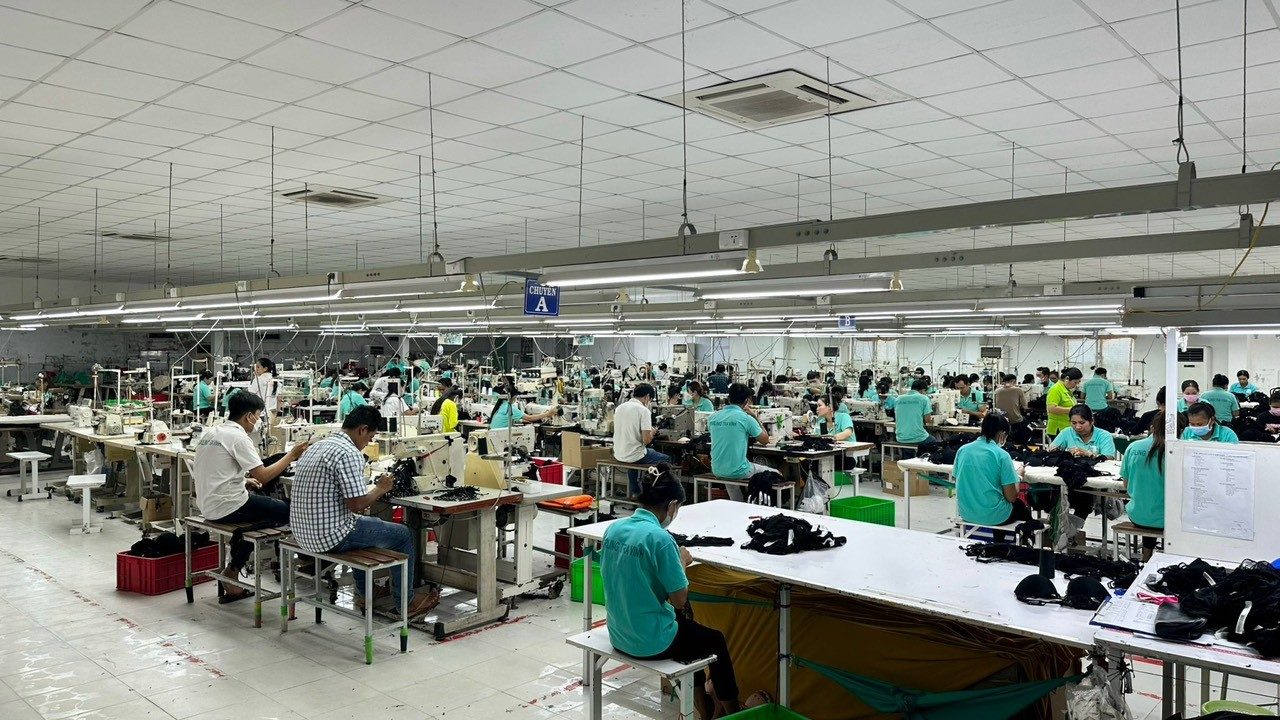
Vietnamese factories produce the full range of underwear and intimate apparel categories. What matters for sourcing is understanding which factory types align with your product, because capabilities vary significantly depending on construction method and fabric type. This is one of the first things we help clients sort out, because a factory that does great work on boxer briefs may have no business quoting you on seamless bras.
Cut-and-sew knit underwear is the most common production method in Vietnam. This covers boxer briefs, trunks, briefs, bikini-cut panties, hipsters, and basic bralettes. These products are typically made from circular-knitted fabrics like cotton jersey, modal, bamboo viscose, or cotton-spandex blends. Most mid-size Vietnamese underwear factories specialize in this category, and it is where we see the widest range of suppliers and the most competitive MOQs.
Seamless underwear requires specialized machinery (Santoni or similar circular knitting machines) and a different production workflow. We have visited factories that claim seamless capability on their website but actually have a handful of older machines sitting underutilized. If your product line requires seamless construction, your factory shortlist will be smaller, and MOQs will typically be higher. We always verify machine counts and recent production runs before recommending a seamless supplier.
Structured bras and lingerie represent the most technically demanding category. Molded-cup bras, underwire bras, and complex lingerie with lace, embroidery, or multiple panel construction require specialized equipment, pattern-making expertise, and experienced operators. Vietnam has a growing number of factories capable of this work, many of them foreign-invested operations originally from Hong Kong, South Korea, Taiwan, or Sri Lanka. In our experience, the best bra factories in Vietnam tend to be those established by or trained under foreign investors and have since developed their own client base.
Performance and activewear underwear includes moisture-wicking base layers, compression shorts, athletic bras, and thermal long johns. These products often use technical fabrics with properties like four-way stretch, antimicrobial treatments, or quick-dry finishes. Factories serving this segment tend also to produce sportswear and activewear, so they are accustomed to working with technical specifications and performance testing requirements.
Why Vietnam for Underwear Manufacturing
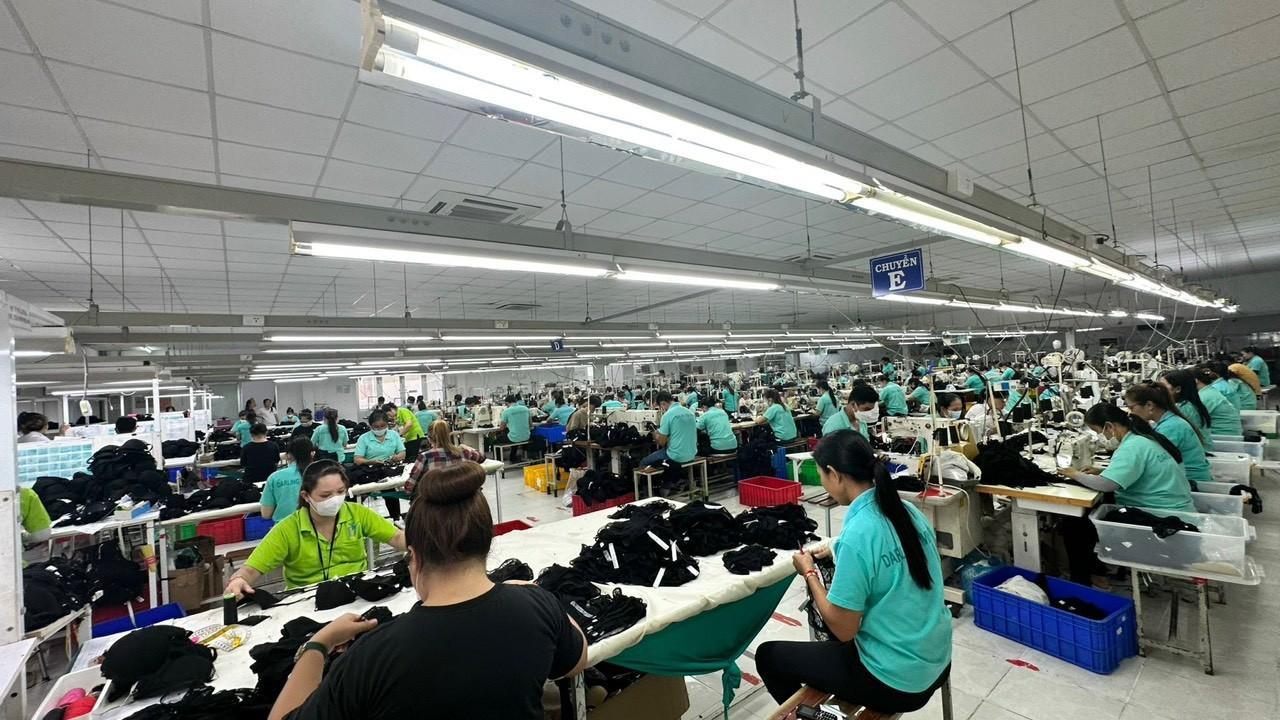
Vietnam's position as an underwear manufacturing hub did not happen by accident. Several structural factors make it a strong fit for this product category, and having worked here for over a decade, we have seen these advantages play out firsthand.
Workforce experience in apparel construction. Vietnam has over 2.7 million workers in the textile and garment sector. Many of these workers have years of experience specifically in underwear and intimate apparel production, having been trained by the large foreign-invested factories (Hanesbrands, MAS Holdings, Triumph International) that established operations in Vietnam over the past two decades. That institutional knowledge has spread across the industry as workers move between factories and as domestic suppliers have built up their own capabilities. We have clearly seen this effect: the quality floor in Vietnam is noticeably higher than in countries with newer underwear manufacturing bases.
Fabric supply chain depth. Underwear production depends heavily on consistent, high-quality knitted fabrics. Vietnam has a well-developed domestic fabric supply chain, with mills producing cotton jersey, rib knit, interlock, and a range of blended knit fabrics. The country also has strong supply channels for imported specialty fabrics from South Korea, Taiwan, and Japan, which are important for performance underwear and premium lines. For brands selling into the EU under the EVFTA, sourcing fabric within Vietnam can help meet rules of origin requirements for reduced tariff treatment.
Competitive pricing with quality. Vietnam sits in a favorable middle ground: costs are lower thanin China, Japan, or South Korea, but quality and compliance standards are generally higher than in Bangladesh or Cambodia. For underwear, where margins are tight and the end consumer immediately notices quality failures, this balance matters. Vietnamese labor costs for garment workers average around $350 to $400 per month, which is higher than in Bangladesh ($100 to $120) but supports a more skilled and stable workforce. In our sourcing work, we consistently find that the total cost of goods from Vietnam, once you factor in lower defect rates and fewer re-dos, is competitive with or better than cheaper-labor alternatives.
Trade agreement access. Vietnam has 17 active free trade agreements, including the CPTPP and EVFTA, which provide preferential tariff access to major markets. For US-bound shipments, the current reciprocal tariff rate on Vietnamese goods is 20%, which was set following negotiations in mid-2025. While this is higher than the pre-2025 baseline, it is significantly lower than the initial 46% rate proposed and than the tariffs currently applied to Chinese goods. For EU-bound shipments, the EVFTA offers duty reductions or elimination for most textile and apparel products, provided the rules of origin are met.
MOQs for Underwear Production in Vietnam
Minimum order quantities for underwear in Vietnam depend on the product type, the level of customization, and the factory size. Here is what we typically see across the factories we work with.
For basic styles using stock fabrics (plain cotton briefs, standard boxer briefs in common colors), MOQs typically range from 1,000 to 3,000 pieces per style per color. Some smaller factories will go as low as 500 pieces per style if you are using their existing fabric inventory and standard elastic/waistband options.
For custom designs with branded elements (custom fabric prints, branded waistbands, custom labels, specific color-matched elastic), expect MOQs of 3,000 to 5,000 pieces per style per color. The higher quantity is driven primarily by fabric and trim minimums from their material suppliers, not by sewing capacity alone. We have had clients frustrated by this, thinking the factory is being difficult, when in reality, it is the fabric mill that requires a minimum dye lot of 500 kg.
For seamless underwear, MOQs are typically higher, starting around 3,000 to 5,000 pieces per style because the machines run continuous production loops, and changeover time is significant.
For structured bras and complex lingerie, MOQs vary widely, typically starting at 1,000 to 3,000 pieces per style. The complexity of components (cups, wires, multiple fabric panels, hooks, adjusters) means setup costs are high, so factories need sufficient volume to justify the production run.
One important note from our experience: the MOQ your factory quotes is often negotiable, especially for repeat orders or if you can demonstrate a credible growth plan. First orders tend to carry higher minimums. We have negotiated lower first-order quantities for clients by presenting a clear forecast and committing to a multi-season relationship. Subsequent orders, once the factory has your patterns and specs dialed in, can sometimes be smaller because the setup work is already done.
How to Find Underwear Factories in Vietnam
Finding factories is not the hard part. Finding the right factory for your specific product, at a volume and quality level that works for your business, is where the real work happens. After over a decade of doing this, here is how we recommend approaching it.
Start with your product specification.
Before reaching out to any factory, have a clear tech pack or at least a detailed product brief. This should include the garment construction type (cut-and-sew vs. seamless), fabric composition and weight, size range, colorways, any branding elements (printed waistbands, woven labels, hang tags), packaging requirements, and target landed cost. The more specific your brief, the more accurate your factory responses will be, and the faster you will filter out factories that are not a good fit.
We see this go wrong regularly: a client sends a vague inquiry to 20 factories, receives 20 wildly different quotes, and has no way to compare them. Starting with a detailed spec saves weeks.
Use targeted sourcing channels
Trade shows remain one of the best ways to find underwear factories in Vietnam. SaigonTex (typically held in Ho Chi Minh City in April) and HanoiTex are the primary textile and garment trade shows where you can meet factory representatives, see fabric and product samples, and start conversations directly. VTG (Vietnam Textile & Garment Exhibition) is another relevant event. We attend these shows regularly and find them useful for discovering new factories, even after years in the market.
B2B platforms such as Alibaba, Global Sources, and Foursource list Vietnamese underwear manufacturers, but the quality of the listings varies significantly. Use these platforms for initial discovery, but verify everything independently before placing orders. We have seen factories with polished Alibaba profiles that turn out to be trading companies rather than actual manufacturers. For a broader look at sourcing platforms and directories, see our guide to finding manufacturers in Vietnam.
Industry associations such as VITAS (Vietnam Textile and Apparel Association) can provide manufacturer directories and referrals. Their member lists tend to include more established, export-oriented factories.
Sourcing agents based in Vietnam can significantly accelerate the process, especially if you do not have an existing network or cannot travel to Vietnam for factory visits. A good sourcing agent will already know which factories are reliable for underwear production, what their actual capabilities are (not just what their website says), and how to negotiate terms effectively. At Cosmo Sourcing, this is exactly what our team does: we match you with vetted factories, manage the sampling and quoting process, and handle quality control on the ground.
Verify before you commit.
Once you have a shortlist of potential factories, verification is essential. Request recent production samples (not marketing samples), ask for their client references, and if possible, visit the factory or have someone visit on your behalf. Here is what we look for during a factory assessment:
The factory actually produces underwear as a core product line, not just as a side category. We have walked into factories that listed underwear on their website but were clearly focused on outerwear or workwear. Underwear production has specific requirements for hygiene, fabric handling, and construction precision that general garment factories may not consistently meet.
Their machinery matches your product needs. If you need seamless underwear, we confirm they have the right knitting machines and that those machines are in active production, not gathering dust. If you need molded bras, we confirm they have the cup-molding equipment and the operators who know how to use it.
Their compliance certifications are current. For underwear sold in regulated markets, look for certifications like OEKO-TEX Standard 100 (which tests for harmful substances in textiles), BSCI or WRAP (for social compliance), and ISO 9001 (for quality management systems). Many international brands also require GOTS certification for organic cotton products or GRS for recycled content claims.
Major Brands Manufacturing Underwear in Vietnam
Vietnam's underwear manufacturing sector serves a range of global brands. Knowing who manufactures in the country provides useful context on the quality and scale of available production.
Hanesbrands (now owned by Gildan as of December 2025) has operated multiple facilities in Vietnam, producing underwear under the Hanes, Maidenform, and Bali brands. Calvin Klein and Tommy Hilfiger (PVH Corporation brands) source apparel, including underwear, from contract manufacturers in Vietnam. Uniqlo produces underwear in Vietnamese factories, Under Armour sources performance underwear from Vietnam. Victoria's Secret and Gap also source intimates and underwear from Vietnamese suppliers.
The presence of these brands confirms that Vietnam's factory base can meet international standards for quality, compliance, and consistency at scale. From a practical sourcing standpoint, this also means many Vietnamese factories have experience working with detailed technical specifications and brand compliance programs, which benefits smaller and mid-sized brands sourcing from the same factories. We have placed clients with factories that also produce for major brands, and the operational discipline those factories have developed carries over to smaller production runs.
Lead Times and Production Planning
Realistic lead times for underwear production in Vietnam, from confirmed order to goods ready for shipment, typically follow this pattern based on our projects.
Sampling: 2 to 4 weeks for initial samples, depending on complexity. Seamless and structured bra samples take longer than basic cut-and-sew styles. We always advise clients to build in time for at least one round of sample revisions, because getting the fit right on underwear often takes two or three iterations.
Fabric sourcing: 3 to 6 weeks if using custom-dyed or custom-printed fabric. If using stock fabric from the factory's existing inventory, this step can overlap with sampling.
Production: 4 to 8 weeks for sewing, finishing, quality inspection, and packing. Larger orders obviously take longer.
Total timeline from order confirmation to ex-factory: Plan for 10 to 16 weeks. First orders with a new factory will always be at the longer end because you are still dialing in fit, construction details, and communication workflows. We tell every new client to plan for at least 12 weeks on their first order and hope to beat that, rather than promising 8 weeks and creating stress for everyone involved.
Shipping to the US West Coast from Vietnam takes approximately 18 to 25 days by sea. To the US East Coast, expect 30 to 40 days. European destinations typically take 30 to 40 days, depending on the port and routing.
Quality Control for Underwear
Underwear is one of the most quality-sensitive apparel categories because the product sits directly against the skin and any defect is immediately noticeable to the wearer. We have seen shipments rejected over issues that would be minor in outerwear but are deal-breakers in underwear: a slightly rough overlocked seam, elastic that is 5% too tight, or a gusset that is offset by a few millimeters. Strong quality control is not optional.
Pre-production checks should confirm that the factory is using the correct fabrics, elastic, and trims before cutting begins. This includes verifying fabric weight, stretch recovery, colorfastness, and fiber composition against your approved specifications. We run these checks as standard practice because catching a fabric issue before cutting saves weeks, compared to finding it after 5,000 pieces have been sewn.
Inline inspections during production catch issues before they become systemic. For underwear, the critical checkpoints include seam quality and stitch count, elastic application and tension, gusset placement and construction, size consistency across the production run, and proper labeling. In our experience, elastic tension is the single most common quality issue in underwear production. A factory will nail it on the samples but drift during bulk production as operators speed up or as elastic rolls from different batches come into play.
Final inspection (typically AQL-based sampling) should happen after packing but before shipment. Standard practice for underwear is AQL 2.5 for major defects and AQL 4.0 for minor defects, though some brands use tighter standards.
If you are not in Vietnam to manage QC yourself, working with a sourcing company or third-party inspection firm that understands apparel quality standards is strongly recommended. Our on-ground team in Ho Chi Minh City handles inspections directly at the factory throughout the production process.
Tariffs and Trade Considerations
Trade policy is a significant factor in underwear sourcing decisions right now, particularly for brands selling into the US market.
US tariffs on Vietnamese textiles: The current US reciprocal tariff rate on goods originating from Vietnam is 20%, established in mid-2025 following negotiations between the US and Vietnamese governments. This rate replaced a temporarily proposed 46% rate. In addition to reciprocal tariffs, goods transshipped through Vietnam from third countries face a higher 40% duty, designed to discourage routing Chinese-made products through Vietnam. Standard US import duties on underwear (HTS Chapter 61 for knitted underwear) still apply on top of reciprocal tariffs, so buyers should factor the combined rate into their landed cost calculations.
EVFTA benefits for EU markets: The EU-Vietnam Free Trade Agreement provides duty reductions or elimination on most textile and apparel imports from Vietnam, provided the products meet the agreement's rules of origin. For knitted underwear, this generally means the fabric must be produced in Vietnam or another qualifying country. This gives Vietnam a meaningful cost advantage over non-FTA countries like China and Bangladesh for EU-bound shipments.
CPTPP and other FTAs: Vietnam's membership in the CPTPP provides preferential market access to Canada, Australia, Japan, and Mexico. For brands targeting these markets, sourcing underwear from Vietnam can offer tariff advantages compared to sourcing from countries outside the agreement.
Tariff rates and trade policy are subject to change, so always verify current rates with your customs broker or freight forwarder before finalizing cost projections.
Work With Cosmo Sourcing for Underwear Manufacturing in Vietnam
Finding the right underwear factory in Vietnam takes more than a Google search. It requires understanding which factories actually specialize in your product type, verifying their capabilities on the ground, negotiating fair terms, and managing quality through production.
That is what we do. Cosmo Sourcing has been based in Ho Chi Minh City since 2012, and we have helped over 4,000 clients source more than 10,000 products from Vietnam. Our team works on a flat-fee model, not on commission, so our incentive is to find you the best factory for your product, not the one that offers the highest margin.
We typically request 2 to 6 quotes from vetted factories for each project, give you transparent pricing breakdowns, and manage quality control at every stage. Whether you are launching your first underwear line or diversifying your supply chain away from China, we can help you find the right manufacturing partner.
Reach out to get started:
Email: info@cosmosourcing.com Contact form: cosmosourcing.com/contact-us