Vietnam Luggage Manufacturers: Top Factories and How to Source Luggage from Vietnam
Vietnam is where Samsonite, Osprey, Tumi, and dozens of other global brands already make their luggage. The country's bag and luggage exports reached $3.8 billion in 2024, and the factory base continues to grow as more brands diversify away from China. But finding the right factory here is not as simple as searching Alibaba. The landscape is fragmented, the best factories are often not listed online, and the sourcing process differs from what most buyers are used to.
This guide covers the factories worth knowing about, the products they make, and how sourcing luggage from Vietnam actually works on the ground.
Updated Feb 22, 2026

Luggage examples from a showroom in a factory in Vietnam
What Types of Luggage Are Made in Vietnam?
Vietnamese factories produce hard-shell suitcases, soft-sided luggage, backpacks, duffel bags, briefcases, travel totes, and specialty items like camera bags and instrument cases.
By Material
Polycarbonate and ABS are the primary materials for hard-shell suitcases. Vietnamese factories produce both single-material and blended shells using injection molding or thermoforming. Polycarbonate is lighter and more impact-resistant but costs more. ABS is more affordable and durable enough for mass-market products.
Nylon and polyester are standard for soft-sided luggage, backpacks, and travel bags. Vietnam has a well-developed supply chain for synthetic textiles. Most factories source fabric domestically or from China, South Korea, and Taiwan. Cordura, ripstop, and ballistic nylon are all available.
Leather and faux leather are used for briefcases, duffel bags, and premium luggage lines. Vietnam has a long history of leather craftsmanship, but most hides are imported (primarily from Italy, South Korea, and Brazil), which affects lead times and costs. In our experience, clients are often surprised to learn that leather luggage from Vietnam can cost 15-25% more than comparable synthetic products due to the cost of imported hides. If leather is central to your line, budget extra lead time for material sourcing.
Canvas and recycled materials are increasingly used in eco-conscious product lines. Several Vietnamese factories now offer luggage made from recycled PET, organic cotton canvas, and other sustainable textiles.
By Product Type
Vietnam's factories handle the full range of luggage products: spinner suitcases with TSA locks, carry-on and checked sizes, expandable soft-side bags, laptop backpacks, hydration packs, tactical and outdoor packs, rolling duffels, garment bags, and toiletry kits. Many factories also support custom specialty items (golf travel bags, pet carriers, ski bags) on an ODM or OEM basis.
What luggage brands are manufactured in Vietnam?
Major international brands producing luggage and bags in Vietnam include:
Samsonite
Contracts for significant luggage production in Vietnam.
Tumi
Manufactures premium travel and business bags here.
Osprey
Produces technical backpacks and travel packs.
JanSport
Has manufactured backpacks in Vietnam for years.
Deuter
Sources ergonomic hiking and travel packs from Vietnamese facilities.
Herschel Supply Co.
Manufactures its heritage-inspired bags through Vietnamese partners.
Fjallraven
Produces durable outdoor packs in Vietnam.
Patagonia
Uses Vietnamese factories for bags and packs.
Targus
Source laptop bags and travel accessories here.
Columbia
Manufactures outdoor packs through Vietnamese suppliers.
These brands reflect the maturity of Vietnam's luggage sector, particularly for products that require advanced construction and compliance with Western import standards.
Top Luggage Factories in Vietnam
Below is a cross-section of established luggage and bag manufacturers in Vietnam by size, specialization, and export capability. We have visited or worked with several of these factories, and the landscape changes regularly as new players enter and others scale up.
Hung Phat JSC
One of Vietnam's largest domestic luggage manufacturers. Hung Phat operates a 15,000-square-meter facility with 12 production lines and 500+ workers. OEM and ODM for suitcases and backpacks, exporting to Japan, the US, the UK, India, Malaysia, and South Korea. Strong fit for larger volume orders.
Mizuno Bags Co., Ltd.
Japanese company founded in 1890, with a production facility in Ho Chi Minh City alongside its headquarters in Nagoya. Decades of experience producing to Japanese quality standards, which are among the most demanding globally. Good option if your product requires tight tolerances and rigorous QC.
Senda Vietnam Co., Ltd. (Senrong Group)
Established in Vietnam in 2017 by Hong Kong-based Senda International Group (17+ years in custom bag production). ISO, SGS, and Sedex certified. Passed factory audits by Disney, Coca-Cola, and H&M. Two Vietnam factories, 1,300+ workers. Strong in backpacks, cooler bags, canvas bags, and custom designs.
KimTa Bags
Ho Chi Minh City-based, specializing in bags, backpacks, and sewn accessories. Clients in the US, Europe, Australia, New Zealand, and Asia. OEM contract manufacturing with strong reviews for customer service and quality consistency.
Mikkor Vietnam
Factories in Ho Chi Minh City and Dong Nai Province. 12+ years of experience, daily capacity exceeding 1,000 bags, and investing in recycled material lines. B2B and OEM.
Kowide Outdoors
Operating since 1974. Specializes in outdoor backpacks, fashion packs, and automotive accessories. ISO 9001 certified. Has collaborated with BMW, Mercedes, and Lamborghini on custom bag projects. Supplies buyers in Europe, Australia, and Japan.
Domingo Bag Factory
Founded in 2014 in Ho Chi Minh City. Specializes in backpacks and luggage bags. Smaller factory focused on craftsmanship, a potential fit for brands needing lower MOQs and hands-on collaboration during development.
VIBAMA
Vietnamese-owned, founded in 2013. Two factory locations in Ho Chi Minh City (Hoc Mon and District 12). Specializes in backpacks and work bags. Positions as a partner for small to mid-sized brands.
EverWin
Founded in 2015. ISO 9001, ISO 14000, OHSAS 18000, and WRAP certified. Produces sports bags, backpacks, and hand luggage. Strong candidate for buyers with specific compliance requirements.
Souki Vietnam
Japanese-owned, with factories in China and Ho Chi Minh City. Supplies luggage and backpacks primarily to the Japanese market. OEM and ODM are expanding internationally.
Sakos Joint Stock Company
International bag brand with Vietnam-based factories. Targets the high-end segment and exports to the US, Germany, Switzerland, Australia, Japan, the Netherlands, and China. Invests in market research and innovative designs.
Qami Bag (Phu Minh Quang)
A high-volume manufacturer capable of producing 50,000 to 100,000 bags per month. Qami has earned OEM contracts with major brands and organizations, including WAHL Vietnam, AIG Insurance, and Manulife. A strong option for large-scale production needs.
Note: Cosmo Sourcing is a sourcing company, not a manufacturer. We connect buyers with the right factories for their product, volume, and quality requirements.
How to Source Luggage from Vietnam
Sourcing luggage from Vietnam differs from sourcing from China. One of the most common mistakes we see is buyers assuming Vietnamese factories operate the same way Chinese ones do. They often do not, and understanding that upfront saves time and frustration.
Preparing Your Requirements
Before contacting any factory, you need a clear techpack or product specification document. For luggage, this should include materials (shell, lining, zippers, wheels, handles), dimensions, weight targets, color specs, branding requirements, and any compliance standards your market requires. Most Vietnamese factories manufacture entirely based on the buyer's techpack. Some offer design services, but they still need substantive input to work from. Sending a physical reference sample helps, but it does not replace written specifications. We have seen projects stall for weeks because a buyer showed up with only a photo and expected the factory to reverse-engineer the product. The more detailed your specs, the faster you get accurate quotes and usable samples.
More on this: sourcing from Vietnam vs. China.
Finding Factories
Online directories such as Alibaba, Global Sources, and Made-in-Vietnam list Vietnamese bag and luggage factories. However, in our experience, many of the best Vietnamese luggage factories are not listed on these platforms because they already have enough order volume from existing relationships. Vietnam is also one of the top countries for bags and luggage manufacturing globally, so the factory base is large and varied.
Industry associations like LEFASO (Vietnam Leather, Footwear and Handbag Association) maintain member directories and can connect you with verified manufacturers.
Trade shows like the Vietnam Leather & Footwear Exhibition and Vietnam Manufacturing Expo give direct access to factory reps. Most events are in Ho Chi Minh City and Hanoi.
Sourcing companies with teams on the ground in Vietnam can match you with factories based on your product, volume, and quality needs. Especially useful for first-time buyers, because the factory landscape here is more fragmented than in China.
More options: alternative platforms for finding Vietnamese suppliers.
Getting Quotes and Evaluating Factories
Request quotations that include unit price, MOQ, lead time, tooling costs (if applicable), payment terms, and sample pricing. MOQs for luggage in Vietnam typically range from 300 to 1,000 units per style for soft goods, and are higher for hard-shell products that require custom molds.
When evaluating factories, look for:
Certifications relevant to your market (ISO 9001, WRAP, BSCI, Sedex, OEKO-TEX)
Export experience in your target market (the US, EU, and Japan each have different compliance requirements)
Production capacity that matches your order volume with room for growth
Sample quality and willingness to iterate during development
Communication responsiveness varies widely. Response times can range from same-day to over a week. This is not disinterested; many factories, especially smaller ones, lack dedicated English-speaking sales staff.
Factory Visits
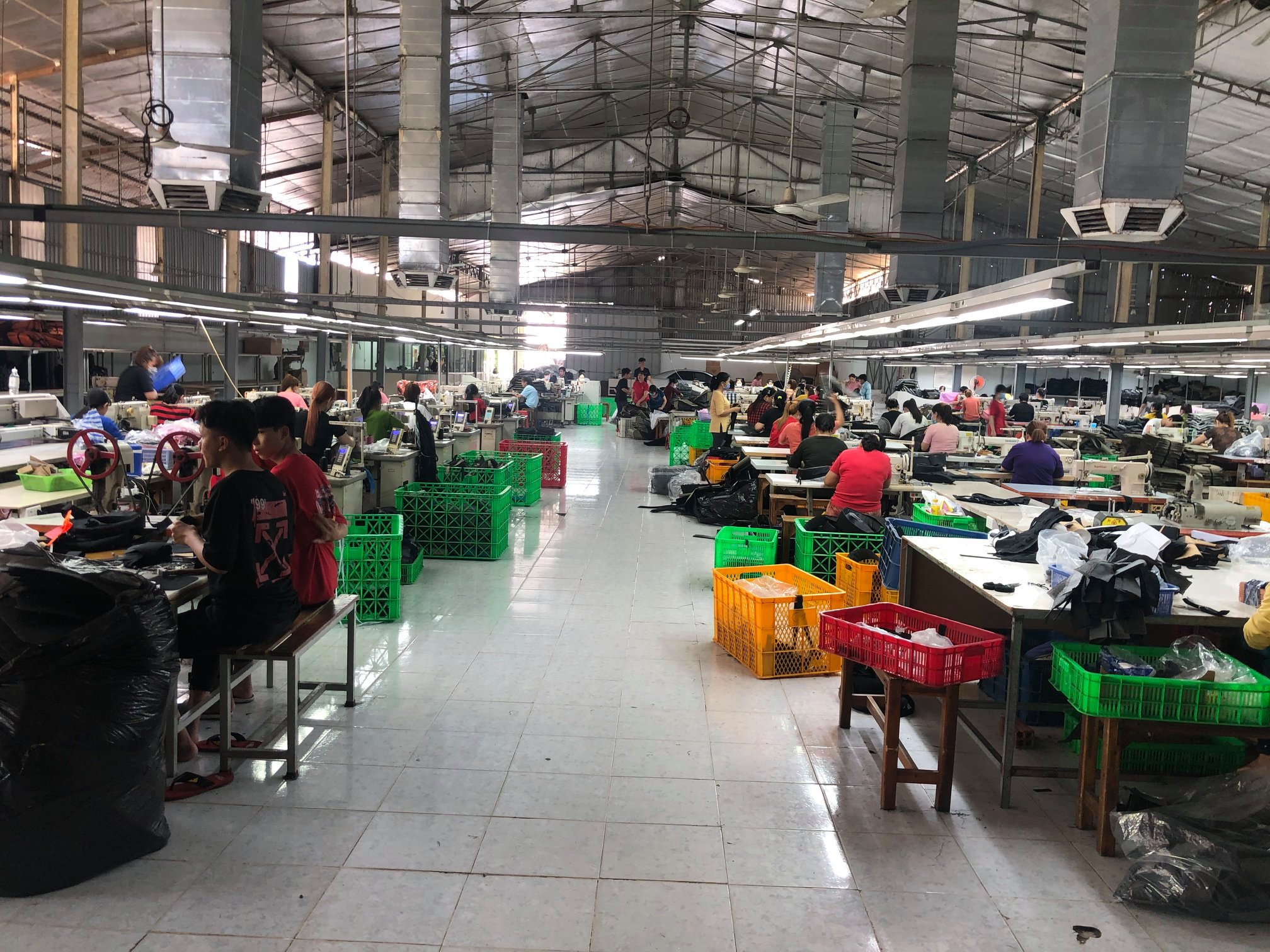
Visit factories before committing to a production order, especially for a first-time relationship. Over the years, we have found that the factories that look best on paper do not always match up in person, and vice versa. Some of our clients' best supplier relationships started with a factory that had a modest website but impressive production floors.
For planning help, see our guide to Vietnam sourcing trips.
Quality Control
Pre-production samples are non-negotiable. Approve materials, construction, hardware, and branding before full production begins. During production, schedule in-line inspections and a final random inspection (AQL sampling) before shipment.
Common quality issues in luggage include zipper failures, wheel alignment problems, handle mechanism defects, stitching inconsistencies, and color variation between batches. We have seen entire orders held up by something as simple as a zipper pull that did not match the approved sample. Specify your acceptance criteria clearly in your contract and QC checklist.
Why Source Luggage from Vietnam?
Production Maturity
This is not an emerging industry. Factories have supplied global brands for decades, and the workforce in Ho Chi Minh City and surrounding provinces has extensive experience in sewn-goods manufacturing. When we walk factory floors in the luggage sector, the skill level of the sewing operators is consistently impressive, especially for complex multi-compartment designs.

Cost Competitiveness
Labor costs remain lower than in China, which directly affects unit economics for labor-intensive products like bags. The government also provides tax holidays and incentives for export-oriented manufacturers in designated industrial zones.
Trade Agreement Access
Vietnam is a member of the CPTPP, EVFTA, and RCEP, which provide preferential tariff treatment for goods to the EU, the UK, Canada, Japan, Australia, and ASEAN. For brands selling into multiple markets beyond the US, this is a major advantage. Tariff rates vary by country and product classification, so check the latest rates for your specific market.
Material Versatility
Vietnamese factories work across the full spectrum: polycarbonate, ABS, leather, canvas, nylon, and recycled fabrics. This allows buyers to source multiple product lines from a single country.
Sustainability Momentum
More manufacturers are investing in recycled materials, energy-efficient production, and environmental certifications. For brands facing sustainability requirements from retailers or regulators, Vietnam offers increasingly viable options.
See our Vietnam sourcing guide for more on the country's manufacturing capabilities.
Source Luggage from Vietnam with Cosmo Sourcing
Cosmo Sourcing connects buyers with vetted luggage and bag manufacturers across Vietnam. Our team in Ho Chi Minh City handles factory identification, quoting, quality control, and logistics. Flat-fee pricing, no commissions, no hidden markups, and direct factory introductions. We typically get you quotes from two to six factories so you can compare options side by side.
Whether you need a factory for 500 backpacks or 50,000 hard-shell suitcases, we can match you with the right partner.
Contact us: Email: info@cosmosourcing.com Web: cosmosourcing.com/contact-us