What Kind of Wood Comes From Vietnam? A Sourcing Guide
Vietnam produces and processes a wide range of wood species. Still, for buyers sourcing products from Vietnamese factories, the wood types that matter most fall into two categories: plantation-grown species like acacia, rubberwood, and eucalyptus that form the backbone of the country's furniture export industry, and premium or imported hardwoods like teak, oak, and walnut that factories bring in for higher-end production.
Vietnam's wood and wood product exports hit a record $17.3 billion in 2024, making it the world's fifth-largest wood product exporter and the top furniture exporter in Southeast Asia. The country has over 6,000 wood processing and trading companies, and its factories use both locally grown and imported timber to serve buyers in more than 120 countries. Understanding which species are actually available, what they cost, and what they're best suited for is the first step to getting your product made well.
Updated February 22, 2026

Quick reference: commercially relevant wood species in Vietnam
| Wood Species | Source | Best For | Relative Cost |
|---|---|---|---|
| Acacia | Plantation-grown (dominant species) | Outdoor furniture, flooring, kitchenware | Low |
| Rubberwood | Plantation by-product | Indoor furniture, shelving, cabinetry | Low |
| Eucalyptus | Plantation-grown | Budget furniture, outdoor pieces, pulp products | Low |
| Bamboo | Native, widely cultivated | Furniture, flooring, decor, homewares | Low to mid |
| Mango wood | Harvested from spent fruit trees | Decorative furniture, bowls, cutting boards | Low to mid |
| Teak | Plantation-grown (limited domestic supply) | Premium outdoor furniture, boat components | High |
| Oak (imported) | Primarily from the US | High-end furniture, flooring, cabinetry | High |
| Walnut (imported) | Primarily from the US | Luxury furniture, decorative items | High |
| Ash (imported) | Primarily from the US | Furniture, tool handles, sports goods | Mid to high |
What Kind of Wood Comes From Vietnam?
One of the first questions I get from new clients is simple: what wood can I actually get in Vietnam? The answer is a lot more than most people expect. Vietnam's climate ranges from tropical lowlands to cool highlands, and that diversity translates directly into the timber you can source.
Acacia
Acacia is the workhorse of Vietnam's wood industry and the species I encounter most often when visiting factories. It grows fast, tolerates poor soil, and produces a solid, light-colored hardwood that holds up well outdoors. I have watched plantation owners in the Central Highlands harvest acacia on five- to seven-year rotations, keeping costs low and supply steady. Most of the outdoor furniture, flooring, and construction timber we source for clients starts with acacia. If you are looking for the best value wood in Vietnam, this is almost always where I point people first.
Rubberwood
Rubberwood comes from rubber plantations after the trees stop producing latex, so you are essentially upcycling a byproduct. I have toured rubberwood processing facilities in the Mekong Delta, where entire supply chains revolve around this species. The wood finishes nicely and offers solid durability for indoor furniture and cabinetry. Many of the mid-range furniture lines we help clients source use rubberwood as the primary material.
Teak
Teak is not native to Vietnam, but you will find it grown in plantations across the country. Every time I visit a premium outdoor furniture factory, teak is front and center in their showroom. It is incredibly strong, naturally weather-resistant, and ages beautifully. It commands a premium price, but for outdoor furniture and boat building, it is hard to beat.
Bamboo
Technically a grass, but in Vietnam, it functions like wood in almost every application. Vietnam exported over $325 million in bamboo products in 2024, and that number continues to climb. One factory I toured in the north produced everything from bamboo cutting boards to full furniture sets, all from locally harvested material. Bamboo is highly sustainable, grows rapidly, and appeals to eco-conscious brands and consumers. The versatility is impressive, and I expect this category to keep expanding.
Eucalyptus and Pine
Eucalyptus grows quickly in Vietnam's plantations and is used in plywood, paper manufacturing, and budget-friendly furniture lines. Pine grows in cooler northern regions and is well-suited for children's furniture, decorative items, and products that call for a lighter, softer wood with a pleasant natural aroma.
Rosewood, Mahogany, and Other Premium Species
I have toured workshops where artisans hand-carve rosewood into intricate furniture pieces that take weeks to complete. The rich color, fine grain, and durability make these species highly prized for luxury furniture and decorative items. Mahogany also appears in boat construction and outdoor applications. Both are mostly imported or plantation-grown, so expect higher costs and longer lead times.
Other Notable Species
Vietnam's factories also work with oak (for high-end furniture and flooring), mango wood (with a distinctive grain, harvested sustainably after fruit production ends), cherry wood (for fine cabinetry), walnut, ash, birch, cedar, merbau, beech, hickory, and maple. Most of these are imported, but skilled Vietnamese factories can also manufacture them. I have helped clients source walnut and ash products that matched or exceeded what they were getting from Chinese suppliers, often at better prices.
Native vs. Imported Wood Species
This distinction matters more than most buyers realize. The wood that grows locally in Vietnam (acacia, rubberwood, bamboo, eucalyptus, and mango wood) is cheaper, more readily available, and easier to document for compliance. Imported species such as teak, oak, cherry, and walnut require additional logistics and documentation. Many popular North American woods, such as spruce, hemlock, and Douglas fir, must be imported from Canada if you want to manufacture with them in Vietnam. The finished products can then be easily re-exported.
Vietnam also imports raw materials from neighboring countries such as Malaysia and Thailand, which have well-developed forestry sectors. Knowing where your raw material comes from is essential for regulatory compliance, which I cover later in this guide.
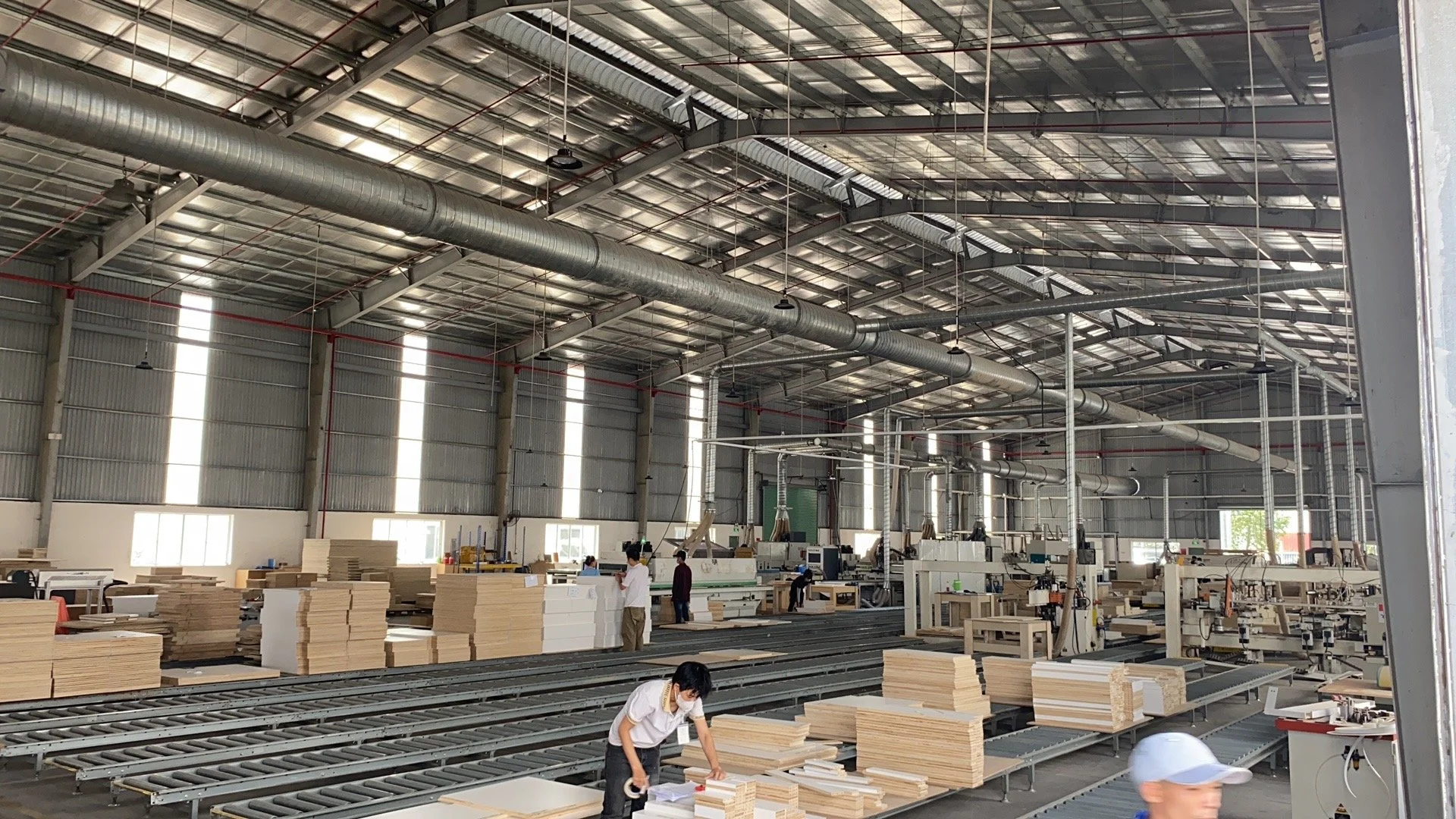
Plantation-Grown Woods
These are the species for which Vietnamese factories have the deepest supply chains. They're grown domestically, harvested on predictable cycles, and priced competitively for export manufacturing.
Acacia
Acacia is by far the most important commercial wood species in Vietnam. It occupies roughly 70 to 80 percent of the country's 3.5 million hectares of planted production forest, and it's the raw material behind a huge share of Vietnam's furniture and wood product exports.
What makes acacia so dominant is its growth cycle. Plantation acacia reaches harvestable size in five to seven years for wood chip production or eight to ten years for saw timber, keeping supply consistent and costs low. The wood itself is a medium-density hardwood with natural water resistance, a warm golden-brown color, and good durability for both indoor and outdoor applications.
I've seen acacia used across a huge range of products in Vietnamese factories: garden furniture, cutting boards, flooring, shelving, and outdoor decking. For buyers sourcing outdoor furniture from Vietnam, acacia is often the default material for mid-range product lines because it offers solid weather resistance at a fraction of the cost of teak.
Rubberwood
Rubberwood comes from rubber trees (Hevea brasiliensis) that have reached the end of their latex-producing life, typically after 25 to 30 years. Rather than being discarded, the timber is harvested and processed for furniture manufacturing. This makes rubberwood one of the more genuinely sustainable commercial wood options available.
It contributes roughly 10 to 12 percent of the wood used in Vietnamese manufacturing, and Vietnamese rubberwood products are exported to over 120 countries. The wood is light in color, easy to work with, takes stain and finish well, and has a smooth, even grain that works for a clean, modern aesthetic.
The main limitation is durability in outdoor settings. Rubberwood is susceptible to fungal and insect damage when exposed to moisture, so it's best suited for indoor furniture, cabinetry, shelving, and kitchen items. If your product is for indoor use, rubberwood gives you a good balance of quality and cost. Many of the top furniture manufacturers in Vietnam work extensively with rubberwood for indoor product lines.
Eucalyptus
Eucalyptus was introduced to Vietnam from Australia in the 1950s and is now widely planted across the country. It grows fast, reaching harvestable size in five to seven years, and it's categorized in Vietnam's Group IA wood classification, which means it's valued primarily for industrial and construction applications.
For furniture, eucalyptus sits in a similar price bracket to acacia but with slightly different properties. It has a natural, washed appearance that gives it rustic appeal, reasonable weather resistance, and a natural insecticide. It's commonly used for budget-range outdoor furniture and garden accessories, and as a raw material for plywood and wood-based panels.
One practical note: eucalyptus tends to have uneven moisture retention, so manufacturers often recommend applying a sealant to finished products. If you're comparing eucalyptus to acacia for outdoor furniture, acacia generally has better dimensional stability. Eucalyptus is a strong choice when cost is the primary driver.
Bamboo
Technically, a grass rather than a wood, but in practical manufacturing terms, bamboo is treated as a wood material in Vietnam and processed by many of the same factories. Vietnam is one of the world's largest producers of bamboo, and the material is used for furniture, flooring, homewares, kitchen utensils, and decorative items.
Bamboo's appeal to buyers lies in its sustainability story (it grows extremely fast and regenerates without replanting), its strength-to-weight ratio, and its distinctive visual character. It's particularly strong in the eco-friendly and natural product categories.
Mango Wood
Mango wood is harvested from mango trees that are past their fruit-bearing prime, typically after ten or more years of cultivation. This gives it a natural sustainability angle similar to rubberwood. The wood is classified in Vietnam's Group V, commonly used in furniture and construction.
Mango wood is hard, durable, and comes in a range of natural colors from golden brown to deeper mahogany tones that darken attractively with age. It's increasingly popular for decorative furniture, cutting boards, serving platters, and artisan homewares. The grain patterns tend to be distinctive and varied, which makes it a strong fit for products where visual character is a selling point.
Premium and Imported Woods
Vietnamese factories also work with higher-end species, some grown domestically in limited quantities and others imported specifically for manufacturing. These command higher prices but open up premium product categories.
Teak
Teak is not native to Vietnam, but it is grown in domestic plantations to meet demand. Vietnamese plantation teak is available but in much smaller volumes than acacia or rubberwood, and most high-volume teak furniture production relies on imported timber.
Teak's reputation is well earned: it's naturally weather-resistant, dimensionally stable, high in natural oils, and has a rich golden-brown color that ages gracefully. It's the standard material for premium outdoor furniture and has strong demand from buyers in the US, Europe, and Australia. The tradeoff is cost. Teak is significantly more expensive than acacia, and its products may have longer lead times due to material sourcing.
Imported Hardwoods: Oak, Walnut, and Ash
The United States is the largest supplier of hardwood timber to Vietnam, with exports reaching approximately $350 million annually. The most popular imported species are oak, walnut, ash, and poplar, which Vietnamese factories process into high-end furniture, cabinetry, and flooring for export markets.
This is an important distinction that many buyers miss: when you see "oak furniture from Vietnam" or "walnut furniture from Vietnam," the wood was almost certainly imported from the US, Europe, or elsewhere, then processed and manufactured in Vietnamese factories. Vietnam's value-add here is skilled manufacturing labor and competitive production costs, not the raw material itself.
For buyers sourcing premium furniture, this actually works in your favor. You get access to the same high-quality hardwoods you'd find in Western manufacturing, processed by experienced factories at significantly lower production costs. Many of the brands manufacturing in Vietnam use this exact model for their furniture lines.
Rosewood and Mahogany
These premium species deserve a special note. Vietnamese rosewood (Dalbergia cochinchinensis) is one of the most prized furniture woods in Asia. Still, it's now listed under CITES Appendix II and classified as "Vulnerable" on the IUCN Red List due to decades of overharvesting, driven largely by demand from the Chinese luxury furniture market. Legal trade in rosewood is heavily restricted, and any supplier offering large quantities of Vietnamese rosewood should be scrutinized carefully.
Mahogany follows a similar pattern: beautiful wood, but supply constraints and legal requirements make it impractical for most commercial production. Buyers looking for a rich, dark-toned wood are usually better served by imported walnut or high-quality stained acacia.
How Factories Source Their Wood
Understanding where Vietnamese factories actually get their raw materials helps you make better sourcing decisions and avoid surprises.
Most furniture factories in southern Vietnam (concentrated in Binh Duong, Dong Nai, and the greater Ho Chi Minh City area) source plantation wood through established supply networks. Acacia and rubberwood are the most readily available, and factories typically maintain relationships with multiple plantation suppliers to keep costs stable.
For imported hardwoods, timber comes primarily from the US, Africa, South America, and other Southeast Asian countries. Vietnam imported approximately $2.5 billion worth of timber and timber products in recent years, reflecting the scale of its processing-for-export model.
On the certification side, over 520,000 hectares of Vietnamese forest are now FSC-certified, representing about 13 percent of the country's planted forest area, with a government target of one million certified hectares by 2030. If your product needs FSC or PEFC certification for your target market, this is achievable but needs to be specified early in the sourcing process. Not every factory maintains a chain-of-custody certification, so it's worth confirming during vetting.
Vietnam also operates under the Vietnam Timber Legality Assurance System (VNTLAS), which was established as part of the country's Voluntary Partnership Agreement with the EU. This system is designed to verify legal timber sourcing throughout the supply chain, and it's become increasingly important as export markets (particularly the EU and the US) tighten enforcement around illegal timber.
Choosing the Right Wood for Your Product
The right wood depends on your product, your price point, and your target market. Here's how to think through the decision.
Indoor vs. Outdoor
For outdoor products, acacia and teak are the standout options. Acacia handles weather exposure well and keeps costs manageable. Teak is the premium choice when your price point supports it. Eucalyptus works at the budget end but may need additional sealing.
For indoor products, rubberwood is the workhorse: affordable, easy to finish, and available at scale. Oak and walnut (imported) serve the premium indoor market. Mango wood works well for decorative and artisan pieces.
Budget Considerations
Plantation-grown species (acacia, rubberwood, eucalyptus) offer the most competitive pricing because supply is consistent and domestic. Imported hardwoods add material costs on top of manufacturing, so factor in timber sourcing when comparing factory quotes.
Certification Requirements
If you're selling into the EU, the upcoming EU Deforestation Regulation (EUDR) will require proof that wood products are not linked to deforestation, including geolocation of harvest areas. The US Lacey Act already requires due diligence on timber legality. Specifying certified wood (FSC, PEFC) from the start simplifies compliance. Factories that work with plantation-grown acacia and rubberwood tend to have the most straightforward certification paths.
For a deeper look at finding and vetting the right factory, our guide to finding wood and furniture manufacturers in Vietnam covers the full process, and our Vietnam wood products manufacturers list profiles specific factories worth evaluating.
Source Wood Products from Vietnam with Cosmo Sourcing
Getting the material right is only one piece of the sourcing puzzle. Finding a factory that works well with your chosen wood species, can meet your quality standards, and delivers on time takes on-the-ground knowledge and verified relationships.
At Cosmo Sourcing, we've helped clients source wood and furniture products from Vietnam since 2012. Our team in Ho Chi Minh City works directly with manufacturers across the country, from large-scale furniture exporters in Binh Duong to specialty workshops working with premium hardwoods. We operate on a flat-fee pricing model, not commission, so our recommendations are based on fit, not markup. A typical project involves sourcing quotes from 2 to 6 factories, with direct introductions and full pricing transparency.
If you have a wood product you want manufactured in Vietnam, reach out, and we'll help you find the right factory.
Email: info@cosmosourcing.com Get started: cosmosourcing.com/contact-us