How to Find WPC Manufacturers in Vietnam: Top Factories and Sourcing Guide
Vietnam produces WPC (wood plastic composite) decking, cladding, fencing, and flooring for export markets worldwide. The country has a growing cluster of WPC factories, mostly in the north and south, that offer competitive pricing, OEM/ODM capabilities, and certifications that meet European and North American standards.
This guide covers the major Vietnamese WPC manufacturers by name, what products they make, where the factories are concentrated, and how to evaluate and source from them. I've visited hundreds of factories across Vietnam over the past 12 years running Cosmo Sourcing, and while WPC is a more specialized niche than furniture or wood products, the manufacturing quality coming out of Vietnam's WPC sector is strong and improving fast.
updated Feb 19, 2026
What Is WPC and Why Does It Matter for Sourcing?
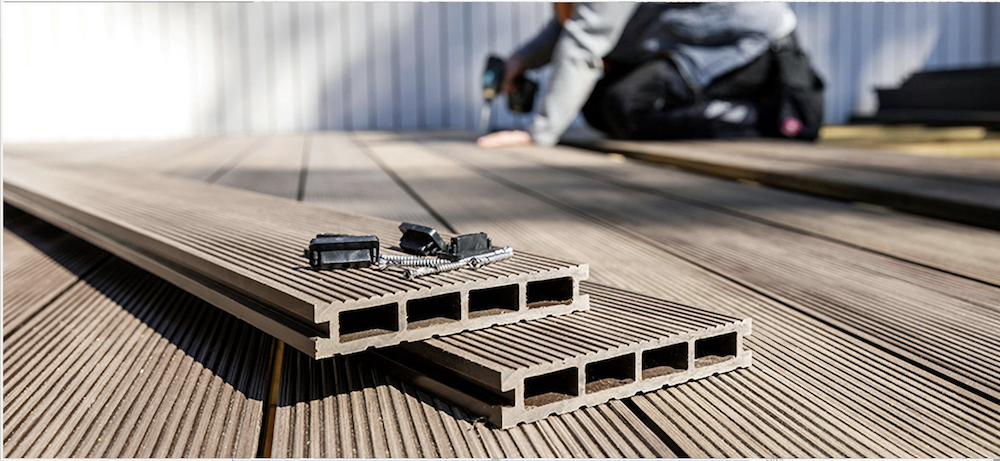
Wood-plastic composite is a material made by blending wood fibers or wood flour (typically 50-70% of the mix) with thermoplastic polymers such as polyethylene (PE), polypropylene (PP), or polyvinyl chloride (PVC). Additives for UV resistance, fire retardancy, and color stability make up the remainder.
The global WPC market was valued at roughly $8.9 billion in 2025 and is projected to grow at a CAGR of around 8-12% through the early 2030s, depending on the source. Building and construction accounts for the majority of demand, driven by the popularity of composite decking, fencing, and cladding as low-maintenance alternatives to natural wood.
For sourcing buyers, the key advantage of WPC over traditional lumber is its consistent product quality. WPC doesn't warp, splinter, or rot, and it requires no staining or sealing. That consistency also makes it well-suited for manufacturing in countries like Vietnam, where extrusion technology and quality control systems can produce uniform profiles at scale.
Top WPC Manufacturers in Vietnam
Vietnam's WPC sector comprises a mix of large, export-focused manufacturers and smaller domestic-market operations. Here are the notable players that international buyers should know about.
EuroStark (European Wood Plastic Development & Investment JSC)
EuroStark is one of Vietnam's largest and most established WPC manufacturers. The company is part of the EuP Group, a major industrial conglomerate, and operates from its factory in the Southern Industrial Park in Yen Bai Province in northern Vietnam. EuroStark produces WPC decking, tiles, wall cladding, pergola components, louvers, and WPC compound (raw material). The factory holds ISO 14001, ISO 22000, BRC, and BSCI certifications. They have over 10 years of experience and export globally, with products shipping primarily through Hai Phong port.
WPC Vietnam (EuP Group)
WPC Vietnam is closely connected to the EuP Group and positions itself as the largest WPC manufacturer in Vietnam. The company holds EUR.1, FSC, and EN15534 certifications and offers a 10-year product warranty. Their product range includes decking (hollow and solid profiles), fencing, pergolas, and cladding. They maintain a European client relations office through EuroVietnam for streamlined communication with buyers in the EU.
Trieu Phuong (TPWood)
Trieu Phuong has over 10 years of experience in WPC production and is known for developing TPWood Steel. This proprietary product combines WPC with galvanized steel pipe for enhanced structural strength. They produce WPC for pergolas, fencing, railings, gates, wall frames, and outdoor furniture. Their products meet US and European manufacturing standards, and they hold intellectual property protections in Vietnam. TPWood is an interesting option for buyers looking for engineered WPC products beyond standard decking and cladding.
Ngan Hoa (Eurowood Outdoor Brand)
Ngan Hoa is one of Vietnam's largest manufacturers of plastic panels and moldings, with an annual production capacity of 80 million meters of finished products. In 2023, they launched Eurowood, a high-end outdoor WPC brand targeting the exterior materials market. The company is ISO 9001:2015 certified, meets CE standards for European export, and distributes across all 63 provinces in Vietnam. Their products include WPC flooring, outdoor panels, and decorative moldings.
AnPro
AnPro manufactures interior WPC panels and decorative moldings using advanced production technology. They focus on health and environmental safety compliance for indoor applications. AnPro is best suited for buyers sourcing interior wall panels, ceiling panels, and decorative WPC products rather than outdoor decking.

What WPC Products Can Be Manufactured in Vietnam?
Vietnamese WPC factories cover a broad range of product categories.
Outdoor building materials are the core strength: decking boards (hollow and solid profiles, grooved or woodgrain finishes), wall cladding and siding, fencing panels and modular systems, pergola and gazebo structures, railings and balustrades, garden products like flower boxes and raised beds, and facade louvers and decorative slats.
Indoor applications are a growing segment: WPC and vinyl-WPC hybrid flooring (click-lock or glue-down), wall panels and 3D textured coverings, sound-absorbing panels, door frames and window trims, cabinet boards, and interior partition panels for commercial spaces.
Custom and industrial components are available from larger manufacturers: custom extrusion profiles for automotive, marine, or commercial use, proprietary tooling-based extrusions, and acoustic panels with insulation properties.
Specialty products include recycled WPC made from post-consumer plastics and wood waste, fire-resistant boards for public and commercial buildings, and antibacterial panels for healthcare and cleanroom environments.
For a broader view of what can be manufactured in Vietnam across industries, check out our complete guide to products made in Vietnam.
Where Are WPC Factories Located in Vietnam?
Vietnam's WPC manufacturing is concentrated in two main regions.
Northern Vietnam is home to some of the largest operations. Yen Bai Province hosts the EuP Group's industrial park (75 hectares) and EuroStark's primary WPC factory. Hai Phong provides port access for northern manufacturers exporting to Europe and North America. Several WPC and wood-processing companies also operate near Hanoi.
Southern Vietnam, particularly the provinces of Binh Duong, Dong Nai, and Long An near Ho Chi Minh City, has a strong concentration of wood and composite materials manufacturers. This region benefits from proximity to major container ports (Cat Lai, Cai Mep) and a deep pool of skilled labor. Many of the smaller WPC producers and domestic brands operate in this zone. Our office is based in Binh Duong Province, which gives us easy access to factories in this cluster.
This geographic split is similar to what you see across other manufacturing sectors in Vietnam, where northern provinces handle heavy industry, and the south focuses on export-oriented manufacturing.
How to Find and Evaluate WPC Suppliers in Vietnam
Define Your Product Requirements First
Before reaching out to any factory, lock down these details: the specific WPC product type (decking, cladding, flooring, custom profiles), the polymer base you need (PE, PP, or PVC), surface finish requirements (woodgrain, smooth, grooved, co-extruded), target certifications (FSC, EN15534, CE, fire rating), estimated annual volume, and your target market's regulatory requirements.
WPC is not a one-size-fits-all material. A factory that excels at PE-based outdoor decking may not have the equipment or formulation expertise for PVC-based interior wall panels. Getting specific early saves time for both sides.
Search Channels That Actually Work
Trade shows are the most efficient way to meet WPC manufacturers face-to-face. Vietbuild (held in Ho Chi Minh City and Hanoi multiple times per year) showcases construction materials, including WPC products. VietnamWood, the country's largest wood processing exhibition, often features WPC manufacturers alongside traditional wood processors.
B2B platforms like Alibaba, Global Sources, and Made-in-Vietnam list Vietnamese WPC manufacturers, but listings require careful vetting. Many listings are from trading companies rather than actual factories, and the information can be outdated or exaggerated.
Industry associations provide useful leads. The Ho Chi Minh City Fine Art & Woodworking Association (HAWA) and the Vietnam Timber and Forest Products Association (VIFOREST) both maintain manufacturer databases that include producers of composite materials.
Direct factory outreach works if you already know the company names. Most of the larger Vietnamese WPC manufacturers listed above have English-language websites and export departments.
Partner with a Local Sourcing Agency
Navigating Vietnam's WPC landscape gets complicated once you move past the handful of well-known brands. The smaller and mid-sized factories that might be the best fit for your specific product often don't appear on international B2B platforms, don't have English-language websites, and operate in areas where business is conducted almost entirely in Vietnamese.
This is where a sourcing partner with an on-the-ground presence makes a real difference. At Cosmo Sourcing, we maintain relationships with factories across Vietnam's wood and building materials sectors, and we can match your WPC requirements with manufacturers that have the right equipment, certifications, and capacity for your order.
Evaluate Suppliers on What Matters
When you've identified potential WPC factories, focus your evaluation on these areas:
Production capacity and equipment. WPC manufacturing requires extrusion lines, and the number and type of lines determine throughput. Ask about co-extrusion capability (for capped profiles), tooling capacity for custom molds, and current capacity utilization.
Certifications and testing. For export to Europe, look for EN15534, CE marking, and FSC certification. For the US market, verify compliance with fire ratings and relevant ASTM standards. Ask for recent third-party test reports, not just certificates.
Export experience. Factories that regularly export will have established processes for documentation, container loading, and quality inspection protocols. Ask international buyers in your target market for references.
Sample quality. Always request production samples, not showroom samples. Evaluate dimensional consistency, surface finish quality, UV stability (if possible, request accelerated weathering test data), and color matching across multiple samples.
Factory visit or video tour. Nothing replaces seeing the production floor. If you can't visit in person, request a live video tour that covers the extrusion lines, raw material storage, quality control processes, and the finished goods warehouse.
Cosmo Sourcing: Your WPC Sourcing Partner in Vietnam
Looking to source WPC decking, cladding, fencing, or custom composite profiles from Vietnam? Cosmo Sourcing has been helping international buyers find the right factories in Vietnam since 2012. We've worked with over 4,000 clients on more than 10,000 products, and we operate on a flat-fee model, meaning we never mark up supplier quotes or take hidden commissions.
We handle the entire process: factory identification and vetting, negotiation, sampling coordination, production monitoring, quality inspections, and logistics support. We get you 2 to 6 original quotes directly from qualified factories so you can compare and choose with full transparency.
Ready to get started? Contact us at info@cosmosourcing.com or visit cosmosourcing.com/contact-us to schedule a free consultation about your WPC sourcing project.