How to Find Plastic Manufacturers in Vietnam: Top Suppliers and Sourcing Guide
Vietnam has close to 4,000 plastics enterprises, and roughly 84 percent of production sits in the south around Ho Chi Minh City, Binh Duong, and Dong Nai. Finding a factory is easy. The hard part is working out which one can hit your spec, your tolerance, and your volume. Expect a mold to run $2,000 to $15,000 and 4 to 8 weeks before production even starts.
New to sourcing from Vietnam? Start with the complete Vietnam sourcing guide, which covers suppliers, costs, tariffs, quality control, and how production works across every category.
Vietnam's Plastics Industry at a Glance
Vietnam's plastics sector has grown at 16 to 18 percent annually over the past decade, making it one of the country's fastest-expanding industries. According to the Vietnam Plastics Association, the market reached roughly $32 billion in 2024, up nearly 24 percent year over year, across more than 7,000 enterprises employing over 250,000 workers and exporting to more than 190 countries. About 90 percent of those enterprises are small or medium-sized, and they cluster in the south.
- Export value: around $6.7 billion in 2024, up close to 30 percent on 2023, with growth continuing through 2025. The US, Japan, ASEAN, the EU, and South Korea take roughly 83 percent of plastic exports.
- Market volume: roughly 11.8 million tons in 2025, projected to reach about 17.7 million tons by 2030, an 8 to 9 percent compound annual growth rate.
- Geographic concentration: about 84 percent of production is in southern Vietnam (Ho Chi Minh City, Binh Duong, Dong Nai), about 14 percent in the north, and 2 percent in the central region.
- Raw material dependency: Vietnam imports 80 to 85 percent of its virgin resin (PE, PP, PVC, PET), mainly from China, South Korea, and Japan.
If you are sourcing plastics, concentrate your supplier search in the south. The largest consumption sectors are packaging (roughly half of all plastic use), construction materials, technical and industrial components, and consumer goods.
What Plastic Products Can You Source from Vietnam?
Product availability depends on a specific factory's equipment, certifications, and capacity, but this is what the market supports broadly.
Packaging
The largest segment: food and beverage containers, pharmaceutical packaging, cosmetic bottles, industrial drums, shopping bags, and flexible films. Driven by Vietnam's food processing sector and e-commerce growth.
Household and consumer goods
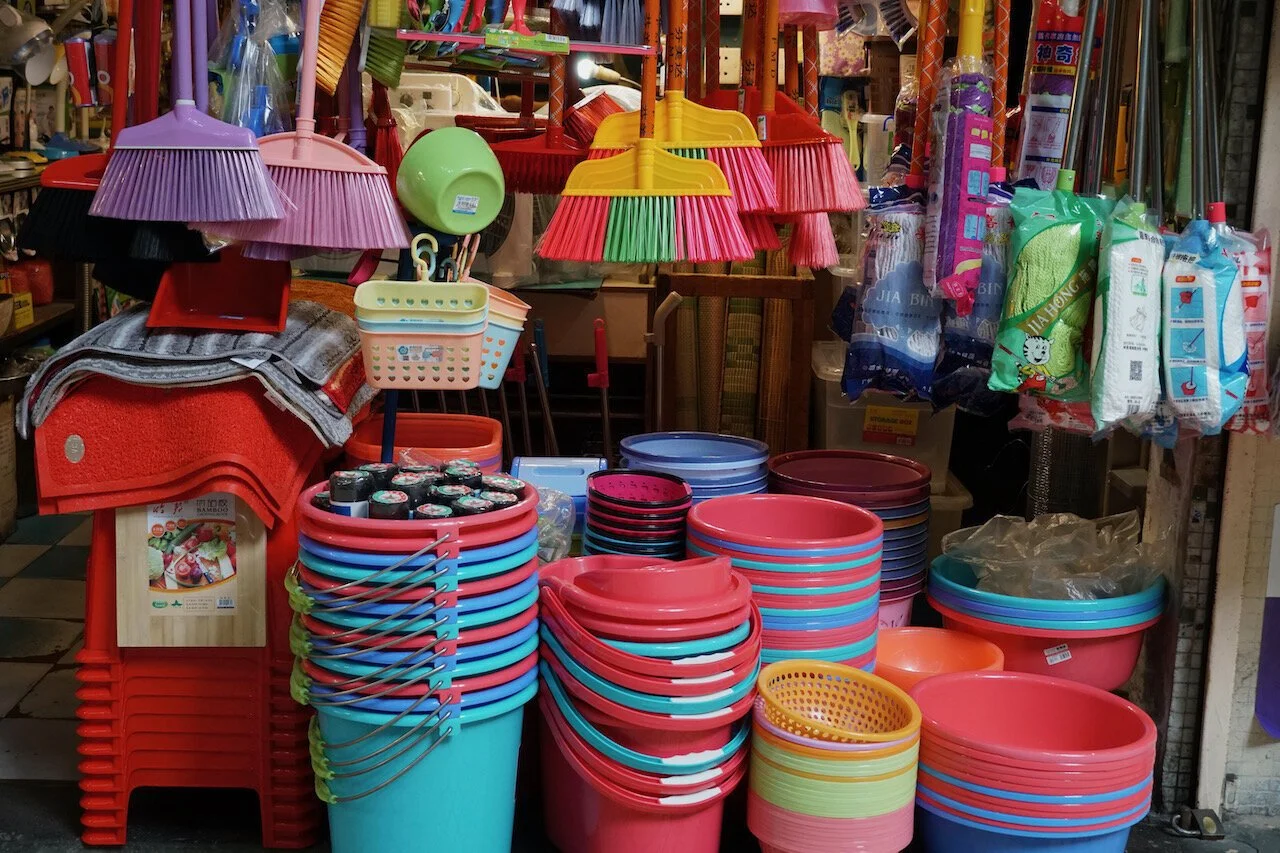
Kitchenware, storage containers, furniture, cleaning tools, and garden supplies. Duy Tan and Viet Nhat are major domestic players.
Construction materials
PVC pipes, insulation, wall panels, vinyl flooring, and ceiling tiles.
Automotive and electronics components
Dashboard parts, bumpers, connector housings, device casings, and insulation. The relocation of Samsung, Foxconn, and other manufacturers to Vietnam is driving demand for engineering-grade plastics such as polycarbonate, ABS, and nylon.
Medical supplies
Syringes, IV bags, specimen containers, and protective equipment. Several factories hold ISO 13485 certification for medical device manufacturing.
Other categories
Toys, sporting goods, pet products, luggage, agricultural supplies such as greenhouse films and irrigation components, and office products. For sustainable or biodegradable alternatives, see the guide to eco-friendly product categories from Vietnam.
Top Injection Molding Suppliers in Vietnam
These factories build to your design and your tooling. The suppliers below are a small sample of what is available: there are thousands of plastics factories across Vietnam, and the right match depends on your product, volume, budget, and quality requirements. Inclusion here is not an endorsement. Conduct your own due diligence, including factory audits, sample evaluation, and reference checks.
VMR Plastics Injection Molding
Danish-managed facility near Ho Chi Minh City offering end-to-end services from product design through production. Can work from completed designs or develop a product from concept, which makes it a good option for buyers who need engineering help alongside manufacturing. Website: vmr.vn
THT (Tan Hiep Thanh) Precision Mold
More than a decade in high-precision injection mold design and manufacturing, running CNC and EDM equipment. Primarily serves automotive and industrial clients with Germany and Japan as its largest export markets. Best suited to products requiring tight tolerances and complex part-to-part interfaces. Website: thtmold.com
MIDA Precision Molding
One of Vietnam's more established plastics manufacturers, offering custom molding, product decoration, and packaging under multiple ISO certifications. Experience spans electronic components, automotive parts, medical devices, household appliances, and cosmetics. Website: midamold.com
DK Mould
Specializes in injection molding, blow molding, and stamping, with advanced CNC milling, EDM, and wire cutting. The distinguishing capability is combining plastics with metalwork, including steel cutting and stamping, which is useful for multi-material assemblies that would otherwise need two suppliers. Website: dkmould.com.vn
VPIC Group
Large manufacturer whose capabilities span plastic injection, 3D laser cutting, CNC machining, forging, stamping, painting, powder coating, and assembly. Casting machines up to 1,500 tons make it suitable for larger components. Primary clients are in automotive and healthcare. Website: vpic-group.com
Top Consumer Plastic Manufacturers in Vietnam
These companies focus on finished consumer goods and typically work from existing designs or customizable catalog products, rather than building bespoke tooling for you.
Duy Tan Plastics
One of Vietnam's largest plastic manufacturers, supplying Unilever and Mobil Oil and exporting to the US, Japan, South Korea, Canada, Australia, and the EU. Secured a $60 million credit line in 2020 to expand recycled plastic production by 100,000 tons annually, which matters if you have a recycled-content requirement.
INT Plastic
Manufactures household, industrial, and technical plastic products. The notable advantage is electronic component assembly alongside plastic production, which saves time and logistics cost if your product combines plastic housings with electronics. Website: intplastic.com.vn
Viet Nhat Plastic
Major domestic manufacturer of furniture, bins, racks, helmets, hangers, and cabinets, importing raw materials from South Korea and China. Primarily serves Vietnam's domestic market but can produce for export with the right project scope and volume. Website: vietnhatplastic.com
Tan Hiep Hung
Best known as a contract manufacturer of plastic bottles and caps for Coca-Cola, Pepsi, Nestle, and KFC in Vietnam. Also produces custom plastic products for retail and medical applications with design and branding services. Website: tanhiephung.com.vn
Hiep Thanh Plastic
Specializes in household plastic goods: tables, chairs, garbage cans, basins, cabinets, buckets, plates, and dinnerware. Primary export markets are Southeast Asia, with additional customers in the US and Australia. Website: nhuahiepthanh.com
| Injection molder | Consumer goods manufacturer | |
|---|---|---|
| You supply | Design, 3D files, and tooling budget | A spec or a catalog selection |
| Tooling | Custom mold, paid up front | Usually existing molds |
| Upfront cost | Higher, the mold is the barrier | Lower |
| Time to first shipment | Longer, 4 to 8 weeks of mold work first | Shorter |
| Product is | Uniquely yours | Often shared or lightly customized |
| Right for | Proprietary products and branded hardware | Housewares, retail programs, private label |
Mold Costs, MOQs, and Lead Times
This is where most first-time plastics projects go wrong on budget. The mold is a separate, upfront cost before a single unit ships, and it is not refundable if the product does not sell.
| Item | Typical range | What moves it |
|---|---|---|
| Mold cost | $2,000 to $15,000 and up | Complexity, size, number of cavities, and material. Aluminum tooling is cheaper than steel but wears faster. |
| Mold fabrication | 4 to 8 weeks | Tolerance requirements and how many revisions the first samples trigger |
| MOQ, simple household items | 1,000 to 5,000 pieces | Existing tooling and commodity resin |
| MOQ, custom injection molded | 5,000 to 10,000+ pieces | Line setup cost has to be spread across the run |
| Production after mold approval | 30 to 60 days | Volume, resin availability, and factory loading |
How to Evaluate a Vietnamese Plastic Supplier
Finding factories is the easy part. Qualifying them is where sourcing projects succeed or fail.
"Nearly 4,000 plastics factories in Vietnam sounds like abundance, but it is really a filtering problem. The number that can hold your tolerance, hold your schedule, and hold your price for a year is a much smaller list."
Jim Kennemer, Founder of Cosmo SourcingCertifications and Standards
At minimum look for ISO 9001 for quality management. Medical plastics require ISO 13485. Food-contact applications need FDA or EU compliance verification. Environmental certifications such as ISO 14001 are increasingly relevant for buyers with sustainability mandates. Ask for certificate copies and verify them independently rather than taking a factory's word for it.
Samples Before Production
Never commit to a production order without evaluating samples first. For injection-molded products this means paying for a prototype or pilot run. Evaluate dimensional accuracy, surface finish, material consistency, and packaging quality. Finding problems at this stage costs a fraction of what it costs after a full production run ships.
Factory Visits and Audits
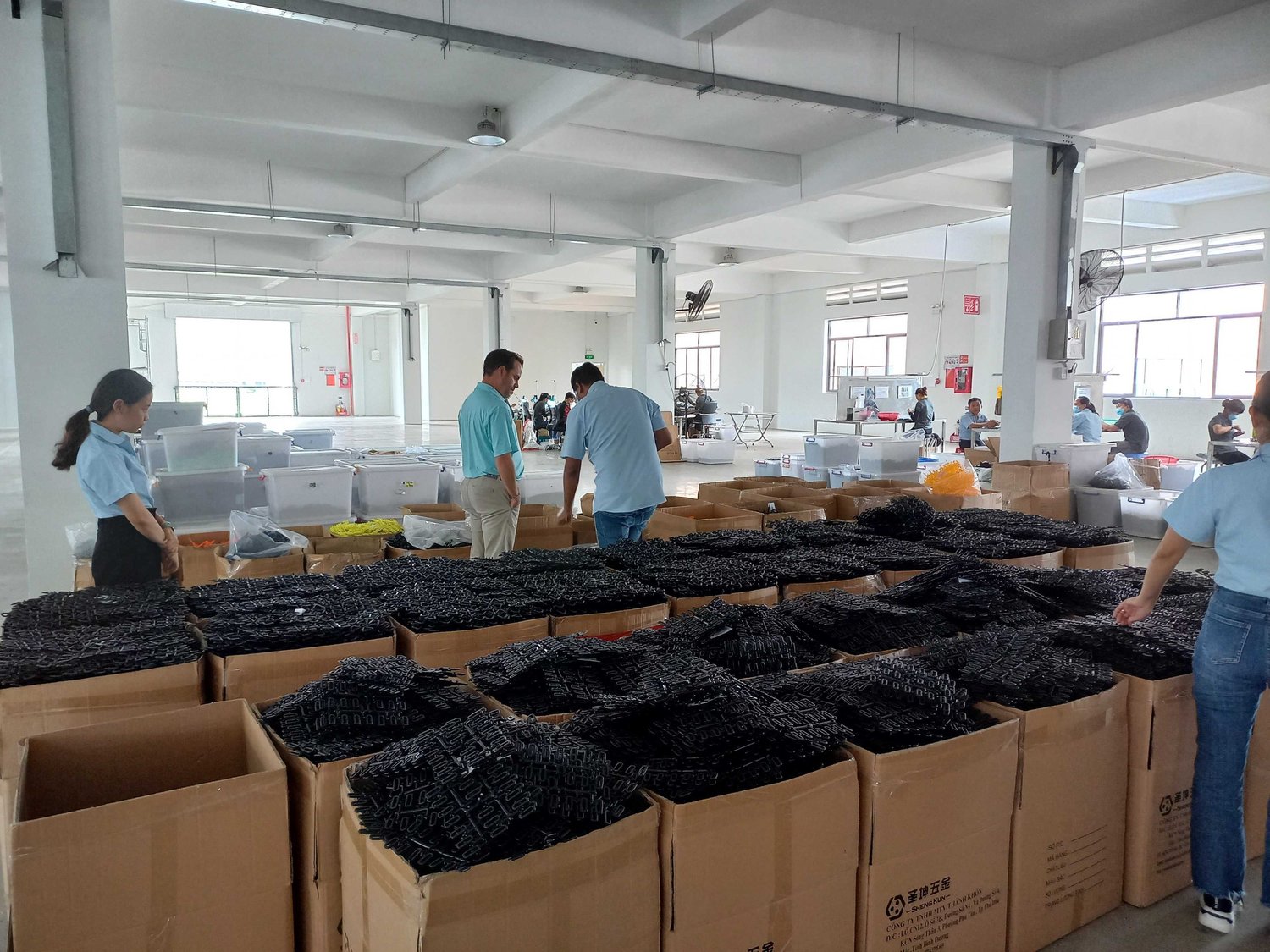
A factory visit lets you verify production capacity, inspect equipment condition, assess worker conditions, and evaluate management. Most southern Vietnam factories are within a few hours of Ho Chi Minh City, which makes visiting several in a few days realistic. If you cannot go in person, hire a third-party auditor.
Export Experience and Communication
Factories that primarily serve Vietnam's domestic market may have limited English support and less familiarity with international shipping documentation and compliance requirements. Prioritize factories with a track record exporting to your target market, ask for customer references, and check whether they have handled your industry's specific testing and certification standards.
Practical Sourcing Tips
Provide detailed specs. Vietnamese factories work best with clear drawings, 3D models (STEP or IGES files for injection molding), material specifications, tolerances, and finish requirements. Vague briefs lead to misquotes and wasted weeks.
Get multiple quotes. Pricing varies significantly between factories, so quote three to five suppliers minimum. Finding Vietnamese suppliers works differently from China, where Alibaba dominates. See the guide to Vietnam sourcing resources and Alibaba alternatives for better starting points.
Plan for longer timelines than China. Vietnam's supply chain is capable but not as fast. Mold fabrication, sample approval, production, and shipping all take longer, so build in buffer on first orders. The rundown of the real challenges of sourcing from Vietnam covers what to expect.
Use third-party inspections. For any significant order, hire a QC inspector to check production before shipment. Common plastic failure modes include short shots (incomplete mold filling), flash (excess material at mold seams), warping, color inconsistency, and dimensional drift over long production runs.
Tariffs and Import Considerations
US tariffs on Vietnamese goods changed substantially in 2026, and they are still moving. On February 20, 2026 the US Supreme Court struck down the IEEPA reciprocal tariffs, which had put Vietnam at 46 percent and later 20 percent. A flat 10 percent Section 122 surcharge replaced them from February 24, 2026. The Court of International Trade then ruled Section 122 unlawful in May 2026, and a Federal Circuit stay is keeping it in force while that is appealed.
Because this is changing month to month, no article should be your source for a rate. Check the current number in the Cosmo Sourcing tariff calculator before you build a landed cost, and confirm anything material with a customs broker against your specific HTS code.
Two things sit outside the reciprocal tariff question and are more stable. Section 232 metal tariffs apply separately to steel and aluminum content, so a product combining plastic with metal parts can be treated differently from a pure plastic part. And goods transshipped through Vietnam from a third country face their own penalty treatment, which is a real risk if a factory quietly subcontracts your order across the border. Ask directly where the goods are actually made.
Even with tariffs in flux, Vietnam has generally remained competitive against Chinese-origin goods, which carry Section 301 duties on top of everything else. Compare landed cost rather than factory-gate price, and revisit the calculation before each purchase order rather than once a year.
Finding Manufacturers Beyond This List
Vietnam has close to 4,000 plastics enterprises. The right factory depends on your product, volume, and budget, and the ten above are a starting point rather than a shortlist.
- Vietnam Plastics Association (VPA): member directory searchable by product type and region.
- Trade shows: Plastics & Rubber Vietnam in Ho Chi Minh City and VietnamPlas are the main industry events for meeting suppliers face to face.
- Online platforms: Global Sources, Made-in-Vietnam, and Vietnamese trade directories list plastics suppliers, though listing quality varies widely.
- Sourcing companies with on-the-ground teams: a sourcing company with staff in Vietnam can pre-screen factories, arrange visits, and manage quality control on your behalf. This matters most if you are sourcing from Vietnam for the first time.
For a full overview across all product categories, see the guide to finding Vietnam manufacturing companies.
Frequently Asked Questions
How much does a plastic injection mold cost in Vietnam?
Typically $2,000 to $15,000 or more, depending on complexity, part size, cavity count, and tooling material. Aluminum molds cost less than steel but wear out faster, so they suit lower lifetime volumes. Fabrication usually takes 4 to 8 weeks before production can begin, and the mold is paid for upfront and separately from the unit price.
What is the MOQ for plastic manufacturing in Vietnam?
Simple household items using existing tooling often start at 1,000 to 5,000 pieces. Custom injection-molded parts typically need 5,000 to 10,000 or more per run to be cost effective, on top of the mold investment. The minimum exists because line setup costs the factory the same whether the run is short or long.
Where are most plastics factories located in Vietnam?
About 84 percent of production is in southern Vietnam, concentrated around Ho Chi Minh City, Binh Duong, and Dong Nai. Roughly 14 percent is in the north and 2 percent in the central region. If you are sourcing plastics, focus your search and your factory visits in the south, where you can see several factories in a few days.
Who owns the mold, the buyer or the factory?
In Vietnam the buyer typically owns the mold if the buyer paid for it, but this should be written into your agreement rather than assumed. Specify ownership, storage, maintenance responsibility, and what happens to the tooling if you move production to a different factory.
What tariffs apply to plastics imported from Vietnam to the US?
The rate has changed repeatedly through 2026 after the Supreme Court struck down the IEEPA reciprocal tariffs in February and a Section 122 surcharge replaced them. Because the position is still moving, check a current source such as the Cosmo Sourcing tariff calculator and confirm with a customs broker against your specific HTS code rather than relying on any published figure.
Is Vietnam or China better for plastic manufacturing?
China has a deeper resin and tooling supply chain and generally faster turnaround, so it can win on speed and on complex tooling. Vietnam competes on tariff exposure for US importers and on supply chain diversification. Vietnam also imports 80 to 85 percent of its virgin resin, so its material pricing is more exposed to global commodity swings. Compare landed cost, not factory-gate price.
Source Plastic Products from Vietnam with Cosmo Sourcing
Cosmo Sourcing has been helping businesses source products from Vietnam since 2014. Cosmo Sourcing's team in Ho Chi Minh City works directly with plastics factories across southern Vietnam, handling supplier identification, factory vetting, quote comparison, sample management, production oversight, quality inspections, and shipping logistics.
Cosmo Sourcing is a sourcing company, not a factory and not a middleman. Unlike commission-based sourcing agents who take a percentage of your order value, Cosmo Sourcing charges a fixed fee and passes on original factory quotes with no markup, so the incentive is to find the right supplier rather than the most expensive one. For a typical plastics project that means quotes from 2 to 6 qualified factories, direct introductions, and full transparency on who is making your product.
Email info@cosmosourcing.com, send your specs through the contact page, or read more about working with a Vietnam sourcing company.